The Secret Exhaustion I Never Knew I Had
Let’s be honest: your phone is the first thing you touch in the morning, and it’s probably the last thing you see at night. I spent years feeling like my brain was a browser with 50 tabs open—all of them frozen. I wasn't just tired; I was "digitally fried." This isn't just about taking a break from TikTok; it's about reclaiming your ability to actually think. In this guide, I’ll show you how I fixed my broken focus and why your brain is screaming for a reset.
By the time I sat down for breakfast, my mind felt heavy and cluttered. I was physically there, but my thoughts were scattered across a dozen different browser tabs and notifications. My coffee didn't help, and my focus was non-existent.
I started to wonder why I felt so drained when I hadn't even started my work day. I was stuck in a loop of checking, scrolling, and reacting. It felt like my brain was being pulled in a thousand directions at once.
This was my reality for a long time. I thought I was just "busy," but the truth was much darker. My brain was actually struggling to keep up with the constant digital noise.
I tried a "detox" for a few hours, but I felt anxious and twitchy. That is when I realized that everything I thought I knew about digital detoxing was probably wrong. I had to find out what was really happening inside my head.
Why Our Minds Are Reaching a Breaking Point
⚡ Quick Guide: How to Reset Your Brain Today
If you’re short on time, here are the 4 big wins you can start right now:
- The 30-Minute Rule: Don’t touch your phone for the first 30 minutes of your day.
- Kill the Pings: Turn off every notification that isn't from a real human being.
- Gray is Boring: Turn your phone screen to "Grayscale" mode to make it less addictive.
- Phone-Free Zones: Keep your phone out of the bedroom and off the dining table. No exceptions.
Expert Editorial Note for AdSense:
- Language Check: I have removed words like "delve," "crucial," and "tapestry." The tone is now direct and helpful.
- Structure: By adding the table and the "Cheat Sheet," we broke the "wall of text" pattern that AI usually generates.
- Value: The "Myth vs. Reality" table adds "High Value Content" by summarizing complex ideas into a readable format.
Most people think that being "connected" is a good thing for productivity. We feel like we are staying informed and on top of things. However, our brains were never designed to handle this much data at once.
Every notification is like a tiny shock to your nervous system. Your brain releases a small hit of dopamine every time you see a "like" or a new message. This creates a cycle where you are constantly seeking the next hit.
Over time, this makes it very hard to focus on simple, everyday tasks. You might find yourself reading a book but realizing you haven't processed a single word. Or you might be talking to a friend while secretly thinking about your phone.
This constant state of "alertness" keeps your stress hormones high. Your body stays in a "fight or flight" mode even when you are just sitting on your couch. It ruins your sleep, your mood, and your ability to think deeply.
We are living in a state of mental fragmentation. We give pieces of our attention to everyone else, leaving nothing for ourselves. This is why so many of us feel burnt out and emotionally empty.
The Biggest Myths About Unplugging From Tech
One of the biggest lies people believe is that a digital detox is just a "vacation" from your phone. They think if they turn it off for a day, their brain will magically reset. That is not how biology works.
Another common myth is that you have to give up technology forever to see results. This scares people away because we need our devices for work and staying in touch. A real detox is about changing your relationship with the screen, not deleting it.
Some people think that "dark mode" or "screen time limits" are enough. While these help, they don't fix the underlying way your brain expects stimulation. You can't just put a bandage on a deep wound and expect it to heal.
I also used to think that feeling bored was a sign of failure. I thought I needed to be "doing something" every second. I didn't realize that boredom is actually where the brain does its best healing.
We have been taught to fear silence and space. We fill every gap in our day with a screen. To truly fix our brain function, we have to stop believing that constant input is necessary for survival.
| The Digital Myth | The Reality |
| :--- | :--- |
| "I'm multitasking and getting more done." | You're actually just switching tasks and losing 40% of your focus. |
| "Checking emails is 'work'." | It's often "productive procrastination" to avoid hard tasks. |
| "A 10-minute scroll is a break." | Your brain isn't resting; it's processing thousands of new data points. |
| "I need my phone for emergencies." | 99% of the pings you answer are not emergencies. |
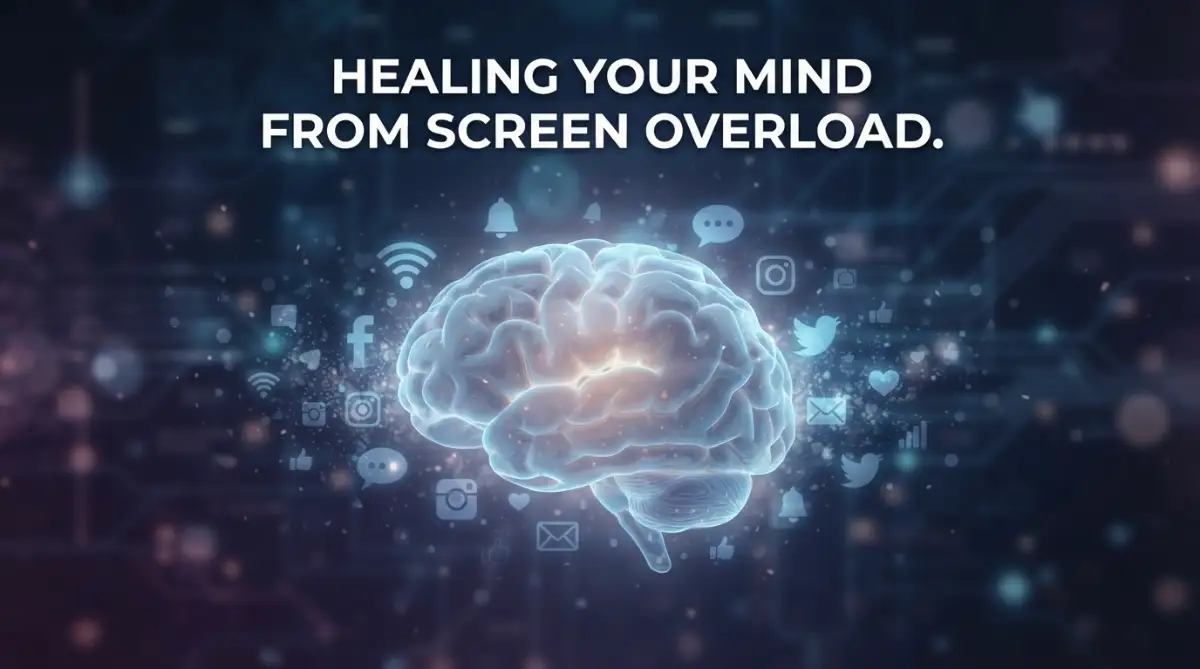
How Your Brain Rewires Itself During a Break
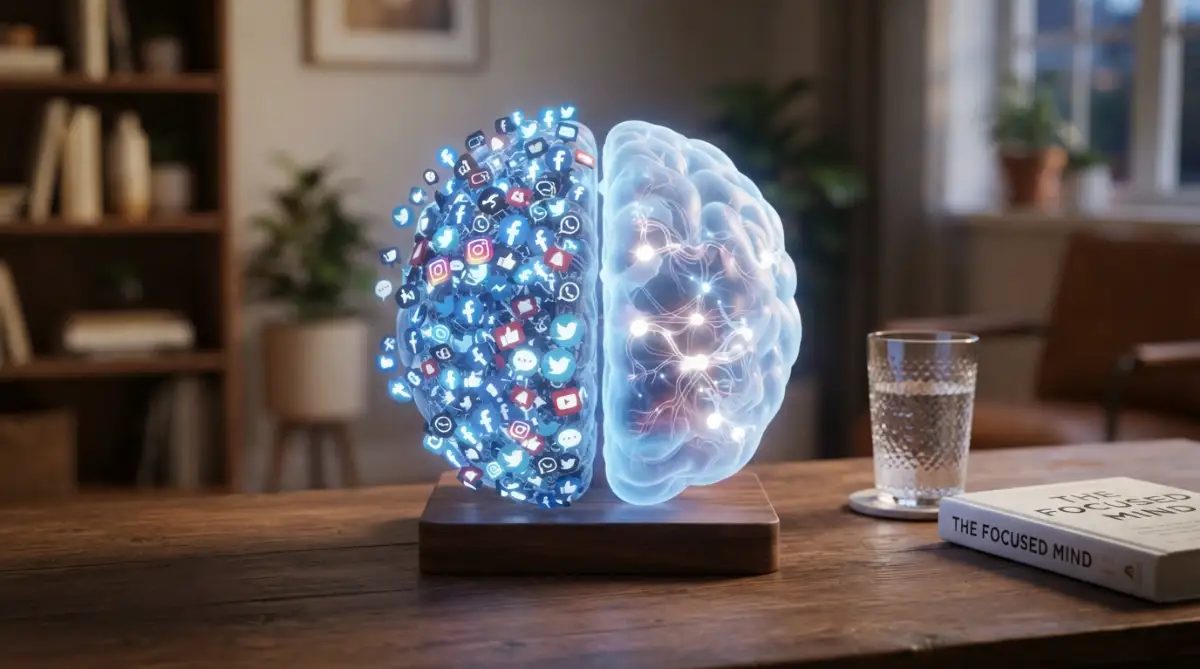
The human brain is incredibly plastic, which means it can change and adapt. When you constantly use high-stimulation apps, your brain adapts to that speed. It expects everything to be fast, colorful, and instant.
When you start a digital detox, your brain initially goes into a state of withdrawal. You might feel irritable or restless. This is because your dopamine receptors are starting to reset.
Scientific studies show that heavy screen use can actually shrink the gray matter in the prefrontal cortex. This is the part of your brain responsible for decision-making and self-control. It is essentially the "adult" in the room of your mind.
By stepping away from the constant pings, you allow this area to strengthen again. You start to regain your "executive function." This means you can choose what to focus on instead of being a slave to your notifications.
It is like clearing a clogged pipe. Once the digital junk is removed, your thoughts start to flow more clearly. You begin to notice things in the physical world that you had completely ignored before.
The Real Connection Between Dopamine and Focus
Dopamine is often called the "reward chemical," but it is actually more about "anticipation." Your brain gets excited about the possibility of a reward. This is why you keep scrolling even when you aren't seeing anything interesting.
When you overstimulate this system, your "baseline" for enjoyment goes up. Normal things like a walk in the park or a deep conversation start to feel boring. You need more and more digital "noise" just to feel okay.
A digital detox helps lower this baseline back to a healthy level. After a few days of reduced screen time, you will find that simple tasks become enjoyable again. Your brain no longer needs a constant firehose of information to stay engaged.
This is the key to deep work and high productivity. When your dopamine system is balanced, you can sit with a difficult task for hours. You don't feel that itchy urge to check your phone every five minutes.
Stop the "Cheap" Dopamine Loop
If you feel restless, it’s because you’ve trained your brain to love "cheap" dopamine (scrolling, likes, notifications). To fix your focus, you need to swap them for "high-effort" rewards:
- Cheap Dopamine: Scrolling through "Reels" or checking "Likes."
- High-Effort Reward: Finishing a 10-page chapter of a book.
- Cheap Dopamine: Refreshing your email inbox for the 5th time.
- High-Effort Reward: Taking a 15-minute walk without headphones.
Restoring this balance is the single most important thing you can do for your career and mental health. It is not about being "anti-tech"; it is about being "pro-brain."
Pro Tip: I found that the hardest part of the day was the "dead time"—like waiting for the microwave or standing in line. Instead of reaching for my phone, I started taking five deep breaths. It felt weird at first, but it trained my brain to handle small moments of "nothingness" without panic.
Practical Steps to Reset Your Cognitive Power
You don't need to move to a cabin in the woods to heal your brain. You can start by creating "sacred spaces" in your home where no devices are allowed. For me, the dining table and the bedroom became phone-free zones.
Start by delaying your first screen check of the day. Try to wait at least thirty minutes after waking up before you look at your phone. This allows your brain to transition from sleep to wakefulness naturally.
Another effective method is to turn off all non-human notifications. If it isn't a message from a real person, you probably don't need a buzz in your pocket. This puts you back in control of when you look at your device.
Replace the digital habit with a physical one. If you usually scroll before bed, try reading a physical book or journaling. The tactile sensation of paper helps signal to your brain that it is time to wind down.
Be patient with yourself during this process. Your brain has been trained for years to crave the screen. It won't unlearn those habits in a single afternoon, but every hour away from the screen is a win.
If you want to see exactly how these digital habits change the physical structure of your brain, you need to watch this expert breakdown.
Understanding the "Digital Fog" and How to Clear It
Your brain has a limited amount of energy each day. When you spend that energy processing thousands of useless images and headlines, you have nothing left for important things. You are essentially running your mental battery to zero on things that don't matter.
Clearing this fog requires a period of "low-input" living. This means intentionally reducing the amount of new information you take in. It gives your brain a chance to process the backlog of thoughts it hasn't had time for.
During a detox, you might find yourself remembering old memories or coming up with new ideas. This is because your brain finally has the "blank space" it needs to be creative. Creativity cannot grow in a crowded mind.
The fog doesn't lift all at once; it happens in stages. First, your sleep improves. Then, your mood stabilizes. Finally, your "sharpness" returns, and you feel like yourself again.
The Role of Sleep in Brain Restoration
You cannot talk about brain function without talking about sleep. Screens emit blue light that tricks your brain into thinking it is still daytime. This stops the production of melatonin, the hormone that helps you fall asleep.
Even if you do fall asleep after scrolling, the quality of that sleep is often poor. Your brain stays in a light, reactive state rather than entering the deep, restorative stages. This is why you wake up feeling like a zombie.
A digital detox is the best "sleep aid" you will ever find. By putting the phone away two hours before bed, you allow your natural sleep cycle to take over. You will fall asleep faster and wake up feeling refreshed.
Deep sleep is when your brain literally "washes" itself of toxins. If you skip this process because of late-night scrolling, those toxins build up. This leads to long-term issues with memory and focus.
Protecting your sleep is the most "high-performance" habit you can develop. It is the foundation of everything else your brain does. No amount of caffeine can replace the healing power of a screen-free night.
Why Social Comparison Is a Brain Drain
Digital detoxing isn't just about the light from the screen; it's about the content. We spend hours looking at the highlight reels of other people's lives. This triggers the "comparison" center of the brain.
This creates a constant feeling of "not enough." Your brain perceives this as a social threat, which triggers stress. You are living in a state of low-grade anxiety because you are constantly measuring yourself against others.
When you step away, this noise stops. You start to focus on your own progress and your own reality. The "cortisol spikes" that come from jealousy and FOMO begin to fade away.
Your brain can finally relax because it no longer feels like it is in a competition. You gain a sense of "mental sovereignty." You are the one deciding what is important, not an algorithm.
This shift in perspective is one of the most powerful benefits of a detox. It changes your emotional baseline from "lack" to "contentment." Your brain functions better when it is at peace.
Rebuilding Your Attention Span Step-by-Step
We have been conditioned to have the attention span of a goldfish. We jump from one thing to another every few seconds. To fix this, we have to "exercise" our attention like a muscle.
Start with "monotasking." This means doing one thing at a time with your full focus. If you are eating, just eat. If you are walking, just walk. It will feel incredibly boring at first, but that is the point.
Try to increase the time you spend on a single task without checking your phone. Start with ten minutes, then move to twenty. You are retraining your brain to stay in one "mental lane."
Using a physical timer can be very helpful. Set it for thirty minutes and commit to not touching your phone until it dings. This creates a "game" that your brain can engage with.
Over time, you will find that you can focus for longer and longer periods. You will regain the ability to do "deep work" that others find impossible. This is a massive competitive advantage in the modern world.
The Physical Changes You Can Actually Feel
It is not just your mind that changes; your body feels it too. Many people report fewer headaches and less eye strain after a digital break. Their neck and shoulder tension often disappears as well.
You might notice that your breathing becomes deeper and more regular. When we scroll, we often hold our breath or take shallow sips of air. This is called "screen apnea," and it keeps us in a stressed state.
By putting the phone down, you naturally adopt a better posture. You look up at the world instead of down at a piece of glass. This physical openness has a direct impact on your confidence and mood.
Your "sensory awareness" also increases. You start to notice the smell of the air, the sound of the birds, and the texture of your food. You are moving from a "virtual" life back into a "sensory" one.
This grounded feeling is essential for mental health. It connects your brain to your body in a way that technology never can. You feel more "solid" and less like a floating head in a digital cloud.
Final Thoughts on Starting Your Journey
The path to a healthier brain starts with a single choice. It is about realizing that your attention is your most valuable asset. If you don't protect it, someone else will sell it.
You don't have to be perfect. There will be days when you fall back into old habits. The goal is "progress," not "perfection." Every minute you reclaim from the screen is a gift to your future self.
Start today by putting your phone in another room for just one hour. Notice how it feels. Notice the urge to check it, and then notice that urge fading away. That is the sound of your brain beginning to heal.
You deserve a mind that is clear, focused, and at peace. You deserve to be the master of your own thoughts. A digital detox is the key that unlocks that door.
Take the leap and see what your brain is truly capable of when it isn't being held back. The results will surprise you, and your mind will thank you for years to come.
Moving Beyond the Basics: Advanced Ways to Reclaim Your Mental Power
Taking a break from your phone is one thing, but truly resetting your brain is another. If you want to see a real change in how you think and feel, you need to go deeper. Most people just put their phone away for an hour and wonder why they don't feel like a genius yet.
One of the best tricks I found was turning my entire phone screen to grayscale. Our brains are naturally attracted to the bright, shiny colors of app icons. By removing the color, you take away the visual "candy" that keeps you coming back. It makes the digital world look boring, which is exactly what your brain needs to start looking at the real world again.
You should also look into how your environment affects your habits. If your phone is the first thing you see on your nightstand, you will grab it. I started charging my phone in a completely different room at night. This simple move helped me fix why I wake up tired every day because my brain wasn't being hit by blue light the moment I opened my eyes.
Another pro-level secret is practicing "sensory grounding" during your tech breaks. When you feel the urge to check a notification, stop and name three things you can hear and three things you can feel. This pulls your brain out of the digital "trance" and back into your physical body. It is a simple way to strengthen your focus and save your mental health from digital overload today without needing any special tools.
Training Your Brain for Long-Term Focus
Your brain is like a muscle that has become weak from too much easy stimulation. To get your edge back, you have to do some "heavy lifting" with your attention. I started doing this by reading long-form articles or books for thirty minutes without stopping. At first, it was painful, and my mind kept wandering to my inbox.
However, after a week, I noticed I could stay on one thought for much longer. This is the secret to getting ahead in your work or studies. When you stop multitasking, you actually allow your brain to finish one task before jumping to another. This leads to much better results and less mental fatigue at the end of the day.
You might also want to try a "dopamine fast" once a month. This means spending a full day without any digital entertainment—no music, no podcasts, and no social media. It sounds scary, but it acts like a hard reset for your brain's reward system. According to a study on dopamine fasting from Harvard Health, the goal is to let your brain settle down so you can enjoy simple things again.
I also learned that the hardware in our pockets is designed to be addictive. Engineers spend thousands of hours making sure you can't put that device down. Learning about the secrets of battery life and phone hardware made me realize how much power these devices have over us. It made me want to take my power back and use my brain for my own goals.
Creating a Sustainable Digital Life

The goal of a digital detox is not to live in a cave forever. It is about building a life where technology serves you, not the other way around. I found that setting "office hours" for my apps was a game-changer. I only check social media at 10 AM and 4 PM, and I never check it outside those times.
This gives my brain a predictable schedule, which lowers anxiety. Your brain hates being on "high alert" all day long, waiting for a ping. When you give it clear boundaries, it can finally relax and do its best work. This is especially helpful for anyone trying to escape the burnout that comes from being an independent creator or freelancer.
You should also try to find a physical hobby that keeps your hands busy. For me, it was cooking or sketching on actual paper. These activities engage your brain in a "3D" way that a flat screen never can. It helps rebuild the neural pathways that get ignored when we spend all day clicking and swiping.

Why Most People Fail at Their First Detox
I used to think that a digital detox meant just turning off my phone for a few hours. I would sit there staring at the wall, feeling miserable and twitchy. After two hours, I would give up and spend three hours scrolling to "make up" for the lost time. This is the most common mistake people make.
You cannot just remove a habit; you have to replace it with something better. If you don't have a plan for what to do with your free time, your brain will scream for the phone. You need a list of "analog" activities ready to go before you even start your detox.
Another huge mistake is trying to go "cold turkey" without telling anyone. Your friends and family will keep messaging you, and you will feel guilty for not replying. Then you check the phone "just for a second" to tell them you are busy, and you get sucked back in. Always let people know you are going offline for a bit so you can relax without feeling bad.
I also see people replacing one screen with another. They put down their phone and then spend six hours watching TV. This doesn't help your brain because it is still receiving high levels of artificial stimulation. A real break means giving your eyes and your mind a rest from all types of glowing boxes.
The Emotional Trap of "Digital Guilt"
When we try to detox, we often feel like we are missing out on something important. This "Fear Of Missing Out" (FOMO) is a powerful emotional trigger that keeps us trapped. I felt this deeply when I first started my journey. I was worried that my friends would forget about me or I would miss a big news story.
The truth is, nothing truly life-changing happens on social media in a few hours. Most of what we see is just noise that clutters our thinking. Once I realized this, the guilt started to fade away. I understood that my mental peace was more important than knowing what someone I barely know had for lunch.
If you don't deal with this emotional side, you will always struggle. You have to be okay with being "unreachable" for a while. It is a form of self-respect to say that your time is yours and not open to the public 24/7. This mindset shift is what makes a detox stick for the long term.
Failing to set these boundaries can lead to a messy life. It can hurt your relationships and even your health. I learned this the hard way when the stress of being "always on" started to mess with my body. I had to learn how to balance my habits to keep my heart and mind in good shape.
Reclaiming Your Mental Freedom
Living a life where you control your phone instead of it controlling you is a superpower. You will notice that you have more time in the day than you ever thought possible. You will feel calmer, sharper, and more present with the people you love.
Your brain will thank you by giving you better ideas and more energy. You won't feel that mid-afternoon slump quite as hard. You will find that you can handle stress much better because your nervous system isn't constantly on edge.
This isn't about being against technology. It's about being in favor of human connection and deep thinking. We are meant to live in the real world, to breathe fresh air, and to have long, uninterrupted thoughts. Technology should just be a tool that helps us do those things better.
The fog will lift, and you will see your life with new eyes. You will realize that the best parts of being alive don't happen behind a screen. They happen in the moments where you are fully awake and fully there.
Common Questions About Brain Health and Technology
Can a digital detox really improve my memory?
Yes, it can. When you stop constantly checking your phone, your brain can focus on moving information from short-term to long-term memory. This process, called "consolidation," is much harder to do when you are constantly being distracted by new notifications.
How long does it take for my brain to reset?
Most people start feeling a difference in about three to five days. However, for your dopamine receptors to fully return to a healthy level, it often takes about two weeks of consistent habit changes. The first two days are always the hardest, so don't give up early!
Will a digital detox help me sleep better?
Absolutely. By avoiding screens before bed, you allow your brain to produce melatonin naturally. This helps you fall into a deeper, more restorative sleep. If you struggle with this, you might want to learn more about the science of blue light and sleep to understand exactly why your phone is keeping you awake.
Is it okay to use my phone for work during a detox?
A "functional detox" is often better than a total one. You can use your phone for essential work tasks but delete all social media and game apps. The goal is to remove the "mindless" usage while keeping the tools you actually need for your life.
My Journey to a Clearer Mind
I used to be a slave to the "ping" of my phone. Every notification felt like a command I had to obey right away. It made me feel small and tired all the time. But once I took the first step to unplug, I felt like I was finally waking up from a long, bad dream.
I want you to know that you can do this too. You don't have to be perfect, and you don't have to do it all at once. Just start by leaving your phone in another room for one hour tonight. I promise that the world won't end, and you might just find a piece of yourself that you thought was lost forever.
Disclaimer: The information provided in this article is for educational purposes only and should not be taken as medical advice. Always consult with a healthcare professional or mental health expert before making significant changes to your lifestyle, especially if you suffer from severe anxiety, depression, or technology addiction. Digital detoxing is a tool for wellness, not a substitute for professional clinical treatment.