The Hidden Cost of the Always-On Mentality
Let me guess: your laptop is open right now, and you probably have at least a dozen tabs competing for your attention. I used to think burning out was just a badge of honor for anyone trying to build a business on their own. But after crashing hard—literally falling asleep on my keyboard one afternoon—I realized that trading my health for a few extra dollars was a terrible deal. You do not have to break yourself to build something great, and today, I want to show you exactly how to get your life back.
I honestly thought this was just the normal price of being an independent business owner. Everyone online told me to grind harder, sleep less, and build my empire while others were resting in their beds.
So, I pushed myself to the absolute limit, believing that every extra hour of work equaled a step closer to financial freedom. But instead of wealth and happiness, I found myself completely burned out and emotionally empty.
My relationships began to suffer, my physical health deteriorated, and my passion for the business I built from scratch completely faded away. I was running a dangerous race with no finish line, fueled entirely by stress, anxiety, and too much caffeine.
You might be feeling that exact same heavy weight on your shoulders right now. So many independent creators and solo founders are silently drowning under the pressure to constantly do more.
We willingly sacrifice our peaceful weekends, miss out on warm family dinners, and convince ourselves that mental peace is a luxury we simply cannot afford right now. It breaks my heart to see brilliant, creative minds crashing under this highly toxic expectation.
Quick Takeaways: What You Will Learn Today
- Why treating rest as a "reward" is quietly ruining your business growth.
- How to set up a hard "Digital Sunset" to finally get your peaceful evenings back.
- The exact mental shift you need to fire bad clients without feeling guilty.
- A simple 90-minute daily focus trick that beats an eight-hour multitasking shift.
Escaping the Grind: Building Systems That Actually Protect Your Energy
When you run your engine on empty for too long, a crash is not just possible—it is completely inevitable. I had to learn this lesson the hard way after my productivity dropped to zero.
Today, I want to share the exact practical shifts that helped me rebuild my work life from the ground up. These are real, actionable changes you can apply to your daily routine today to protect your peace.
Redefining What Real Productivity Looks Like
Most of us confuse being busy with being productive. We think that replying to fifty emails and attending three Zoom meetings means we had a successful day.
In reality, busy work drains your energy without moving the needle on your major business goals. True productivity is about doing the right things, not just doing a lot of things.
When you sit down at your desk, you need to identify the tasks that actually generate income or growth. Everything else is just noise that distracts you from your main objective.
You have to start asking yourself if the task in front of you really requires your immediate attention. Often, we create fake emergencies in our heads because we are addicted to the rush of solving problems.
Myth vs. Reality: The Busy Trap
- The Myth: Replying to emails within five minutes makes you a highly reliable professional.
- The Reality: It just trains people to interrupt you all day long. Give your clients a simple 24-hour response window, and watch your actual daily output double.
The Power of the "Digital Sunset" Rule
One of the most effective ways to break free from continuous work is setting a hard stop to your day. I call this the Digital Sunset, and it completely changed my life.

A Digital Sunset means picking a specific time every evening when all work-related devices are turned off. For me, that time is 6 PM, and nothing can make me open my laptop after that.
Pro Tip: I used to keep my email notifications on because I was terrified of missing an important client message. My biggest realization was that the world does not end if an email sits in my inbox for 12 hours; turning off those notifications gave me my life back.
When you set this boundary, you send a clear signal to your brain that the workday is over. This allows your nervous system to calm down and prepare for a restful night of sleep.
Prioritizing Deep Work Over Shallow Multitasking
Human brains are simply not designed to handle five different tasks at the exact same time. Every time you switch from writing a proposal to checking social media, you lose a massive amount of focus.
Science shows that it takes an average of 23 minutes to fully regain your concentration after a single distraction. Think about how much time you are wasting every day just bouncing between tabs.
Instead of trying to do everything at once, start blocking out 90-minute sessions of deep, uninterrupted work. Put your phone in another room and focus on one single task until it is done.
Why Deep Work Changes the Game for Solo Founders:
When you practice deep work, you can accomplish more in three hours than most people do in an entire eight-hour workday. This is the secret to getting your evenings back without losing your income.
[Watch This Before You Plan Your Next Workday]
If you are constantly struggling to stay focused and want a clear visual guide on how to structure your daily tasks without feeling overwhelmed, you absolutely need to watch this short breakdown.
The Truth About Rest and Business Growth
Hustle culture teaches us that rest is a reward you only get after you have achieved massive success. This is a highly dangerous lie that ruins perfectly good businesses.
Rest is not a reward for hard work; it is the fundamental requirement for doing good work in the first place. You cannot have brilliant ideas or solve complex problems when your brain is exhausted.
Think of an athlete training for a major competition. They do not train 24 hours a day; they know that their muscles actually grow during the recovery period.
Your brain works the exact same way when it comes to creativity and strategic thinking. Taking a walk, reading a book, or just staring at the ceiling are productive activities because they recharge your main tool—your mind.
Learning to Say No Without Guilt
As solo entrepreneurs, we often suffer from a severe case of people-pleasing. We say yes to difficult clients, bad projects, and unpaid favors because we fear missing out on opportunities.
Every time you say yes to something that does not align with your goals, you are saying no to your own peace. You are stealing time away from your rest, your family, or your most important projects.
It takes practice, but learning to say a polite, firm "no" is a superpower in the business world. You will instantly notice a massive reduction in your daily stress levels.
Protecting your time makes you more valuable in the eyes of your clients. They respect professionals who have clear boundaries and respect their own schedules.
How to Audit Your Daily Workflow
To make a real change, you have to honestly look at where your time is going right now. Spend just three days writing down exactly what you do every hour of your workday.
You will likely be shocked to see how much time vanishes into mindless scrolling, formatting documents, or answering repetitive questions. Once you see the data, you can start cutting out the waste.
Apply the famous 80/20 rule to your daily task list. Identify the 20 percent of your actions that bring in 80 percent of your results, and aggressively focus your energy right there.
Automating the Boring Stuff
You are the CEO, the marketing manager, the customer service rep, and the accountant of your solo business. Doing all of this manually is a guaranteed ticket to an early burnout.
Today, there are thousands of inexpensive tools designed to handle the repetitive parts of your work. You can set up systems that automatically send invoices, book appointments, and publish your content.
Setting up these systems takes a few hours upfront, but they will save you hundreds of hours over the next year. You are essentially cloning yourself through smart technology.
When software handles the boring administration tasks, you get to focus on being creative and growing your vision. This is how you scale a business without scaling your stress levels.
The Myth of the Overnight Success
Social media platforms are flooded with stories of people making millions while sitting on a beach with a laptop. These highlight reels create a massive sense of inadequacy for hardworking people.
What they never show you are the years of quiet, consistent, and highly boring work that went into building that lifestyle. Comparing your realistic journey to their highly edited highlight reel will only make you miserable.
You do not need to rush the process or destroy your health to get to the top of the mountain. Walking at a steady, sustainable pace guarantees you will actually enjoy the view when you finally arrive.
Finding Community in a Lonely Journey
Working entirely by yourself from a home office is an incredibly isolating experience. When things go wrong, you have no one sitting at the next desk to vent to.
This isolation makes the pressure of running a business feel ten times heavier than it actually is. You start to believe that you are the only one struggling to find clients or manage cash flow.
It is so important to connect with other independent business owners who truly understand the daily challenges you face. Join online forums, attend local meetups, or just have a virtual coffee with a peer.
Sharing your struggles with someone who completely understands is a massive relief for your mental health. You will quickly realize that your problems are completely normal and highly solvable.
Committing to the Long Game
Building a business that supports your life takes time, patience, and a lot of self-forgiveness. There will be days when you fall back into old habits and work too late.
Do not beat yourself up when that happens. The goal is not perfect balance every single day; the goal is an overall trend toward a healthier, more sustainable way of living.
Your business is meant to be a vehicle that gives you freedom, not a prison that keeps you trapped at a desk. You hold the keys to that prison, and you can decide to walk out at any time.
Start today by picking just one small habit from this guide. Maybe you will set a strict end time for your workday, or maybe you will finally turn off those stressful email notifications.
My 48-Hour Energy Fix Checklist:
[ ] Turn off all non-essential social media and email notifications on your phone right now.
[ ] Pick a strict "Log Off" time for tonight (Mine is 6:00 PM, no exceptions).
[ ] Write down tomorrow's top three tasks on a sticky note before closing your laptop.
Small, consistent changes compound over time into massive life transformations. Protect your energy fiercely, because a healthy, happy founder is the most valuable asset any business can ever have.High-Level Strategies to Protect Your Energy Daily
Now that we understand how damaging the constant grind can actually be, we need to talk about long-term protection. You cannot just take one weekend off and expect your burnout to magically disappear forever.
Real recovery requires building permanent systems that protect your mental energy every single day. I want to share a few highly effective concepts that completely transformed the way I look at my workday.
These are not standard time-management tricks you find in a basic productivity book. These are survival strategies for independent creators who want to stay in business for a very long time.
The Magic of the Minimum Viable Day
As an independent business owner, your energy levels will naturally fluctuate from day to day. Some mornings you will wake up ready to conquer the world, and other days you will barely want to look at a screen.
This is exactly why you need to design what I call a "Minimum Viable Day" routine. This is a highly stripped-down version of your workday that only includes the absolute bare minimum tasks required to keep the business running.
When you feel sick, overwhelmed, or emotionally drained, you simply activate this emergency routine. You answer only the most urgent messages, check your bank accounts, and then you step away from the desk without feeling bad about it.
Having this safety net means you never drop the ball on important client work, but you also give your body the rest it desperately needs. It is the ultimate tool for sustainable growth.
Shifting to Asynchronous Communication
One of the biggest energy drainers for a solo founder is the expectation of instant replies. We live in a society that demands immediate answers to every text, email, or direct message.
You need to actively train your clients and customers to respect your response times. The best way to do this is by adopting asynchronous communication habits across your entire business.
This simply means that you do not expect immediate answers from others, and they should not expect them from you. You can easily set up an automated email reply stating that you only check your inbox twice a day at specific times.
According to strategies for setting professional boundaries outlined by Harvard Business Review, creating predictable communication windows drastically reduces daily anxiety. When people know exactly when you will reply, they stop bothering you with follow-up messages.
Managing Your Hidden Cognitive Load
Think of your brain exactly like a smartphone or a computer. Every time you open a new app, it drains a little bit of the battery and uses up your available memory.
In your business, every unfinished task, unread email, and unmade decision is like an open app running in the background. This invisible weight is called cognitive load, and it silently drains your energy even when you are supposed to be resting.
To clear this mental RAM, you need to get everything out of your head and onto paper. End every single workday by writing down your specific tasks for the next morning.
When you force yourself to physically write things down, your brain finally feels safe enough to stop thinking about them. This simple habit will dramatically improve the quality of your sleep tonight.
Why You Need to Fire Bad Clients
This might sound terrifying if you are just starting out, but not all money is good money. Some clients will demand all of your time, complain about your prices, and ruin your mental peace.
Working with toxic clients drains so much energy that you actually lose the capacity to serve your good clients properly. It is a massive invisible leak in your business model.
When you finally get the courage to let a difficult client go, you create empty space in your schedule. That space can now be filled with a better client who respects your time and pays you what you are actually worth.
 The Silent Traps That Pull You Back Into Burnout
Even when you know all the right things to do, it is incredibly easy to fall back into old habits. The pressure to succeed is always whispering in our ears, telling us we are not doing enough.
I have watched so many brilliant solo founders build great habits, only to destroy them completely during a busy month. Let us look at the most dangerous traps you need to actively avoid on this journey.
The Illusion of Fake Work
When we are afraid to do the hard things like making sales calls or launching a new product, we often hide behind fake work. Fake work feels productive, but it does absolutely nothing to grow your bank account.
Spending three hours redesigning your perfectly fine logo or organizing your computer files is not moving your business forward. It is just a highly creative form of procrastination.
You have to be brutally honest with yourself about where your daily time is going. If you spend your whole day doing things that avoid rejection or failure, you will stay stuck exactly where you are.
Ignoring Your Body’s Check-Engine Lights
Your body is incredibly smart and will always warn you before a massive breakdown happens. The problem is that most solo entrepreneurs completely ignore these early warning signs.
Tight shoulders, regular headaches, random eye twitches, and an inability to sleep through the night are all physical symptoms of severe stress. These are your internal check-engine lights flashing brightly on the dashboard.
If you ignore these warnings and keep driving, your engine will eventually explode. According to research on occupational burnout from the World Health Organization, ignoring these chronic stress signs can lead to severe long-term health complications.
Take a day off the exact moment you notice these signs appearing. Losing one day of work is always better than losing an entire month because you ended up in a hospital bed.
Falling for the "Just One More Thing" Lie
This is perhaps the most common trap for anyone who works from a home office. You tell yourself that you will just send one more quick email before dinner, or just finish one more graphic.
Before you know it, two hours have passed, your dinner is completely cold, and your family is highly disappointed. The boundary between your personal life and your business completely disappears.
This habit is incredibly dangerous because it teaches your brain that work never actually stops. You need to respect your closing time just like you would respect a flight departure time—when it is time to go, you drop everything and go.
Mismanaging Your Business Finances
Financial stress is usually the main driver behind the constant need to hustle. When you do not know exactly how much money is coming in or going out, you naturally panic and try to work harder.
Many independent creators completely mix their personal money with their business money, creating a massive accounting nightmare. This kind of chaos makes you feel like you are constantly broke, even when you are earning a good income.
Taking the time to understand your numbers gives you a massive sense of control and peace. Often, financial anxiety comes from bad management, which is the hidden financial trap that destroys 90% of new startups very early on.

The Guilt of Watching Others Succeed
Social media algorithms are specifically designed to show you people who are doing better than you. When you see a competitor posting about a massive income month, it is completely normal to feel a sudden wave of panic.
This panic makes you want to abandon your sustainable habits and start grinding endlessly again. You start believing that they know a secret shortcut that you somehow missed.
You have to remind yourself that people only post their absolute best moments online. You are comparing your messy behind-the-scenes reality to their highly polished highlight reel, which is an unfair game you will never win.
Your Blueprint for a Healthier Business Life
You now have a completely different understanding of what it actually takes to run a solo business. You do not need to destroy your health, sacrifice your weekends, or lose your mind to build something great.
True success is building a reliable income stream that still allows you to attend your child's soccer game or read a book in peace. A business that requires you to be miserable is simply a poorly designed business.
The changes we discussed today will not happen overnight, and you will definitely make mistakes along the way. Be gentle with yourself as you unlearn the highly toxic habits that society forced upon you.
A Simple Action Plan for Tomorrow Morning
When you sit down at your desk tomorrow, I want you to try something completely different. Before you even open your email inbox, write down the single most important task for the day.
Put your phone on silent, close all unnecessary browser tabs, and just stop multitasking entirely for the first 90 minutes. Focus all of your mental energy on that one specific goal.
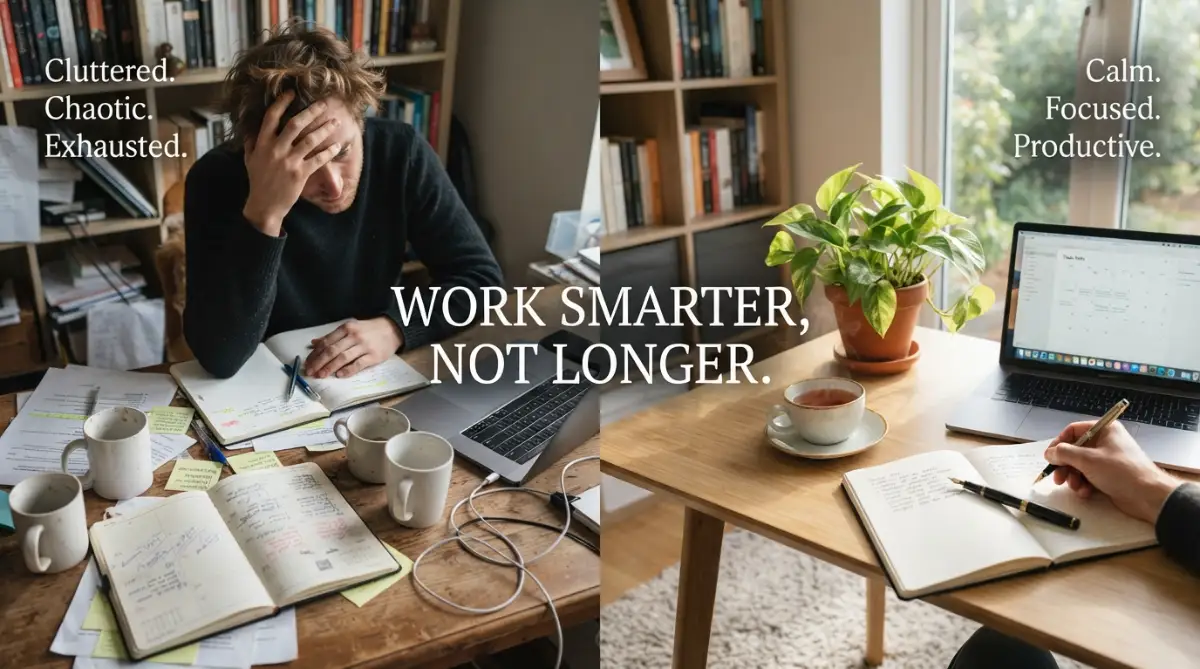
If you just do this one simple thing, you will instantly feel more accomplished by noon than you usually do by midnight. You will finally understand that working smarter is not just a catchy slogan; it is a highly practical reality.
If you find yourself worrying about funding your ideas without working yourself to the bone, look for smart financial tools instead of just trading more hours for dollars. Sometimes, securing things like easy collateral free business loans can give you the breathing room to hire help and step back.
It is time to take your life back from the endless grind. I promise you that when you start prioritizing your peace of mind, your business revenue will naturally follow because you will finally be thinking clearly. My own life changed the exact day I decided that my mental health was my most valuable business asset, and I am so excited for you to experience that exact same freedom.
Common Questions About Sustainable Solo Entrepreneurship
Is it actually possible to scale a business without overworking?
Yes, it is entirely possible if you focus heavily on building good systems instead of just working longer hours. Scaling successfully means automating repetitive tasks, increasing your prices, and occasionally outsourcing work so you do not have to carry the whole burden alone.
How many hours should a solo founder really work each day?
There is no magic number, but most studies show that human beings can only handle about four to five hours of deep, highly focused work a day. If you spend those few hours strictly on money-generating tasks, you can easily finish your workday by the early afternoon.
Why do I feel incredibly guilty when I try to rest?
You feel guilty because society has programmed you to tie your personal self-worth directly to your daily productivity. Breaking this mindset takes time, but you have to actively remind yourself that resting is a required business strategy, not a sign of laziness.
How can I stop constantly thinking about my business at night?
The best way to turn off your brain is by doing a strict brain-dump exercise at the end of your workday. Write down all your pending tasks on a piece of paper and leave it on your desk; this tells your brain that the information is safe and it can finally relax.
Will my clients get angry if I do not reply immediately?
Most professional clients will highly respect your boundaries as long as you clearly communicate them upfront. Setting an automated email reply stating your regular response times prevents anxiety for both you and your customers.
Disclaimer: The information provided in this blog post is for educational and informational purposes only and should not be considered as professional mental health or financial advice. Every business situation is highly unique, and you should always consult with certified professionals before making major changes to your business structure, finances, or health routines.