
The Breaking Point: How Trying to Do Everything Ruined My Grades
Picture this: you are staring at your math book, your phone is going off every two seconds, and a random YouTube video is playing in the background. You think you are getting tons of work done, right? I used to think the exact same thing, until I completely bombed a midterm exam. That was my wake-up call, and today, I want to show you exactly how to fix your focus before your grades suffer too.
My brain felt like a web browser with fifty tabs open, and none of them were responding. I thought I was being highly productive, but my report card told a completely different story.
The reality hit me incredibly hard when I completely blanked out during a major midterm exam. I stared at the paper, and despite spending hours "studying" the night before, my mind was entirely empty.
That was the exact moment I realized my shiny, busy study habits were actively working against me. I was not actually learning anything; I was just exhausting my brain.
Every day, millions of students fall into this exact same trap. We try to juggle math homework, social media messages, and a favorite TV show all at the exact same time.
This constant juggling act leaves us feeling completely drained, anxious, and deeply frustrated. You might sit at your desk for four hours, but when you stand up, you realize you only completed about twenty minutes of actual, meaningful work.
The worst part is the constant guilt that follows you around. Because you never fully finish one single task, your brain never gets to relax, completely stealing your mental peace.
Quick Summary: What You Will Learn Today
- The Myth of Multitasking: Why doing three things at once actually ruins your memory.
- Attention Residue Explained: How a simple text message secretly drains your brainpower.
- Block Scheduling: My simple method to finish your homework in half the time.
- Digital Defense: How to lock away distractions without relying purely on willpower.
Why Your Brain Hates Task-Switching (The Science Behind Focus)
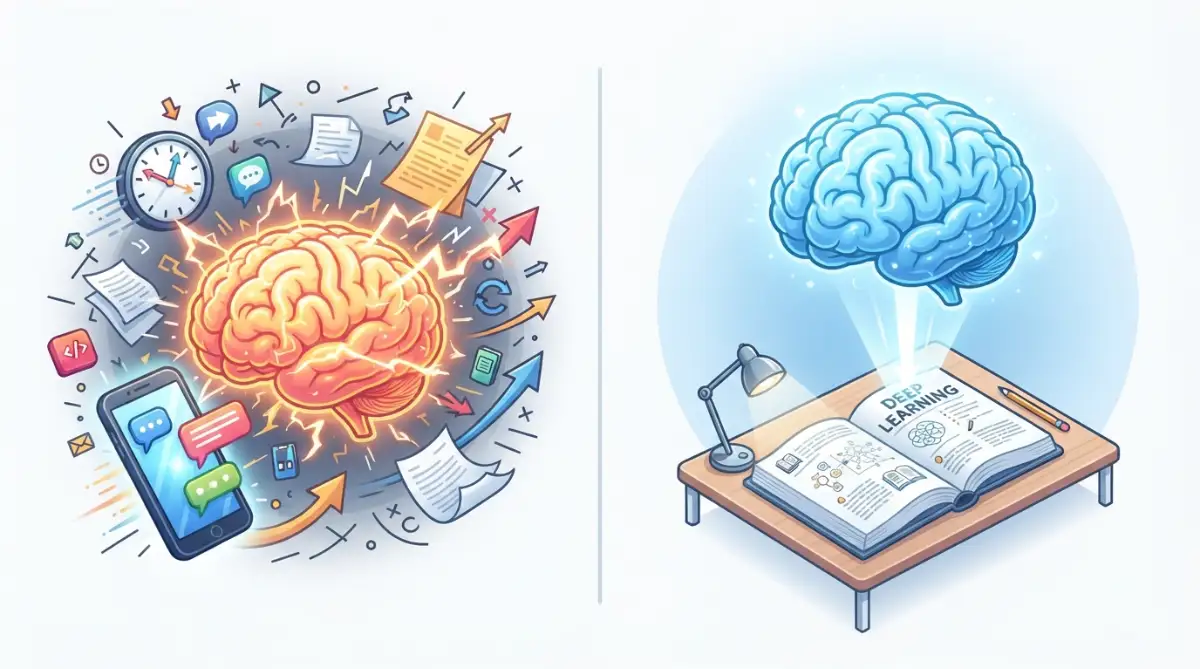
Most people believe that multitasking means doing multiple things at the exact same time. Science tells us a very different story.
Our brains are physically incapable of processing two complex tasks simultaneously. Instead, your brain rapidly switches back and forth between tasks.
Think of it like driving a car and constantly shifting gears from drive to reverse every five seconds. Eventually, the engine is going to break down from the stress.
Every single time you look away from your textbook to check a text message, your brain has to completely refocus. It takes an average of twenty-three minutes to get back to your original level of deep concentration.
The Hidden Time-Loss Reality Check
To put this into perspective, look at how much time you are actually throwing away during a standard study session:
| What You Do | How Long It Takes | The Hidden Cost |
| --- | --- | --- |
| Replying to a group text | 30 Seconds | 23 Minutes of lost focus |
| Checking social media | 3 Minutes | Attention residue lasts up to 30 minutes |
| Flipping between two subjects | 5 Minutes | Memory retention drops by 40% |
Data perspective based on general cognitive attention studies.
The Hidden Cost of Attention Residue
When you jump from biology to math and then to a YouTube video, a small part of your attention stays stuck on the previous task. Psychologists call this "attention residue."
This means when you finally look back at your math problem, you are only using a fraction of your actual brainpower. The rest of your mind is still thinking about the funny video you just watched.
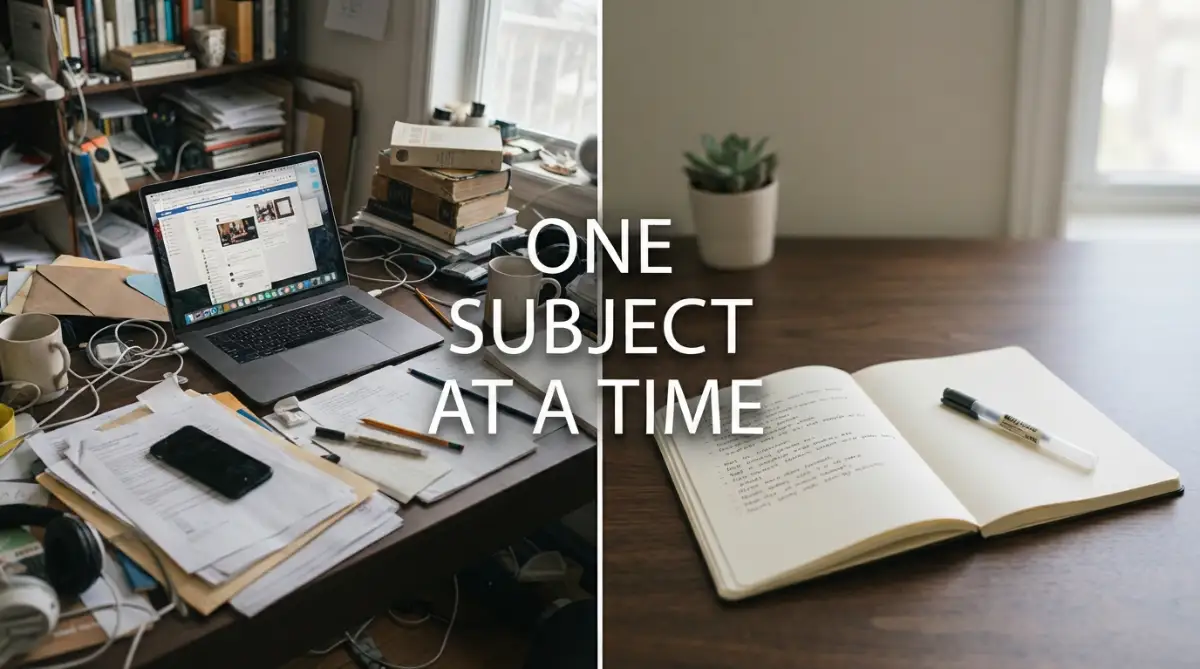
.By simply changing how you approach your subjects, you can save hours of wasted time and frustration.
Pro Tip: I remember trying to study physics while watching a documentary for another class, thinking I was saving lots of time. It took me three hours to finish a simple assignment, and I ended up failing the quiz the next day. Now, I put my phone in another room and focus on one single topic for fifty minutes straight, which completely changed my academic life.
Rewiring Your Mind for Single-Subject Success
To actually absorb complex information, your brain needs time to settle into a rhythm. When you focus on just one single subject, you give your memory a chance to build strong connections.
Think about pouring water into a bottle through a small funnel. If you pour a steady, single stream, the bottle fills up perfectly.
Watch This Before Your Next Study Session! If you truly want to understand how simple focus can completely transform your memory and save you hours of studying, check out this brilliant breakdown.
Practical Steps to Master One Subject at a Time
Now that we know the problem, we need a clear and practical way to fix it. You do not need to completely change your entire life overnight.
Small, intentional changes to your daily study routine will make a massive difference in your grades. Let us look at how you can easily implement the single-subject method today.
First, you need to completely clear your workspace of anything unrelated to your current task. If you are studying history, your math book should not even be in the same room.
Visual clutter strongly contributes to mental clutter. Seeing another textbook out of the corner of your eye reminds your brain of unfinished work, which instantly creates stress.
The Block Scheduling Method
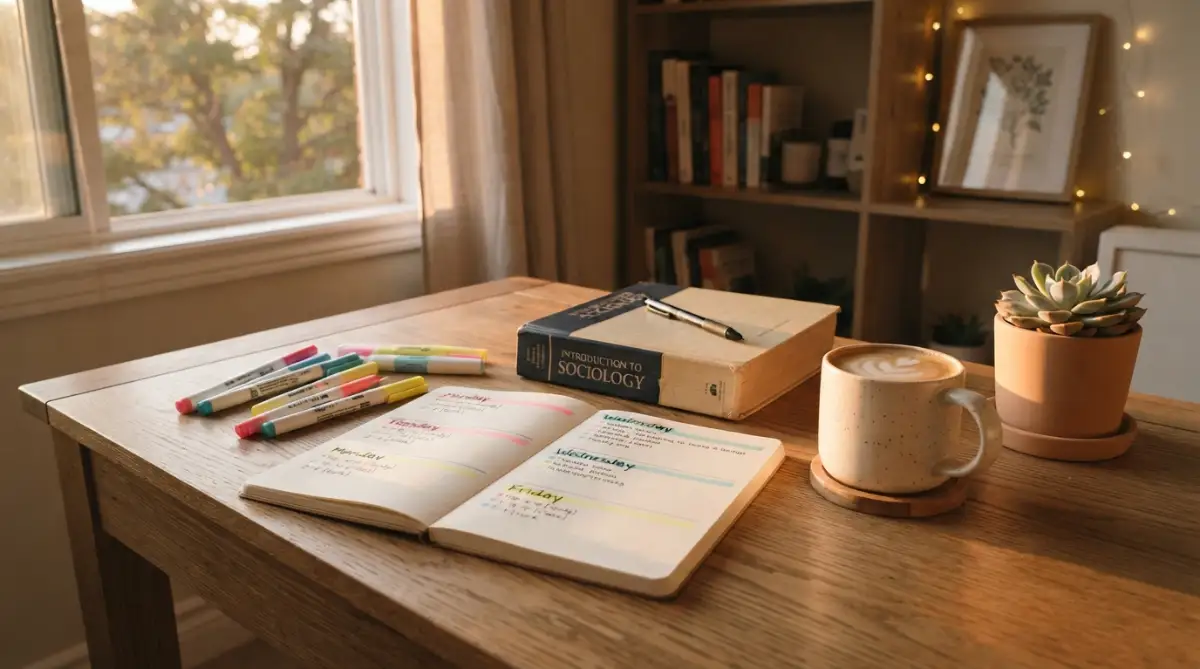
Instead of mixing your subjects throughout the evening, dedicate specific blocks of time to just one topic.
For example, dedicate from 6 PM to 7:30 PM entirely to chemistry. Do not even think about your English essay during this time block.
Give yourself permission to completely ignore everything else. This simple mental permission instantly removes the heavy weight of anxiety from your shoulders.
When you know you have a dedicated time for English later, you can fully relax and give chemistry your best effort.
Myth vs Reality: The Productivity Illusion
Let us break down some common lies we tell ourselves about studying.
The Myth: Listening to an educational podcast while writing an essay helps you learn twice as fast.
The Reality: Your brain is just ignoring the podcast to focus on the writing, or your writing quality is dropping heavily.
The Myth: Keeping multiple browser tabs open saves time when researching.
The Reality: Too many tabs cause decision fatigue, and you end up endlessly clicking between them without reading anything deeply.
Comparing the Two Study Methods
To make this even clearer, let us look at exactly how single-tasking beats multitasking in a real-world scenario.
Dealing with Digital Distractions
Your smartphone is the biggest enemy of single-subject focus. App developers spend millions of dollars designing notifications to steal your attention.
My Personal 3-Step Phone Lockdown Routine:
- The Drawer Rule: I physically place my phone in a different room. Out of sight means out of mind.
- Grayscale Mode: I turn my phone screen entirely black and white. It instantly makes scrolling super boring.
- The "Do Not Disturb" Star: I only allow calls from my parents to come through. Everyone else can wait an hour.
You cannot rely on simple willpower to ignore a buzzing phone. You have to physically remove the distraction from your environment.
Put your phone inside a drawer in another room while you complete your study block. If you need your phone for an alarm, buy a cheap digital clock instead.
If you must use your computer for reading, install a website blocker that completely stops you from opening social media for at least an hour.
Building Up Your Attention Muscle
If you have been a heavy multitasker for years, focusing on one thing will feel slightly uncomfortable at first.
Your brain will beg for a quick hit of dopamine from a social media scroll. This is completely normal and expected.
Think of your attention span exactly like a muscle at the gym. You cannot walk in on the first day and lift a massive weight without struggling.
Start by setting a timer for just twenty minutes of pure, unbroken focus on one single subject. When the timer goes off, give yourself a five-minute break to walk around.
Over the next few weeks, slowly increase that timer to thirty minutes, then forty-five, and eventually an hour.
The Emotional Relief of True Focus
One of the best things about studying a single subject is the massive boost in your confidence.
When you spend an hour deeply focused on a math chapter, you actually finish it. You get to close the book and cross the task off your list.
That feeling of finality creates a wonderful sense of achievement. You no longer go to bed feeling like you left fifty things half-finished.
Your sleep quality will drastically improve because your brain is not racing with thoughts about incomplete assignments. You will wake up feeling refreshed and genuinely ready for a new day.
Real-Life Application: Planning Your Evening
Let us imagine a highly effective evening routine using this exact method. You arrive home at 5 PM with homework in three different subjects.
Instead of opening all three bags and panicking, you take a deep breath and pick just the hardest subject first.
You set up your desk with only the items needed for that specific subject. You tell your family you are doing a deep work session and close your door.
For the next hour, you are fully immersed in that single topic. You understand the core concepts better because your mind is perfectly quiet.
By 6:30 PM, the hardest task of the day is completely finished. You take a relaxing walk, eat a snack, and then easily tackle the lighter subjects one by one.
By breaking your work down into single, focused sessions, you actually finish your entire workload hours earlier than you normally would.
This gives you your evenings back. You finally have time to read a book for fun, watch a movie, or just hang out with your family without any guilt.
This simple shift from chaotic multitasking to calm, single-subject learning will naturally push your grades higher while making your daily life so much happier.
Beyond the Basics: Expert Hacks for Deep Academic Focus
Now that you understand exactly why juggling multiple classes is ruining your grades, we need to talk about long-term success. Anyone can focus on a single textbook for one afternoon.
The real magic happens when you turn this single-subject focus into an automatic daily habit. This requires a few advanced strategies that go far beyond simply turning off your phone.
First, you must master the concept of environmental design. Your brain is a highly visual organ, and it deeply associates specific locations with specific activities.
If you study, eat, and watch movies in the exact same bed, your mind gets completely confused when you open a textbook. You need to create a dedicated space that tells your brain it is time to work on one specific thing.
This does not mean you need an expensive home office. You simply need to designate one specific corner of your kitchen table or desk purely for deep learning.
When you sit in that specific chair, you only do academic work. When you want to check social media or take a break, you must physically stand up and walk to a different room.
The Magic of the Brain Dump Notepad
One of the biggest struggles of studying a single topic is dealing with intrusive thoughts. You might be completely focused on a chemistry formula when you suddenly remember you need to email your history teacher.
Most students immediately stop studying, open their email, and completely ruin their concentration. To stop this from happening, keep a blank piece of paper right next to your textbook.
Whenever a random task or thought pops into your head, quickly write it down on this paper and immediately go back to studying. This simple "brain dump" method safely stores your thoughts without breaking your focus.
Your mind can completely relax because it knows you will not forget that important email. Once your study session is entirely finished, you can comfortably look at that piece of paper and handle those random tasks.
If you want to read more about how cognitive overload affects your learning, the American Psychological Association shares great insights on managing mental capacity effectively.
Managing the Discomfort of Difficult Concepts
When you force yourself to stick to one topic, you will eventually hit a very difficult chapter that makes you feel deeply frustrated. Your natural instinct will be to escape that bad feeling by opening an easier assignment.
This habit is incredibly destructive. Running away from hard problems is one of those 7 toxic study habits that destroy your memory and leave you feeling completely helpless before a big exam.
Instead of switching subjects when things get tough, you need to learn how to sit with the discomfort. Give yourself permission to struggle with a difficult concept for at least ten minutes without giving up.
Oftentimes, if you just push through that initial wall of confusion, your brain will suddenly connect the dots. You will feel a massive wave of confidence that you simply cannot get from taking the easy way out.
If you are working on a massive writing assignment, having a clear plan will stop you from getting overwhelmed. I highly recommend reviewing the only college essay structure you actually need so you can focus entirely on your words instead of stressing about the formatting.

The Hidden Traps: Why Most Students Fail at Single-Subject Learning
Even with the best intentions, changing your study habits is genuinely difficult. Your brain is completely addicted to the quick dopamine hits that come from constantly switching tasks.
Because of this addiction, many students fall right back into their old, chaotic routines within a few days. Let us look at the most dangerous traps that will try to pull you back into the multitasking nightmare.
Understanding these common mistakes before they happen is the absolute best way to protect your new study habits.
Trap 1: The "Just One Quick Check" Illusion
This is the most common way students ruin a perfect study session. You are twenty minutes into a deep reading assignment, and your phone softly vibrates from across the room.
You tell yourself that you will just glance at the notification for two seconds and get right back to work. But that two-second glance completely shatters your concentration.
According to Stanford University researchers who study media multitasking, people who constantly expose themselves to multiple streams of electronic information struggle to pay attention or recall information accurately.
Once you look at that text message, your mind starts thinking about how to reply. Even when you look back at your textbook, a large part of your mental energy is still stuck inside that text conversation.
Never trust the lie of a quick check. If you are in a single-subject block, the rest of the world simply has to wait until your timer rings.
Trap 2: Over-Scheduling Your Daily Energy
When students finally discover the power of focused learning, they often get overly excited. They try to schedule six hours of intense, single-subject study blocks in a single day.
This is a terrible idea that will quickly lead to severe academic burnout. Your brain physically cannot handle that much deep concentration without proper rest.
Treating your mental energy poorly is just like rushing into a financial disaster. If you do not plan carefully, you will crash hard, much like the stress of figuring out how to get unsecured loans with bad credit safely when you are completely out of options.
Instead of trying to be perfect, aim for just two or three highly focused study blocks per day. Quality is always much more powerful than quantity.
If you spend two hours completely locked into one subject, you will learn far more than someone who sits at a library desk for eight hours while quietly distracted.
Trap 3: Ignoring the Details in the Syllabus
Another massive mistake is diving into a single subject without actually knowing what you need to learn. Some students will happily read a biology textbook for three hours, only to realize they studied the entirely wrong chapter.
Before you start your focused timer, you must take five minutes to plan your exact goal. What specific problem are you trying to solve right now?
Skipping these small instructions is exactly like ignoring the secret fine print in travel policies. You might feel perfectly confident right up until the exact moment everything goes completely wrong.
Take a moment to clearly write down your target for the session. For example, write down, "I will completely finish reading chapter four and answer the five practice questions at the end."
Having a very specific finish line gives your brain a clear target. This makes the entire learning process feel much more like an exciting game rather than a boring chore.
Trap 4: Forgetting to Rest Your Mind Properly
When your study timer finally goes off, you need to step completely away from your work. Many students make the mistake of using their break to start a different type of work.
They close their math book and immediately start replying to heavy, stressful emails. This does not give your brain the actual rest it deeply needs to process new information.
True memory building actually happens when you step away from the material. The National Institutes of Health explains that good sleep and proper rest are absolutely required to physically strengthen the new pathways in your brain.
During your breaks, do something that requires absolutely zero mental effort. Stare out of a window, stretch your legs, get a glass of cold water, or just close your eyes for a few minutes.
If you want to absorb knowledge naturally without exhausting yourself, you should look at ditch the books a real-life guide to mastering a second language. The principles of total immersion apply beautifully to any complex subject you want to master.
Your Blueprint for a Calmer, Smarter Academic Life
We have covered exactly why your brain completely rejects the chaos of juggling too many assignments. We have also explored practical ways to protect your attention from the modern world.
The heavy anxiety that sits on your chest every time you look at your backpack is entirely optional. You do not have to live in a constant state of academic panic anymore.
By simply choosing to honor one subject at a time, you are giving yourself the greatest gift possible: mental clarity. You are finally allowing your brain to do what it naturally wants to do, which is to deeply understand the world around it.
Your Action Plan for Tomorrow Morning
You do not need to wait for a new semester or a Monday to start making this change. You can completely transform your routine starting tomorrow morning.
Look at your current assignment list and pick the absolute hardest task you have. Schedule a strict forty-five-minute block to tackle it head-on, completely alone in a quiet room.
Do not try to fix your entire life in one single day. Managing heavy academic pressure requires patience and a solid strategy, much like understanding how do mortgage rates work a simple breakdown for new buyers. You take it one small step at a time until the big picture makes perfect sense.
When things inevitably go wrong and you have a bad day, do not beat yourself up. Document what distracted you, learn from the mistake, and simply try again the next day.
Fixing your mistakes requires honest reflection, exactly like documenting evidence after a minor car accident. You gather the facts, see where you went wrong, and move forward with a much better plan.
A Final Word of Encouragement
I personally spent years feeling like I was never quite smart enough to keep up with my peers, simply because my study habits were completely broken. The day I finally decided to put my phone away and focus on just one single page at a time, my entire life changed for the better. My grades improved drastically, but more importantly, I finally got my free time and my happiness back. You absolutely have the power to take control of your time, and I truly believe you can start making that change today.
Real Questions Students Ask About Studying One Subject at a Time
What should I do if I get completely bored studying one topic?
If you feel incredibly bored, your brain is likely just craving easy entertainment. Instead of switching subjects, try changing how you study the current material. Stand up, try explaining the concept out loud to an empty room, or draw a quick diagram to make the learning process active again.
How long should a single study block actually be?
Most students find incredible success using blocks of forty-five to fifty minutes of pure work, followed by a ten-minute break. This specific timing works perfectly because it gives you enough space to dive deep, but stops you from getting completely exhausted.
Can I listen to music while focusing on my main subject?
Listening to music with lyrics forces your brain to process language, which heavily disrupts reading and writing tasks. If you genuinely need background noise to block out distractions, use instrumental music, soft rain sounds, or white noise at a very low volume.
What if I have three major exams on the exact same day?
When you have multiple heavy deadlines, divide your afternoon into entirely separate study sessions. Spend the morning fully dedicated to the first subject, take a long break for lunch, and spend the afternoon on the second subject. Never mix the books together on the same desk.
Does this single-focus method work for creative subjects like art or writing?
Yes, it works exceptionally well for creative tasks. True creativity requires deep immersion, so putting away your phone and focusing entirely on a single canvas or essay allows your best ideas to finally surface without constant interruption.
Disclaimer: The information provided in this blog post is for educational and informational purposes only and should not be considered professional academic or psychological advice. Study habits and learning capabilities vary widely from person to person. Always consult with a qualified academic advisor, teacher, or educational professional regarding specific concerns about your academic performance or mental health. We do not guarantee specific grades or academic results from applying the methods discussed in this article.