
Staring at the Blank Screen: The Silent Anxiety of Applications
You are staring at a blank Google Doc, watching that little black line blink on the screen. Your brain feels totally empty, and the pressure of cramming your entire life into 650 words is making your palms sweat. I totally get it. Let's fix that right now, because getting into your dream school does not require curing a rare disease or climbing Mount Everest—it just takes a solid game plan and a bit of honesty.
This is the exact nightmare almost every high school student faces when application season rolls around.
You sit down to write, and suddenly your mind goes blank. You ask yourself, "What makes me different from the thousands of other students applying?" This single thought creates a massive amount of mental pressure.
Parents watch their kids burn out, feeling completely helpless. The tension in the house becomes unbearable. Dinner table conversations turn into stressful arguments about word counts, tone, and whether a certain topic sounds "impressive" enough.
It destroys your mental peace when you know you are smart, but you just cannot figure out how to put your personality onto a piece of paper. The truth is, the system makes us believe we need to cure a rare disease or climb a massive mountain to get noticed.
Sneak Peek: How to Beat the Blank Page
- Stop trying to sound like a 50-year-old professor; just use your real teenage voice.
- Ditch the big dictionary words—simple language tells a much better story.
- Find a tiny, weird detail about your everyday life and build your essay around it.
- Always answer the "So what?" question to prove you learned something valuable.
Breaking Down the Illusion: What Colleges Actually Want
Before we map out your essay, we need to completely shift how you think about this whole process. Most students fail before they even type the first word because they believe in common application myths.
Let us clear the air right now. Admissions officers are just normal people sitting in a room, reading hundreds of essays a day. They are tired, they are drinking too much coffee, and they are begging to read something that sounds like a real human being.
They do not want a robot. They do not want a human dictionary. They want to know the real you.
Here is a quick reality check on what actually matters when you submit your story.
Once you accept these facts, the heavy weight on your chest will start to disappear. You do not need to invent a fake persona. You just need a solid framework to organize your thoughts.
Quick Check: Myth vs. Fact in College Essays
- Myth: You need a sob story to win over the admissions team.
- Fact: A funny story about burning your family's Thanksgiving turkey can be just as powerful if it shows how you handle panic.
- Myth: Your essay should summarize your top grades.
- Fact: They already have your transcript! Use this space to show them your personality, not your math scores.
The Core Concept: Finding Your Hidden Narrative
Every great piece of writing starts with a strong foundation. You cannot build a house on sand, and you cannot write a good essay without a clear central message.
Think of this message as your "theme." If an admissions officer finishes reading your paper, what is the single sentence you want them to remember about you?

Maybe you want them to think, "This is the student who never gives up, even when things get messy." Or perhaps, "This is the creative thinker who finds weird solutions to everyday problems."
To find this theme, you need to look at the small, seemingly boring parts of your life. Do you spend every Saturday morning cooking pancakes with your little brother? Do you have a weird obsession with fixing broken toasters?

These small details hold the key to your character. For example, writing about fixing old toasters can show patience, problem-solving skills, and a deep curiosity for how things work. That is way more interesting than reading another generic essay about winning a soccer game.
Grab a notebook and set a timer for ten minutes. Just write down random things you love doing, weird hobbies, or small moments that made you smile recently. Do not judge your ideas yet.
Crafting the Hook: How to Grab Attention Instantly
Now that you have an idea, you need to invite the reader inside your world. The first few sentences of your essay are your absolute best chance to grab an exhausted admissions officer by the collar and make them pay attention.
We call this the hook. The hook is not a fancy quote from a dead philosopher. The hook is not a summary of the universe.
The best hook places the reader directly in the middle of the action. It makes them ask a question and forces them to read the next sentence to find the answer.
Let me give you a quick comparison.
A Bad Opening: "Ever since I was a little child, I have always loved science and learning about biology."
Why it fails: It is boring, generic, and tells us nothing new. Thousands of students will write this exact sentence.
A Great Opening: "I was covered in blue slime, standing in my mom's kitchen, wondering if the ceiling would ever be the same again."
Why it works: It creates instant curiosity. Why is there blue slime? What happened to the ceiling? The reader has to keep going to find out.
Notice how the good opening uses simple words. It paints a picture. You can actually see the blue slime and the messy kitchen.
To create your own hook, think about the most exciting, weird, or challenging moment of your chosen story. Start exactly there. Do not give any background information yet. Drop us right into the mess.
Building the Bridge: Connecting the Hook to Your Theme
You cannot just leave your reader hanging in a messy kitchen. Once you have their attention, you have to smoothly transition into the main point of your story.
This transition is the bridge. It connects the action of the hook to the deeper meaning of your essay.
If we use the blue slime example, the next few sentences need to explain what is happening and why it matters.
You might write: "That afternoon, my attempt to create a homemade lava lamp failed miserably. But as I scrubbed the sticky mess off the tiles, I realized something important about my approach to experiments."
Boom. Right there, you have connected a funny story to a deeper realization about learning and experimenting. You are showing them that you are curious, a bit messy, but willing to clean up your own mistakes and learn from them.
The bridge is where your story starts to make sense. It tells the admissions officer, "Yes, this story is entertaining, but there is a real purpose behind it."
Make sure your bridge clearly introduces your core theme. By the end of the first paragraph, the reader should have a good idea of what personal trait you are about to explore.
The Body Paragraphs: The Art of Showing Over Telling
Everyone tells you to "show, don't tell." But what does that actually mean when you sit down to write?
"Telling" is just giving the reader facts. "I am a very responsible person."
"Showing" is giving the reader an experience so they realize you are responsible on their own. "Every morning at 5:00 AM, I walk through the snow to feed my neighbor's rescue dogs before school."
You never used the word "responsible," but the reader automatically knows you are. The body of your essay should be packed with these specific, visual details.
Before moving forward, check out this incredible visual breakdown of how to map your paragraphs perfectly:
Watch How to Outline Your Thoughts Without Losing Your Mind!
When writing your body paragraphs, break your story down into small, manageable scenes. Do not try to cover five years of your life in one essay.
Instead, focus on a single afternoon, a specific conversation, or a single project. Zoom in on the details.
What did the room smell like? What were you thinking in that exact moment? What did you physically do to overcome the obstacle?
If your story is about learning to play the guitar, do not just say it was hard. Describe the thick calluses on your fingers. Describe the terrible, out-of-tune sounds you made for the first three weeks.
These physical details make your story feel real. They prove to the reader that you actually experienced this struggle and worked through it.
I actually struggled with this a lot when I first started writing my own drafts. I kept trying to list every single good thing I had ever done. My pro tip for you: take your rough draft and literally cross out any sentence that sounds like a resume bullet point. If a sentence just brags about an award, remove it and replace it with a sentence about how you felt while working for that award.
Structuring the Growth: The "Aha!" Moment
A strong college essay is always a story of transformation. You must be a slightly different person at the end of the essay than you were at the beginning.
This change does not have to be massive. You do not need to achieve enlightenment. You just need to show a shift in your perspective.
We call this the "Aha!" moment. It is the turning point in your narrative.
Think back to the body paragraphs. You have described a struggle or an interesting situation. Now, you need to show how that situation changed the way you think.
Let us go back to the toaster example. Maybe you spent three weeks trying to fix a broken toaster, and you finally realized you were missing a tiny, inexpensive spring.
Your "Aha!" moment could be the realization that complex problems often have incredibly simple solutions, but they require extreme patience to find.
When you write this part, focus heavily on your internal thoughts. The admissions officer wants to see your brain working. They want to know how you process failure and frustration.
Do not rush this section. Spend a full paragraph explaining your thought process.
Share your doubts. Share your confusion. Honesty here is your biggest weapon.
When you admit that you were wrong or confused, you show maturity. Colleges love students who are mature enough to admit their flaws and learn from them.
The Climax: Proving Your New Perspective
Now that you have had your realization, you need to prove that it actually stuck with you. You cannot just say you learned a lesson; you have to show how it applies to your life right now.
This is where many students drop the ball. They have a great story, a nice realization, and then the essay just abruptly stops.
You need a paragraph that brings the reader back to the present day. Show them how this new perspective changes your daily actions.
If your realization was about patience from fixing the toaster, show how that patience helps you today.
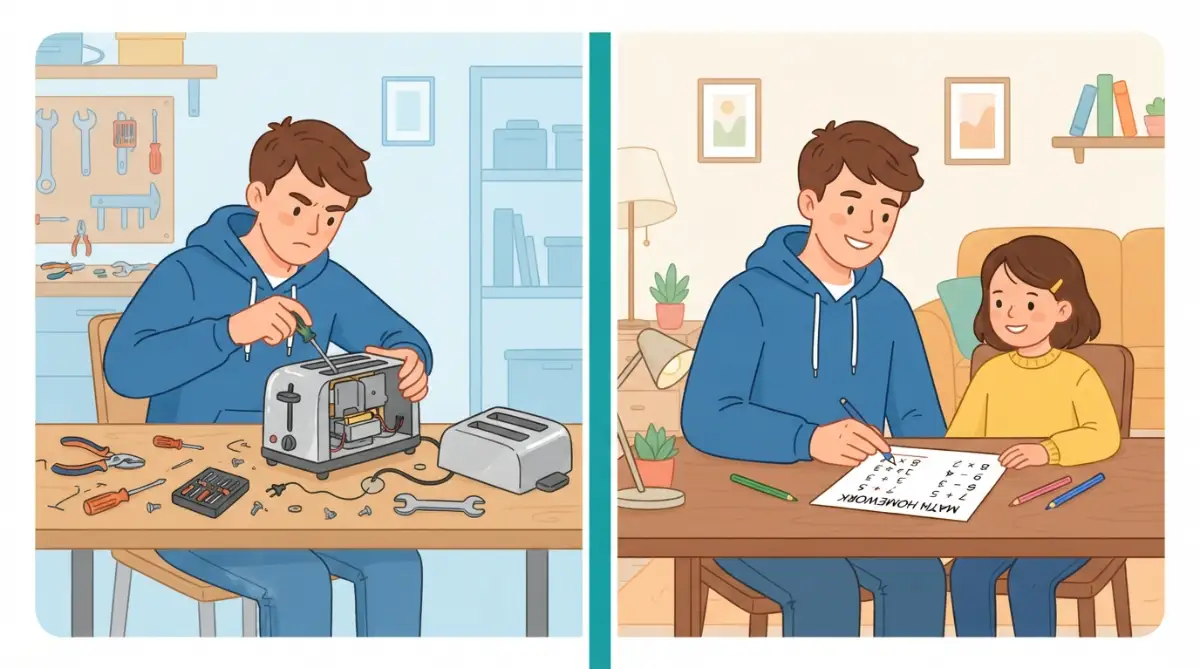
Maybe you now approach your difficult calculus homework with a calmer mindset. Maybe you are more patient when teaching your younger sister how to read.
By connecting your past lesson to your current behavior, you prove that your growth is real and lasting.
This section builds massive trust with the reader. It tells them that if they accept you onto their campus, you will bring this mature, balanced mindset into their classrooms and dormitories.
You are painting a picture of who you will be as a college student. You want them to imagine you sitting in a seminar, using this exact perspective to contribute to a class discussion.
Keep your sentences punchy here. You are driving your main point home.
You want the reader nodding their head in agreement as they read these lines.
Crafting the Conclusion: The Lasting Impression
The end of your essay is just as critical as the beginning. However, you should completely forget everything your high school English teacher taught you about conclusions.
Do not summarize your essay. Do not restate your thesis.
If the reader just spent five minutes reading your story, they do not need a summary of what they just read. That is insulting to their intelligence and wastes valuable word count.
Instead, your conclusion should look forward. It should leave the reader with a sense of excitement about your future.
The best way to do this is to tie your ending back to your opening hook. This creates a satisfying, full-circle moment for the reader.
If we started with the messy kitchen and the blue slime, we want to bring that image back in a new, mature way.
You could write something like: "I still make messes. My desk is currently covered in wires and half-finished projects. But now, instead of worrying about the clean-up, I look forward to what I might discover in the chaos."
This ending is short, confident, and highly memorable. It leaves a positive feeling in the reader's mind.
When they put your application down, they will not remember every single word you wrote.
But they will absolutely remember how your writing made them feel.
Your goal is to make them feel inspired, intrigued, and eager to meet you in person.
Editing with a Ruthless Eye: The Final Polish
Writing the first draft is only half the battle. The real magic happens during the editing phase.
Most students edit by just running a spell-check and fixing commas. That is not enough for an outstanding essay.
You need to edit for rhythm, tone, and clarity.
Read your essay out loud. I mean it. Stand up in your room, close the door, and read it to a wall.
If you stumble over a sentence, the admissions officer will stumble over it too. Rewrite it until it flows perfectly.
Look for weak verbs. If you use the word "was" or "went" too many times, replace them with stronger action words.
Instead of saying "I went to the store," say "I sprinted to the store." It adds instant energy to your writing.
Need help swapping out those boring words? Keep this quick chart handy while you edit:
| Weak Word (Delete These) | Strong Word (Use These Instead) |
| :--- | :--- |
| I made a robot... | I engineered a robot... |
| The project was hard... | The project challenged me to... |
| I got good at playing... | I mastered playing... |
| I was the leader of... | I directed the... |
Remove filler words like "really," "very," and "just." They weaken your message and take up space.
Finally, show your draft to only one or two trusted people. If you ask ten different people for advice, you will get ten different opinions.
Your essay will turn into a Frankenstein monster of different voices, and it will lose your unique personality.
Trust your own voice. This is your story, your life, and your future.
Structure is simply a tool to help your natural brilliance shine through the noise.
Take a deep breath, open a blank document, and start with the messiest, most honest memory you have. You've got this.Pushing Past the Basics: Insider Secrets for a Standout Draft
Once you have your messy first draft on paper, you might feel a huge sense of relief. You should absolutely celebrate that small victory. Getting the initial words out of your head is usually the hardest part of the entire process.
However, your first draft is just raw material. To make your story truly unforgettable, you have to refine it using a few expert-level strategies.
I like to compare this process to shaping a block of clay. At first, you just slap the wet clay onto the table. Now, you have to carefully carve it until it actually looks like something beautiful.
One of the most powerful tools you can use during this phase is the "So What?" test. Every time you write a paragraph, ask yourself, "So what? Why does this matter?"
If you write a beautiful sentence about how much you love playing the piano, stop and ask the question. If your answer is just "because music sounds nice," you need to dig deeper.
Maybe you love the piano because it taught you how to break large problems into tiny, manageable pieces. Always connect your actions to your personal growth.
This is exactly what top-tier universities are looking for when they review applications. According to the guidelines from the National Association for College Admission Counseling, admissions teams are heavily focused on a student's character and emotional maturity, not just their hobbies.
Another secret weapon is changing your environment when you review your work. If you stare at the same computer screen in the same bedroom for days, your brain gets lazy.
You will literally stop seeing your own typos. To fix this, you must break the pattern.
Print your essay on actual paper and take it outside. Sit on your porch or go to a local coffee shop.
When you change your physical location, your brain wakes up. Just like breaking toxic study habits that destroy your memory, you have to break bad writing routines to stay sharp.
The "Read Aloud" Trick Nobody Actually Does
Teachers always tell you to read your work out loud, but almost nobody actually does it. We feel silly talking to ourselves in an empty room.
But I am telling you right now, this is the single best editing trick in existence. When you read silently, your brain automatically skips over clunky words and missing commas.
When you read out loud, your tongue will trip over the bad sentences. If you run out of breath while reading a sentence, it is too long.
If a paragraph sounds like a robot wrote it, you will hear the awkwardness instantly. Your goal is to sound like a smart, thoughtful teenager having a serious conversation over a cup of coffee.
For excellent tips on keeping your sentences active and punchy, I always recommend checking out resources like the Purdue Online Writing Lab. They offer amazing, simple rules for cutting out weak verbs.
Managing the Feedback Loop Without Losing Your Mind
Eventually, you will need to show your draft to someone else. This is where things can get extremely messy if you are not careful.
If you give your essay to your mom, your dad, your English teacher, and your best friend, you will get completely different advice from all of them. One person will tell you it is too funny, while another will say it is too serious.
This creates massive confusion. You end up trying to please everyone, and your unique voice completely disappears.
My biggest piece of advice here is to pick a maximum of two trusted readers. Choose one person who knows you deeply, like a close family member or friend.
Then, choose one person who knows good writing, like a favorite teacher or a counselor. When you ask them for feedback, do not just ask, "Is this good?"
Instead, ask them specific questions. "Does this sound like me?" or "Where did you get bored while reading?"
This gives them clear boundaries. It stops them from trying to rewrite your entire story in their own words.
Remember, much like the challenging process of mastering a second language, finding your true written voice takes daily practice and extreme patience.

The Hidden Traps That Instantly Ruin Good Applications
Even the smartest students fall into a few very common traps when they feel pressured. When the deadline is approaching, panic sets in, and people start making weird decisions.
I want to walk you through these major pitfalls so you can spot them before they completely sink your chances. These are the silent killers of a great personal statement.
Trap 1: The Thesaurus Monster
There is a huge myth that using big, complicated words makes you sound smarter. Students will highlight a perfectly good word like "use" and right-click to find a synonym like "utilize" or "employ."
Suddenly, their essay is filled with words they have never actually spoken in real life. I once read a draft where a student wrote, "I perambulated towards the educational facility."
He just meant, "I walked to school." When an admissions officer reads something like that, they immediately roll their eyes.
It feels completely fake. Institutions like Harvard College Admissions publicly state that authenticity is heavily favored over complex vocabulary.
Write exactly how you speak on your best day. Simple, clear language is always more powerful than confusing jargon.
Trap 2: Starting with a Famous Quote
I cannot tell you how many drafts start with a quote from Albert Einstein or Mahatma Gandhi. It is incredibly common, and it is a massive waste of space.
The admissions committee does not want to accept Albert Einstein into their freshman class. They want to accept you.
When you start with someone else's words, you are hiding your own voice. You are giving away the most valuable real estate in your essay—the opening sentence.
Never hide behind the words of a famous historical figure. Trust that your own thoughts and your own messy experiences are interesting enough to stand on their own.
Trap 3: The Unresolved Trauma Dump
This is a very sensitive topic, but it is incredibly important to discuss. Many students believe they have to write about the absolute worst thing that has ever happened to them.
They write about terrible grief, illnesses, or family struggles. Sharing these things is totally fine, but you have to be careful about the structure.
The mistake is spending 90% of the word count describing the pain, and only 10% describing the recovery. An essay that only focuses on trauma leaves the reader feeling sad and worried.
Your goal is to show resilience. According to psychological insights from the American Psychological Association, true resilience is shown by how we adapt and move forward after a crisis.
If you choose to write about a hardship, describe the challenge briefly. Then, spend the majority of your essay explaining how you grew, healed, and changed your perspective.
Trap 4: The Resume Rehash
Your application already includes a dedicated section for your grades, your test scores, and your extracurricular activities. The admissions officer has already read that list.
Do not use your essay to simply repeat those achievements in paragraph form. Saying "I am the president of the debate club, captain of the soccer team, and a volunteer at the shelter" is incredibly boring.
It lacks any real emotion or depth. Instead of telling them everything you did, focus heavily on the specific details of one single event.
Think about how careful you have to be when documenting evidence after a minor car accident. You have to note the time, the weather, the exact damage, and the conversations.
You need that same level of hyper-focused detail in your essay. Zoom in on one single moment and extract the meaning from it.
Your Game Plan for Tomorrow Morning
You do not have to fix every single part of your application tonight. Great writing happens in small, consistent bursts of energy.
The secret to success is simply showing up and trying, even when the words feel clunky. You are entirely capable of writing something that makes an admissions officer stop and smile.
A Quick Action Plan to Keep You Moving
To make things incredibly simple, here is a quick "Do and Don't" list you can use right now. Tape this to your computer screen if you need a reminder.
Do This:
- Start your story right in the middle of an interesting action.
- Use specific physical details to show your emotions (sweaty palms, loud noises).
- Admit your mistakes and show how they completely changed your thinking.
- Read every single draft out loud to catch awkward sentences.
Don't Do This:
- Do not use big vocabulary words if you don't use them in real life.
- Do not summarize your entire high school resume.
- Do not ask five different people to edit your paper at the same time.
- Do not write a generic summary at the very end of your story.
Your unique perspective is highly valuable. No one else has lived your exact life, which means no one else can write your exact story.
Whenever I feel stuck on a blank page, I just remind myself that the first draft is only for my eyes. You have permission to write a terrible first draft. Just get the ideas out, and trust that the editing process will clean up the mess later.
Burning Questions About Nailing Your Personal Statement
How long should my draft actually be?
Most standard application platforms have a strict limit of 650 words. However, your very first draft should easily be 800 or 900 words long. It is always much easier to cut down a long story than to add padding to a short, boring one.
Can I use humor in my application?
Yes, absolutely, but you have to use it naturally. If you are a naturally funny person, let your quirky humor shine through your daily observations. Just avoid treating your essay like a stand-up comedy routine; the humor should support the story, not distract from it.
What if I don't have a tragic or dramatic story to tell?
This is completely fine and actually a huge advantage. Admissions teams love reading about ordinary moments, like trying to bake a cake or learning to ride a skateboard. The magic is never in the topic itself; the magic is entirely in how you reflect on the experience.
Is it okay to write about common topics like sports injuries?
You can write about a sports injury, but you must find a totally unique angle. Instead of the standard "I worked hard in physical therapy and won the big game," focus on an unusual lesson. Maybe sitting on the bench taught you how to analyze human behavior or be a better listener.
Should I use AI tools to check my grammar?
Using basic spell-check tools is completely fine and highly recommended to catch silly typos. However, never let an AI program rewrite your sentences or generate your ideas. Admissions officers read thousands of essays, and they can instantly spot the robotic, lifeless tone of an artificially generated story.
Disclaimer: The information provided in this article is for educational and informational purposes only. College admissions policies and application requirements frequently change. Always verify specific essay prompts, word counts, and submission guidelines directly with the universities you are applying to or consult with a certified academic counselor before submitting your final application.