

Why Traditional Methods Fail Us Completely
Let’s be honest, staring at a massive grammar book feels like a punishment. You try to memorize hundreds of words, but the second you try talking to an actual person, your brain completely freezes. I used to think I was just bad at languages until I realized the traditional way of studying is completely broken. Here is how I changed my daily habits to pick up a new language naturally, without ever feeling like I was back in school.
Most people feel completely crushed when trying to pick up a new language. We start with incredibly high hopes, buying expensive courses and filling our shelves with heavy study materials.
But after a few weeks, the excitement fades away. The endless memorization turns into a painful chore that we naturally want to avoid.
We already have busy lives filled with work, family responsibilities, and endless stress. Adding a rigid study schedule on top of that just feels like a massive burden.
This endless cycle of starting, struggling, and giving up completely destroys our mental peace. We start doubting our own intelligence, wondering why we cannot remember simple phrases.
The Fast Track: What You Will Learn Today
- Ditch the Textbooks: Why forcing yourself to memorize words actually hurts your fluency.
- Change Your Environment: Simple digital tweaks (like your phone settings) that force your brain to adapt.
- The Shadowing Technique: How to mimic movie characters to nail the natural rhythm of the language.
- Invisible Practice: Turning grocery shopping and daily chores into active learning sessions without spending extra time.
Turning Your Everyday Life Into a Learning Playground
You do not need to pause your life to study a new language. The secret is to weave the learning process directly into things you are already doing every single day.
Think of it like adding spices to a meal. You are not changing the entire dish; you are just changing the flavor. By slightly adjusting your daily habits, your brain starts absorbing new words automatically.
Let me walk you through some completely weird but highly effective methods that you can start using today. These steps will naturally rewire your brain to think differently without feeling like you are back in a classroom.
The Power of the Morning Inner Monologue
When you wake up, your brain is fresh and highly receptive to new information. This is the absolute best time to practice the "Inner Monologue" technique.
Instead of listening to the morning news, try talking to yourself in your target language while you brush your teeth or make coffee. You do not have to speak out loud if you feel shy.

Just form the thoughts in your head. For example, think "I am pouring the hot water now," or "I need to find my clean blue shirt."
Pro Tip: I used to try translating perfectly complex thoughts early in the morning, which just made my head hurt and caused me to quit. My biggest realization was that focusing on toddler-level sentences first—like naming the objects I was touching—built my confidence much faster.
When you narrate your own life, you immediately realize which everyday words you actually do not know. You might know how to say "economy" from a textbook, but do you know how to say "spatula" or "toothpaste"?
My Reality Check: Textbook Vocabulary vs. Real Life Needs
Here is a quick look at what I was forcing myself to learn versus what I actually needed to survive my morning routine.
This method forces you to learn words that have actual value in your daily life. It creates a deeply personal connection to the vocabulary.
Digitally Changing Your Environment
We spend a massive portion of our day looking at screens. Why not make those screens work in your favor?
Go into your phone settings right now and change the system language to the one you want to learn. At first, it will feel extremely confusing. You might accidentally click the wrong button a few times.

But within just three days, your brain will adapt. You will naturally learn words for "settings," "messages," "delete," and "search" purely through muscle memory.
You can do the same thing with your social media accounts. The goal here is to make the foreign language a completely normal, unavoidable part of your existence.
Transforming Your Entertainment Habits
Most people think watching foreign movies with subtitles is enough to become fluent. That is a massive myth.
Passive listening rarely leads to active speaking skills. If you want to see real progress, you have to try a technique called "Shadowing."
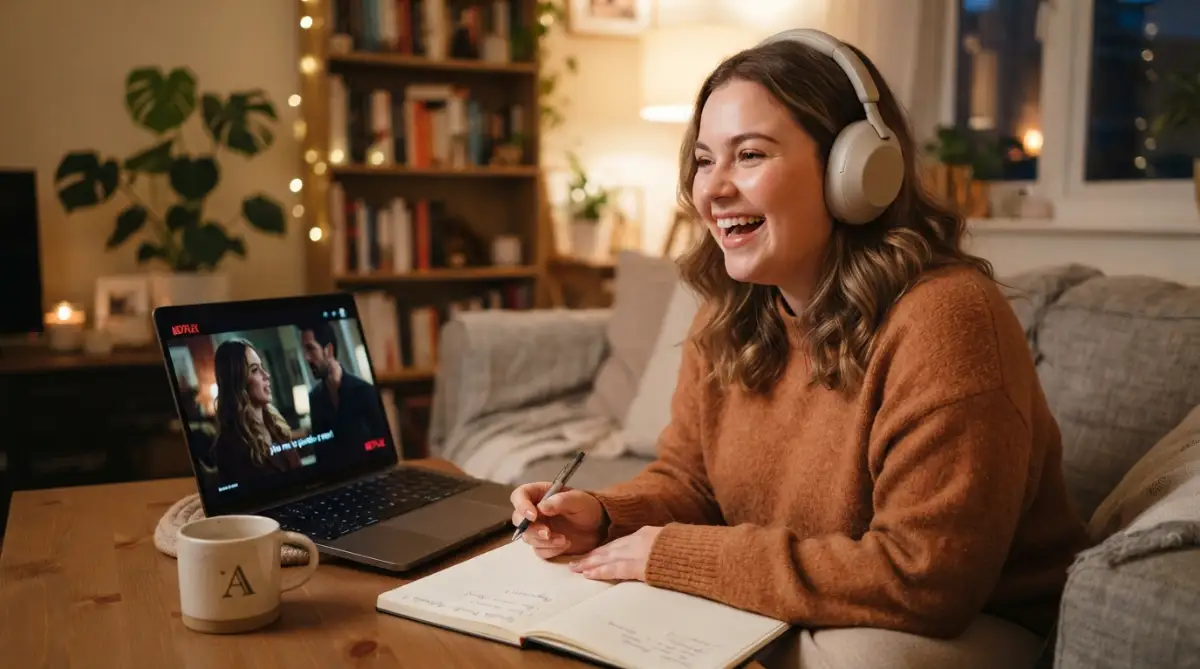
Shadowing means you pause the movie or podcast and try to repeat the exact sentence out loud, matching the actor’s tone and emotion. It is like singing along to your favorite song, but with regular conversations.
Watch This Quick Demonstration:
If you want to see exactly how native speakers use this exact shadowing method to sound incredibly natural, watch this brief demonstration right now.
When you shadow characters in a movie, you are not just learning words. You are learning the natural rhythm, the pauses, and the actual melody of the language.
You learn how native speakers sound when they are angry, extremely happy, or just casually joking around. Textbooks simply cannot teach you that emotional connection.
The House Sticky Note Strategy
This is an old trick, but we are going to modify it to make it even better. Do not just write the name of the object on the sticky note.
Instead of putting a note on the door that just says "Door," write an action phrase like "Open the door" or "Lock the door before leaving."
Stick these notes in places you look at every single day. Put one on the bathroom mirror, one on the refrigerator handle, and one on your computer monitor.
Why Active Phrasing Works Better Than Single Words
When you learn isolated words, your brain struggles to connect them in real conversations. It is like having a box of car parts but not knowing how to build the engine.
By writing short action phrases on your sticky notes, you are learning grammar and vocabulary at the exact same time. You start understanding how verbs and nouns naturally fit together.
Every time you open the fridge, you read the action phrase. Before you know it, you will not even need the note anymore because the phrase is permanently locked in your memory.
Myth vs Reality in Language Acquisition
Let’s clear up some common misunderstandings that hold people back from reaching fluency.
Myth: You must have perfect grammar before you start speaking to native speakers.
Reality: Native speakers make grammar mistakes every single day. They care far more about understanding your message than checking your sentence structure.
Myth: You need to study for at least three hours a day to see any real progress.
Reality: Practicing for just fifteen focused minutes a day builds much stronger long-term memory than cramming for three hours once a week. Consistency always beats intensity.
Myth: Adults simply cannot learn a second language as easily as young children do.
Reality: Adults actually have a huge advantage because we understand complex concepts and can use logic to find patterns in languages. We just get blocked by our fear of making mistakes.
The Power of Imaginary Arguments
Have you ever practiced an argument in your head while taking a shower? We all do it.
The next time you catch yourself having an imaginary debate, try switching to your target language. It sounds completely silly, but it is incredibly effective for building quick thinking skills.
When you argue or explain a passionate topic to an imaginary person, your brain works overtime to find the right descriptive words. It forces you to think on your feet without the pressure of a real human judging you.
If you get stuck and cannot find a word, simply describe what you mean using simpler words. This exact skill is what makes you a fluent, adaptable speaker in real-life situations.
Replacing Your Daily Information Intake
Think about how you consume information right now. You probably read the news, look up recipes, or watch tech reviews on YouTube in your native language.
Starting today, change your search habits. If you want to learn how to cook a new chicken recipe, search for that recipe in your target language.
Read the ingredients and watch the native chef explain the cooking steps. Because you already understand the context of cooking, your brain will easily guess what the new words mean.
Building A Realistic Learning Comparison
To make this super clear, let us look at the massive difference between the old way of doing things and this new lifestyle approach.
Notice how the lifestyle routine removes all the heavy pressure. You are simply living your normal, everyday life with a slight twist.
Engaging With Your Pets or Plants
If you feel too nervous to speak with native speakers right now, talk to your pets. Dogs and cats make fantastic language partners because they are excellent listeners and they never correct your grammar.
Tell your dog about your day at work using the target language. Explain why you are tired or what you are going to eat for dinner.
If you do not have pets, talk to your houseplants while you water them. The goal is simply to get your mouth muscles used to making foreign sounds.
Speaking a new language requires physical muscle memory in your jaw and tongue. The more you talk out loud, even to a plant, the easier those sounds become to produce naturally.
Shopping Lists as a Secret Weapon
Your weekly trip to the grocery store is a hidden goldmine for language practice. Next time you write down your shopping list, completely ban your native tongue.

Write down apples, milk, bread, and chicken in the new language. When you are walking through the store aisles, look at your list and say the items quietly to yourself as you put them in your cart.
If you cannot remember the word for "garlic" while writing the list, look it up. Because you physically go to the store and pick up the garlic an hour later, your brain creates a strong physical memory attached to that new word.
Why Embracing Mistakes is Your Biggest Asset
One of the biggest reasons textbooks fail us is that they demand absolute perfection. A test only shows if an answer is perfectly right or completely wrong.
But human communication is beautifully messy. Sometimes we stumble over our words, use the wrong tense, or forget a name completely.
When you step away from formal study materials, you give yourself the permission to be messy. You start enjoying the funny mistakes you make.
The faster you make a hundred mistakes, the faster you will learn a hundred new lessons. Fluency is not about speaking flawlessly; it is about confidently connecting with another human being.
Your Next Immediate Action Step
Do not wait until tomorrow morning to start this process. Right after you finish reading this, take one tiny action.
Change your phone background to a quote in your target language. Or write just one sticky note and put it on your bedroom door.
Start small, build the habit without stress, and watch how quickly your brain absorbs the language when it feels like a fun game instead of a boring chore. The journey to fluency starts with simply changing the way you look at your daily routines.Mastering the Art of Invisible Practice
Now that you have started making small changes to your home environment, it is time to level up. We need to trick your brain into using the new language actively, without ever feeling like you are studying.
I call this "invisible practice" because nobody around you will even know you are learning. You are simply going about your normal day, but your mind is getting a massive workout.
The secret here is to attach language learning to things you already enjoy doing. If you hate reading the news, do not suddenly start reading a foreign newspaper.
Instead, look at your current hobbies. If you love video games, makeup tutorials, or fixing cars, that is where your focus should be.
The GPS Navigation Trick
Think about how often you use a map app on your phone to drive somewhere. You probably hear directions like "turn left," "go straight," or "take the next exit" almost every single day.
Next time you get in your car, change the voice navigation language to the one you are trying to learn. Because you already know how a GPS works, you do not need to understand every single word at first.
When the voice says a phrase and points to the left on the screen, your brain instantly connects the foreign sound with the action. This is called high-context learning.
According to research from the National Institutes of Health (NIH) on adult neuroplasticity, our brains build stronger neural pathways when we connect new sounds directly to physical actions. This method completely bypasses the need for a dictionary.
The Voice Note Diary Method
Most people suggest keeping a written journal in your target language, but that often feels like homework. Writing takes time, and checking spelling can quickly become frustrating.
Instead, open the voice memo app on your smartphone before you go to bed. Hit record and talk to yourself for exactly sixty seconds about what you did that day.
A Sneak Peek at My Actual Voice Notes:
If you are wondering what to say, keep it incredibly basic. My early recordings sounded exactly like this:
“Today is Tuesday. I went to work. My boss gave me a lot of files. I ate chicken and rice for lunch. Now I am very sleepy. Goodnight.”
It is not poetry, but it builds the exact muscle memory you need to start speaking without freezing up.
You might say things like, "I went to work, I ate a good sandwich, and I am very tired." Do not worry about perfect grammar or sounding silly.
Pro Tip: I used to get so embarrassed listening to my own voice notes, so I deleted them immediately. My biggest realization was that saving them and listening back a month later gave me a massive confidence boost, because I could actually hear my own progress.
This daily habit trains your tongue and jaw muscles to quickly form words without thinking. Over time, you will find yourself pausing less and speaking much faster.
Gaming Your Way to Fluency
If you play online multiplayer games, you have a massive advantage over textbook learners. Video games force you to communicate quickly to survive or win the match.
Try logging into a server based in a country that speaks your target language. You will quickly learn how native speakers actually talk when they are excited, stressed, or joking around.
You will pick up slang words and natural expressions that you will never find in a formal classroom setting. Plus, the pressure of the game makes the learning process incredibly fun.
Managing Real-Life Stress While Learning
Let us be completely honest for a second. Some days, you will feel too exhausted to practice.
When your mind is overwhelmed with heavy stress, your memory simply shuts down. It becomes impossible to retain new vocabulary.
During these tough weeks, do not force yourself to speak or actively learn. Just play some foreign music in the background while you clean the house, and let your brain rest.
The Silent Traps That Ruin Your Progress
Even with the best daily habits, it is incredibly easy to fall into some dangerous mental traps. These mistakes are exactly why so many smart people eventually give up on their dream of speaking a second language.
When you know exactly what these pitfalls look like, you can easily avoid them. Let us break down the biggest roadblocks that might slow down your journey.
The Mental Translation Delay
This is the most common habit that destroys natural fluency. When someone speaks to you in a new language, your brain immediately tries to translate their sentence into your native tongue.
Then, you think of your reply in your native tongue and try to translate it back into the new language before speaking. This four-step process takes way too long.
It creates long, awkward pauses in the conversation. You start stuttering, and the native speaker might switch to English just to help you out, which feels completely defeating.
To fix this, you must stop using bilingual dictionaries that translate directly to your mother tongue. Instead, use a picture dictionary, or search for the word in Google Images.
When you see a picture of an apple next to the word "Manzana," your brain links the word directly to the object. You completely eliminate the middle translation step.
The Perfectionist Paralysis
Many adults treat language learning like a high school test where they must score a perfect grade. They refuse to open their mouths until they know the exact correct verb conjugation.
This fear of making mistakes is the absolute biggest enemy of progress. Think about how toddlers learn to speak.
They say completely ridiculous things, use the wrong words, and point at objects while making funny sounds. They learn quickly because they do not care if they look silly.
According to guidelines from the American Council on the Teaching of Foreign Languages (ACTFL), real-world communication is about being understood, not about grammatical perfection. The goal is to share an idea, not to pass an exam.
Relying Completely on Gamified Apps
Language apps with colorful owls and daily streaks are a great way to build an initial habit. They give you a nice hit of dopamine when you finish a lesson.
However, pressing buttons on a screen is completely different from talking to a real human being. Many people get trapped in the app ecosystem and never move on to real conversations.
They build massive vocabularies but freeze up when a waiter asks them a simple question in a restaurant. You cannot learn to swim by playing a swimming video game.
Eventually, you have to jump into the water. Use apps as a stepping stone, but transition to real-life listening and speaking as quickly as possible.
Studying Like a Robot
Sitting in a quiet room and repeating flashcards for hours might feel productive, but it is actually highly inefficient. This rigid approach often leads to toxic study habits that destroy your memory.
Your brain easily gets bored with repetitive tasks. When boredom hits, your attention wanders, and you stop absorbing new information completely.
Learning should feel dynamic and slightly unpredictable. Mix up your routine by watching a vlog one day, listening to a podcast the next, and talking to your pet the day after.
Ignoring the Cultural Context
Language is deeply tied to culture, humor, and local history. If you only learn the literal meaning of words, you will miss out on the true meaning of the conversation.
For example, understanding complex grammar rules might feel as confusing as trying to decode life insurance terminology explained to a complete beginner. But when you understand the culture, the rules suddenly make sense.
Pay attention to body language, hand gestures, and how loud native speakers talk. These unspoken rules are just as important as the vocabulary itself.
If you plan to travel abroad to practice, you need to understand how the locals actually interact. Misunderstanding a joke is awkward, but missing something important like the secret fine print in travel policies can ruin your entire trip. Focus on real-world context above everything else.
Your Real-Life Action Plan for Tomorrow
You now have a complete toolkit that has absolutely nothing to do with boring textbooks or dusty grammar charts. You understand how to trick your environment and your digital devices into becoming your personal teachers.
The beauty of this lifestyle approach is that it requires almost zero extra time out of your busy day. You are just swapping the language of the things you already do.
Start with the easiest changes tonight. Go into your phone settings and change the language.
Tomorrow morning, try to narrate your shower routine in your head. When you watch a show after dinner, turn off the subtitles and try to shadow the main character for just five minutes.
Consistency is going to be your best friend here. A report by the American Psychological Association (APA) highlights that small, repetitive daily actions wire the brain much faster than massive, occasional efforts.
Do not beat yourself up if you skip a day or forget a simple word. Progress happens in small, messy steps, not in perfect leaps.
I genuinely know how frustrating it feels to stare at a native speaker and forget everything you wanted to say. But I also know the incredible thrill of finally having your first real, effortless conversation—and I promise you, that moment is much closer than you think. Keep taking small bites, stay curious, and let your daily life do the teaching for you.
Common Questions About Everyday Language Learning
Can I really become fluent without ever studying grammar rules?
Yes, you absolutely can achieve conversational fluency without studying strict grammar. When you consume enough native content through movies and podcasts, your brain naturally picks up the correct patterns, just like a child learns to speak before ever attending school.
How long does it take to see progress with this lifestyle method?
If you actively change your phone settings, listen daily, and shadow native speakers, you will notice a huge improvement in your listening comprehension within three to four weeks. Speaking confidence usually takes a few months of consistent, low-stress practice.
Is it too late for me to learn if I am an older adult?
That is a massive myth. Adults actually learn concepts faster than children because we can use logic and context to understand complicated ideas. Your only barrier is the fear of making mistakes, which you can easily overcome by practicing alone first.
What should I do if I cannot find anyone to practice speaking with?
You do not need a partner to start practicing. Use the voice note method on your phone, talk out loud to your pets, or shadow your favorite actors on television. The goal is simply to get your mouth muscles used to making the new sounds comfortably.
Should I use subtitles when watching foreign movies?
In the beginning, use subtitles in your target language, not your native language. This helps you connect the spoken sounds to the written words. Once you feel more comfortable, turn them off completely so your ears do all the heavy lifting.
Disclaimer: The information provided in this article is for educational and informational purposes only. Language learning strategies vary in effectiveness from person to person. We do not guarantee specific fluency results. Always choose learning methods that best suit your personal lifestyle, mental health, and individual needs.