My Personal Wake-Up Call with High Blood Pressure
Let's skip the dramatic stories. If you are reading this, your blood pressure numbers are probably stressing you out, and your doctor just gave you "the talk." I have been in that exact chair, staring at a scary monitor, wondering if I would be stuck taking pills forever. But then I figured out that fixing my morning routine actually forced my numbers back to normal. No expensive supplements, no crazy workouts—just a few simple morning habits. I am going to show you exactly how I did it.
My doctor told me I needed to make changes fast, or I would be on heavy medication for the rest of my life. I didn't want that. I wanted to find a way to help my body heal without feeling like a patient every single day.
I started researching, talking to experts, and testing different routines. What I found was surprising. It wasn't about one giant change; it was about the small things I did right after waking up.
Changing my morning changed my life. I no longer wake up with that "heavy" feeling. My numbers are now in the green zone, and I feel more energetic than I did ten years ago. I want to share exactly what I did with you.
Many people feel trapped by their genetics or their busy lives. They think they don't have time for health. But the truth is, your body wants to be healthy. It just needs the right signals in the morning to set the tone for the rest of the day.
When your blood pressure is high, your heart is working too hard. It’s like a car engine running at red-line speed while sitting at a red light. Over time, that engine wears out. You might feel anxious, tired, or just "off."
The mental toll is often worse than the physical one. You start avoiding activities you love because you're scared of a spike. You stop enjoying meals because you're worried about salt. It doesn't have to be this way.
My Personal BP-Busting Morning Checklist (In Short):
- Drink up first: A big glass of water fixes thick, dehydrated morning blood.
- Breathe the stress away: 5 minutes of box breathing acts like a brake pedal for your heart.
- Delay the caffeine: Eat something light before your coffee to stop morning pressure spikes.
- Get outside: Morning sunlight naturally resets your body clock and hormone levels.
The Power of the First Hour: Starting Your Day for Heart Health
The way you spend your first sixty minutes of the day determines how your blood vessels behave. If you wake up and immediately check stressful emails, your body releases cortisol. This hormone makes your heart beat faster and your vessels tighten up.
Instead, we want to create a "soft landing" into the day. By using specific, natural habits, we can tell our nervous system that it is safe to relax. When your nervous system relaxes, your blood pressure naturally begins to settle.
The Magic of Morning Hydration
The very first thing I do now—before I even think about coffee—is drink a large glass of room-temperature water. During the night, your body loses a lot of moisture through breathing and sweat.
When you are dehydrated, your blood actually gets a little thicker. Think of it like trying to pump syrup through a straw instead of water. Your heart has to push much harder to move that thick blood around.
By drinking water first thing, you thin your blood back out. This makes it much easier for your heart to do its job. I like to add a squeeze of fresh lemon. It doesn't just taste good; it provides antioxidants that help your blood vessel walls stay flexible.
My Morning Drink Power-Rankings for Blood Pressure:
| Drink Type | My Rating | Why It Works for Me |
| :--- | :--- | :--- |
| Room-Temp Water with Lemon | ⭐⭐⭐⭐⭐ (Best) | Thins the blood immediately and adds antioxidant power. |
| Warm Green Tea | ⭐⭐⭐⭐ (Great) | Calms my nerves and gently opens up blood vessels. |
| Black Coffee | ⭐⭐ (Risky) | Causes a quick spike for me if I drink it on an empty stomach. |
| Store-Bought Juice | ⭐ (Worst) | Packed with sugar, which stiffens up my arteries over time. |
Pro Tip: I used to keep my water bottle right on my nightstand so I didn't even have to walk to the kitchen. I realized that if I made it easy, I was much more likely to actually do it every single day.
Breathing Your Way to Lower Numbers
Most of us breathe very shallowly, using only the top part of our lungs. This signals to the brain that we are in a "fight or flight" mode. This is the last thing someone with blood pressure concerns needs.
I practiced a technique called "Box Breathing" every morning for five minutes. You inhale for four seconds, hold for four, exhale for four, and hold again for four. It sounds simple because it is.
This habit directly talks to your vagus nerve. This nerve is like a brake pedal for your heart. When you breathe deeply, you are literally stepping on the brake and telling your blood pressure to slow down.

Watch this short guide to see how deep breathing can change your heart rate in minutes:
The Truth About Morning Coffee
I love coffee, and you probably do too. But I learned that drinking it on an empty stomach was causing my blood pressure to spike early in the day. Caffeine is a stimulant that can cause a temporary but sharp rise in pressure.
Now, I wait until I have had my water and a small bite to eat before I have my cup of joe. This buffers the caffeine and prevents that "jittery" spike. It’s a small change, but my morning readings became much more stable after I started doing this.
If you find that coffee makes your heart race, try switching to green tea for a few days. Green tea contains compounds that actually help the lining of your blood vessels relax. It’s a much gentler way to wake up.
Light Movement: Not a Workout, Just a Wake-Up
You don't need to run a marathon at 6:00 AM to help your heart. In fact, intense exercise too early can sometimes cause a temporary spike that stays with you. Instead, I focus on gentle stretching.
I spend ten minutes doing simple movements like reaching for the ceiling and touching my toes. This opens up the blood flow to my legs and arms. When your muscles are loose, your blood can flow through them with less resistance.
Think of your circulatory system like a garden hose. If the hose has kinks in it, the pressure builds up at the faucet. Stretching helps "unkink" your body, allowing the pressure to distribute evenly.
The Role of Morning Sunlight
Our bodies have a natural internal clock called the circadian rhythm. This clock controls everything, including when your blood pressure should naturally rise and fall.
Getting natural sunlight in your eyes within the first thirty minutes of waking up is a game-changer. The light signals your brain to stop producing melatonin and start balancing other hormones.
When your internal clock is "on time," your blood pressure follows a healthier pattern throughout the day. I usually take my glass of water out to the porch or sit by a bright window. It’s a peaceful way to start the day and it costs absolutely nothing.
Why Your Breakfast Choice Matters
What you eat for breakfast can either help or hurt your blood vessels. Many traditional breakfast foods, like cereal or white toast, cause a quick rise in blood sugar. High blood sugar causes inflammation, which makes your blood vessels stiff.
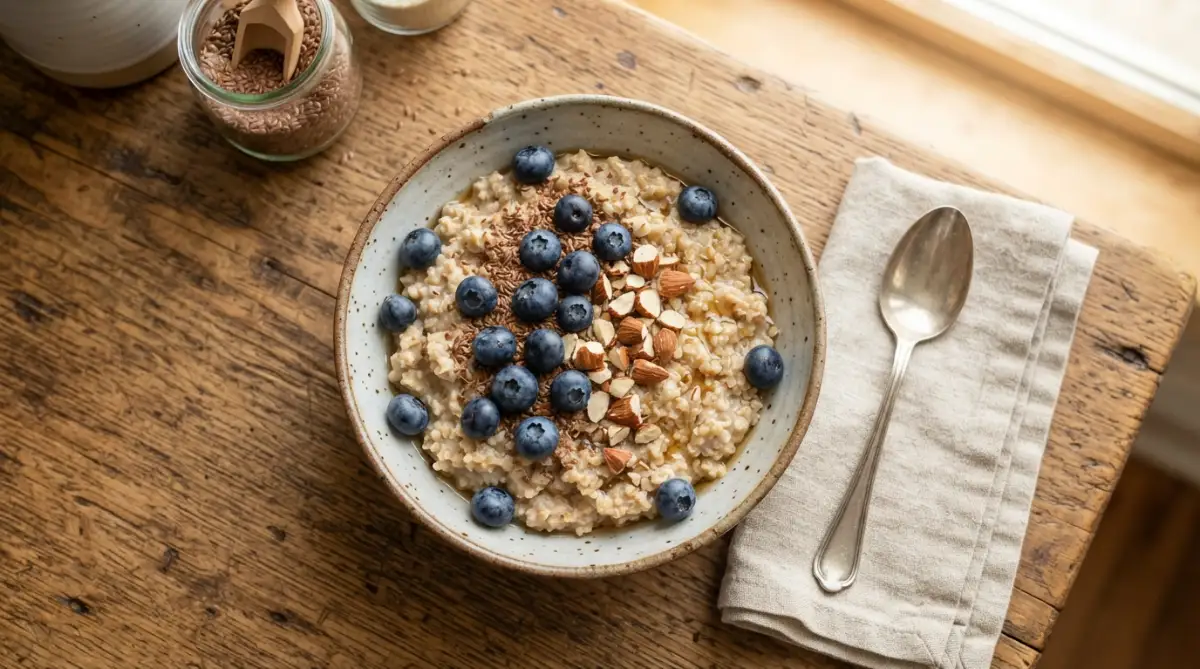
I switched to a bowl of steel-cut oats with a handful of blueberries and flaxseeds. Oats are high in a specific type of fiber that helps keep your arteries clear. Blueberries are packed with natural pigments that help blood vessels dilate, or open up.
I also stopped adding salt to my eggs. Instead, I use herbs like oregano or a bit of garlic powder. Garlic is actually a well-known natural way to help lower blood pressure because it helps the body produce nitric oxide.
My Secret Zero-Salt Flavor Hacks:
I know giving up salt sounds like a nightmare for your tastebuds. But I actually found a few tricks that trick my brain into thinking my food is salty:
- The Squeeze Trick: A heavy squeeze of fresh lime juice on eggs or avocados mimics the "bite" of salt perfectly.
- Smoked Paprika: This gives breakfast bowls a rich, savory flavor without a single milligram of sodium.
- Toasted Onion Powder: Way better than raw onion powder. It adds a deep, roasted flavor to almost anything.
Managing the "Morning Surge"
Doctors often talk about the "morning surge." This is a natural rise in blood pressure that happens as you wake up. For people with hypertension, this surge can be dangerous.
By following these habits, you are effectively "dampening" that surge. You are providing your body with the tools it needs to keep that rise within a safe range. It’s about being proactive instead of reactive.
I used to be reactive. I would wait until I felt bad to take care of myself. Now, I use my morning routine as my "shield." It protects me for the rest of the day, even if work gets stressful later on.
Myth vs. Reality: Morning Habits
Listening to Your Body
One of the biggest mistakes I made early on was ignoring the small signals. If I felt a little dizzy, I’d just drink more coffee. If my neck felt stiff, I’d take a painkiller.
Now, I listen. If I wake up feeling extra tense, I spend an extra five minutes on my breathing exercises. Your body is always talking to you. These morning habits give you the quiet time you need to actually hear what it is saying.
Consistency is the secret sauce here. Doing these things once a week won't do much. But doing them every morning creates a cumulative effect. It’s like saving money in a bank account; the small daily deposits add up to a huge balance over time.
The Importance of a Low-Stress Environment
If your alarm clock sounds like a fire siren, you are starting your day in a state of shock. This causes an immediate spike in your heart rate. I changed my alarm to a soft, gradual bird sound.
It sounds like a small thing, but it prevents that initial jolt of adrenaline. We want to avoid "jolting" the heart. We want to gently nudge it into action.
I also stopped reaching for my phone the second I opened my eyes. The news and social media are designed to grab your attention, often by making you feel anxious or angry. That's a recipe for high blood pressure. Give yourself thirty minutes of peace before you let the outside world in.
Potassium: The Secret Weapon
During my morning routine, I often include a potassium-rich snack like a banana or a small avocado. Potassium is the natural enemy of sodium.
Most of us have too much salt in our bodies, which holds onto water and raises pressure. Potassium helps your kidneys flush out that extra salt. It also helps ease the tension in your blood vessel walls.
Adding just one potassium-rich food to your morning can make a measurable difference in your readings. It’s a delicious and easy way to support your heart health naturally.
Building Your Own Routine
You don't have to do all of these things tomorrow. In fact, I recommend starting with just two. Maybe start with the water and the breathing.
Once those feel like second nature, add the sunlight or the better breakfast. When you try to change everything at once, it becomes a chore. When it’s a chore, you won’t keep doing it.
The goal is to make these habits as automatic as brushing your teeth. When you reach that point, you aren't "trying" to be healthy anymore. You just are. And your blood pressure readings will reflect that new reality.
I feel so much lighter and more in control now. I know that even if I have a stressful day ahead, I have already done the work to protect my heart. That peace of mind is worth more than anything else.
You have the power to change your health starting tomorrow morning. It doesn't take hours of work. It just takes a few intentional choices before the rest of the world wakes up. Your heart will thank you for it every single day.
Master Tips for Keeping Your Heart Happy Long-Term
If you really want to see your numbers stay in a healthy range, you have to look beyond just the first ten minutes of your day. I found that preparing my mind and body the night before made my morning routine ten times more effective. When you wake up in a rush, your body is already in a state of panic, which sends your blood pressure climbing.
I started a habit of "setting the stage" for my heart every single night. I make sure my water glass is ready and my comfortable stretching clothes are laid out right by the bed. This simple step removes any friction in the morning. When things are easy, you are much more likely to stick with them, and consistency is where the real magic happens for your arteries.
Another secret I discovered is the power of magnesium-rich foods during my first meal. Magnesium helps your blood vessels relax, much like a natural muscle relaxer for your pipes. I began adding pumpkin seeds or a bit of spinach to my morning eggs. These small additions act like a shield, keeping my blood vessels flexible throughout the day.
One thing I learned from the Mayo Clinic is that tracking your progress is key. I keep a small journal next to my bed where I write down how I feel each morning. This isn't just about the numbers; it’s about noticing the connection between my habits and my energy levels. It’s much easier to escape the burnout that comes with health struggles when you see real evidence that your efforts are working.
I also want to talk about the "Nitric Oxide Dump." This sounds technical, but it’s actually very simple. Nitric oxide is a gas your body makes to help your blood vessels open up. You can boost this in the morning by doing very light, rhythmic movements like humming or even a quick gargle with water. These small vibrations help your body produce that helpful gas, making it easier for blood to flow.
If you find yourself feeling scattered in the morning, you might need to stop multitasking during your breakfast. I used to eat while checking news and answering texts. Now, I just focus on my food. This "mindful eating" keeps my nervous system calm, which directly keeps my blood pressure from spiking during the meal.
Lastly, don't underestimate the power of a cool splash of water on your face. This triggers what scientists call the "Mammalian Dive Reflex." It naturally slows your heart rate and helps your body find its balance. I do this every morning right after my glass of water, and it feels like a reset button for my entire system.
The Hidden Traps That Could Be Hurting Your Progress
It breaks my heart when I see people trying so hard but making small mistakes that ruin their progress. One of the biggest traps is the "Weekend Break." People follow their heart-healthy routine all week, but on Saturday and Sunday, they sleep in late and eat salty brunch. This back-and-forth is very hard on your blood vessels, as they never get a chance to truly heal and stabilize.
Your body loves rhythm. Think of your heart like a fine-tuned engine. If you treat it well for five days and then "red-line" it for two, you aren't really helping it. I learned the hard way that my blood pressure didn't care if it was Saturday. It still needed that same calm start and hydration to stay in the safe zone.
Another mistake is what I call "Salt Blindness." You might think you are eating a healthy breakfast, but hidden sodium is everywhere. That "healthy" store-bought granola or those "low-fat" muffins are often packed with salt to make them taste better. This extra salt holds onto water in your blood, making the pressure rise almost instantly.
I also see people making the mistake of "Powering Through" a morning headache. If you wake up with a dull ache in the back of your head, that might be your body’s way of saying your pressure is too high. Instead of reaching for a strong coffee or an aspirin, try your deep breathing exercises first. Ignoring these signals is like ignoring a smoke alarm in your house; eventually, the fire will get bigger.
Some people also think they can "out-exercise" a bad morning. They wake up stressed, skip their water, and go straight for a high-intensity run. This can be very dangerous because your blood is thick from dehydration and your heart is already stressed. It’s like trying to start a car in freezing weather and immediately driving at 100 miles per hour.
We also need to talk about the "Invisible Stress" of noise. If you spend your morning in a loud, chaotic environment, your blood pressure will reflect that. I had to learn to ask my family for just fifteen minutes of quiet time in the morning. It wasn't about being rude; it was about my survival and long-term health.
Finally, don't let a bad day turn into a bad week. If you mess up and have a salty breakfast or miss your stretching, don't give up. The stress of feeling guilty will only raise your blood pressure even more! Just take a deep breath and promise yourself to start fresh with your next glass of water.
Taking Charge of Your Heart’s Future Today
Looking back at where I started, I feel like a completely different person. I used to be scared of my own body, always waiting for the next dizzy spell or "thumping" feeling in my ears. Now, I feel a sense of calm every morning because I know I am doing the right things. These habits aren't just about numbers on a screen; they are about being there for my family and enjoying my life.
You don't need a medical degree to understand that your body responds to how you treat it. Every glass of water, every deep breath, and every quiet moment is a gift you are giving to your heart. It’s a way of saying "thank you" to the organ that works 24/7 to keep you alive. You deserve to feel good, and you have the tools to make it happen.
According to research found in the Journal of the American College of Cardiology, lifestyle changes are often the most powerful tool we have. These morning rituals are your secret weapon. They are free, they are simple, and they actually work. You are not a victim of your genetics or your age; you are the captain of your own ship.
I really want you to know that you can do this. It might feel a bit strange at first to sit in the sun or breathe deeply, but keep going. Soon, your body will start to crave these habits because it feels so much better when you do them. You will notice you have more patience, more energy, and a much clearer head throughout the day.
I promise that the effort you put in now will pay off for years to come. I am so glad I made these changes when I did, and I know you will feel the same way. Take that first step tomorrow morning—just one glass of water and one deep breath—and watch how your life begins to change for the better.
Common Questions About Morning Blood Pressure
Why is my blood pressure usually higher right after I wake up?
This is often due to the "morning surge," which is a natural release of hormones like cortisol and adrenaline as your body prepares for the day. For many people, this surge can be a bit too high, which is why starting the day with calm habits like deep breathing and hydration is so helpful.
Can drinking water really lower my blood pressure quickly?
While water isn't a "cure," it helps by thinning your blood and reducing dehydration. When you are dehydrated, your blood is thicker and harder to pump, which raises pressure. Drinking water first thing in the morning makes the heart's job much easier and helps stabilize your readings.
Is it safe to stretch if my blood pressure is already high?
Yes, gentle stretching is actually one of the best things you can do. It helps open up your blood vessels and improves circulation. Just make sure to avoid any movements where your head is lower than your heart for long periods, and always keep your breathing slow and steady.
Should I avoid salt completely during breakfast?
You don't necessarily have to avoid it 100%, but reducing it is very smart. Most people get far more sodium than they need from processed foods. Using herbs and spices instead of the salt shaker is a great way to flavor your food without putting extra strain on your heart.
How long does it take to see results from these habits?
Many people notice they feel calmer and less "jittery" within just a few days. However, for the physical blood pressure numbers to stay consistently lower, it usually takes a few weeks of daily practice. Think of it as a long-term investment in your health rather than a quick fix.
Disclaimer: This article is for informational purposes only and does not constitute medical advice. Always consult with a qualified healthcare professional or your doctor before making changes to your diet, exercise routine, or medication. Never ignore professional medical advice because of something you have read online.