
The Hidden Cost of the Modern Hustle
Ever feel like your brain has way too many tabs open? I spent years thinking that a racing heart at 6 AM was just a normal part of having a "real career." But honestly, constant stress isn't a badge of honor—it is a warning sign that your brain is hitting its limit. Let’s talk about why your "hustle" is actually slowing you down and how you can get your focus back without quitting your job.
My desk was a mess of sticky notes, and my mind was even messier. I thought being stressed meant I was working hard. I believed that if I wasn't anxious, I wasn't being productive enough.
But then, my body started to push back. I couldn't sleep, my focus was gone, and I felt angry at everyone. I realized I was headed for a massive crash if I didn't change something fast.
That is when I stopped looking for more "hacks" and started looking at the science of my own brain. I discovered that I was living in a constant state of "fight or flight," even when I was just sitting in a meeting.
The truth is, many of us are walking around like zombies in suits. We are physically present at our desks, but our minds are stuck in the past or worrying about the future.
This constant mental noise isn't just annoying. It actually changes the way our brains work and makes us worse at our jobs.
We feel like we have to do ten things at once just to stay afloat. We check emails while eating lunch and take calls while driving home.
This way of living kills our creativity and drains our energy. It makes us feel like we are failing, even when we are doing our best.
Eventually, our backs break. We lose our joy, our health, and sometimes even the jobs we worked so hard to get.
But what if there was a way to keep the career but lose the heavy backpack? What if science had a secret key to staying calm while the world around us is screaming?
I found that key, and it wasn't a magic pill or a luxury vacation. It was the simple, evidence-based practice of being present.
🛑 Stop the Hustle: Your 30-Second Cheat Sheet
If you're in a rush, here are the big wins you can start today:
- The 3-Second Rule: Take one deep breath every time you walk through a doorway. It resets your nervous system.
- Kill Multitasking: Focus on one email or one task at a time. You'll finish 40% faster.
- Silence is Power: Spend the first 5 minutes of your workday without any screens or music.
- Brain Health: Mindfulness physically shrinks the "fear center" of your brain, making you smarter under pressure.
How Your Brain Heals Under Pressure
To understand how to fix the stress, we have to look at what happens inside our heads. Science shows that a busy job keeps your "fear center," the amygdala, on high alert.
When this part of the brain is too active, you can't think clearly. You make mistakes, you get defensive, and you feel tired all the time.
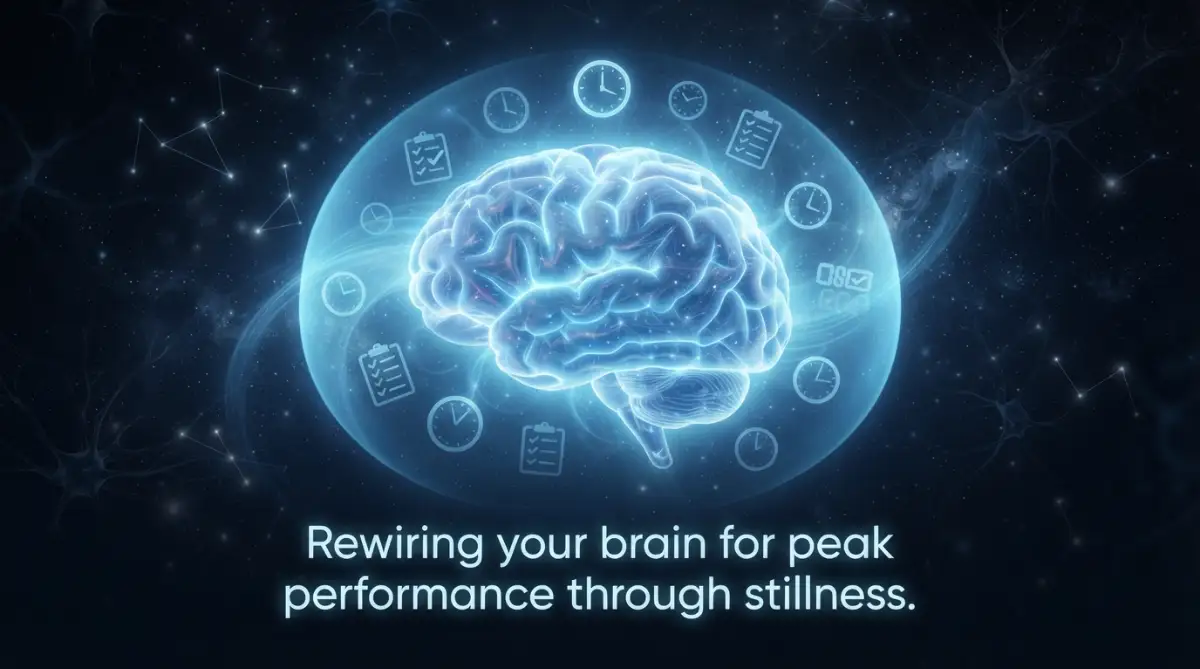
Mindfulness is like a workout for your brain that shrinks that fear center. It strengthens the prefrontal cortex, which is the part of your brain that handles logic and focus.
When you practice being mindful, you are literally rewiring your grey matter to be more resilient. This isn't just "feel-good" talk; it is measurable biology.

Let’s clear up some common lies we tell ourselves about being busy at work:
Taking Control with Tiny Mental Resets
You don't need to sit on a mountain for hours to get these benefits. The best way to start is by using "micro-resets" throughout your busy day.
I used to think I didn't have time to breathe, let alone meditate. But I realized that I was losing hours every day to "brain fog" because I was so stressed.
ne simple trick is the "Doorway Reset." Every time you walk through a door at work, take one deep breath and notice your feet on the floor.
This takes exactly three seconds. But it tells your nervous system that you are safe and in control.
If you want to see how these tiny changes look in real life, this video shows a great 5-minute routine for the office.
The Myth of Doing It All at Once
We have been lied to about multitasking. Science tells us that the human brain cannot actually focus on two complex tasks at the same time.
When you think you are multitasking, you are actually just "task switching" very quickly. This uses up a huge amount of glucose and leaves your brain exhausted.
By practicing mindfulness, you train yourself to do one thing at a time with total focus. This is often called "Deep Work," and it is a superpower in today's economy.
When I started focusing on only one email at a time, I finished my work twice as fast. I stopped making the "tired mistakes" that used to take hours to fix later.
Finding Stillness in the Noise
Your career is always going to have deadlines and difficult people. You cannot control the world, but you can control your reaction to it.
Mindfulness gives you a "buffer zone" between a problem and your response. Instead of shouting when a project fails, you learn to pause.
That pause is where your power lives. It is where you choose a smart solution instead of a panicked one.
Pro Tip:
I used to try and meditate for 30 minutes every morning and I failed every single time. I felt like a loser because I couldn't stay still. Then I realized that even two minutes of focused breathing while my coffee brewed was enough to change my mood. Don't aim for perfection; just aim for a few moments of being "here."
Why Silence is Your Best Productivity Tool
Most of us are afraid of silence because that is when our worries start talking. We fill every gap with podcasts, music, or scrolling through our phones.
But science shows that our brains need "down-time" to process information and spark new ideas. This is why you get your best ideas in the shower.
If you never give your brain a break, it never has the chance to be creative. You just stay stuck in "survival mode."
Try to spend your first five minutes of work in total silence. Don't open your laptop. Don't check your phone.
Just sit and notice the air in the room. This simple act of "nothing" prepares your brain for the "everything" that is coming later.
The Physical Benefits You Can Feel
Mindfulness isn't just about your thoughts; it is about your body too. Constant work stress causes high blood pressure and messes with your heart health.
When you incorporate mindful habits, your heart rate slows down and your muscles relax. You might notice that the tension in your shoulders starts to fade away.
I noticed that I stopped getting those "3 PM headaches" once I started practicing mindful breathing. My body was no longer in a state of emergency all day long.
Building a Mindful Office Culture
You don't have to do this alone. Even if your boss doesn't talk about mental health, you can lead by example.
When you stay calm during a crisis, others will notice. Your peace becomes contagious.
You can start meetings with one minute of quiet focus. It might feel weird at first, but it makes the meeting much more productive.
People will start to wonder how you stay so cool under pressure. That is when you can share the secret of mindfulness with them.
Mapping Out Your Mindful Day
Let’s look at a typical day and see where we can fit these science-backed habits. It starts the moment you wake up and your feet touch the floor.
Instead of reaching for your phone, just feel the floor for ten seconds. Notice the temperature and the texture.
During your commute, try to turn off the radio for a few minutes. Just listen to the sounds of the road or the train without judging them.
When you get to your desk, take three deep breaths before you touch your keyboard. This sets the tone for the rest of your morning.
Breaking the Cycle of "Always On"
We live in a culture that rewards being "busy," but being busy is not the same as being effective. True success comes from being sharp, not just active.
Mindfulness helps you realize when you are just "spinning your wheels." It gives you the clarity to stop and take a break when you need it.
Taking a ten-minute walk without your phone isn't "wasting time." It is an investment in your brain's ability to solve the next problem.
I found that my best work happened after a short walk. My brain felt refreshed, like I had hit the "restart" button on a slow computer.
The Science of "Flow" and Mindfulness
Have you ever been so into a project that you forgot what time it was? This is called a "flow state."
Mindfulness is the fastest way to get into a flow state. By training your mind to stay on the present moment, you remove the distractions that stop flow.
A busy career becomes much easier when you are in "the zone." You work with ease, and the hours fly by because you aren't fighting yourself.
The more you practice being present, the easier it is to find this state of peak performance. It becomes a natural part of how you handle your workload.
Overcoming the "Boredom" Barrier
When you first start being mindful, you might feel bored or restless. This is normal. Your brain is used to constant hits of dopamine from your phone.
Boredom is actually a sign that your brain is starting to heal. It is learning how to be okay without constant stimulation.
Stick with it. After a few days, that restlessness will turn into a deep sense of calm.
You will find that you can sit in a long meeting without feeling like you want to jump out of your skin. That is the power of a trained mind.
Reframing Your View of Success
Success shouldn't cost you your mental health. A high-paying job isn't worth much if you are too stressed to enjoy your life.
Mindfulness helps you see that you are more than just your job title. It gives you a sense of worth that doesn't depend on your to-do list.
This shift in perspective actually makes you more successful. Because you aren't desperate, you make better decisions and build better relationships.
You become the person people want to work with. You become a leader who is steady, wise, and grounded.
Making it a Permanent Habit
The key to all of this is consistency. You don't have to do it perfectly, but you do have to do it often.
Think of it like brushing your teeth. You don't just brush your teeth for three hours on Sunday and expect to be clean all week.
You do it for two minutes, twice a day. Mindfulness is exactly the same.
Start small, stay consistent, and let the science do the work. Your career—and your brain—will thank you for it.
Mastering High-Level Awareness in Your Professional Journey
Now that you know the basics of staying present, we need to talk about the deeper layers. Think of your mind like a high-end smartphone. You can use it for basic calls, or you can use it to manage your whole life.
Most people just scratch the surface of what their brain can do. To truly win in a busy office, you need to use advanced mental strategies. These aren't complicated, but they require you to be more intentional.
One of the best secrets I ever learned is called the "Third-Party Observer" trick. When you are in a stressful meeting, imagine you are sitting on the ceiling watching yourself.
By doing this, you create a tiny bit of space between you and your stress. You can see that your boss is just a person who is also likely stressed out. You can see that the deadline is just a date on a calendar, not a life-or-death event.
This simple shift helps you stay calm while everyone else is losing their minds. It allows you to make smarter choices because you aren't reacting from a place of fear.
Another powerful tip is to change how you handle your inbox. We often feel like every email is a fire that needs to be put out immediately. This leads to a state of constant panic that ruins our focus.
Instead, try to practice "mindful responding." Before you hit reply to an annoying email, stop for ten seconds. Feel your hands on the desk and notice your breath.
I tried this last week when a client sent me a very rude email at 4 PM. My first instinct was to type a snappy comeback. Instead, I waited. I noticed how my heart was thumping. I took three breaths, went to get a glass of water, and came back. When I finally replied, I was calm and professional. The result? The client apologized. That is the "ROI" of staying present.
Then, write your reply from a place of logic instead of anger. This saves you from sending messages you might regret later. It also helps you escape the burnout that comes from constant digital fighting.
I also suggest using the "Five Senses Grounding" technique during your lunch break. Most of us eat while scrolling through our phones. This means our brains never get a real break.
Try this instead: find five things you can see, four things you can touch, three things you can hear, two things you can smell, and one thing you can taste. This forces your brain to come back to the physical world.
It sounds simple, but it actually resets your nervous system. According to experts at Harvard Health, these small moments of awareness can significantly lower your daily anxiety levels.
You should also look at your physical workspace as a tool for calm. If your desk is covered in old coffee cups and random papers, your brain feels cluttered too.
Take five minutes at the end of every day to clear your physical space. This acts as a signal to your brain that the workday is over. It helps you stop losing information and makes the next morning feel much easier.
Long-term success isn't about working more hours; it is about working with more clarity. When you train your brain to stay in the now, you become more efficient than you ever thought possible.
You start to notice patterns that other people miss. You see solutions to problems before they even happen. This is how you move up in your career without losing your soul.
Research published by the American Psychological Association shows that mindfulness improves your working memory. This is exactly what you need when you are juggling multiple projects at once.
It keeps you from feeling like you are drowning in tasks. Instead, you feel like you are standing on solid ground, even when things get busy.

Deadly Traps That Sabotage Your Calm
When I first started this journey, I made some really big mistakes. I thought I could just "check a box" and be mindful. I treated it like another chore on my to-do list.
This is the biggest trap people fall into. They try to "rush" their relaxation. They sit down to breathe and get angry because they don't feel calm after sixty seconds.
You have to understand that your brain is like a puppy. You can't just tell it to sit once and expect it to listen forever. It takes time and a lot of patience.
Another mistake is being too hard on yourself. If your mind wanders during a meeting, don't get mad. Just notice that it happened and bring it back.
If you start judging yourself for being distracted, you are just adding more stress to the pile. That is the opposite of what we want.
Many people also try to stop multitasking cold turkey and fail. They think they can go from chaos to total focus in one day.
It is better to start small. Try to do one thing at a time for just thirty minutes a day. If you try to change everything at once, you will likely give up by Tuesday.
I also see people using mindfulness as a way to ignore their problems. They use "being present" to avoid making hard decisions at work.
Mindfulness isn't about ignoring the truth; it is about seeing the truth clearly. If your job is truly toxic, being mindful will help you see that you need to find a new one.
Don't use these tools to tolerate a situation that is hurting you. Use them to get the strength you need to fix your life.
Another common pitfall is the "Digital Distraction Trap." We think we can be mindful while our phones are buzzing every two seconds.
You have to set firm boundaries with your technology. If you don't control your phone, your phone will control your brain. Learn how to save your mental health by turning off notifications that don't matter.
The physical toll of this stress is real. I used to have high blood pressure because I was always on edge. But when I fixed my habits, I balanced my blood pressure without needing medicine.
Your body keeps a score of all the stress you carry. If you don't deal with it now, it will deal with you later in the form of illness or burnout.
Take it from me, it is much easier to spend five minutes breathing today than it is to spend five weeks in a hospital later.
Your New Path Toward Career Harmony
The road to a peaceful career is not a sprint; it is a steady walk. You now have the science and the steps to change how you feel at work.
You have seen how the brain can heal and how focus can be rebuilt. You know that even the busiest office can become a place of calm if you have the right tools.
Remember that you don't need to be perfect. You just need to be a little bit more aware than you were yesterday.
Success is no longer just about the money in your bank account. It is about the peace in your heart and the clarity in your mind.
When you combine a fast-paced career with a calm spirit, you become unstoppable. You become the leader that everyone else looks up to.
I want you to take a deep breath right now. Feel the air going into your lungs and feel your body relaxing into your chair.
This simple moment is where your new life starts. You are no longer a slave to your stress; you are the master of your own focus.
I know it feels hard at first, but I promise it gets easier every single day. I used to be the most stressed person I knew, but now I feel like I have a secret power.
You can have that same power too. All it takes is the choice to be here, right now, in this moment.
Don't wait for the "perfect time" to start. The perfect time is exactly where you are sitting right now. Go out there and show the world what a mindful professional looks like.
Common Questions About Workplace Stillness
How long does it take to see the benefits of mindfulness at work?
Most people start to feel a shift in their stress levels within just a few days of consistent practice. Science shows that physical changes in the brain can be measured after about eight weeks of regular daily habits.
Do I have to meditate to be mindful in my career?
Not at all. While meditation is a great tool, you can be mindful by simply focusing on one task at a time or practicing deep breathing during your commute. It is more about how you pay attention to your day than sitting on a cushion.
Can mindfulness actually make me more productive?
Yes, it definitely can. By training your brain to avoid distractions and stop multitasking, you finish your work faster and with fewer mistakes. This saves you time and prevents you from having to redo tasks later.
What if my office is too loud to find any peace?
You don't need total silence to practice mindfulness. You can focus on the sounds around you without judging them, or you can use tools like noise-canceling headphones to create a personal space for focus. If you feel tired from the noise, you might want to learn why you wake up tired as it could be linked to your overall sensory overload.
Is mindfulness just a trend or is there real science?
There are thousands of peer-reviewed studies from places like The Mayo Clinic that prove it works. It lowers cortisol levels, improves heart health, and strengthens the parts of the brain responsible for decision-making.
Disclaimer: This article is for informational purposes only and does not constitute medical or professional mental health advice. Always consult with a qualified healthcare provider or mental health professional if you are experiencing severe stress, anxiety, or physical symptoms. The strategies mentioned are meant to complement, not replace, professional medical treatment.