
The Day My Financial Confidence Shattered Completely
Getting that 'application denied' screen feels like a heavy punch to the gut. You planned everything out, thought your numbers looked fine, and suddenly you are left wondering what went wrong. Do not panic—lenders do not reject people, they reject math. Let's break down exactly why you got a 'no' today and how to quickly turn it into a 'yes' without losing your mind.
All my careful plans for the future felt like they evaporated in a single second. I needed that funding badly, and I thought my profile was good enough to get a quick approval. I felt a deep sense of embarrassment, wondering what I did wrong and how I was going to explain this to my family. That single rejection letter made me feel incredibly small and entirely powerless.
Every time you see an advertisement for a low-interest credit card, a wave of frustration washes over you. The truth is, the system can feel incredibly unfair when you do not understand the secret rules banks use to judge you. But wallowing in that sadness will not change your bank balance. We have to take a deep breath, wipe the slate clean, and figure out the exact mathematical reasons behind their decision.
Fast Fixes for a Rejected Application:
- Freeze your reports: Stop new hard inquiries from doing extra damage to your file.
- Fix the math: Keep your current card balances strictly under 10% of their limits.
- Lower your ratios: Sell unused items and pay off your smallest debt to free up cash flow quickly.
- Try a secured route: Use a cash deposit-backed card to safely build a long streak of on-time payments.
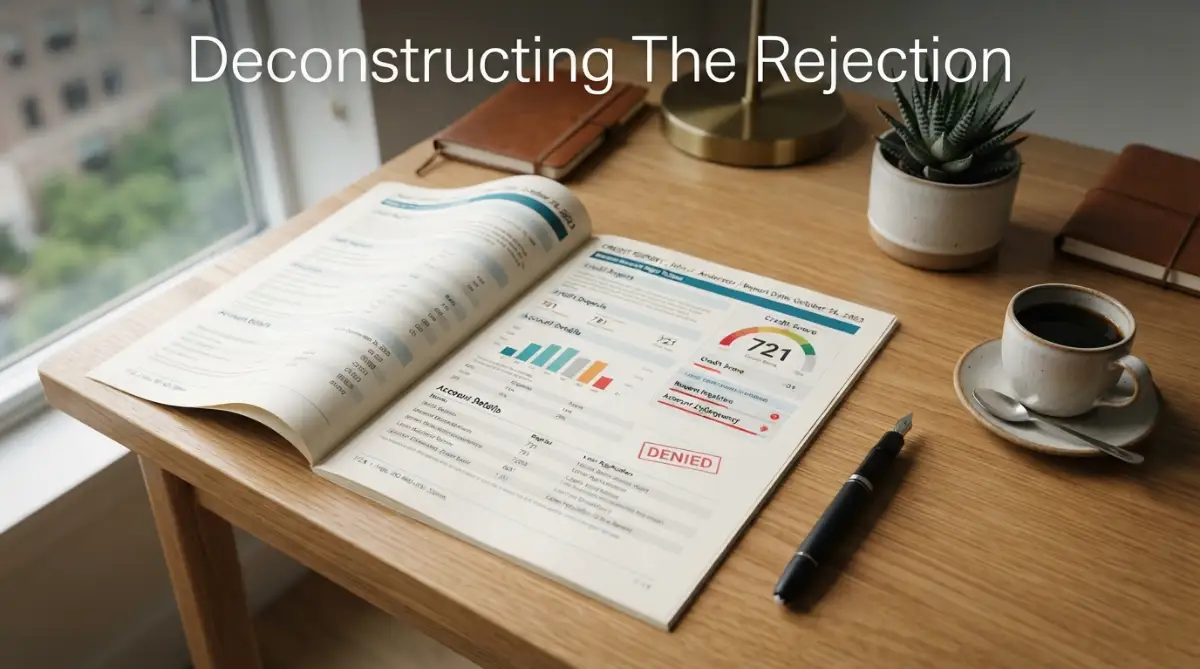
Deconstructing the Rejection: What Actually Happens Behind the Scenes
Before you can fix a broken engine, you need to open the hood and see which parts are actually smoking. A financial denial works the exact same way. Banks do not reject people because they do not like them; they reject data points that represent a high risk of losing money. We need to approach this situation like a scientist looking at an experiment.
When a lender pulls your file, their automated software runs your history through a complex algorithm. This system looks for historical patterns of behavior. If you missed a single payment months ago, the machine flags it as a behavioral risk. Understanding this robotic process takes the emotion out of the situation and helps you see the clear path forward.
Myth vs Reality: How Banks Actually View You
Many people carry false assumptions about how the banking system operates. Let us clear up some of the most common misunderstandings right now.
Reading the Lender’s Mind: The Risk Assessment Formula
To rebuild your financial profile, you must learn to think exactly like an underwriter. An underwriter is the person, or software, that decides if you are a safe bet. They mostly care about two massive factors: your ability to repay and your willingness to repay.
Your ability to repay is measured by your current income compared to your current monthly bills. If you make four thousand dollars a month, but you already owe three thousand dollars in minimum payments, you have no extra breathing room. The bank assumes that one minor emergency will cause you to default on their new note.
Your willingness to repay is judged entirely by your past actions. You might have a great job now, but if you ignored your obligations a few times in the past, lenders get incredibly nervous. They look at your track record to predict your future habits.
Stop guessing and start analyzing your data.
Quick Self-Check Before You Apply Again:
- Did my credit card balance go up last month? (If yes, pay it down before trying again).
- Have I applied for anything else recently? (Space out your requests to avoid looking desperate).
- Does my paycheck comfortably cover my minimum payments? (Underwriters check this math instantly).
Locating the Hidden Red Flags in Your Credit Report
The very first action you must take today is pulling a completely fresh, detailed copy of your credit history from all major reporting bureaus. Do not rely on those free summary apps on your phone because they often hide the deep technical details. You need the full, unedited document to see exactly what the lender saw.
Once you have the documents, grab a bright red pen and a green pen. You are going to go line by line, looking for anything that seems inaccurate, outdated, or slightly suspicious. Identity theft and simple administrative errors are incredibly common in these databases.

Sometimes, a medical bill you paid off months ago still shows up as an active collection due to a lazy billing department. Other times, an account belonging to someone with a similar name might accidentally merge into your file. If you find any of these errors, you must immediately file a formal dispute to have them legally removed.
I remember trying to apply for another card immediately after my rejection just to prove the system wrong. My score dropped even lower because of the hard inquiry, and I learned the hard way that reacting emotionally to banks only makes your situation worse. Taking a step back to analyze the actual data saved me from ruining my profile completely.
The Debt-to-Income Rebalancing Technique
Your debt-to-income ratio is essentially the heartbeat of your financial profile. If this ratio is too high, every single door in the banking world will slam shut in your face. We need to actively force this number down as quickly as possible.
Think of your monthly income as a pie. If too many slices are already promised to other creditors, the new lender knows they will only get crumbs. You have two main ways to fix this specific issue. You can either increase the overall size of the pie, or you can start aggressively paying off the smallest debts to free up slices.
Look around your house and find things you no longer need. Sell them online and use that exact cash to completely wipe out a small credit card balance. The moment that small account reports a zero balance, your ratio improves, and your profile looks slightly healthier to the algorithm.
Mastering the Credit Utilization Strategy
Credit utilization is a fancy term that simply means how much money you are borrowing compared to your total available limits. If you have a card with a one thousand dollar limit, and you spend nine hundred dollars on it, your utilization is at ninety percent. This terrifies lenders because it makes you look desperate for cash.
Scientifically speaking, keeping your utilization below ten percent is the golden rule for a top-tier profile. If your balances are currently maxed out, this is the main reason you got rejected. You must treat high balances as a financial emergency.
You can sometimes trick the system without paying a single dime. Call your current card providers and politely ask for a limit increase. If they raise your limit from one thousand to two thousand, and your balance stays at five hundred, your utilization automatically drops by half. This simple phone call can boost your numbers overnight.
Building a Safety Net to Prove Financial Stability
Lenders want to know what happens to you if you suddenly lose your job. If you live paycheck to paycheck, you represent a massive risk to their investment. Building a visible safety net proves that you are a responsible adult who plans for rainy days.
Start funneling a small portion of your paycheck into a separate, dedicated savings account. It does not have to be a huge amount at first. Even saving twenty dollars a week starts building a track record of stability.
When you reapply in the future, having cash reserves in the bank acts like a heavy shield. Some lenders will look at your overall asset picture during manual reviews. Seeing a well-funded savings account tells them you have the discipline required to manage large sums of money properly.
Establishing Fresh Credit Without Risking Another Denial
Sometimes, your profile is rejected simply because it is too thin. A thin file means you do not have enough historical data for the algorithm to judge you safely. You need to add positive, heavy data points to your report without risking another hard rejection.
Secured credit products are the perfect scientific tool for this exact job. With a secured product, you give the bank a cash deposit upfront. If you deposit three hundred dollars, they give you a credit line of three hundred dollars. Because the bank holds your cash, their risk is literally zero, meaning approval is almost guaranteed.
Use this secured line to buy one small item a month, like a tank of gas, and pay it off completely the next day. By doing this, you are forcing the bank to send positive payment data to the bureaus every single month. Over time, this consistent stream of green checkmarks buries your old mistakes and rebuilds your reputation from the ground up.
Secured vs. Regular Cards: What’s the difference?
| Feature | Secured Card | Regular Card |
| :--- | :--- | :--- |
| Upfront Cash | Yes (You pay a deposit) | No deposit needed |
| Approval Odds | Almost 100% | Depends on your past history |
| Best Used For | Building a blank or bad file | Earning rewards and travel points |
Why the "Wait and See" Approach Ruins Your Chances
Many folks believe that if they simply do nothing, time will heal their damaged financial history. This passive mindset is incredibly dangerous. While negative marks do slowly lose their impact over several years, sitting still allows your active accounts to stagnate.
Rebuilding requires aggressive, deliberate action. If you just wait, your credit mix remains weak and your payment history stalls. You are basically putting your future on pause.
You need to actively manage your remaining open accounts with absolute perfection. Set up automatic payments so you never miss a due date again. Every single on-time payment you make today acts like a tiny brick, slowly building a new, stronger foundation over the ruins of your old profile.
Drafting a Goodwill Letter That Actually Gets Read
If your rejection was caused by one or two late payments during a really tough time, you might have a secret weapon available. It is called a goodwill adjustment letter. This is a polite, humble letter sent directly to the bank's executive team, asking for a small favor.
In this letter, you take full responsibility for the mistake. You briefly explain the hardship you faced, like a sudden medical emergency or a job loss. Then, you point out that you have been a perfect customer ever since that specific incident.
Banks are run by human beings who sometimes show compassion. If they see you are a loyal customer who just had a bad month, they can legally go into the system and erase that late payment mark. Getting just one late payment removed can skyrocket your numbers and instantly fix your broken profile.
Diversifying Your Income Streams to Lower Risk Perception
Banks love predictable, stable income, but they love diversified income even more. When you rely solely on one employer, you are one bad corporate decision away from losing everything. Adding a side income makes you a much stronger applicant in the eyes of an underwriter.
Consider starting a small freelance hustle or driving for a delivery service on the weekends. Make sure this extra money goes directly into your bank account so there is a clear, traceable paper trail. When you can prove this additional income on paper, it significantly lowers your debt-to-income ratio.
This strategy completely shifts the power dynamic. Instead of begging for approval with a tight budget, you walk into the application process with multiple streams of cash flow. It shows the lender that you are proactive, hardworking, and deeply committed to maintaining your financial health no matter what happens in the economy.
(Continuing the comprehensive guide to ensure you have the full strategic knowledge necessary to bounce back completely...)
Next-Level Strategies: Pro Secrets to Repair Your Financial Identity
Getting back on your feet requires more than just paying your bills on time. If you want to see massive improvements quickly, you need to understand the hidden mechanics of the banking world. These are the exact strategies insiders use to manipulate their data points legally and effectively.
One of my favorite advanced methods is known as the authorized user strategy, or piggybacking. This involves finding a trusted family member who has an incredibly strong, aged credit card with a perfect payment history. You ask them to add your name to that specific account as an authorized user.
They do not even have to give you the physical card to spend their money. Just by attaching your name to their pristine account, all of their positive history instantly copies over to your blank or damaged file. I did this with my mother’s oldest department store card, and my numbers jumped almost overnight.
The "Pay-For-Delete" Negotiation Tactic
If you have an old account that has already been sent to a collection agency, simply paying it off will not help you much. A paid collection still sits on your record like a dark cloud, dragging down your overall approval odds. Instead of just handing over your cash, you need to negotiate a specialized agreement.
This agreement is called a pay-for-delete arrangement. You call the collection agency and offer to pay the debt, but only if they agree in writing to completely erase the account from your history. Collection agencies buy these debts for pennies on the dollar, so they are often highly motivated to make a deal.
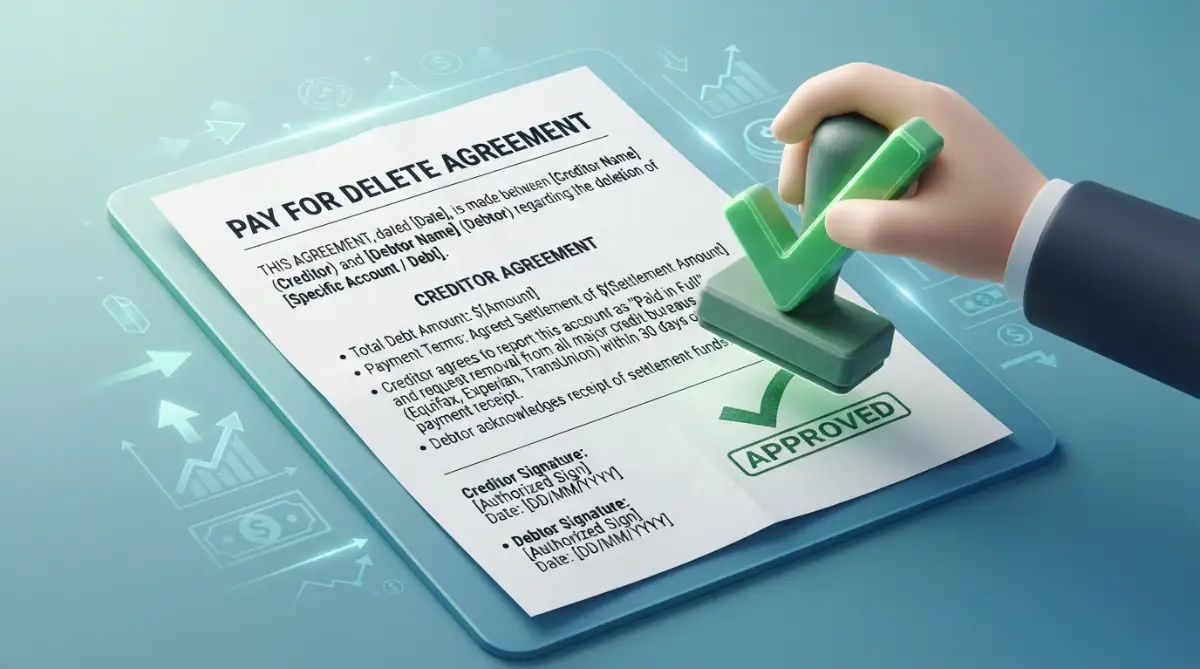
Always get this promise in writing before you give them a single cent. You can check the official guidelines from the Consumer Financial Protection Bureau (CFPB) to understand your rights during these intense negotiations. If they refuse to delete it, you can hold onto your money and try negotiating again at the end of the month when they are desperate to meet their quotas.
Diversifying Your Account Portfolio Like a Pro
Lenders want to see that you can handle multiple types of financial responsibilities at the same time. If you only have credit cards, your profile looks completely one-sided and weak. The algorithm highly rewards consumers who maintain a healthy mix of both revolving accounts and installment accounts.
Revolving accounts are your standard credit cards, where the balance goes up and down every month. Installment accounts are fixed agreements, like a student note or a car payment, where you pay a set amount for a specific time period. If you want to beat the system, you need to show you can balance both types flawlessly.
If you currently only have credit cards, consider taking out a very small, specialized credit-builder loan from a local credit union. This adds an installment loan to your mix, showing lenders you can handle structured debt. Learning how to properly manage these different types of accounts is essential for anyone trying to escape the trap of too much debt while building a solid reputation.
Freezing Your File to Stop Unwanted Inquiries
Every time a lender checks your background, it leaves a hard inquiry mark that slightly damages your score. If you have been rejected recently, you probably have a few of these marks dragging you down. You cannot easily erase legitimate inquiries, but you can absolutely stop new ones from happening accidentally.
You have the legal right to place a complete security freeze on your data with all the major reporting bureaus. This means nobody, not even you, can open a new account in your name until you manually unlock the file. This creates a powerful physical barrier that stops you from making impulsive applications when you are feeling frustrated.
You can learn exactly how these scoring models calculate inquiry damage by reading up on the official FICO Score educational resources. Keeping your file frozen is a smart, defensive move that protects your identity while you quietly work on repairing your past mistakes.
Pro Tip: My "Zero Balance" Realization
When I was trying to recover from my own rejection, I thought leaving a small balance on my cards showed the bank I was actually using them. I was completely wrong. I learned that paying the statement balance down to exactly zero before the reporting date made me look financially bulletproof. Always aim to show a zero balance on your statement date, not just your due date.

The Pitfalls: Dangerous Mistakes That Will Ruin Your Comeback
When you get hit with a major financial denial, your brain often goes into panic mode. You feel an overwhelming urge to fix the problem immediately, which usually leads to making terrible, impulsive decisions. I have seen smart people completely destroy their financial futures because they let their emotions take over.
The most common and destructive reaction is something called "rage applying." After getting one rejection letter, people will immediately go online and apply for five different lenders in a single afternoon. They hope that at least one system will take pity on them and approve their request.
Every single one of those applications triggers a hard pull on your file. The algorithm sees this sudden burst of applications and assumes you are extremely desperate for cash, which instantly drops your score by dozens of points. This panic behavior is one of the main reasons why your personal loan application gets rejected over and over again.
Falling for the High-Interest Trap
When traditional banks turn you away, shady alternative lenders will suddenly start appearing in your email inbox. They promise guaranteed approvals and instant cash, completely ignoring your damaged history. These offers look like a lifesaver when you are drowning in bills.
You must avoid these predatory companies at all costs. They charge astronomical interest rates that are specifically designed to keep you trapped in a cycle of poverty. Once you sign their paperwork, a small emergency can easily turn into a massive financial disaster.
If you are feeling tempted by these offers, you need to understand that high-interest debt destroys lives and ruins families. It is always better to wait, save your cash, and rebuild your profile the hard way rather than signing away your future to a predatory lender.
Ignoring the Root Cause of the Denial
Another massive mistake people make is trying to treat the symptoms without curing the actual disease. They might aggressively pay down a credit card but completely ignore their terrible spending habits. If you do not change the behavior that got you rejected in the first place, you will eventually end up right back where you started.
You need to take a harsh, honest look at your monthly budget. Are you spending too much money on things that do not actually improve your life? If you are constantly borrowing money just to maintain a certain lifestyle, a new loan will only mask the problem temporarily.
Instead of looking for a quick fix, focus on managing unsecured loans without credit damage by creating a strict household budget. Cut up the physical cards if you have to, and force yourself to live strictly on the cash you actually earn.
Mishandling Active Collection Accounts
When you have accounts that have gone into default, ignoring the phone calls is the worst possible strategy. Many people think that if they just block the debt collector's number, the problem will magically disappear. In reality, the collector is simply building a legal case against you in the background.
If you ignore them for too long, they will eventually take you to court and garnish your hard-earned wages. You need to face these issues head-on, even if it feels incredibly uncomfortable. It is highly recommended to study the legal rules set by the Federal Trade Commission (FTC) regarding debt collection so you know how to protect yourself from abusive tactics.
You must learn how to properly communicate with these agencies. Understanding the legal steps is essential, so make sure you understand the loan collection process before you ever pick up the phone. Knowledge is your best defense against aggressive collectors.
Closing Old Accounts Out of Spite
I completely understand the anger you feel toward a bank that denies you. Many people get so mad that they decide to cancel their oldest credit cards just to cut ties with the banking system entirely. This emotional reaction is a massive analytical mistake.
Fifteen percent of your overall profile strength is based entirely on the length of your financial history. When you close your oldest account, you are effectively wiping away years of good behavior. You shrink your total available limits and shorten your average age of accounts in a single click.
Even if you hate the company, keep that old card open. Put a tiny subscription on it, like your monthly music streaming service, and set it to autopay. This keeps the positive history flowing into your file without requiring you to actually deal with the bank directly.
Neglecting Your Current Secured Assets
When you are stressed about a rejection, it is easy to accidentally drop the ball on your current obligations. Some folks get so obsessed with fixing their credit cards that they forget to pay their basic car note. This is a catastrophic error that can lead to immediate asset seizure.
Secured debts should always be your top priority because they are tied to physical things you need to survive. If you lose your car, you cannot get to work, which means your income stops completely. If you are ever in a tight spot, you must know exactly what to do if you cannot make your car payment to protect your daily transportation.
Never sacrifice a secured asset just to pay off an unsecured credit card. The credit card company cannot take your house or your car without a massive legal fight, but an auto lender will send a tow truck in the middle of the night. Prioritize your physical survival over a temporary dip in your numbers.
Your Blueprint for a Powerful Financial Comeback
We have covered a massive amount of ground today, and I know this process can feel incredibly overwhelming at first. Just remember that a single rejection letter does not define your worth as a human being. It is simply a mathematical snapshot of your history at one specific moment in time.
You now hold the exact blueprint to reverse this situation completely. You know how to pull your raw data, spot the hidden errors, and aggressively challenge them. You understand the math behind your debt-to-income ratio and how to manipulate your utilization rates to your advantage.
Most importantly, you know exactly which dangerous pitfalls to avoid. By staying away from predatory lenders, managing your active collections smartly, and keeping your old accounts open, you are already miles ahead of the average consumer. This journey requires extreme patience, but every small step you take today builds a protective wall around your future.
Start small tomorrow morning. Pick just one task, like downloading your free reports or setting up a tiny automatic savings transfer. Action cures anxiety, and once you see those numbers start ticking upward, your confidence will return stronger than ever before.
My biggest piece of advice is to completely forgive yourself for any past money mistakes you made. I felt so much shame after my denial, but once I started treating my finances like a fun math puzzle, the fear completely vanished. You have the power to rewrite your entire story starting today, so take a deep breath and get to work!
Common Questions About Fixing Your Financial Reputation
How long does it actually take to recover after a rejection?
It highly depends on exactly why you were denied in the first place. If it was a simple high balance issue, paying it down can boost your numbers in just thirty days. However, if you have severe late payments or collections, it might take six to twelve months of perfect behavior to see a massive shift.
Will checking my own reports lower my numbers even more?
No, this is a very common misunderstanding. When you check your own data through a monitoring app or an official bureau, it counts as a soft pull. Soft pulls are completely invisible to lenders and have zero negative impact on your profile.
Should I hire a professional repair company to fix my history?
Honestly, most of these companies just charge you hundreds of dollars to do things you can easily do yourself for free. They simply mail dispute letters on your behalf, which we discussed how to do earlier. Save your hard-earned cash and use it to actually pay down your real debts instead.
Does my personal income level affect my final score?
Your actual salary is never factored into your three-digit profile number at all. However, lenders do ask for your income on the application to calculate your debt-to-income ratio. You can have a perfect score while working a minimum wage job, provided you manage your small limits perfectly.
What is the fastest way to add positive history to my file?
Becoming an authorized user on a trusted family member's old, perfect account is the fastest trick available. The second best method is opening a secured card and using it for one tiny purchase every month. Both methods feed healthy, positive data into your file almost immediately.
Disclaimer: The information provided in this article is for educational and informational purposes only and does not constitute professional financial, legal, or tax advice. We are not licensed financial advisors. Every individual's financial situation is entirely unique. Please consult with a certified financial planner or legal professional before making any major financial decisions, taking out loans, or negotiating with collection agencies.