The Silent Weight That Slowly Crushes Your Peace
Opening your banking app shouldn't feel like stepping into a horror movie. But when your balance is constantly dipping into the negative, it ruins your whole day. I totally get it. You work hard all month, only to watch your paycheck vanish to loan payments and credit card minimums within hours of getting paid. It is exhausting. Let's stop panicking and look at some real, tested ways to actually fix this mess so you can finally breathe again.
It felt exactly like I was drowning in a dark ocean with no life jacket in sight. Every single month, my entire hard-earned paycheck disappeared before I even had the chance to enjoy a single penny of it.
The heavy weight of my multiple personal loans was physically crushing my chest. I felt like an absolute failure, constantly wondering how I let things get this horribly bad.
If you are reading this right now, you probably know exactly what that suffocating feeling is like. You wake up in the dead of the night, panicking about upcoming due dates and empty bank accounts.
The anxiety never really goes away, does it? It silently follows you to the grocery store when you stand at the checkout counter, praying your card does not get declined.
Quick Action Guide: What You Need to Know
- List Everything: You cannot fix what you do not track. Write down every single balance and interest rate today.
- Freeze the Spending: Put your credit cards away for now. If you cannot buy it with the cash in your account, skip it.
- Pick a Target: Focus all your extra cash on one single balance first (either the smallest one or the one with the highest interest) to build fast momentum.
- Keep a Buffer: Always keep a $1,000 safety net in your checking account so a flat tire does not force you to borrow money again.
Spotting the Red Flags Before the Ship Sinks
Before we can actually fix a leaking boat, we need to find exactly where the water is coming in. Many of us try to ignore our financial problems, hoping they will just magically disappear on their own.
However, turning a blind eye only makes the monster grow larger in the dark. Let us look at some very clear warning signs that indicate your financial situation is slipping out of your hands.
If you notice these behaviors in your daily life, it is time to stop and pay close attention.
You Are Playing the Balance Transfer Game
One of the biggest red flags is using one credit card to pay off another. This is a very dangerous game of musical chairs that you will eventually lose.
When you borrow money just to make a minimum payment on a different loan, you are not actually making any progress. You are simply moving the heavy box from one side of the room to the other.
In fact, with transfer fees and compounding interest, that box is getting heavier every single time you move it. This is a clear indicator that your regular income can no longer support your current lifestyle and obligations.
The Minimum Payment Trap
Take a close look at your last few credit card statements. Are you only paying the minimum amount required every single month?
Banks absolutely love it when you do this. When you only pay the minimum, the majority of your hard-earned money goes straight toward paying interest, not the actual amount you borrowed.
You could easily spend over a decade paying off a simple shopping trip just because of high interest rates. If you cannot afford to pay more than the bare minimum, your debt load is already too high.
Keeping Financial Secrets from Loved Ones
Have you ever hidden a shopping bag in the trunk of your car before walking into the house? Do you secretly delete email receipts so your partner will not see how much you spent?
Financial infidelity is a massive warning sign. When you start hiding your spending habits because you feel ashamed or scared of an argument, your relationship with money has become toxic.
This secrecy not only destroys trust in your personal relationships but also prevents you from getting the help and support you desperately need.
The Actionable Blueprint to Reclaim Your Freedom
Now that we have identified the problem, it is time to stop panicking and start acting. Getting out of a financial mess does not require a magical lottery win.
It requires discipline, a clear strategy, and the willingness to make some temporary sacrifices. Let us break down the exact steps you can take starting this very afternoon to turn your situation around.
Step 1: Face the Monster Under the Bed
The scariest part of this entire journey is figuring out exactly how much money you owe. Most people avoid this step because they are terrified of the final number.
But you cannot defeat an enemy if you do not know its actual size. Grab a blank piece of paper and a pen, and sit down at your kitchen table.
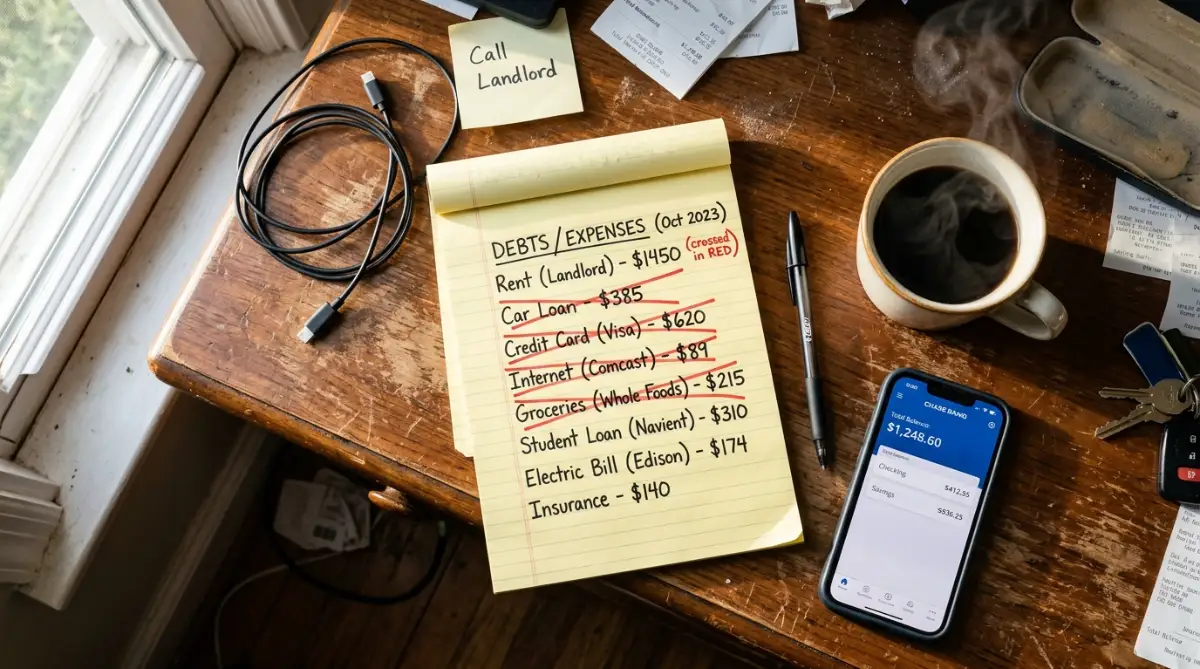
Write down every single debt you have. Include the name of the lender, the total amount you owe, the minimum monthly payment, and the current interest rate.
Seeing it all on one page might make your stomach drop at first. However, once it is written down, it stops being a mysterious monster in your head and simply becomes a math problem on a piece of paper.
Step 2: Stop Digging the Hole Deeper
Take all of your credit cards out of your wallet today. You do not necessarily have to cut them up, but you need to remove the temptation completely.
Put them in a drawer, hand them to a trusted family member, or freeze them in a block of ice if you have to. From this moment forward, if you cannot buy something with cash or the money currently in your checking account, you simply cannot afford it.
Step 3: Create a Survival Mode Budget
You need to tell your money exactly where to go, instead of wondering where it all went at the end of the month. To reverse this negative cycle, you must adopt a "survival mode" budget for a little while.
This means completely stripping away any expense that is not strictly necessary for your basic survival.
Expectation vs. Reality: Surviving a Bare-Bones Budget
- Expectation: You will stop spending money instantly and feel amazing about saving.
- Reality: The first two weeks will feel pretty annoying. You will miss your paid streaming apps and morning drive-thru coffees.
- The Fix: Swap the expensive habits instead of just dropping them. Borrow movies from your local digital library using apps like Libby, and learn to make iced coffee at home. It saves you roughly $120 a month without feeling completely miserable.
Needs vs. Wants: A Simple Breakdown
By cutting out the "Wants" temporarily, you will free up extra cash. Every single dollar you save from this process must go directly toward paying off your lenders.
Here is a highly effective breakdown of how to tackle your payments faster.
If you are struggling to decide which loan to pay off first, I highly recommend watching this simple explanation of the debt snowball method. It completely changed the way I viewed my monthly payments and gave me the quick wins I needed to stay motivated.
Step 4: Choose Your Attack Strategy
When you have some extra money from cutting your expenses, you need a specific plan on how to use it. There are two highly popular and scientifically proven methods to destroy what you owe.
The first is the Snowball Method. You organize your list from the smallest balance to the largest balance, completely ignoring the interest rates. You pay the minimum on everything, but throw every extra dollar at the smallest balance. Once that small one is gone, you feel a massive psychological boost. You then roll that payment into the next smallest one, building momentum like a snowball rolling down a hill.
The second option is the Avalanche Method. You organize your list by the highest interest rate first. Mathematically, this saves you the most money in the long run. You attack the highest interest rate aggressively while paying the minimums on the rest.
I personally suggest the Snowball Method for most people because human beings are driven by emotion and quick wins. Seeing an entire account drop to zero gives you the immense motivation you need to keep pushing forward.
Pro Tip: When I first started budgeting, I tried to cut my grocery expenses too drastically and ended up binge-ordering expensive takeout by Friday night out of sheer frustration. I quickly realized that leaving a tiny bit of "fun money" in my budget actually stopped me from making much larger, impulsive mistakes. Give yourself a small, realistic allowance in cash so you do not feel totally deprived while paying off your loans.
Step 5: Increase Your Shovel Size
Sometimes, cutting expenses is simply not enough. If your income is too low, you will naturally struggle to make any significant progress.
Think of your debt as a giant pile of snow. Cutting your budget stops the snow from falling, but increasing your income gives you a much bigger shovel to clear the driveway faster.
Look for ways to bring extra money into your home immediately. Can you sell items sitting in your garage or closet? There are likely hundreds of dollars worth of clothes, electronics, and furniture you no longer use just gathering dust.
Can you pick up overtime at your current job? What about starting a simple side hustle, like freelance writing, tutoring, or delivering groceries on the weekends? Every extra dollar you earn from these side jobs should bypass your checking account and go straight toward your balances.
Quick Reality Check: How fast can you actually make an extra $100?
Let's be honest, side hustles take time. Here is a realistic timeline based on what I have seen work:
- Selling old clothes online (eBay/Poshmark): Usually takes 1 to 2 weeks to see cash in hand.
- Food delivery (UberEats/DoorDash): You can make $100 in about 5 to 7 hours of active weekend driving.
- Freelance writing/tutoring: Finding your first paying client might take a full month, but it pays the best hourly rate long-term.
Step 6: Negotiate Like a Professional
Did you know that you can actually pick up the phone and talk to the companies you owe money to? Many people are absolutely terrified of doing this, but it is one of the most effective strategies available.
Creditors genuinely want to get their money back. If they think you are on the edge of walking away or failing to pay, they are often willing to work out a special deal with you.
Call their customer service department and politely explain your financial hardship. Ask them if they can temporarily lower your interest rate so you can catch up.
You can also ask if they have a specific hardship program that pauses late fees for a few months. The worst thing they can possibly say is no. However, if they say yes, you could easily save thousands of dollars and speed up your journey to freedom.
Myth vs Reality: Breaking Mental Barriers
When you are deeply stressed about money, it is very easy to believe false information. Let us clear up some common misunderstandings that hold people back.
Myth: Checking my credit report will lower my score.
Reality: Checking your own credit report is considered a "soft pull" and has absolutely zero impact on your score. You should check it regularly to ensure there are no fraudulent charges holding you back.
Myth: I will always be stuck in this financial mess.
Reality: Thousands of normal people clear massive amounts of financial burden every single day. It requires time and a solid plan, but your current situation is temporary, not a permanent life sentence.
Myth: Consolidating my loans magically fixes the problem.
Reality: Consolidation simply moves your mess into one single pile. If you do not fix your core overspending habits, you will end up filling up your old credit cards again while still paying off the new consolidated loan.
Protecting Your Mental Health During the Journey
Fixing your finances is a marathon, not a sprint. There will be tough days when an unexpected car repair pops up and ruins your beautiful budget for the month.
During these moments, it is incredibly easy to feel defeated and want to give up entirely. You must remember to give yourself some grace.
Do not tie your self-worth to your current bank balance. You made some mistakes, but those mistakes do not define who you are as a human being.
Talk to a trusted friend or join an online community of people who are also trying to clean up their finances. Sharing your struggles with others who actually understand your journey makes the heavy burden feel a lot lighter.
Celebrate your small victories along the way. Did you pay off your very first small credit card? Take a walk in the park, make your favorite meal at home, and acknowledge the hard work you put in.
Preparing for a Brighter Tomorrow
As you slowly begin to pay down your balances, you will notice a massive shift in your daily life. The heavy pressure in your chest will start to fade away.
You will be able to answer your phone without fear and check your mail without a sudden spike in anxiety. The money you once sent away to greedy banks will suddenly stay in your own pocket.
You can finally start building an emergency fund so that the next time life throws a curveball at you, you can handle it with cash instead of panic.
Taking back control of your money means taking back control of your entire life. It is not an easy road, but the absolute peace of mind waiting for you at the finish line is worth every single drop of effort. Start with step one today, and watch how your life begins to completely transform.
Advanced Strategies to Protect Your Future Financial Peace
Once you finally stop the bleeding and begin paying down those heavy balances, you need a solid system to keep your momentum going. Getting out of a bad financial spot is only half of the actual battle.
The other half is making sure you never fall back into that dark hole again. This requires changing the way you view money on a daily basis.
Let us look at some highly effective, expert-level habits you can slowly introduce into your daily routine. These are the exact strategies successful people use to build long-term wealth from scratch.
Master the Magic of the Sinking Fund
Most people get completely derailed by expenses they should have seen coming. A sinking fund is essentially a financial shock absorber for all those bumpy roads ahead.
Think about it logically for a second. You already know your car tires will eventually wear out, and you know the holiday shopping season happens at the same time every single year.
Instead of putting these predictable expenses on a credit card and panicking later, you save for them in advance. If you know you need $600 for new tires in six months, you simply put aside $100 every single month into a separate savings folder.
When the time comes to visit the mechanic, you pay with cold, hard cash. This simple trick prevents new emergencies and helps you master your debt managing unsecured loans without credit damage.
Implement the 48-Hour Cooling Off Rule
Online retailers spend billions of dollars studying human psychology to make you buy things impulsively. They use flashing countdown timers and limited-stock warnings just to create a false sense of urgency.
You can easily beat them at their own game by implementing a strict 48-hour cooling-off period. Whenever you see something you want to buy online, put it in your shopping cart and simply walk away from your computer.
Do not click the checkout button under any circumstances. Over the next two days, the emotional high of wanting that shiny new item will completely fade away.
Nine times out of ten, you will realize you do not actually need it at all. This one simple habit will save you thousands of dollars over your lifetime.
Automate Your Good Financial Behaviors
Human willpower is extremely limited, and we all get tired at the end of a long work week. If you rely purely on discipline to manually transfer money to your savings or your lenders every month, you will eventually slip up.
The smartest thing you can do is remove yourself from the equation entirely. Log into your banking app today and set up automatic transfers for the day after your paycheck arrives.
Before you even have a chance to look at your money, a portion of it is already sent off to pay your balances. According to the Consumer Financial Protection Bureau's guide on paying down debt, creating a structured and automated plan is one of the most reliable ways to become debt-free faster. You cannot spend money that is no longer sitting in your checking account.
Learn to Negotiate Big Life Expenses
We often focus so much on cutting out a $4 morning coffee, but we completely ignore the massive expenses eating our paychecks. If you own a home, your monthly payment is likely your biggest financial burden.
Take an afternoon to research the current market conditions in your area. You might be surprised to learn how to negotiate a lower interest rate on a mortgage in 5 steps just by calling your current lender or shopping around.
The same rule applies to your car insurance, internet bill, and cell phone plan. Call these companies once a year and simply ask for their loyalty retention department.
Politely tell them you are thinking about switching to a competitor because of their high prices. They will almost always offer you a hidden discount just to keep you as a paying customer.

The Most Dangerous Traps That Will Pull You Back In
When people finally decide to clean up their financial mess, they often rush into things blindly. In their extreme excitement to fix everything overnight, they end up making things significantly worse.
There are a few massive potholes on this journey that you need to be aware of. If you step into these traps, it could easily set your progress back by several years.
Let us carefully review these common mistakes so you can walk confidently around them.
Taking Advice from Shady Relief Companies
When you are feeling totally desperate, you become a primary target for scammers. You have probably heard radio ads promising to magically wipe out half of what you owe with one phone call.
These shady companies often charge you massive upfront fees and tell you to completely stop paying your creditors. They claim this will force the banks to settle, but in reality, it completely destroys your credit profile.
Instead of trusting a random commercial, you should always consult verified, non-profit organizations. Reaching out to trusted counselors through the National Foundation for Credit Counseling (NFCC) ensures you get honest, legitimate advice without hidden fees.
You also need to spend some time debunking common myths about debt consolidation loans and credit scores. Moving your mess from three credit cards onto one massive personal loan does not actually fix your overspending problem.
Falling for the Quick Cash Miracle
Imagine your car breaks down on a Tuesday, and you do not have enough cash in your bank account to cover the repair. In a moment of pure panic, you might consider walking into one of those bright neon storefronts offering instant cash advances.
This is arguably the single worst financial decision you can possibly make. These places often charge interest rates that are secretly equivalent to 400% per year.
You borrow $300 to fix your engine, but you end up paying back thousands over the next several months. If you are ever in this exact situation, you need to understand the dangerous trap of payday loans and safe alternatives for emergency cash flow.
Borrowing from a trusted family member, selling an old laptop, or even asking your boss for an advance on your paycheck is always a much safer option.
Closing Old Accounts the Second They Hit Zero
It feels incredibly satisfying to finally pay off a credit card that has been haunting you for years. In that moment of victory, your first instinct is usually to call the bank and close the account forever.
However, doing this can actually hurt your credit score quite badly. Your credit history length is a major factor in how banks judge your financial health.
If you close your oldest credit card, you are instantly erasing years of good payment history from your record. This is one of the silent reasons your personal loan application gets rejected every time you try to apply for something new.
Instead of closing the account, just cut the physical plastic card into tiny pieces with scissors. The account remains open and active on your report, but you remove the temptation to ever use it again.
Ignoring the Need for a Starter Emergency Fund
Many well-meaning financial gurus will tell you to throw absolutely every spare penny at your lenders. While this sounds mathematically smart, it is actually a recipe for disaster in the real world.
Life is wildly unpredictable, and bad things happen to good people all the time. If you drain your bank account down to zero to pay off a credit card, what happens when your refrigerator suddenly stops working?
You will have no choice but to reach for that exact same credit card again, starting the miserable cycle all over. This is exactly why your early debt payoff strategy might actually cost you more in emotional stress and repeated borrowing.
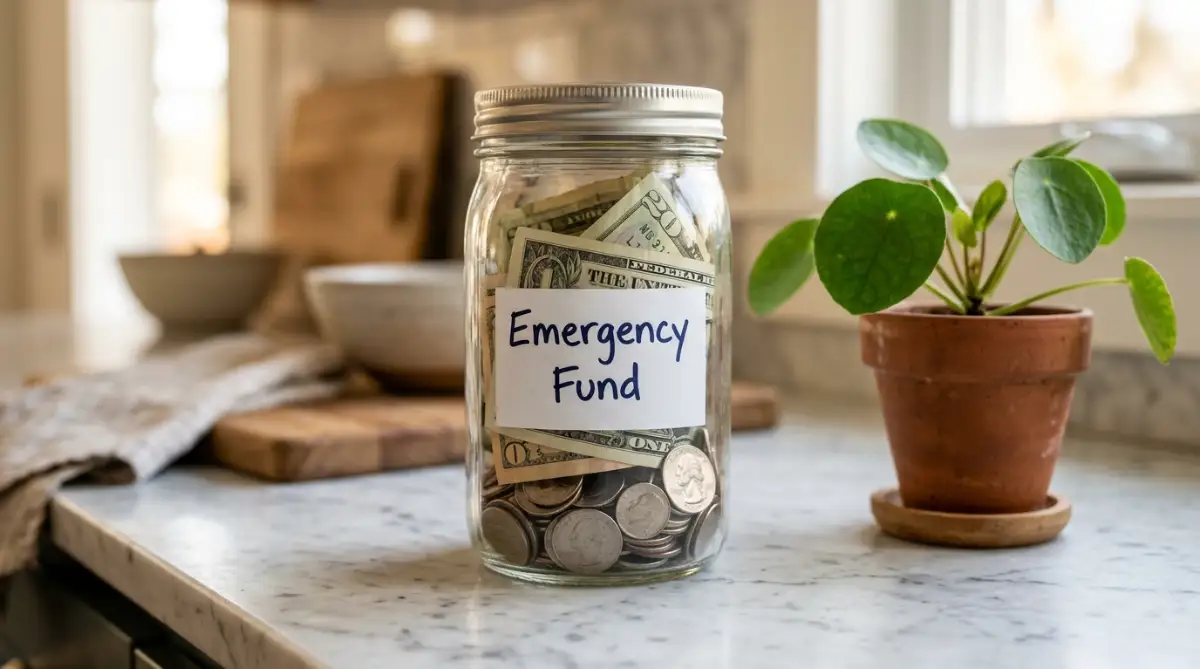
According to financial guidance from FINRA on building an emergency fund, having a small safety net is the ultimate barrier against unexpected life events. You should aim to save a basic $1,000 in a separate, hard-to-reach account before you start aggressively paying down your balances.
Running Away When You Cannot Pay
Sometimes, despite your absolute best efforts, you simply do not have enough money to cover your bills for the month. Fear takes over, and people often choose to completely ignore the problem.
They stop opening their mail and block unknown numbers on their phone. Pretending the problem does not exist only triggers late fees, penalty rates, and aggressive collection agencies.
If you know you are going to be short on money, you must be proactive. For example, knowing exactly what to do right now if you can't make your car payment can save your vehicle from being repossessed.
Call your lender before the due date, explain your temporary hardship, and ask for a one-month payment deferment. Honesty will buy you the precious time you need to get back on your feet.
Your New Life Without Financial Stress
Taking control of your finances is honestly one of the bravest things you can ever do for yourself and your family. It is entirely normal to feel completely overwhelmed at the beginning of this journey.
Just remember that nobody climbs a massive mountain in a single jump. You reach the top by taking one small, intentional step at a time, day after day.
Every single time you choose to cook dinner at home instead of ordering expensive takeout, you are taking a step. Every time you throw an extra $20 at your smallest balance, you are actively buying back your freedom.
A Quick Action Plan for Tomorrow Morning
Do not just read this article and close the tab without changing your reality. Tomorrow morning, while you are drinking your coffee, I want you to take three very simple actions.
First, log into your banking app and check your exact balance without turning away. Second, find just one monthly subscription you have not used in the last 30 days and cancel it immediately.
Third, pack your lunch for work instead of planning to buy a sandwich from the cafeteria. These three tiny actions will take less than ten minutes, but they will officially start your momentum.
You are no longer a passenger in your financial life; you are now in the driver’s seat.
Common Questions About Reversing Your Debt Cycle
How long does it actually take to become completely debt-free?
There is no universal timeline because it depends entirely on your total balance and your monthly income. For a highly disciplined person tackling average credit card balances, it usually takes between 18 to 24 months. The key is staying consistent and celebrating small milestones along the way.
Should I empty my savings account to pay off my credit cards?
You should never drain your entire savings, as this leaves you totally vulnerable to sudden life emergencies. It is much smarter to keep a starter emergency fund of about $1,000 safely tucked away. Use whatever is left over above that amount to aggressively attack your high-interest balances.
Will paying off a loan early hurt my credit score?
Paying off an installment loan early can sometimes cause a tiny, temporary drop in your credit score because it closes an active account. However, your score will usually bounce back within a few short months. The massive amount of money you save on interest is always worth a small, temporary dip in your score.
Can I still use credit cards if I pay them off entirely every month?
Yes, using a credit card for normal expenses and paying the balance in full every month is an excellent way to build your credit. However, if you are currently struggling with overspending habits, it is best to switch to cash temporarily. Only return to credit cards when you fully trust your own spending discipline.
What happens if I just stop paying my loans completely?
Ignoring your lenders will severely damage your credit score, making it nearly impossible to rent an apartment or buy a car in the future. The lenders will eventually send your account to aggressive collection agencies, and they can even sue you to garnish your future paychecks. It is always better to communicate with banks and ask for hardship programs rather than hiding.
When I finally submitted that very last payment to my bank, I actually cried sitting in my old, beat-up car. If I can slowly climb out of that dark financial hole with my sanity intact, I promise that you can too. Take a deep breath, trust your new plan, and start rebuilding your peace of mind today.
Disclaimer: The information provided in this blog post is for educational and informational purposes only and should not be considered professional financial advice. Every individual's financial situation is entirely unique. Please consult with a certified financial planner or a licensed advisor before making any major decisions regarding your money, loans, or investments.