
How a "Great Deal" Turned Into My Biggest Financial Headache
Look, we have all been there. You spot a flashy 3% interest rate online, quickly click 'Apply,' and feel like an absolute financial genius. Fast forward two months, and your bank account is bleeding from administrative charges you did not even know existed. Let me show you exactly how I accidentally fell into this hidden fee trap—and how you can smartly dodge it without needing an accounting degree.
But when my first few statements arrived, the math simply did not add up. My bank account was draining much faster than I had anticipated. I realized that my monthly payments were padded with strange administrative charges and mysterious processing costs that nobody had clearly explained to me.
I felt completely completely trapped and frustrated by my own lack of knowledge. I was losing my hard-earned money to fees that were buried deep in the fine print. That was the moment I realized the banking industry often uses bright, shiny numbers to distract us from the reality of what we are actually paying.
This is a struggle so many of us face every single day. We see a low rate plastered on a billboard or flashing on a website, and we immediately assume it means affordable monthly payments. We sign the papers, feeling a sense of relief, only to realize later that our budget is being slowly suffocated.

Quick Takeaways Before You Read On
- The rate is just a hook: The advertised percentage almost never includes origination or processing fees.
- Compounding matters: Daily compounding will drain your wallet much faster than monthly compounding.
- Always ask for the EAR: The Effective Annual Rate shows you the true, undeniable cost of the money you are borrowing.
- Monthly payments are an illusion: Stretching a contract to lower the monthly bill often doubles the actual price of your purchase.
Peeling Back the Layers: Why the Advertised Rate is Just an Illusion
If you have ever bought tickets for a concert or a flight, you already know how this game is played. You see a ticket priced at $50, which sounds like an amazing bargain. But by the time you reach the checkout page, a convenience fee, a digital delivery charge, and a processing tax have magically appeared. Suddenly, that $50 ticket costs you $85.
Borrowing money works in exactly the same way, but on a much larger and more expensive scale. The rate you see in big, bold letters is just the starting point. To truly protect your wallet, you need to understand the mechanics happening behind the scenes.
The advertised rate is basically the cost of borrowing the principal amount for one year. But it completely ignores the mandatory side dishes that come with your financial meal. Let us break down exactly what you need to watch out for so you never get caught off guard again.

The Sneaky World of Origination and Processing Fees
One of the most common ways lenders make extra money is through origination fees. Think of this as a cover charge just for entering the club. The lender charges you a fee simply for the privilege of processing your application and creating your account.
These fees are usually a percentage of your total loan amount. If you borrow $10,000 and the lender charges a 2% origination fee, that is $200 gone right out of the gate. Sometimes, they deduct this directly from your payout, meaning you only receive $9,800 but are still responsible for paying back the full $10,000.
Red Flag vs. Green Flag: Spotting Good Loan Terms
- 🚩 Red Flag: The lender refuses to explain their origination fee or tries to hide it in the fine print.
- ✅ Green Flag: The lender openly shows you the flat processing fee upfront and offers a waiver if you set up auto-pay.
Always ask your lender if they charge an upfront processing fee. If they do, ask them exactly how it will be collected. Knowing this single detail can completely change how you view a so-called cheap offer.
Understanding the Amortization Schedule (Your Financial Roadmap)
When you take out money, your payments are split into two parts: the principal (the actual amount you borrowed) and the interest (the cost of borrowing). An amortization schedule is simply a table that shows exactly how each of your monthly payments is broken down over time.
At the beginning of your term, a massive chunk of your monthly payment goes entirely toward the interest. Very little of your money actually reduces your main balance. This is why you can make payments for an entire year and feel like your balance has barely moved.
Requesting this document is your right as a consumer. You should never sign an agreement without reviewing the amortization table first. It gives you a clear, honest picture of exactly where every single dollar is going each month.
I learned this lesson the hard way a few years ago when I decided to clear a debt ahead of schedule. My realization was simple but painful: I assumed paying off my balance early would save me a fortune, only to discover I had already paid almost all the interest upfront during the first year! Always check your amortization table to see how your interest is front-loaded before making extra payments.
If you are more of a visual learner, watch this brilliant breakdown that explains how financial institutions hide their fees in plain sight.
The Danger of Prepayment Penalties
You would think that paying back your debt faster would make a bank happy. After all, you are returning their money ahead of time. However, many lenders actually penalize you for being financially responsible.
This is known as a prepayment penalty. Financial institutions calculate their expected profits based on you paying them interest over a specific period. When you pay early, they lose out on that expected profit, so they charge you a fee to make up for their "loss".
Myth vs Reality: Paying Off Your Balance Early
- The Myth: Whenever you have extra cash, you should immediately dump it into your loan to save money.
- The Reality: If your contract includes a harsh prepayment penalty, paying early might actually cost you more money than just sticking to the regular schedule.
Before you commit, you must specifically ask if there is a penalty for early repayment. If there is, you might want to look for a different lender. You deserve the freedom to become debt-free on your own timeline without being punished for it.
How Compounding Frequency Drains Your Account
Here is a slightly technical but incredibly important concept that affects your daily life: compounding frequency. This simply means how often the lender calculates the interest you owe them.
Some institutions calculate this on a monthly basis, while others calculate it daily. Daily compounding means they are charging you interest on top of the interest from the day before. Over a long period, this tiny detail can cost you hundreds or even thousands of extra dollars.
Let us look at a quick comparison to make this easy to understand:
When you are reviewing different offers, do not just look at the big numbers. Ask the representative how the interest is compounded. Opting for a monthly calculation over a daily one is a incredibly smart move that keeps more money in your pocket.
Beware of Mandatory Insurance and Add-ons
Sometimes, lenders will try to bundle extra products into your agreement. The most common extra is credit life insurance or payment protection insurance. They will frame this as a wonderful safety net for you and your family.
They will tell you that if you lose your job or get sick, this insurance will cover your payments. While this sounds comforting, these policies are usually wildly overpriced. The premiums are rolled into your main balance, meaning you are actually paying interest on the insurance premiums!
You have the right to say no to these extra add-ons. If you truly want protection, you are almost always better off buying a separate, standalone term life or disability insurance policy from a regular insurance agent. It will be much cheaper and offer far better coverage.
Late Fees and the Domino Effect
Life happens. Sometimes you forget a due date, or an unexpected expense empties your checking account right before your automatic payment hits. When this happens, you get hit with a late fee.
But a late fee is not just a one-time penalty. It gets added to your total balance. This means next month, you will be paying interest on that late fee. This creates a terrible domino effect that makes it incredibly hard to catch up once you fall behind.
Always check the grace period before you sign. A grace period is the number of days you have after your due date to make a payment without getting slapped with a penalty. Some lenders offer a generous 10-day grace period, while others offer absolutely zero leeway. Finding a lender with a forgiving grace period is a massive step toward securing your financial peace of mind.
Real-Life Scenario: The Domino Effect in Action
Let’s say your payment is $300, and you miss the 3-day grace period. The bank slaps on a $35 late fee. Next month, your balance isn't just higher; you are now paying interest on that $35 penalty. Within six months, a single missed day can quietly drain an extra $100 from your pocket just in compounded penalties.
Why Annual Percentage Yield (APY) Matters More Than You Think
While we often focus on the advertised borrowing rate, another acronym sometimes pops up: APY. This stands for Annual Percentage Yield. It is a term usually used for savings accounts, but understanding the concept helps you grasp how borrowing works.
The main difference is that APY includes the effect of compounding, while the basic rate does not. If a lender is legally forced to show you the "true" annual cost including all fees and compounding, that number will always be significantly higher than the big number they put on their billboard.
This is exactly why you have to be your own advocate. Nobody is going to tap you on the shoulder and politely point out the expensive math hidden in paragraph 14 of your contract. You have to put on your detective hat and read the documents carefully.
Taking Control of Your Financial Conversations
When you sit down with a loan officer or speak to a customer service representative on the phone, remember that you are the one in charge. They want your business. You are the customer, and you have every right to ask tough questions.
Do not feel intimidated by their big financial vocabulary. If they use a word you do not understand, stop them and ask them to explain it in simple terms. A trustworthy institution will be happy to break things down for you. If they seem annoyed or try to rush you through the signing process, consider that a massive red flag.
Write down a list of questions before you even apply. Ask about origination fees, prepayment penalties, late fees, and compounding methods. Having a checklist keeps you focused and prevents you from getting swept up in the excitement of getting approved.
Borrowing money is a significant life event, whether it is for a house, a car, or an emergency. By looking past the flashy advertisements and understanding the actual mechanics of your agreement, you are building a strong, secure future for yourself and your family.
Taking Charge: Expert Strategies to Expose Hidden Loan Expenses
Once you realize that the big, flashy numbers on advertisements are just a marketing trick, you have already won half the battle. Now, it is time to arm yourself with the real tools that financial insiders use every single day. I want to share some incredibly effective strategies that will instantly change how you look at any financing agreement.
The most powerful weapon in your financial toolkit is understanding the Effective Annual Rate, or EAR. While the standard advertised percentage just looks at the basic cost of borrowing, the EAR gives you the absolute, undeniable truth. It calculates exactly how much you will pay by factoring in the compounding periods over the year.
Imagine you are comparing two different offers from two different banks. Bank A offers a slightly lower rate that compounds daily, while Bank B offers a slightly higher rate that compounds monthly. On paper, Bank A looks like the obvious winner. But when you look at the understanding the impact of compounding interest, you might be shocked to discover that Bank B is actually cheaper in the long run.
Always ask your loan officer to provide the EAR before you make a decision. If they hesitate or try to change the subject, that is a massive red flag indicating their offer might be loaded with hidden traps.
Reading the Truth in Lending Disclosure Like a Pro
In the United States and many other places, lenders are legally required to give you a specific document before you sign any paperwork. This document is your ultimate cheat sheet. It clearly outlines the actual amount financed, the total finance charge, and exactly how much you will have paid by the end of your term.
You should treat this document like a map through a minefield. Look specifically at the box labeled "Total of Payments". This number is the harsh reality of what that borrowed money is truly costing you. According to federal guidelines for financial disclosures, lenders cannot hide fees from this specific section, making it your safest point of reference.
If the total payment amount makes you feel sick to your stomach, you need to step away from the desk. You always have the power to walk out the door, even if the paperwork is already printed.
The Art of Negotiating Away "Junk Fees"
Most people assume that every single fee on a bank contract is permanently set in stone. This is a massive misconception. Many administrative charges, application fees, and processing costs are entirely negotiable.
Lenders add these "junk fees" simply because most consumers never question them. The next time you sit down to finalize an agreement, just point to the processing fee and politely ask, "What can we do to get this waived?"
You would be amazed at how quickly a representative can make a fee disappear when they realize they might lose your business. This tactic is especially useful when you are negotiating a better rate on a house purchase, where even a tiny waived fee can save you hundreds of dollars upfront.
Protecting Your Credit Score While Shopping Around
One of the biggest fears people have is that comparing different offers will destroy their credit profile. It is true that every time a lender pulls your report, it creates a "hard inquiry". However, the credit bureaus actually want you to shop around for the smartest deal.
They use a special logic called the rate-shopping window. If you apply for multiple similar financial products within a 14 to 45-day period, the credit bureaus usually treat all those inquiries as just one single event. This means you can confidently compare offers from three different banks without tanking your score.
Knowing this gives you the freedom to hunt down the lowest fees and the most favorable terms. Do not let a pushy salesperson scare you into signing a bad deal by claiming that checking other options will ruin your credit rating. Understanding the myths about combining your debts and credit impacts gives you immense power during negotiations.

Heartbreaking Mistakes That Keep Hardworking People in Debt
We all want to believe that financial institutions have our best interests at heart. Unfortunately, the system is designed to maximize their profits, often at the expense of your peace of mind. Over the years, I have seen wonderful, hardworking people make the same painful mistakes simply because nobody taught them the rules of the game.
The emotional toll of these mistakes is devastating. Waking up in the middle of the night, sweating over how to cover basic living expenses because a hidden fee drained your account is a terrible way to live. Let us walk through the most dangerous traps so you can protect your family and your future.
The Monthly Payment Illusion
This is without a doubt the most common and destructive trap in the entire financial world. When you walk into a dealership or a bank, the very first question they ask is usually, "How much can you afford to pay each month?"
If you answer that question, you have already lost the negotiation. Lenders can magically make any monthly payment fit your budget simply by stretching out the length of the agreement. They might take a standard 48-month agreement and stretch it out to 84 months just to make the monthly number look small and friendly.
But what they do not tell you is that stretching the timeline means you are paying compounding interest for years longer than necessary. You might end up paying double the original value of the item. This is exactly why breaking down an auto loan amortization schedule is so incredibly important before buying a vehicle.
Always negotiate based on the total purchase price and the true cost of the money, never just the monthly payment.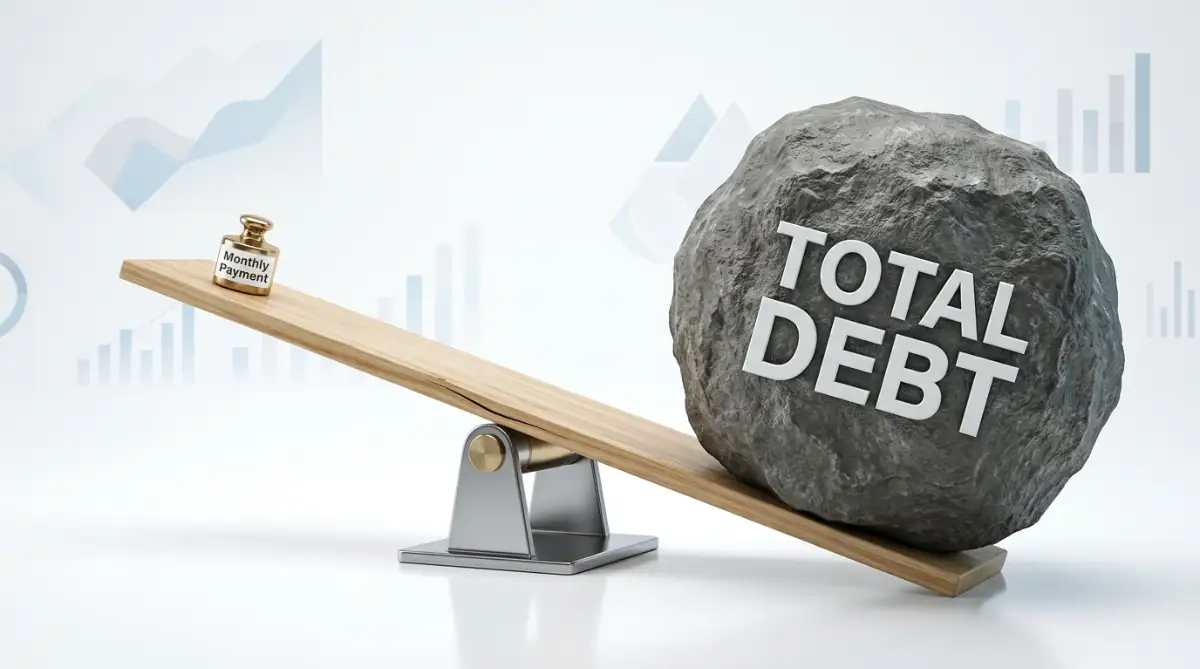
Falling for the Precomputed Interest Trap
Most standard agreements use simple interest, meaning your interest is calculated based on what you actually owe that day. If you pay off your balance early, you save a ton of money. But some sneaky lenders use something called precomputed interest.
With precomputed interest, the lender calculates exactly how much profit they want to make over the entire term on day one. They then bake that total profit into your contract. If you suddenly get a bonus at work and decide to pay everything off three years early, you still have to pay all the interest for those remaining three years.
It is incredibly frustrating to realize that your hard work and financial discipline are actually benefiting the bank instead of your own family. Always ask your lender to clarify if the interest is simple or precomputed. This is highly relevant when dealing with strategies that punish early balance payoffs.
Rolling Old Debt into New Debt (The Negative Equity Cycle)
Sometimes people get tired of their current car or house and want an upgrade before they have fully paid off their old one. Lenders will happily offer to take the remaining balance of your old debt and roll it straight into your new agreement.
This sounds incredibly convenient, but it is a massive financial disaster waiting to happen. You end up paying interest on top of old interest, and your new balance instantly becomes much larger than the actual value of whatever you just bought. According to consumer protection insights from the FDIC, this negative equity cycle is one of the fastest ways to destroy your personal wealth.
If you find yourself stuck in a situation where you are constantly rolling over balances, you have to stop the cycle. It might mean driving an older car for a few more years, but the financial freedom you gain is worth so much more than a new set of wheels. If you are ever finding yourself unable to cover your auto payment, rolling it into a new, more expensive contract is almost never the right answer.
Turning to Desperation Borrowing Without a Plan
When an emergency hits and the bank account is empty, panic naturally takes over. In these terrifying moments, people often turn to fast-cash options that promise instant relief without checking credit scores. These institutions prey on your fear and desperation.
The fees and rates associated with these instant approvals are often astronomical. What starts as a small $500 emergency can quickly spiral into a $2,000 nightmare within a matter of weeks. They bury predatory terms deep in the fine print, knowing you are too stressed to read them properly.
Before you ever sign away your future during an emergency, you have to stop and breathe. Look into safer alternatives like credit union builder programs, borrowing against a life insurance policy, or setting up a strict payment plan with your original creditor. Avoiding these dangerous high-interest emergency borrowing options will save you from months of intense anxiety and financial ruin.
Your Roadmap to Financial Confidence and Smarter Deals
You now have a deep understanding of exactly how the lending industry tries to squeeze extra money out of your pockets. You know that the shiny percentage rate on the billboard is just a distraction from the real math happening behind the scenes. More importantly, you know exactly how to fight back and protect your hard-earned money.
The next time you need to finance a major purchase, do not just blindly accept the first paper they slide across the desk. Bring a notebook, write down your questions, and demand clear, honest answers. Ask to see the amortization table, demand the Effective Annual Rate, and boldly ask them to remove unnecessary administrative fees.
Financial institutions rely on your confusion and passive acceptance to maximize their profits. By simply taking a deep breath, reading the fine print, and asking the right questions, you completely change the power dynamic in the room. You become an educated consumer who simply cannot be taken advantage of.
If you want to maintain this positive momentum, start applying these same principles to every area of your personal budget. Whether you are handling unsecured debt responsibly or planning for a major life event, taking control of the details always leads to greater peace of mind.
I know from my own personal experience that stepping into a bank used to make my stomach tie in knots. But once I learned how to decode the true costs hidden in those contracts, my fear completely disappeared and was replaced with absolute confidence. You have everything it takes to take control of your financial destiny starting right now, and I am so excited for you to experience that incredible feeling of freedom.
Questions Real People Ask About Sneaky Borrowing Costs
Why is my APR always higher than my actual interest rate?
The basic interest rate only tells you the cost of borrowing the principal amount. Your APR is legally required to include the basic interest rate plus any extra broker fees, origination charges, and mandatory insurance costs. This makes the APR a much more accurate reflection of what you will actually pay over a year.
Can I legally refuse to pay a loan origination fee?
You cannot legally refuse a fee once you sign the contract, but you can absolutely negotiate it before signing. Many banks will lower or completely waive the origination fee if you simply ask or threaten to take your business to a competitor.
What happens if I ignore the fine print on my financial agreement?
Ignoring the fine print means you might accidentally agree to predatory terms like prepayment penalties, daily compounding interest, or massive late fee triggers. Reading those small details is the only way to ensure your monthly budget stays safe and predictable.
How do I find out the real cost of my financing before signing?
Always ask the lender for a "Truth in Lending" disclosure and a full amortization schedule before you put your pen to the paper. Look specifically for a box labeled "Total of Payments," which shows exactly how much money will leave your bank account by the end of the term.
Are early repayment penalties actually legal for banks to charge?
Yes, in many cases, financial institutions are legally allowed to charge you a fee for paying off your balance ahead of schedule. However, consumer protection laws vary by location, and many modern lenders are moving away from this practice to stay competitive. Always ask directly if an early payoff fee exists in your specific contract.
Disclaimer: The information provided in this article is for educational and informational purposes only and should not be construed as professional financial advice. Every individual's financial situation is entirely unique. Please consult with a certified financial planner, licensed advisor, or legal professional before making any major financial decisions, signing legal contracts, or committing to any borrowing agreements. The author and publisher are not responsible for any financial losses or damages resulting from the use of this information.