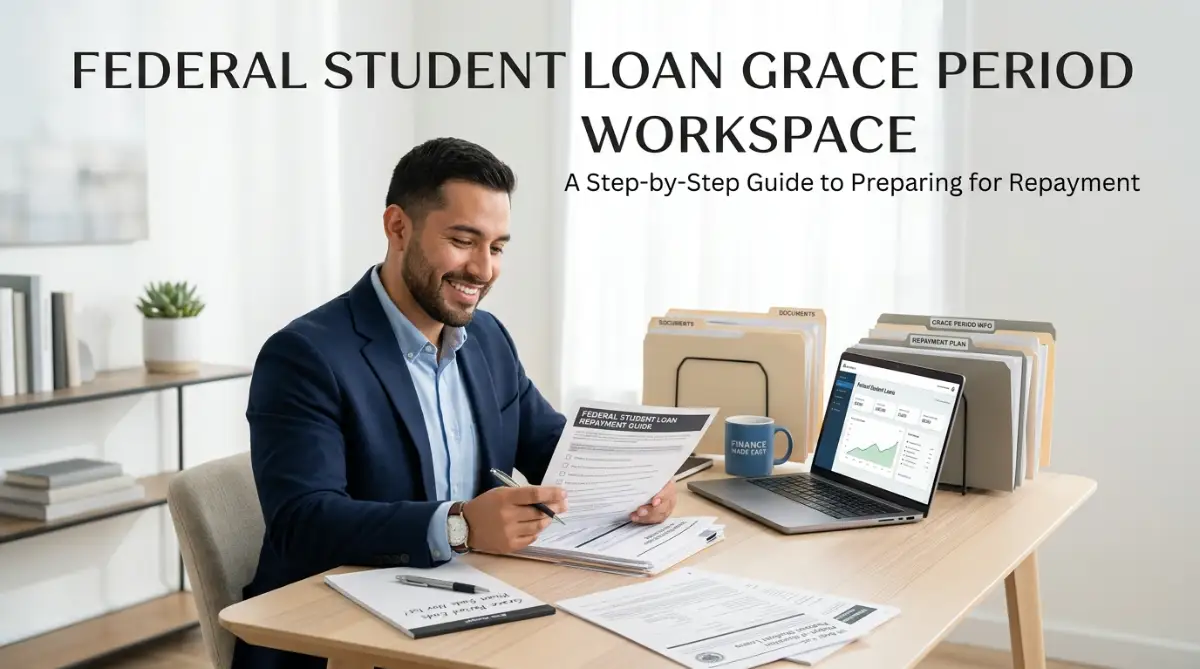
The Silent Financial Trap Stealing Your Peace of Mind
Hey, let's be real—nobody actually enjoys reading the microscopic fine print on a loan agreement. But last year, skipping page four of my contract cost me exactly $450 in "origination fees" I didn't even know existed. If you are borrowing money right now, I am going to show you exactly where banks hide their extra charges so you don't make the same expensive mistake I did.
But when the deposit finally hit my checking account, the amount was hundreds of dollars short. I instantly panicked, assuming the bank had made a massive mistake with my money transfer. My hands were shaking as I dialed customer service to demand answers.
The representative calmly pointed me to page four of my agreement, right down in the tiny, microscopic print. I had been hit with a massive upfront charge that I never even noticed during the fast digital signing process. My heart sank as I realized I would be paying interest on money I never actually received.
I felt entirely foolish, trapped, and taken advantage of by a system designed to confuse normal, hardworking people. The truth is, I am not alone in this frustrating experience. Everyday folks are losing sleep over this exact same scenario right now across the country.
We borrow money because we need a desperate lifeline during tough times or unexpected emergencies. But instead of throwing us a helpful rope, financial institutions often throw a heavy anchor tied to hidden costs. These unexpected charges quietly drain your bank account every single month without you realizing it.
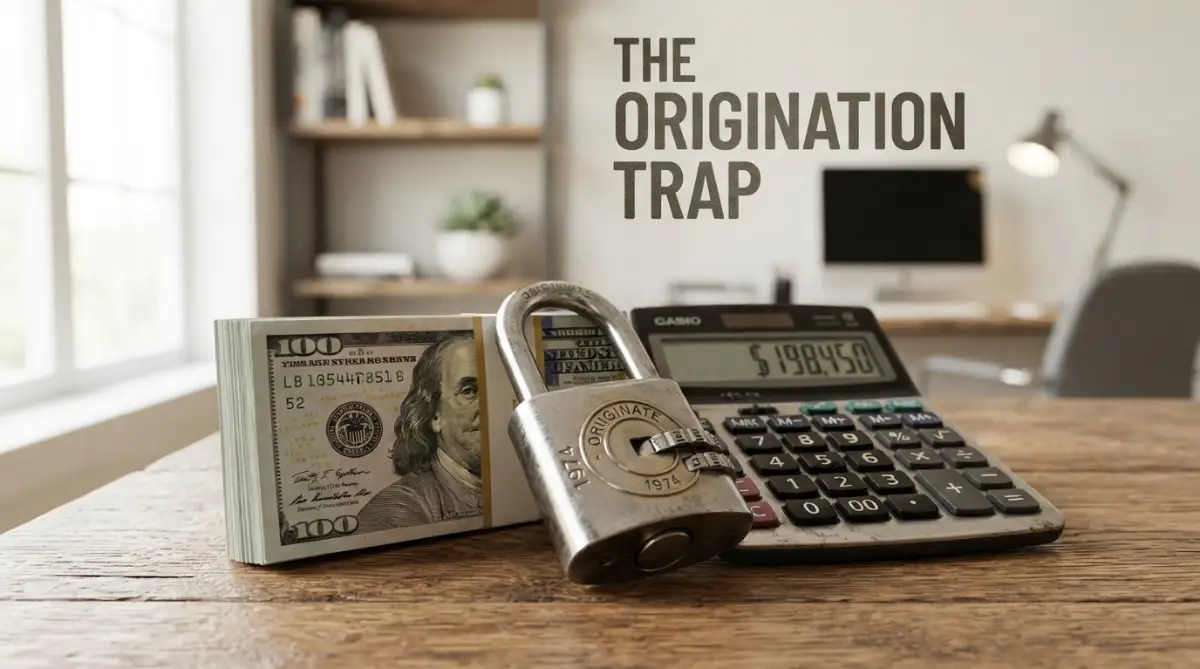
The 30-Second Cheat Sheet
Don't have time to read the whole thing? Here is what you need to keep your money safe:
- Check the APR: The regular interest rate is just marketing. The APR shows your real total cost.
- Watch for Origination Fees: Banks can take up to 8% of your money before you even get it.
- Say No to Add-ons: Optional credit insurance is usually a bad deal—you can decline it safely.
- Ask for the Truth: Always demand a "Truth in Lending" document before you sign your name.
Looking Beyond the Advertised Interest Rate
When we shop for borrowed funds, we naturally focus on the bold numbers screaming at us from the advertisements. Banks love to flash low interest rates in massive fonts to grab our attention quickly. However, that shiny number rarely tells the whole story of what you will actually pay.
The real cost of your borrowed money is hidden behind confusing legal terms and heavy financial jargon. Lenders make their real profit by sneaking extra costs into the tiny text at the bottom of the page. You have to learn how to translate this complex language into plain English.

Let us break down the exact sneaky traps lenders use to increase their profits at your expense. By knowing exactly what to look for, you can protect your wallet and keep more money in your pocket.
The Upfront Surprise: Understanding Origination Charges
The most common trap people fall into is the dreaded origination charge. Lenders frame this as a simple "processing" or "administrative" cost for evaluating your application. In reality, it is a huge chunk of your money taken right off the top before you even see it.
Instead of asking you to write a check for this cost, they simply deduct it from your total requested amount. If you ask for ten thousand dollars, they might only deposit nine thousand five hundred into your account. Yet, your monthly payments are still calculated based on the full ten thousand dollar amount.
This means you are paying monthly interest on five hundred dollars that you never even got to spend. It is a brilliant trick for the lender, but a terrible financial hit for you. Always check the exact dollar amount you will receive compared to the amount you are legally borrowing.
The Sneaky Math: What You See vs. What You Pay
Here is a quick breakdown of how an origination fee actually hits your pocket on a $10,000 loan:
- What you asked for: $10,000
- The Bank's "Processing Fee" (5%): $500
- Money that actually hits your bank account: $9,500
- The amount you pay interest on every month: $10,000
- The Bottom Line: You pay interest on $500 you never even got to spend!
Pro Tip: I learned the hard way to always ask the loan officer a very specific question before signing anything. I now say, "Can you show me exactly where the origination charge is listed and exactly how much will hit my bank account?" Doing this one simple thing would have saved me hundreds of dollars and a ton of anxiety.
The Penalty for Being Responsible
One of the most unfair practices in the financial world is the prepayment penalty. Imagine working incredibly hard, taking on extra jobs, and saving up to clear your debt early. You finally send in that big final payment, expecting a sense of relief and freedom.
Instead of congratulations, the lender slaps you with an unexpected penalty charge for paying them back too fast. They do this because when you pay early, they lose out on all the future interest they planned to collect. They use this penalty to guarantee they make their expected profit, no matter what you do.
Always look for a clear statement saying "No Prepayment Penalties" before you agree to anything. You should never be punished financially for being responsible and clearing your debts ahead of schedule.
Before you continue reading about the sneaky traps banks use, watch this eye-opening breakdown of how lenders calculate their hidden numbers.
The Late Payment Avalanche Effect
Some contracts state that missing a due date by just one day triggers a "default penalty rate." This means your nice, low interest rate suddenly skyrockets to a massive double-digit number. Your monthly payment instantly becomes unmanageable, pushing you further into financial distress.
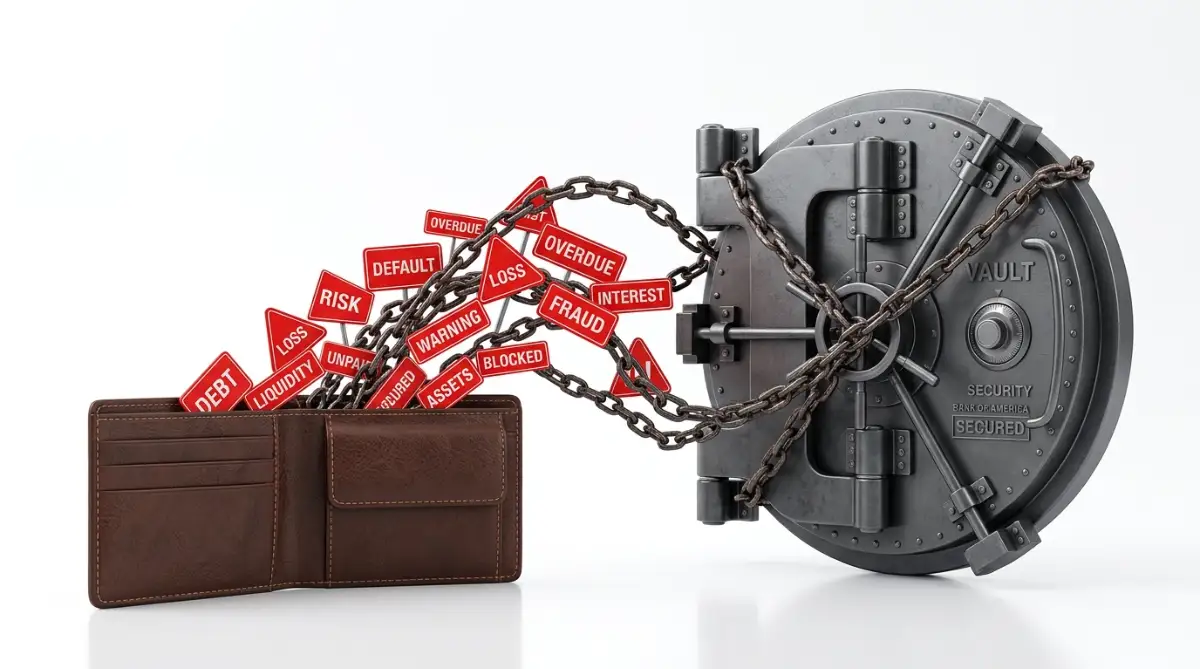
You must specifically look for the "Grace Period" section in your document. Find out exactly how many days you have after the due date before the heavy punishments begin.
Decoding The Check Processing Trap
In our modern digital era, you would assume paying your bill is completely free and easy. Surprisingly, many lenders charge you simply for the privilege of handing them your money. This is often called a payment processing fee or a convenience fee.
If you choose to pay by phone with a live agent, they might charge you fifteen dollars just for the call. If you try to pay with a debit card instead of a direct bank link, you get hit with another charge. Over a three-year term, these small convenience charges can add up to a massive amount of wasted money.
Expert Insight: Beware of "Protection" Plans
When you sit down to sign your final documents, you might see a pre-checked box for "Credit Protection Insurance." The lender will aggressively tell you this is for your own safety and peace of mind. They will claim it covers your payments if you lose your job or get seriously sick.
What they fail to mention is that this insurance is incredibly expensive and extremely hard to actually use. The rules for making a successful claim are so strict that most people are easily denied when they need it most. This optional add-on gets secretly rolled into your total balance, increasing your monthly burden.
You have the absolute right to decline this extra coverage. Never let a pushy sales representative make you feel guilty for saying no to their expensive add-ons.
Myth vs. Fact: Credit Protection Plans
- The Myth: The bank says this plan acts like a magic shield, paying off your balance if you get sick or fired.
- The Fact: Most policies have massive loopholes. For example, they often will not cover you if you are self-employed or if your illness is considered a "pre-existing condition." You are paying for a safety net full of giant holes.
The APR Reality Check
You will often see two different percentage numbers listed on your paperwork. One is the standard interest rate, and the other is the Annual Percentage Rate (APR). Most borrowers get confused and just look at the smaller number, assuming that is what they pay.
- Interest Rate: The basic cost of borrowing the principal amount.
- APR: The true, total cost of your borrowing, including all those sneaky upfront administrative charges.
The APR gives you a much more honest picture of how expensive this debt truly is. If the APR is significantly higher than the base rate, you know the agreement is heavily loaded with extra junk costs. Always use the APR to compare offers from different banks.
Application and Credit Check Costs
Some greedy institutions start charging you before they even approve your request for funds. They might ask for a non-refundable application charge just to look at your paperwork. They claim this covers the cost of pulling your credit report and verifying your employment details.
If they deny your request, they keep your money anyway. In today's highly competitive market, there are plenty of excellent lenders who never charge you just to apply. You should simply walk away from any company asking for cash before giving you an official offer.
Uncovering the Annual Maintenance Trap
You might assume that once the money is in your account, the surprise charges stop. Unfortunately, some contracts include a yearly maintenance or administration cost. They charge you a set amount every single year just for keeping the account open in their system.
This is incredibly common in personal lines of credit, but it sometimes sneaks into standard installment agreements too. They will quietly add this charge to your balance on the anniversary of your signing date. You will just notice your balance unexpectedly jump up one month for seemingly no reason.
Dealing with Failed Payment Fees
Life happens, and sometimes a scheduled transfer bounces due to insufficient funds in your checking account. When this happens, your personal bank will likely charge you an overdraft or return fee. But the bad news does not stop there.
The lender who tried to take the money will also hit you with a "Returned Payment Fee". This double hit can easily drain fifty to eighty dollars from your pocket in a single day. Make sure you fully understand what happens if a transfer fails, and try to keep a small buffer in your checking account.
How to Fight Back and Protect Yourself
Now that you know exactly what the lenders are hiding, you hold the power in the negotiation. Never let a fast-talking representative rush you through the signing process. Take the paperwork home, sit in a quiet room, and read every single line carefully.
Use a bright highlighter to mark any word or charge you do not fully understand. Call the representative back and make them explain every single highlighted section in plain, simple English. If they get annoyed or refuse to explain clearly, that is your immediate signal to find a different lender.
Remember, you are the customer, and they want to profit off your business. Do not be afraid to ask them to waive certain upfront costs to win your signature. Many lenders will actually drop their administrative charges if they know you are comparing them to a competitor.
Taking just one extra hour to thoroughly review your disclosure document can save you a massive amount of stress. It keeps your hard-earned money in your own pocket, right where it belongs. You deserve a fair, transparent financial agreement that actually helps you move forward in life.
Taking Total Control: Pro Strategies for Outsmarting Lenders
Now that we know exactly where the financial traps are hidden, it is time to flip the script. You do not have to be a helpless victim when sitting across from a loan officer. You can actually take complete control of the negotiation process before you sign anything.
The smartest borrowers know that financial agreements are almost always negotiable. Banks want your business because your interest payments keep their lights on. If you walk in with confidence and the right knowledge, you can easily force them to drop their sneaky extra costs.
Ask for the "Truth in Lending" Disclosure First
Before you even discuss monthly payments, you need to ask for a specific legal document. The government requires lenders to provide a Truth in Lending disclosure to every single applicant. This document is designed to strip away the marketing fluff and show you the bare math.
According to the official guidelines provided by the Consumer Financial Protection Bureau (CFPB), this form must clearly state your exact APR, finance charges, and total amount financed. It forces the bank to put all their cards on the table in a standardized format.
If a lender hesitates or makes excuses when you ask for this paper, grab your ID and leave immediately. Honest financial institutions will gladly hand this over without a second thought. Reviewing this paper is the fastest way to spot extra charges before they get secretly added to your balance.
The Magic Negotiation Script
Many people feel incredibly awkward asking a professional banker to remove a fee. We are socially conditioned to just accept whatever rules a big institution puts in front of us. But pushing back is actually much easier than you think.
Next time you spot an administrative charge, try using this exact script. Look the representative in the eye and say, "I have excellent payment history, and I am currently comparing offers from two other banks. If you can waive this origination charge today, I will sign the paperwork right now."
You would be shocked at how often this simple sentence works like pure magic. Loan officers often have the hidden authority to waive certain junk fees to close a deal quickly. If you never ask, you will simply pay the full price every single time.
Document Every Verbal Promise
One of the biggest lessons I learned is that spoken words mean absolutely nothing in the banking world. A friendly customer service agent might promise you that a specific penalty will not apply to your account. They might even swear that a late charge can be easily reversed with a simple phone call.
However, if that promise is not printed in black and white on your final contract, it does not exist. Lenders are legally bound by the written text, completely ignoring any friendly chats you had during the application process. Consumer advocates at the National Consumer Law Center (NCLC) constantly warn borrowers about relying on verbal assurances from sales representatives.
Always take a bright pen and ask the representative to physically point to the clause they are talking about. If they cannot find it in the agreement, demand that they print a new contract with that exact promise included.
Know Your True Borrowing Power
Sometimes, banks try to sneak in higher rates simply because they think you are desperate. They might assume you do not know your true creditworthiness, so they throw unnecessary risk charges onto your file. Understanding exactly where you stand gives you immense power to push back against these inflated costs.
In fact, ignoring your own credit profile is one of the silent reasons your personal loan application gets rejected every time. When you know your score is strong, you can confidently laugh at any attempt to charge you a "credit processing fee." You become a highly desirable customer, giving you the upper hand to demand zero-fee terms.

The Dangerous Traps Borrowers Fall Into When Reading Fine Print
Even smart, educated people make massive mistakes when reviewing their borrowing options. The sheer excitement of getting approved often clouds our judgment at the final hurdle. Let us explore the real-life traps that catch ordinary folks off guard every single day.
Scenario 1: The Rushed Lunch Break Signing
Imagine squeezing a trip to the bank into your quick thirty-minute lunch break. The loan officer slides a massive stack of thirty pages across the desk and points to the highlighted signature lines. You feel pressured by time, so you just blindly scribble your name on every page without reading a single sentence.
This is exactly how people unknowingly agree to expensive credit insurance and optional add-on products. The bank relies on your impatience to slip these highly profitable products into your final balance. Never review financial documents when you are in a rush, distracted, or hungry.
Take the entire packet home, pour yourself a cup of coffee, and read it in total silence. A good rule of thumb recommended by the Federal Trade Commission (FTC) is to sleep on any major financial decision before signing the final dotted line.
Scenario 2: The Consolidation Illusion
Many folks take out new money specifically to pay off multiple old credit cards. The goal is to bundle everything into one single, easy monthly payment at a lower rate. This strategy sounds amazing on paper, but it comes with a massive hidden pitfall.
People often get hit with unexpected balance transfer fees or disbursement charges by the new lender. Suddenly, debunking common myths about debt consolidation loans and credit scores becomes a harsh reality when the new balance is higher than the old debts combined. If you are not aggressively checking the new terms, you might just be swapping one bad situation for an even more expensive one.
Ignoring the Default Triggers
Nobody ever plans to fail on their financial obligations. Because we always assume the best, we completely skip over the section labeled "Default Terms and Conditions." This is a massive mistake that can ruin your financial future in the blink of an eye.
You need to know exactly what happens if you lose your job and miss two payments. Will they instantly send your account to a vicious collection agency? What kind of insane penalty rates will they slap onto your remaining principal balance?
Understanding these terms is your best defense against worst-case scenarios. If you ever find yourself struggling, knowing the rules is the first step to surviving a default: everything you must know about the loan collection process. Prepare for the absolute worst, so you are never caught off guard by aggressive banking tactics.
The Early Payoff Punishment Trap
It feels completely backwards, but being financially responsible can actually trigger heavy fines. Let us say you receive a large work bonus and decide to wipe out your entire borrowed balance three years early. Instead of being happy, the bank hits you with a massive prepayment penalty.
They do this to recoup the interest payments they expected to earn over those remaining three years. This completely defeats the purpose of trying to get out of debt quickly. Always remember why your early debt payoff strategy might actually cost you more if you do not check your contract for early closure penalties beforehand.
Do's and Don'ts of Reviewing Loan Paperwork
To keep things extremely simple, I have created a mental checklist that I run through every single time I deal with a bank. Memorize these simple rules, and you will instantly become a nightmare for sneaky loan officers.
DO:
- Do bring a calculator to your appointment and physically crunch the numbers yourself.
- Do ask the representative to explain confusing legal terms in simple, everyday words.
- Do compare the final APR with at least two other competing institutions before committing.
- Do request a fully blank copy of the contract just to practice reading the terms without pressure.
DON'T:
- Don't assume the bold numbers on the marketing brochure match the actual legal contract.
- Don't let anyone tell you that a specific charge is mandatory if it sounds like an optional add-on.
- Don't ever turn to predatory lenders out of sheer frustration with traditional banks. It is always better to wait than to fall into the danger of payday loans: why high interest debt destroys lives.
- Don't sign anything electronically on your phone where you cannot easily read the tiny print.
Why You Must Double-Check the Math
We often assume that banking software is completely flawless and always generates the correct numbers. The reality is that humans program these systems, and humans frequently make data entry errors. The loan officer might accidentally type an extra zero into your origination fee field.
If you just glance at the final monthly payment and say "looks good," you are blindly accepting their math. Take five minutes to multiply your monthly payment by the total number of months in your term. Compare that final massive number to the amount of actual cash you are receiving today.
If the difference is shockingly huge, you are paying way too much in hidden charges and inflated interest. Do not be afraid to point out math discrepancies to the manager on duty. Your vigilance is the only thing standing between your hard-earned cash and their corporate profits.
Your Next Steps Toward Borrowing With Total Confidence
Dealing with banking paperwork does not have to feel like a terrifying trip to the dentist. The confusion and anxiety you feel are completely by design, but education is your ultimate shield. Once you know exactly what a prepayment penalty or an origination trap looks like, they lose all their hidden power.
You now have the exact tools needed to scan any complex legal document and spot the junk fees hiding in the margins. You understand how to negotiate like a professional and demand fair treatment from pushy sales representatives. Most importantly, you know that walking away from a bad deal is always a valid and powerful option.
Every time you refuse to pay a sneaky administrative charge, you are protecting your family's future wealth. You can safely master your debt: managing unsecured loans without credit damage just by reading the fine print carefully. The power is finally back in your hands, right where it belongs.
My biggest turning point was realizing that banks need my business much more than I need their specific offer. I started treating my signature like a highly valuable prize that lenders had to actually earn through honesty. Take a deep breath, grab your highlighter, and never let a confusing piece of paper intimidate you again.
Questions People Ask About Sneaky Borrowing Costs
Are hidden bank charges legally allowed in agreements?
Yes, unfortunately, most of these extra costs are entirely legal as long as they are disclosed somewhere in the paperwork. Banks get away with it by burying these charges deep inside massive paragraphs of confusing legal jargon. That is why reading the entire Truth in Lending document is your best defense.
Can I cancel my agreement if I find surprise costs later?
In some specific cases, you might have a short window of a few days to cancel the deal without heavy penalties. However, once that tiny window closes, you are usually legally locked into the contract you signed. It is always significantly easier to spot the charges before you sign rather than fighting to reverse them later.
Do origination charges count as regular interest?
No, an origination charge is a completely separate upfront cost taken directly out of your borrowed amount. However, it does heavily impact your overall Annual Percentage Rate (APR) by making the money more expensive to borrow. Think of it as a heavy entrance fee just to get through the bank's front door.
How can I easily spot a prepayment penalty?
Look for specific sections in your contract labeled "Early Payoff," "Prepayment Terms," or "Early Closure." If the language mentions charging a percentage of the remaining balance or a set number of months' interest, that is a penalty trap. Always demand a contract that explicitly states "No Prepayment Penalty" in bold text.
Will negotiating these fees hurt my credit score?
Absolutely not! Asking a loan officer to waive an administrative cost is simply a conversation and does not touch your credit report. By the time you are negotiating the final terms, the bank has already pulled your credit history anyway.
Disclaimer: The information provided in this article is for educational and informational purposes only and does not constitute financial, legal, or professional advice. Always consult with a certified financial advisor or legal professional before signing any loan agreements or making major financial decisions. We do not guarantee the accuracy of any third-party links or rates mentioned.