Mastering Your Federal Student Loan Grace Period: A Complete Guide
Let's be real—graduating is awesome until that countdown timer on your student loans starts ticking. You have exactly six months before the bills hit, and hiding from them won't make them go away. I've been in your shoes, so let me show you exactly how to use this grace period to save your hard-earned money and keep your sanity intact.
If you are reading this right now, I know exactly how that sinking feeling in your chest feels. You just finished years of hard work, hoping to finally start your adult life. Instead, you are immediately handed a massive bill that feels impossible to pay.
Most recent graduates face this exact same nightmare. You are trying to find a decent job, figure out rent, and buy groceries, all while this invisible debt cloud hangs over your head. The lack of clear information makes everyday life incredibly stressful.
But I want to assure you that you do not have to live in this state of constant panic. Taking control of this situation is entirely possible, and it is much easier than your anxious mind is telling you. Let us break down exactly how you can protect your peace of mind and your wallet.

Your Quick Survival Guide:
- You have 6 months before your first bill—use this time to plan, not panic.
- The government pays interest on Subsidized debt, but Unsubsidized debt grows every single day.
- Paying just
15−
15−
- 20 a week right now stops interest from permanently sticking to your total balance.
- You can (and should) apply for Income-Driven Repayment (IDR) before your grace period even ends to secure a low monthly bill.
Decoding the Six-Month Window of Opportunity
The very first thing we need to do is understand exactly what is happening behind the scenes of your debt. The six months following your graduation, leaving school, or dropping below half-time enrollment is your breathing room. This time is designed to help you transition into the workforce.
However, treating these six months as a vacation from your responsibilities is a huge mistake. This is actually your preparation phase. What you do during these days will directly impact your financial health for the next decade.
You need to shift your mindset from avoiding the problem to actively preparing for it. Knowing the exact rules of the game gives you a massive advantage. Let us look at what is quietly happening to your money right now.
The Silent Growth of Interest (What You Need to Know)
Not all borrowed money behaves the same way during this six-month pause. The government treats different types of borrowed funds in very specific ways. Understanding this difference is the secret to not getting caught off guard by a suddenly larger balance.
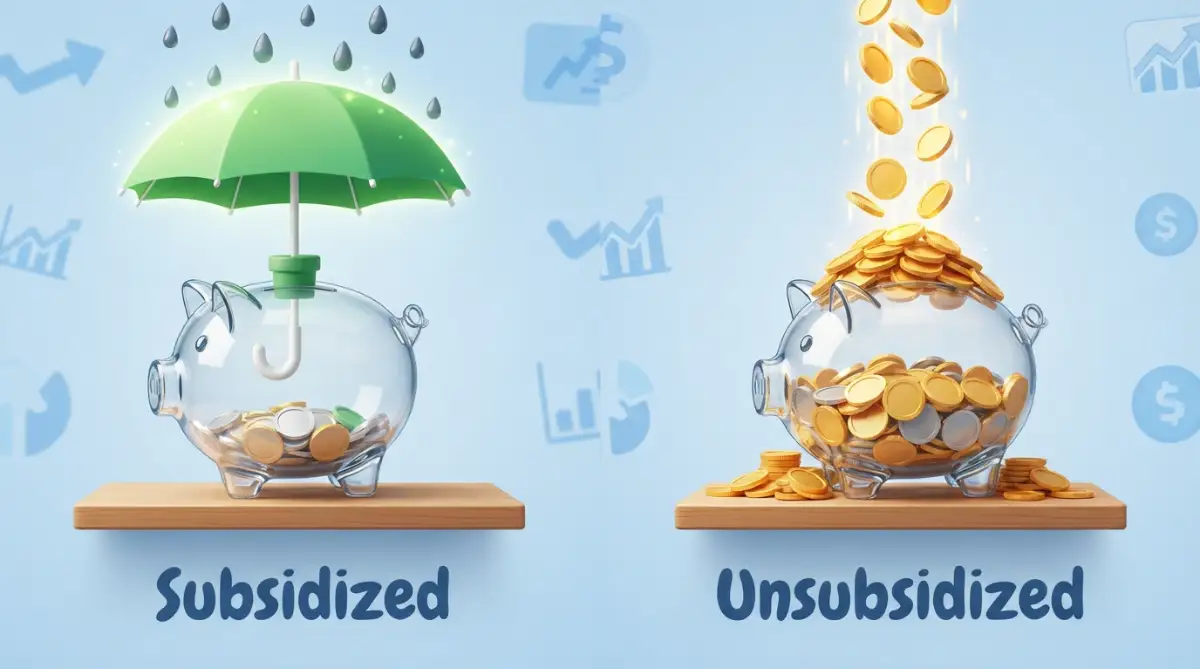
If you have Direct Subsidized funds, you are in a relatively safe zone. The government actually pays the interest that adds up on these specific balances during your six-month pause. Your total amount owed stays exactly the same as the day you walked across the graduation stage.
On the other hand, Direct Unsubsidized funds are a completely different story. Interest starts piling up on these balances from the moment the money is sent to your school. This interest continues to grow every single day during your six-month break.
I learned this the hard way during my own transition out of college. I assumed all my debt was paused and completely ignored my accounts, only to log in months later and find out my total balance had grown by hundreds of dollars because of unsubsidized interest. If I had known, I would have made small $20 payments just to keep that interest from piling up.
Quick Math Reality Check: Let’s say you have $20,000 in unsubsidized loans at a 5% interest rate. If you ignore it for six months, you’ll rack up about $500 in interest. By the time your grace period ends, your new balance jumps to $20,500. Just throwing $20 a week at it right now keeps that extra weight from growing!
Myth vs Reality: Common Misunderstandings
There is a lot of bad advice floating around on social media about paying back what you owe. Let us clear up some of the most common myths right now. Relying on rumors can end up costing you a lot of money in the long run.
Myth 1: You are not allowed to make payments until the six months are over.
Reality: You can absolutely start paying early. There are no penalties for making early payments, and doing so can save you a lot in interest charges.
Myth 2: Your loans will automatically forgive themselves if you ignore them long enough.
Reality: Federal debts do not disappear just because you ignore them. In fact, ignoring them leads to default, which will severely damage your credit score and financial future.
Myth 3: You only have one single repayment option.
Reality: The government offers many different ways to pay back what you owe based on your income. You are never stuck with just the standard ten-year plan if you cannot afford it.
Actionable Strategies to Take Control Today
Now that we know the rules, we need a solid game plan. You cannot fix everything in one day, but you can take small, manageable steps. These steps are designed to reduce your anxiety by giving you clear, actionable tasks.
Do not try to do all of these at once. Pick one task for today, and save the rest for later this week. Building financial habits is a marathon, not a sprint.
Here is a simple breakdown comparing the two main types of debt you might hold. This will help you decide which ones need your attention first.
Tracking Down Your Loan Servicers
The most common question people ask is, "Who do I even pay?" The government does not actually collect your monthly checks directly. They hire private companies, known as servicers, to handle the billing and customer service.
You might actually have more than one servicer if you borrowed money across multiple years. To find out exactly who holds your debt, you need to log into the official StudentAid website using your FSA ID. Your dashboard will list every single servicer assigned to you.
Once you know who they are, go directly to their specific websites and create your user accounts. Update your contact information immediately. Missing an important notice just because they have your old college dorm address is a very common and costly mistake.
Here is a great visual breakdown to help you understand your options better. Watch this short explanation to see how others are managing this exact situation successfully.
Building a Mock Repayment Budget
One of the most effective ways to prepare for your upcoming bills is to practice paying them. We call this the "Mock Budget" strategy. It tricks your brain into getting used to living on less money before the actual bills arrive.
Log into your servicer's website and look at your estimated future monthly payment. Let us say it is estimated to be $250 a month. Starting this month, move $250 from your checking account into a separate savings account.
Act as if that money is completely gone and you cannot touch it. This helps you adjust your daily spending habits without the risk of actually missing a real bill. By the time your real payments begin, you will already be used to your new budget.
Plus, when your six months are up, you will have a nice little pile of cash in your savings account. You can use that money to make a massive first payment or keep it as an emergency fund. It is a win-win situation for your financial security.

My Personal Mock Budget Trick: I opened a completely separate, fee-free savings account just for this. Every Friday, I automatically transferred $40 into it. By month six, I had nearly $1,000 saved up. I used half to knock out my unpaid interest before it stuck to my main balance, and kept the rest for emergencies.
Exploring Income-Driven Repayment (IDR) Early
Many graduates look at the standard ten-year payment plan and panic because the monthly number is too high. If your entry-level salary is low, or if you are still looking for a job, you have options. The government created Income-Driven Repayment (IDR) plans specifically for this situation.
These plans look at how much money you currently make and your family size. They then calculate a monthly payment that is actually affordable for your specific situation. Sometimes, if your income is low enough, your required monthly payment could literally be zero dollars.
You do not have to wait for your six-month break to end before applying for these programs. In fact, applying early is a very smart move. It ensures that when your first bill finally arrives, it is already set to an amount you can actually pay without starving.
To apply, you will need to provide your most recent tax return or proof of your current income. The process is entirely free on the official government website. Never pay a private company to enroll you in an IDR plan, as it is a known scam.
Organizing Your Financial Documents
When dealing with government systems, being organized is your best defense against errors. Sometimes systems glitch, or a servicer might make a mistake with your paperwork. If you do not have your own records, proving them wrong becomes very difficult.
Create a specific digital folder on your computer or a physical binder just for this topic. Download and save copies of your master promissory notes. Keep a record of every confirmation email you receive when you update your account details.
If you ever call your servicer on the phone, write down the date, the time, and the name of the person you spoke with. Write a short summary of what was promised during that call. This small habit has saved many people from huge administrative headaches down the road.
The Mental Health Aspect of Financial Planning
We talk a lot about numbers, interest rates, and budgets, but we rarely talk about the emotional toll. Managing large amounts of debt at a young age is incredibly draining. It is completely normal to feel overwhelmed or scared by the numbers on your screen.
Please remember that your self-worth is not tied to your account balance. This is simply a math problem that requires a logical strategy to solve. Thousands of people before you have successfully navigated this system, and you will too.
Talk to your friends about what you are going through. You will be surprised to find out that almost all of them are dealing with the exact same fears. Sharing knowledge and supporting each other makes the entire process feel much less lonely and terrifying.
Taking small actions, like logging into your account just to look at the dashboard, is a victory. Every time you face the numbers instead of running away, you take back a little bit of your power. You are building financial resilience that will serve you well for the rest of your life.
Next-Level Strategies for Total Repayment Confidence
Once you understand the basic rules of your six-month break, it is time to level up your approach. The difference between struggling with debt for decades and paying it off early comes down to a few smart habits. Let us look at some highly effective tactics that most borrowers completely ignore.
These are not just random theories. These are practical steps you can take today to protect your future bank account.
The Power of Micro-Payments Before the Deadline
You do not need hundreds of dollars to make a real dent in your balance. During your six-month pause, even tiny payments can create a massive positive impact. Think of your unsubsidized interest like a leaky faucet filling up a bucket.
Every single day, a few drops of interest fall into that bucket. If you wait six months to empty it, the bucket gets incredibly heavy and spills over. By making small $15 or $20 micro-payments every week, you constantly empty that bucket before the water causes damage.
I used to skip buying a coffee on Friday mornings and immediately transfer that $5 to my servicer. It felt like nothing at the time, but it prevented a huge chunk of interest from attaching to my principal balance. You can easily set up these tiny automatic transfers directly through your bank's mobile app.
Understanding the Monster Called Capitalization
There is a specific financial event that happens the exact moment your six-month break ends. It is called interest capitalization, and it is the main reason people feel like their balances never go down. When this happens, all the unpaid interest you gathered over the last few months gets permanently glued to your main loan amount.
Let me give you a quick real-life scenario to explain this clearly. Imagine you borrowed $10,000, and over your break, it gathered $500 in interest. If you do not pay that $500 before the break ends, your new official starting balance becomes $10,500.
From that day forward, the servicer charges you interest on the new $10,500 amount, not the original $10,000. You are literally paying interest on top of old interest. You can read the exact legal definitions of how interest rates and capitalization work on the Federal Student Aid website to see the math for yourself.
Directing Windfalls with a Purpose
When you graduate or leave school, you might receive some extra cash. This could be graduation money from relatives, a small signing bonus at a new job, or a seasonal tax refund. The immediate temptation is to spend this money on a nice vacation or a new wardrobe.
Instead of blowing it all, try applying the 50/50 rule to these sudden windfalls. Take half of that money and treat yourself because you absolutely deserve to celebrate your hard work. Take the other half and throw it directly at your unsubsidized balances before capitalization hits.
This simple move protects you from long-term financial stress. However, you should also be careful with how you plan your payoff timeline, because sometimes early payoff strategies might cost you more if you empty your emergency savings completely. Always keep a small cash buffer in your bank account just in case life happens.
Automating Your Good Habits
Willpower is a limited resource, especially when you are stressed about finding a job. If you rely on your memory to log in and make payments every month, you will eventually miss one. Setting up auto-pay is the smartest defensive move you can make.
Most federal servicers actually reward you for setting up automatic deductions from your checking account. They usually offer a tiny, yet helpful, 0.25% interest rate reduction just for enrolling. Over the lifespan of a ten-year repayment term, that small percentage saves you a noticeable amount of cash.
Make sure you set the auto-pay date a few days after you normally receive your paycheck. This prevents accidental overdraft fees if your paycheck is ever delayed by a day or two.

The Dangerous Traps Most New Graduates Fall Into
Navigating this transition period is tricky, and there are landmines everywhere. I have seen incredibly smart people make terrible financial choices simply because they were scared or misinformed. Let us walk through the most common pitfalls so you can actively avoid them.
The "Ostrich Effect" and Ignoring the Mail
The absolute worst thing you can do right now is hide from the problem. Many graduates see an envelope or email from their servicer and immediately throw it away without reading it. They hope that if they do not look at it, the debt will somehow pause itself.
This behavior quickly leads to missed deadlines and eventually destroys your credit score. If you ignore the warnings long enough, your account will enter default, which is a miserable experience. The government can easily garnish your wages or take your tax refunds to cover the debt.
If you are already worried about falling behind, you must learn about surviving a default and the loan collection process so you know your rights. The Consumer Financial Protection Bureau offers excellent resources for managing debt anxiety safely. Facing the envelopes is always less painful than facing a collection agency.
Falling for Debt Relief Scams
Because millions of graduates feel desperate, scammers see this as a highly profitable opportunity. Your phone might start ringing with automated voices promising "immediate total forgiveness" or "special government relief programs." They will sound incredibly professional and often use fake government logos in their emails.
They will usually ask you for your FSA ID password or demand an upfront processing fee to handle your paperwork. Please listen to me carefully: the Department of Education will never call you to demand a fee for a repayment program. Every single official repayment plan is 100% free to apply for on the actual government website.
If you ever give these scammers your login details, they can lock you out of your own federal accounts. To protect yourself, always review the Federal Trade Commission guidelines on avoiding student debt relief scams. Stay extremely guarded with your personal information.
The "New Job, New Car" Illusion
Getting your first professional paycheck feels amazing, and the urge to upgrade your lifestyle hits hard. Many young adults immediately run to a dealership to finance a brand-new car because they feel they earned it. They completely forget that their massive student bills are hiding just around the corner.
Six months later, the grace period ends, and suddenly they have a $400 car payment and a $350 education bill hitting at the same time. Their entire paycheck gets swallowed by monthly obligations, leaving them broke and stressed. Before taking on new auto debt, you need to be very careful.
If you make this mistake and panic, you will soon be searching for what to do if you are struggling to make a car payment. Wait until your federal repayments have officially started and you are comfortable with the budget. Drive your old car or use public transit just a little bit longer.
Rushing into Private Refinancing
You might see flashy ads on social media offering incredibly low interest rates if you refinance your federal debt with a private bank. While this sounds like a great deal on the surface, it is often a massive trap for recent graduates. When you move federal funds to a private company, you permanently lose all your government protections.
You lose access to income-driven plans, you lose the option to pause payments if you lose your job, and you lose any chance of future public service forgiveness. Private lenders do not care if you get laid off; they want their money every single month regardless of your situation.
You should definitely educate yourself on debt consolidation and credit score myths before signing any binding paperwork. The National Consumer Law Center closely monitors these private lending practices and strongly warns borrowers about giving up federal safeguards. Keep your federal benefits safe unless you have a massive, highly secure income.
Asking Family Members to Co-Sign Unnecessarily
Sometimes, out of pure panic, a graduate might ask a parent or grandparent to step in and help restructure their financial obligations. Getting family involved with legal documents is a very dangerous game that ruins relationships. If you fail to pay, that family member is now legally hunted for your mistakes.
Your late payments will instantly ruin their retirement credit score without warning. If you are ever thinking about getting help, they must read this before they endorse a student loan for you. It is far better to jump on a zero-dollar income-based plan than to drag your parents into a binding legal contract.
Your Personal Blueprint for Financial Freedom
We have covered a massive amount of ground today, but you are now equipped with the exact knowledge you need to win. You no longer have to sit in the dark, guessing what will happen when your six months run out. You hold the power to shape your own financial future.
Your Action Plan for This Week
Do not try to fix your entire life today. Just pick one small, simple task to build your momentum.
First, grab a notebook and log into the official Federal Student Aid dashboard. Write down the name of your servicer, their phone number, and your exact total balance. That alone is a massive victory over your financial fear.
Next, open up a simple calculator and figure out how much unpaid interest is currently sitting on your account. Decide if you can afford to send them $10 or $20 this Friday to slow down the growth.
Finally, if you do not have a steady job yet, go look at the Income-Driven Repayment application online. You can learn how to manage unsecured obligations without credit damage just by communicating your income level to the right people. It takes maybe ten minutes to fill out the form, and it can save you from a major panic attack next month.
If you ever wonder why banks turn you down for a credit card or an apartment lease later in life, it usually traces back to how you handle your first major obligations. Knowing the reasons loan applications get rejected will remind you why staying current on these federal payments is so important.
I want you to know that the heavy chest and the sleepless nights do eventually go away. When I made my very first organized payment, the relief I felt was unbelievable. I stopped letting the debt control my mood, and I finally took my life back. You are so much stronger than the numbers on your computer screen, and I promise you will get through this smoothly if you just take it one small step at a time.
Common Questions About Managing the Six-Month Transition
Can I switch my repayment plan after my first bill arrives?
Yes, you are never permanently locked into a single plan. You can contact your servicer and request a change to a different repayment strategy at any time for absolutely free.
Will this six-month pause negatively impact my credit score?
No, using this official break will not hurt your credit history at all. As long as you are officially in this status, the government reports your account as current and in good standing to all the major bureaus.
What happens if I decide to go back to graduate school?
If you enroll in a new program at least half-time, you usually qualify for an official deferment. This pauses your required payments again, but you still need to watch out for any unsubsidized interest growing in the background.
If I pay extra one month, does it lower my bill for the next month?
Usually, making an extra payment does not lower your fixed monthly bill amount for the following month. Instead, the extra cash pays down your main balance faster, which saves you a lot of money in long-term interest charges.
Can I pick exactly which specific balance my extra money goes toward?
Yes, but you have to specifically tell your servicer how to apply the extra cash. You can log into your online portal and manually target the specific balance with the highest interest rate to maximize your savings.
Disclaimer: The information provided in this article is for educational and informational purposes only and does not constitute financial, legal, or tax advice. Borrowing rules and government policies frequently change. Always consult directly with your official loan servicer or a certified financial planner regarding your specific personal situation before making major financial decisions.