
The Suffocating Fear of Losing Your Vehicle (My Honest Confession)
Look, I know why you clicked this. You just checked your bank account, realized you are short on your upcoming car payment, and your heart instantly dropped. You are probably wondering if a tow truck is going to show up in your driveway tonight. Stop panicking and take a breath. I have been in this exact financial mess before, and I am going to show you the exact steps you can take today to protect your car and get your lender off your back.
I knew deep down that I simply did not have the money to cover it. The panic that hit me was totally overwhelming, and my hands actually started shaking.
My mind instantly jumped to the worst possible scenarios. I pictured a tow truck backing into my driveway in the middle of the night to take away the only way I could get to work.
I felt embarrassed, scared, and completely alone in this financial mess. I even thought about parking my car a few blocks away just to hide it from the repo guys.
But hiding from a financial problem never actually solves it. I learned the hard way that pretending the payment does not exist only makes the situation ten times worse.
If you are feeling that exact same tightness in your chest right now, please take a deep breath. You are not a bad person, and you are definitely not the first person to face this exact struggle.
We attach a lot of our personal pride to our cars. Losing your vehicle means losing your freedom, your ability to drop the kids at school, and your easy access to earning an income.
The mental toll of this situation is heavy. However, letting fear freeze your actions is the most dangerous thing you can do right now.
There are exact, proven steps you can take today to protect your car and get back on track. Lenders actually have systems built into their businesses specifically for people going through exactly what you are going through.
Let us break down exactly how you can stop the panic and take control of your auto loan right now.
Quick Survival Guide: If You Are Short on Your Car Payment
- Do not ignore the problem: Call your lender's "Loss Mitigation" department before your payment hits the 30-day late mark.
- Use your grace period: Check your contract. You usually have 7 to 15 days before any real late fees even apply.
- Ask for a deferment: Most banks will allow you to skip a month and simply push that payment to the very end of your loan term.
- Slash other expenses fast: Raise your auto insurance deductible today to instantly free up emergency cash for your car payment.
What Actually Happens When You Miss a Car Payment? (Separating Fear from Reality)
Before we start taking action, we need to understand the actual timeline of a missed auto loan payment. Anxiety usually comes from the unknown.
When you know exactly how the system works, the bank loses its power over your emotions. Most people think their car will be gone the morning after they miss a payment, but that is simply not true.
In reality, the auto financing industry follows a very specific set of rules and timelines. Understanding this timeline gives you the breathing room to make smart, logical decisions.
Myth vs. Fact: The Repossession Reality Check
Before you let your anxiety take over, let's clear up some common lies you might have heard about missing a payment:
- Myth: The bank wants your car back immediately.
- Fact: Repossessions cost lenders thousands of dollars in towing and auction fees. They actually lose money when they take your car.
- Myth: Hiding the car in a friend's garage stops repossession.
- Fact: Repo agents use GPS and license plate scanners. Hiding it just adds massive legal and investigation fees to your debt.
Days 1 to 15: The Hidden Grace Period
Almost every standard auto loan comes with a built-in grace period. This is a specific window of time right after your due date where the payment is legally not considered late yet.
For most major banks and credit unions, this grace period lasts anywhere from seven to fifteen days. During this time, the lender will not report you to the credit bureaus.
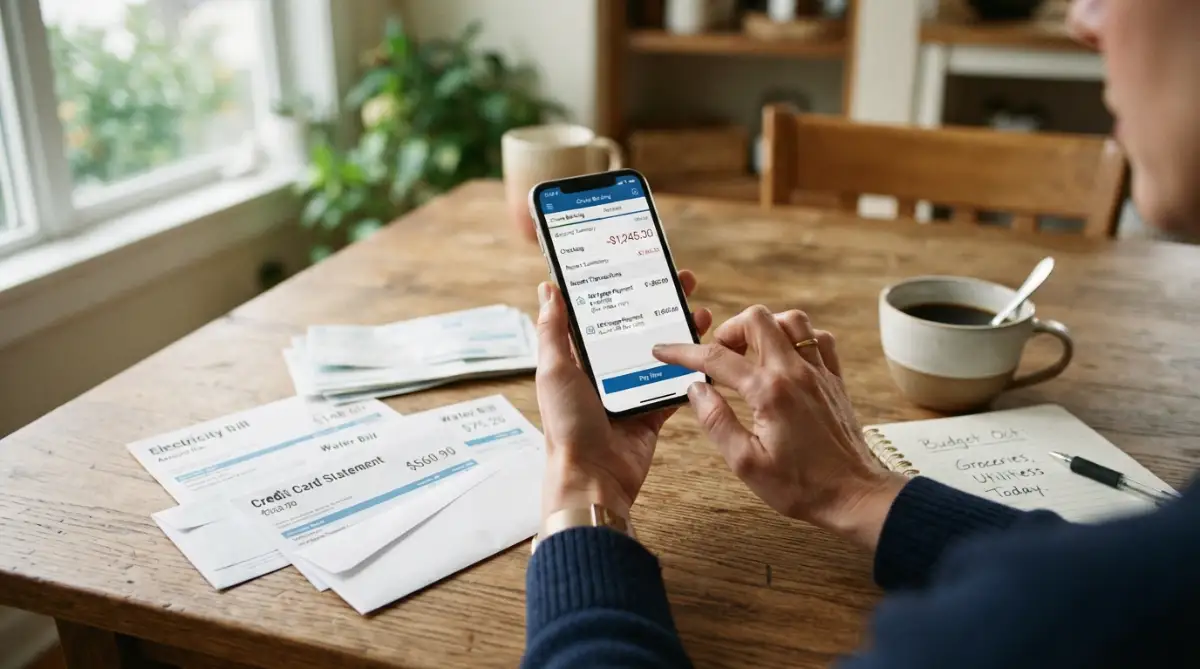
You might get a friendly automated text message or an email reminding you about the due date. However, your car is entirely safe from being repossessed during this initial window.
It is important to read your original loan paperwork to find out exactly how many days you have in your specific grace period. If you can gather the money within this timeframe, you will usually just pay a small late fee, and the problem is completely solved.
Days 16 to 30: The Collection Calls Begin
If your grace period ends and no money has been paid, the situation moves to the next level. Your lender will now officially flag your account as past due.
This is when the phone calls will start coming in. The bank representatives will call you at home, at work, and on your cell phone to ask when you plan to pay.
Many people panic at this stage and just block the bank's phone number. Ignoring these calls is the biggest mistake you can possibly make.
The people calling you at this stage are usually not trying to take your car just yet. They are actually trained to figure out why you are late and see if they can get you back on a payment schedule.
Beyond 30 Days: Credit Damage and Repossession Risks

Once you hit the thirty-day mark, the lender will report the missed payment to the major credit bureaus. This will instantly drop your credit score.
At this point, the risk of repossession becomes a very real threat. Lenders hate repossessing cars because it costs them a lot of money to hire tow trucks, store the cars, and sell them at auctions.
They usually lose money on repossessions. This is a massive advantage for you because it means the bank genuinely wants to work out a deal with you to avoid taking the car back.
Your Immediate Action Plan to Save Your Vehicle Today
Now that we understand how the timeline works, it is time to take aggressive action. You cannot sit back and hope a magical check arrives in the mail.
You need to step up and act like the manager of your own financial life. Here are the most practical, realistic steps to handle an auto loan you cannot afford this month.
Step 1: Pick Up the Phone and Ask for a Hardship Program

Your very first move should be to call your auto lender directly. Do this before you even miss the payment if possible.
Lenders have specific departments dedicated entirely to helping people who are facing sudden financial hardships. When you call, do not use the regular customer service number.
Ask the first person who answers to transfer you to the Loss Mitigation Department or the Hardship Assistance Team. These specific agents have the authority to actually change your payment terms.
When you get them on the phone, be completely honest but keep it brief. You do not need to cry or tell them your entire life story.
Just say something like this: "Hello, my name is John. I have experienced a sudden drop in my income this month, and I will not be able to make my full car payment. I want to keep my car and pay my debt. What hardship options do you have available for me?"
Here is an amazing video that breaks down exactly how to speak to bank representatives without feeling intimidated or scared. Watch this before you make your phone call:
By calling them first, you show that you are responsible. The bank will instantly view you as a cooperative customer rather than someone who is trying to run away from their debt.
Step 2: Request a Formal Loan Deferment or Extension
If you only need a temporary break, a loan deferment is your best friend. A deferment is an official agreement with your bank to skip one or two payments right now.
The bank takes the payments you missed and simply moves them to the very end of your loan term. This means your loan will just last a month or two longer than you originally planned.
Think of your auto loan like a long train. A deferment just takes a passenger car from the front of the train and moves it to the very back. The length of the train changes, but the cargo stays the same.
During a deferment, you will not get late fees, and your car will not be repossessed. Your credit score will also stay protected because the bank agrees to report your account as current.
I remember when I finally swallowed my pride and asked my credit union for a deferment. I realized that the bank tellers are just regular people doing their jobs, and they were actually incredibly kind and eager to help me skip a payment without making me feel guilty. Getting a human on the phone instead of fighting with the automated menu changed everything for me.
You need to know that interest will usually continue to grow during the months you skip. So, your final loan balance will be slightly higher, but this is a very small price to pay to keep your car safe today.
Step 3: Offer to Make a Partial Payment
Sometimes the bank will say no to a full deferment. If that happens, do not just hang up the phone in defeat.
Your backup plan is to offer a partial payment. If your normal car payment is four hundred dollars, ask if they will accept two hundred dollars this month to keep the account in good standing.
Any money you send shows good faith. Lenders use a computer system to track your risk level.
When their system sees that you are consistently sending whatever you can afford, your account is pushed to the bottom of the repossession list. A partial payment proves that you are trying your absolute best.
Always get the agreement in writing. Ask the representative to email you a confirmation that your partial payment will prevent repossession for the current billing cycle.
Step 4: Check Your Insurance for Credit Life or Disability Riders
This is a secret step that almost nobody talks about. When you bought your car at the dealership, the finance manager probably rushed you through signing dozens of papers.
Many people unknowingly agree to buy something called "Credit Life and Disability Insurance" when they purchase a car. This is a special type of insurance policy attached directly to your car loan.
If you cannot pay your car loan because you recently lost your job, got severely sick, or got injured, this insurance policy might actually cover your monthly payments for you.
Go pull your original loan paperwork out of your glove box or filing cabinet. Look for any charges labeled "Credit Protection", "Disability Rider", or "Payment Protection".
If you find this on your contract, call the dealership or the bank immediately. You might be fully covered, and the insurance company will literally send a check to the bank on your behalf while you recover.
Step 5: Refinance the Auto Loan for a Longer Term
If your inability to pay is not just a one-month problem, you need a long-term fix. If your monthly budget is permanently tighter now, your current car payment is simply too high for your lifestyle.
Refinancing means you get a completely new loan to pay off your current loan. The goal here is to stretch the timeline out further to make the monthly math work in your favor.
For example, if you have three years left on your loan at five hundred dollars a month, you could refinance it to a five-year loan. This action instantly drops your monthly payment to three hundred dollars.
Yes, you will pay more total interest over those extra two years. However, saving two hundred dollars every single month right now might be the exact relief your family needs to survive.
You can try to refinance with local credit unions, online banks, or community lenders. Just keep in mind that you usually need a decent credit score to get approved for a new loan.
Step 6: The "Sell It Yourself" Escape Route
Sometimes we have to face the hard truth that a car is simply too expensive for our current reality. If you have tried all the steps above and still cannot afford the payment, you need to exit the situation cleanly.
Do not let the bank repossess the car. A repossession will completely destroy your credit score for up to seven years, making it impossible to rent an apartment or get a credit card.
Instead, take control and sell the car yourself. Start by finding out your car's exact payoff amount by calling your lender.
Then, go online and check what companies like CarMax, Carvana, or local dealerships are willing to pay for your specific vehicle today. If your car is worth more than what you owe the bank, you are in a great position.
You can sell the car, pay off the entire bank loan, and actually put the extra leftover cash straight into your pocket. You can then use that extra cash to buy a cheap, reliable used car with cash so you never have to worry about a monthly car payment again.
If you owe more than the car is worth (which is called being underwater), you might need to take out a small personal loan to cover the difference. It is still infinitely better to owe a small personal loan than to deal with a devastating car repossession on your public record.
Beyond the Panic: Insider Strategies to Keep Your Vehicle Long-Term
Getting a temporary break from your auto lender is a huge relief. But you need to realize that a one-month deferment is just a financial bandage.
If your income does not magically increase next month, you will be right back in this exact same stressful situation. To permanently solve an auto loan crisis, you have to restructure the way your money flows.
Think of your monthly income like a bucket of water. Right now, there are too many holes at the bottom of your bucket, and the water is draining out before it can reach your car payment.
You do not necessarily need a bigger bucket. You just need to aggressively plug those holes today.
The Insurance Premium Trick
Here is a brilliant strategy that almost nobody thinks about when they are short on vehicle funds. Your car payment is only half of the expense of owning a vehicle.
The other massive expense is your auto insurance premium. If you cannot afford the car loan, you can often free up enough cash by completely slashing your insurance costs.
Call your insurance agent right now and ask them to increase your deductible. A deductible is the amount you pay out of pocket if you get into a crash.
If you raise your deductible from five hundred dollars to one thousand dollars, your monthly insurance bill will drop dramatically. You can take that extra thirty or forty dollars and apply it directly to your auto loan.
Here is a quick breakdown of how this simple insurance trick worked for a friend of mine just last month:
- Old Insurance (Full Coverage, $500 Deductible): $185 per month
- New Insurance (Full Coverage, $1,000 Deductible): $110 per month
- Monthly Cash Saved: $75.
- That extra $75 was exactly what he needed to negotiate a partial payment agreement with his credit union. It only took him a 10-minute phone call to set this up.
You can also ask your insurance provider to temporarily remove full coverage if your lender allows it, though most banks require it. At the very least, shop around for a cheaper policy this afternoon.
Leveraging Credit Counseling Programs
Sometimes the math just does not work, no matter how hard you try. If your car payment is competing with credit card bills and personal loans, you are fighting a losing battle.
This is when you need to bring in professional backup. There are certified, non-profit organizations designed specifically to help regular people reorganize their debts.
You can reach out to trusted organizations like the National Foundation for Credit Counseling (NFCC) for a completely free financial review. These experts will look at your entire financial picture without judging you.
They can often negotiate with your other creditors to lower your monthly credit card payments. If you can legally reduce your other debts, you suddenly have enough cash left over to comfortably pay your auto loan.
If you have a messy mix of different debts, you might want to look into restructuring them. For example, debunking common myths about debt consolidation loans and credit scores can help you realize that combining your debts into one smaller payment might save your car.
Exploring Alternative Income Avenues
When you are desperately short on your auto payment, your car can actually become the tool that saves itself. You already own a vehicle, which means you own a money-making machine.
You can sign up for delivery apps, grocery shopping services, or ride-sharing platforms by tonight. Just working a few hours on Friday and Saturday evenings can easily generate an extra two hundred dollars a week.
That extra weekend money is more than enough to cover a standard monthly vehicle payment. You are essentially using the car to pay for its own existence.
If driving extra miles is not an option, you have to look at what you can sell around your house. Old electronics, clothes you never wear, or unused sporting equipment can easily be sold on local online marketplaces to cover a missing payment.

Dangerous Moves That Guarantee You Will Lose Your Car
When people feel trapped financially, their brains often go into a state of panic. This panic makes us do totally irrational things that completely destroy our financial future.
I want to warn you about the most toxic traps people fall into when they miss an auto payment. Avoiding these specific mistakes is just as important as talking to your bank.
The Payday Loan Death Spiral
This is the absolute worst mistake you can make when trying to save your vehicle. You realize you are short on cash, so you drive down to a local payday loan store to borrow the money for your car payment.
These places promise fast cash with no background checks, but they are setting a trap. They often charge outrageous interest rates that can reach over four hundred percent.
By next month, you will owe your normal car payment plus the massively inflated payday loan. It is like trying to put out a small kitchen fire by throwing a bucket of gasoline on it.
Instead of turning to predatory lenders, you should always look for safer alternatives. If you have bad credit, learning how to get unsecured loans with bad credit safely through reputable credit unions is a much smarter move.
If you have been rejected by standard banks before, do not lose hope. You just need to understand the silent reasons your personal loan application gets rejected every time so you can fix your profile and get approved for a fair interest rate.
Playing Hide and Seek with the Repo Man
There is a very common myth that if you hide your car in a friend's closed garage, the bank cannot repossess it. This is a terrible idea that will cost you thousands of dollars.
Banks are incredibly skilled at finding vehicles. They use advanced license plate scanning cameras, private investigators, and GPS tracking to locate hidden cars.
Every single day you hide the car, the bank adds extra investigation fees and towing penalties to your total loan balance. What started as a simple missed payment suddenly becomes a massive mountain of legal fees.
Furthermore, the Consumer Financial Protection Bureau (CFPB) states that while a repo agent cannot use physical force or break into a locked garage, they can absolutely take your car from your driveway or a public street. Hiding it only delays the inevitable and makes the financial damage much worse.
The "Voluntary Surrender" Misunderstanding
Some people get so exhausted by the collection calls that they simply drive the car to the bank and hand over the keys. They believe that if they voluntarily give the car back, the debt simply disappears.
This is called a voluntary surrender, and it is a massive financial illusion. Giving the keys back does not wipe away your auto loan.
The bank will still take the car to an auction and sell it for a fraction of what it is actually worth. If you owe fifteen thousand dollars, and they sell it at auction for eight thousand dollars, you still legally owe them the remaining seven thousand dollars.
This remaining balance is called a "deficiency balance." The bank can and will sue you for this leftover money, and they can even garnish your future paychecks.
You also get a massive negative mark on your credit report, just like a forced repossession. Never walk away from a vehicle without understanding the math behind the auction process.
Your Next Moves for Financial Peace of Mind
We have covered a massive amount of ground today, and I know your head might be spinning. But you are now armed with the exact knowledge that the banks do not want you to know.
You are no longer a victim of a bad financial month. You are an informed consumer who knows exactly how to navigate the auto loan system.
Let us quickly recap your game plan so you know exactly what to do when you wake up tomorrow morning. First, you are going to take a deep breath and log into your banking app to check your exact due date and grace period.
Next, you will call the loss mitigation department before the collection agents start calling you. You will confidently ask for a deferment, a hardship program, or offer a partial payment to keep the account active.
If the bank refuses to help, you will immediately start looking at the true value of your car online. You will take control of the sale yourself rather than letting a tow truck take your power away.
Remember that missing a car payment is a math problem, not a moral failure. You are simply dealing with a temporary cash flow issue that thousands of people solve every single day.
According to guidelines from the Federal Trade Commission (FTC), you have specific rights as a consumer when dealing with debt collectors. They cannot harass you, threaten you with jail time, or call you in the middle of the night.
Knowing your legal rights gives you the confidence to stand tall and handle this situation like a true professional.
A quick personal note before you go:
I know exactly how dark and heavy the world feels when you cannot pay your bills, because I have sat crying in a parked car wondering how I would survive the week. I promise you that this temporary financial storm will pass, and you will rebuild your life stronger than before. Take action today, make that difficult phone call, and reclaim your peace of mind.
What Others Are Asking About Missed Car Payments
Can I go to jail for not paying my auto loan?
Absolutely not. Not paying a vehicle loan is a civil contract issue, not a criminal offense. Debt collectors are legally not allowed to threaten you with jail time, and no police officer will ever arrest you for simply owing money to a bank.
Does a voluntary car repossession hurt my credit score?
Yes, a voluntary repossession damages your credit score just as badly as a forced repossession. The only minor benefit is that it saves you the towing fees and looks slightly better to future lenders because it shows you cooperated with the bank.
How many days late can I be before they take my car?
This completely depends on your specific state laws and your loan contract. However, most major banks will not start the repossession process until you are at least sixty to ninety days past due.
Can my lender repossess my car if I am only one day late?
Technically and legally, yes, a lender can repossess a vehicle the very minute you default on the contract. But practically, they never do this because it is too expensive, and they would rather give you a grace period to pay the money.
What should I take out of my car if I cannot pay?
If you are worried that your car might be towed in the middle of the night, remove all your personal belongings immediately. Take out your house keys, wallet, baby car seats, sunglasses, and any important paperwork from the glove box today.
Disclaimer: The information provided in this article is for educational and informational purposes only and does not constitute financial, legal, or tax advice. I am sharing personal insights and general strategies based on publicly available data. Every financial situation is unique, and auto loan laws vary heavily by state and country. Always consult with a certified financial planner, a legal professional, or your lender directly before making any major decisions regarding your debts or vehicle contracts.