Why Constant Noise is Secretly Draining Your Mental Energy
Ever catch yourself clenching your jaw just because the refrigerator is humming too loud? You are not crazy. We live in a world that never actually shuts up, and honestly, our brains are exhausted. I used to think I was just burning out from my daily routine, but the truth hit me when my power went out one evening. The sudden, absolute silence in my apartment felt like a physical weight lifting off my shoulders. It made me realize just how much energy my brain was wasting to block out the daily background roar.
This happened to me almost every single day at my office or during my long commute. I used to think I was just being too sensitive or that I needed more sleep. Then, I began to look into how noise actually affects our brains and our hearing health. I realized that my body was reacting to "noise stress," a real thing that scientists talk about all the time. It wasn't just in my head; my ears were literally exhausted from trying to filter out the world.
Have you ever felt that strange sense of relief when a loud air conditioner finally shuts off? That sudden "peace" is actually your nervous system relaxing after being on high alert. We live in a world that never stops making noise, and our ears were never designed for this much input. This constant sound forces our brains to work overtime, leading to what many call "listening fatigue."
When we are exposed to loud or steady background sounds, our bodies release stress hormones like cortisol. This keeps us in a state of "fight or flight," even when we are just trying to read a book or answer an email. Over time, this constant stress can lead to higher blood pressure and even sleep problems. It is a quiet crisis that most of us just accept as a part of modern life.
The struggle is real because our ears do not have "lids" like our eyes do. We cannot simply shut them to stop the flow of information to the brain. Even when you think you are ignoring the hum of traffic or the roar of an airplane engine, your brain is still processing it. This takes up valuable "bandwidth" that you could be using for creative thinking or just staying calm.
What You Will Learn In This Guide
- How constant background noise triggers a hidden "fight or flight" stress response in your body.
- The simple physics of how "anti-noise" actually makes your world quiet.
- Why turning up your music to block out street noise is the absolute worst thing you can do for your ears.
- Easy daily habits to prevent ear fatigue and get better sleep using modern audio tech.
The Amazing Physics Behind Your Personal Bubble of Quiet
To understand how active noise cancellation helps our hearing comfort, we have to look at how sound works. Think of sound like waves in the ocean. When a loud noise happens, it creates a wave that travels through the air and hits your eardrum. Normally, your ear has to take the full force of that wave, which can be tiring over many hours.
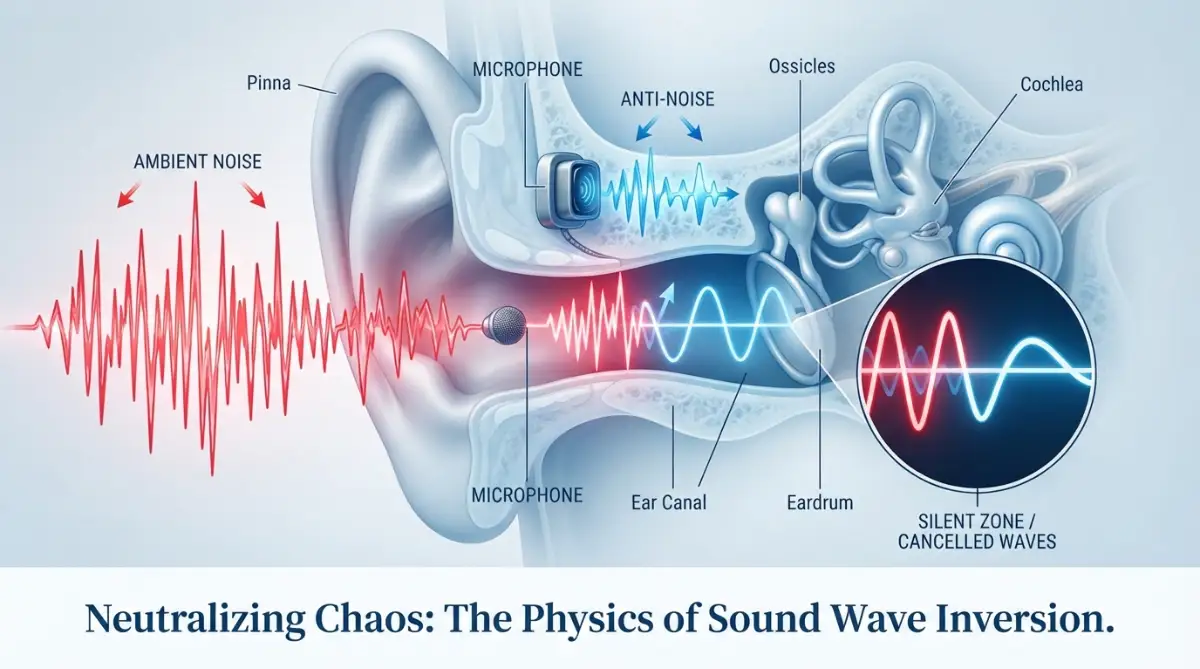
Active Noise Cancellation, or ANC, works by creating its own sound waves to fight back. The headphones have tiny microphones on the outside that "listen" to the noise around you. Then, a smart chip inside the headphones creates a "mirror image" of that noise. This new wave is the exact opposite of the noise outside, which scientists call "out of phase."
When these two waves meet—the noise from the world and the "anti-noise" from your headphones—they cancel each other out. It is almost like a math equation where 1 plus -1 equals zero. The result is a much quieter experience for your ears. This means your eardrums do not have to vibrate as hard, which is a huge win for your long-term hearing comfort.
Quick Myth vs. Fact: Active Noise Cancellation
- Myth: ANC headphones block out literally every single sound around you.
- Fact: They are built to block low, steady hums like a plane engine or a desk fan. However, they let sharp, sudden sounds like a baby crying or a dog barking slip through for your safety.
- Myth: Noise cancellation damages your eardrums with invisible pressure.
- Fact: That weird "pressure" you feel is just your brain getting confused by the sudden drop in background noise. It is totally safe and actually protects your hearing over time!
How ANC Reduces the Load on Your Brain
One of the coolest parts about this technology is how it helps your brain relax. When you use noise cancellation, you are essentially turning down the volume of the entire world. This allows you to listen to your music or podcasts at a much lower volume than usual. Most people turn their music up high just to drown out the bus or the office chatter.
By using ANC, you don't have to fight noise with more noise. You can enjoy clear sound without pushing your ears to the limit. This prevents something called "noise-induced hearing loss," which often happens when people blast music to cover up background sounds. It is a much safer way to enjoy your favorite media while keeping your ears healthy for the future.
I used to believe that I had to play loud rock music just to block out my noisy neighbors. I eventually realized that I was giving myself a headache and making my ears ring by the end of the night. Now, I often turn on my noise-canceling headphones without playing any music at all, just to enjoy the silence.
Improving Focus and Mental Clarity
Scientists have found that quiet environments significantly improve our ability to focus on complex tasks. When you remove the background hum of a fan or the distant sound of traffic, your brain can dedicate more energy to what you are doing. This is why many people feel more productive when they use ANC in a busy office or a library.
It also helps with "speech intelligibility." This is a fancy way of saying you can hear people talking to you much more clearly. Because the background "muck" is gone, the sounds you actually want to hear stand out. This reduces the strain of trying to follow a conversation or a lecture in a crowded room.
If you want to see exactly how these sound waves interact to create silence, check out this great explanation below.
Watch this video to see a visual breakdown of how sound waves cancel each other out in real-time!
The Connection Between Quiet and Heart Health
You might be surprised to learn that hearing comfort is linked to your heart. Long-term exposure to noise has been shown to increase the risk of heart-related issues. This is because noise keeps the body in a constant state of low-level stress. By using technology to create a quieter environment, you are actually helping your heart stay calm.
Active noise cancellation provides a portable way to control your environment. You cannot control the city street or the person talking loudly on the train, but you can control what reaches your ears. This sense of control is a huge boost for your overall well-being. It turns a chaotic day into something that feels much more manageable.
Why Digital Silence is Better Than Physical Earplugs
Some people ask why they shouldn't just use foam earplugs. While earplugs are great for very loud noises, they often feel uncomfortable and "stuffy" inside the ear. They block out all sounds, including things you might need to hear, like a doorbell or an alarm. They also don't help with low-frequency hums as well as ANC does.
ANC technology is smart because it focuses mostly on low-frequency sounds. These are the sounds like plane engines, air conditioners, and distant traffic. These are the most draining sounds because they are constant. ANC removes these while still allowing you to hear higher-pitched sounds like someone calling your name, making it a more balanced experience.
Protecting Your Ears During Travel
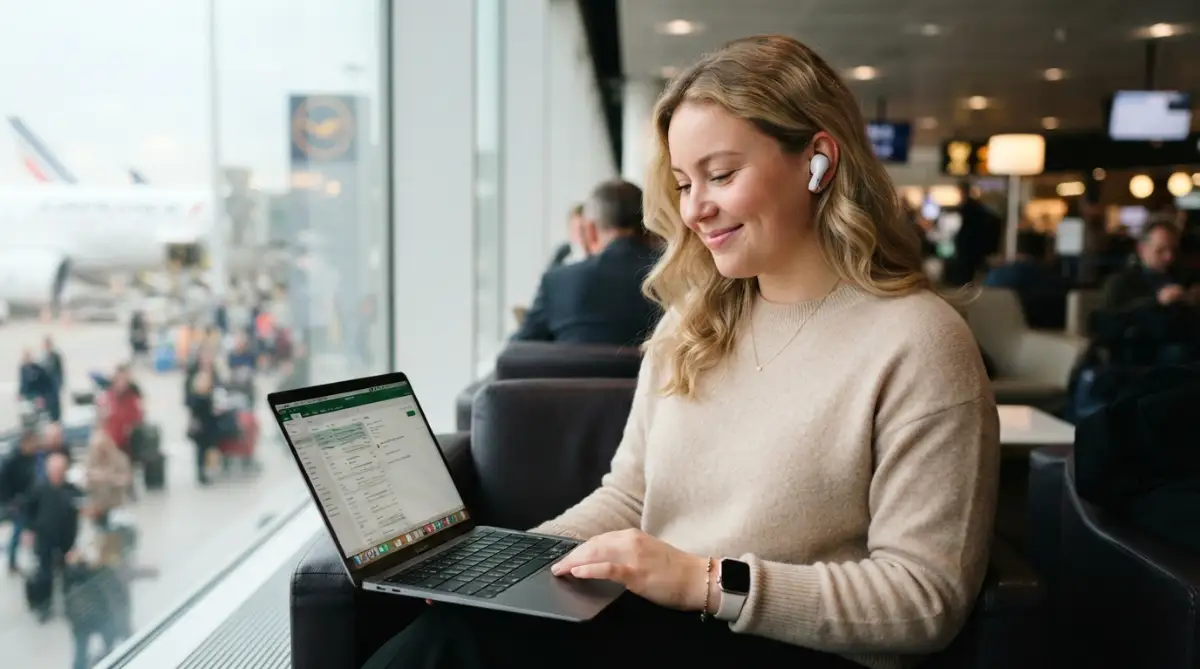
Travel is one of the most stressful times for our hearing. The constant roar of a jet engine or the clatter of a train can be as loud as 80 or 90 decibels. This is right at the edge of what is safe for long periods. Using noise-canceling tech during a long flight can leave you feeling much more refreshed when you land.
Most "travel fatigue" is actually caused by the body trying to process loud noise for several hours. When you remove that noise, your body doesn't have to work as hard to stay balanced. It is one of the best ways to arrive at your destination feeling like yourself instead of a tired zombie. I never travel without mine anymore because the difference is just too big to ignore.
The Role of ANC in Better Sleep
For those who live in noisy cities, hearing comfort is essential for good sleep. Some modern devices now use ANC technology specifically designed for sleeping. These "sleep buds" cancel out the sound of snoring or outside sirens. This allows the brain to enter deeper stages of sleep without being woken up by sudden spikes in noise.
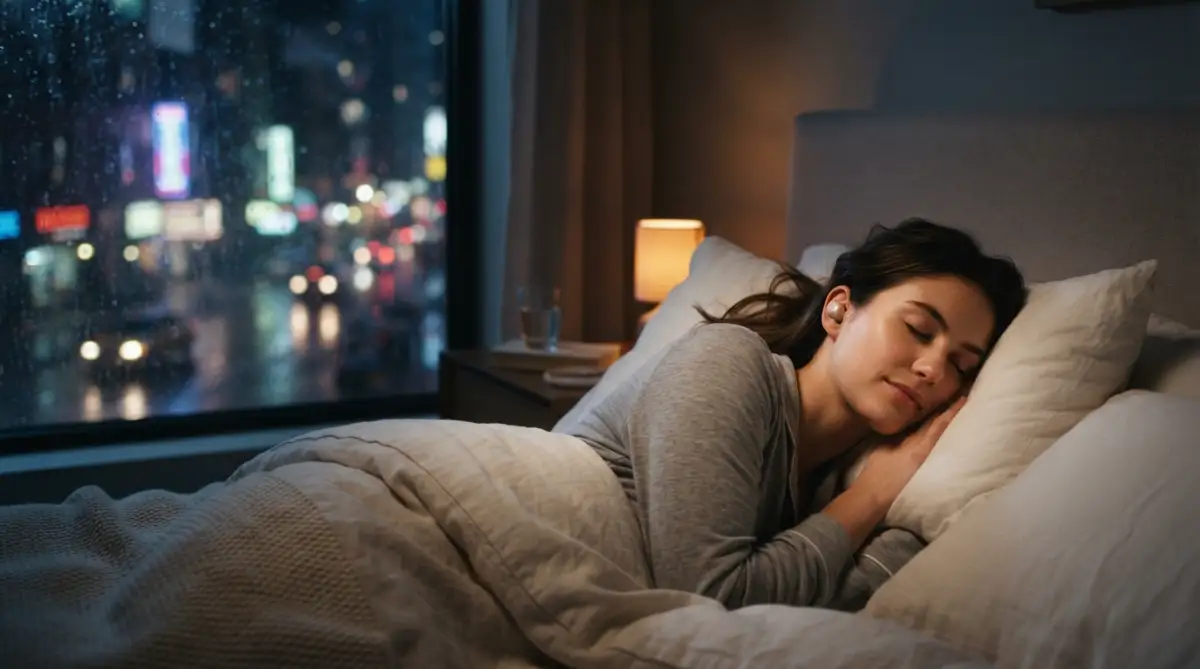
Getting deep, uninterrupted sleep is the foundation of health. If your hearing is comfortable and the world is quiet, your brain can finally go through its "cleaning process" during the night. This leads to better memory, better mood, and more energy the next day. It proves that noise cancellation is more than just a tech trend; it is a health tool.
Choosing the Right Level of Quiet
Not all noise cancellation is the same. Some people feel a strange "pressure" in their ears when they use very strong ANC. This is because the brain is confused by the sudden lack of low-frequency sound. It is important to find a device that allows you to adjust the level of cancellation so it feels natural to you.
Many modern headphones have a "transparency mode" too. This lets you switch between total quiet and hearing the world around you. This flexibility ensures that you stay comfortable in every situation. You can be in your bubble when you need to focus and then click a button to talk to a friend without taking the headphones off.
The Future of Hearing Comfort
As we move forward, this technology will only get better. Scientists are working on ways to make ANC even more "transparent" and natural. We are seeing it being put into smaller and smaller devices, making it accessible for everyone. This is a great step toward a world where we can all enjoy a bit more peace and quiet.
Protecting your hearing comfort is a long-term investment. By using the science of active noise cancellation, you are taking care of your ears and your mind. It is about creating a space where you can think, breathe, and relax. Start paying attention to the noise around you today, and see how much better you feel when you finally turn it down.
Advanced Ways to Make Your Quiet Time Even Better
I have spent a lot of time testing different ways to make my ears feel better. I found that just turning on the noise cancellation button is only the first step. To really get the most out of this tech, you need to think about the physical fit.
If your headphone cushions are old or cracked, the "anti-noise" waves will leak out. This makes the tech work twice as hard but give you half the results. I always tell my friends to check their ear pads every few months for any signs of wear.
Another trick I use is pairing my noise cancellation with very low-level background sounds. I like to play a track of soft rainfall or "pink noise" at a very low volume. This helps my brain ignore the tiny bit of "hiss" that some headphones make.
It creates a layering effect that feels like a warm blanket for your ears. This is a great way to stop multitasking and improve your focus during long study sessions. When you combine silence with a steady, natural sound, your stress levels drop quickly.
I also learned that your brain needs a "reset" period every hour. Even if the world is quiet, the physical pressure of the headphones can tire out your skin and muscles. I set a timer to take my headphones off for five minutes every hour.
This simple habit prevents that "heavy head" feeling you get after a long day of work. It is similar to how you need to save your mental health from digital overload by stepping away from screens. Your ears are sensitive parts of your body, and they deserve these small breaks.
Creating the Perfect Acoustic Seal
If you use earbuds instead of over-ear headphones, the "tip" size is everything. Most people just use the ones that come attached to the device out of the box. I found that trying the larger or smaller tips changed my experience completely.
A good seal blocks out high-pitched noises that the active tech might miss. This means you don't have to turn the volume up to hear your music clearly. According to research from the Acoustical Society of America, a proper fit can reduce ambient noise by an extra 10 to 15 decibels.
That might not sound like much, but it is the difference between a loud office and a quiet library. I always spend at least ten minutes swapping tips until I find the one that feels like nothing is there. It makes a huge difference in long-term comfort.
Using Software to Personalize Your Silence
Many modern devices come with apps that let you change the "EQ" or sound balance. I usually turn down the bass slightly when I am just looking for quiet. Heavy bass can sometimes feel like a lot of pressure against your eardrums over several hours.
By flattening the sound profile, I find that my ears don't feel as "full" at the end of the day. This is one of those small secrets that pros use to stay comfortable during long flights. It is a key part of learning how to fly like a pro and beat jet lag.
When your body isn't fighting sound pressure, you arrive at your destination feeling much more awake. I have tested this on many trips, and the results are always the same. Quiet travel is much less draining than noisy travel.
Mistakes That Might Be Hurting Your Hearing Comfort
One of the biggest traps I see people fall into is using noise cancellation to hide dangerously loud music. They think that because the background is quiet, they can blast their favorite songs even louder. This is a huge mistake that can lead to permanent ear damage.
The tech is meant to let you listen at lower volumes, not higher ones. If you find yourself turning the volume up past 50%, you are defeating the whole purpose of the technology. I had to train myself to keep my volume slider in the "green zone" to protect my hearing.
The Safe Volume Cheat Sheet
To make sure you are actually protecting your ears, I keep a simple mental checklist for my daily listening habits:
- At 50% Volume: You can listen safely for an unlimited amount of time. This is the sweet spot when using ANC.
- At 70% Volume: Try to keep your listening time under 4 hours a day to avoid ear fatigue.
- At 85% Volume (Standard max for most phones): Damage can start after just 2 hours of continuous listening.
- Pro Tip: If you cannot hear someone talking to you from three feet away while your ANC is turned off, your music is way too loud.
Another common error is wearing heavy headphones for too long without checking your posture. I noticed that when I wore big headphones, I would lean my head forward to look at my laptop. This put a lot of strain on my neck and spine.
I eventually realized that my expensive chair might be hurting my spine because I wasn't sitting right with the extra weight on my head. Always make sure your ears are aligned with your shoulders when you have your gear on. It helps prevent headaches that you might blame on the noise cancellation itself.
The Danger of Ignoring Your Surroundings
I once almost got hit by a bicycle because I was so deep in my "silent bubble" while walking. Active noise cancellation is amazing, but it can be dangerous if you use it in the wrong places. You should never use full cancellation when walking near busy traffic or in unfamiliar areas.
Most headphones have a "transparency mode" for a reason. I use this mode whenever I am outside or moving around. It keeps my ears comfortable while making sure I can still hear a car horn or a person calling out.
Ignoring the world completely can lead to accidents that are much worse than a little bit of noise. I learned the hard way that situational awareness is part of being a smart tech user. Balance your need for quiet with your need for safety.
Forgetting to Clean Your Gear
It sounds simple, but dirty headphones can cause ear infections and discomfort. Sweat and skin oils build up on the cushions and inside the ear tips over time. I make it a habit to wipe down my headphones with a soft cloth once a week.
If you don't clean them, the material can become stiff and scratchy. This ruins the comfort and can even irritate your skin. It is just like keeping your home healthy; you have to make your home air fresh and clean to feel your best. Your headphones are no different.
Falling for the "More is Always Better" Marketing
Some companies try to sell you "extreme" noise cancellation that feels very aggressive. For some people, this creates a feeling of "ear pressure" that is actually quite painful. I have felt this myself, and it made me feel dizzy and slightly sick.
Don't feel like you have to buy the strongest one on the market. The best one is the one that feels natural to your ears. If a device makes you feel like you are underwater or in a vacuum, it might be too much for you.
I suggest trying a few different brands in a store if you can. Every person's ears are shaped differently, and the software reacts differently to every ear canal. What works for a tech reviewer might not work for your specific hearing comfort.
Moving Toward a More Peaceful Daily Life
I truly believe that managing the sound in our lives is a form of self-care. We spend so much time worrying about what we eat or how much we walk. But we rarely think about the "sound diet" we are feeding our brains every day.
Using active noise cancellation has helped me lower my daily stress more than almost anything else. It gives me a choice. I can choose when to listen to the world and when to step back into my own quiet space.
This sense of control is powerful. It allows me to escape burnout and stay creative even when the world feels very chaotic. I no longer feel like a victim of my environment.
A New Way to Rest Your Mind
We often wonder why we wake up tired every day, and noise is often a hidden reason. Even while we sleep, our ears are listening for danger. By making our daytime hours quieter, we help our nervous system stay calm for the night ahead.
I have noticed that on days I use my headphones to block out office noise, I sleep much better at night. My brain isn't as "wired" or jumpy when I finally lay down. It is a chain reaction of health benefits that starts with just one simple piece of technology.
I hope you take a moment today to really listen to the noise around you. Notice how it makes you feel in your chest and your head. If it feels like too much, remember that you have the tools to change it.
Common Questions About Noise Cancellation
Can active noise cancellation cause dizziness or ear pain?
Yes, some people feel a sensation of pressure because the brain is confused by the lack of low-frequency sound. This is usually harmless, but if it makes you feel sick, you should lower the cancellation level or take more frequent breaks. Most users get used to the feeling after a few days of short sessions.
Does using ANC drain my headphone battery much faster?
It does use more power because the internal chip and microphones have to work constantly to create "anti-noise" waves. On average, you might lose a few hours of total battery life compared to having the feature turned off. However, most modern headphones are designed to last all day even with this feature running.
Is it safe for children to use noise-canceling headphones?
It can be safe, but you must be very careful with the volume levels. Children's ears are much more sensitive than adult ears, and they might not realize if the music is too loud. It is often better to use "passive" noise-isolating headphones for kids unless you are in a very loud place like an airplane.
Can ANC block out sudden loud sounds like a dog barking?
Active noise cancellation is best at blocking steady, low sounds like engines or fans. It struggles with sudden, sharp, or high-pitched noises because the computer doesn't have enough time to create the "anti-noise" wave. You will still hear the bark, but it will usually sound much softer and less startling.
Do I need to play music for the noise cancellation to work?
No, you can use the feature without playing any audio at all. This is actually a great way to study or relax in a noisy room. Many people call this "silent mode," and it is one of my favorite ways to use the technology when I just need to think clearly.
Disclaimer: This article is for informational purposes only and does not replace professional medical advice. Always consult with an audiologist or a doctor if you experience persistent ear pain, ringing, or hearing loss. Use noise-canceling technology responsibly and stay aware of your surroundings for your safety.