
The Heavy Burden of Putting Your Hard-Earned Assets on the Line
"Think twice before you sign that loan agreement. The moment you use your house or car as collateral, you stop being the sole owner in the eyes of the law. I’ve seen so many people risk everything for a quick cash injection without realizing how the bank’s 'silent partnership' actually works. Let’s cut through the bank talk and look at what really happens to your property when you put it on the line."
I spent so many sleepless nights just wondering what would actually happen to my family if I signed those documents. Let me tell you, handing over the legal rights to your hard-earned assets is absolutely terrifying when you do not fully understand the hidden background processes. You feel completely out of control. Every time the phone rings, you wonder if it is the bank calling to take your property away.
Most people just sign the dotted line because they are desperate for the money. They trust the friendly loan officer sitting across the desk. But ignoring the fine print does not make the legal reality disappear. If you do not know the exact mechanics of asset pledging, you are walking into a financial minefield blindfolded.

💡 60-Second Summary: What You Must Know
- Lien Power: You keep the keys, but the bank owns the "legal rights" until the last penny is paid.
- The Haircut: Banks value your property 20-40% lower than the market price to protect themselves.
- Insurance is King: If your insurance lapses for even one day, the bank can buy expensive "forced" insurance and charge you for it.
- The Trap: Cross-collateralization allows banks to seize your car even if you only missed a payment on a separate credit card.
Behind the Scenes: The Invisible Legal Shift of Your Property
When you finally agree to use a secured borrowing option, your relationship with your property changes instantly. You might still live in the house or drive the car, but you no longer have complete freedom over it. The lender legally steps into the picture as a silent partner in your ownership.

This invisible shift happens through something called a legal lien. A lien is simply a formal public notice that says you owe money to an institution. Until that money is paid back in full, the lender has a legal claim on your item.
Think of it like renting a storage unit. You own the items inside the unit, but if you stop paying the monthly rental fee, the facility owner has the legal right to put a huge padlock on your door. You cannot sell the items inside, and you cannot move them without permission.
This means you cannot just wake up one morning and decide to sell your pledged car to a neighbor. The local government records will show that a bank holds a lien on the vehicle. Any buyer would immediately see that you do not have a clear title to hand over.
Even if your property value goes up over time, your hands are tied. You have to ask the lender for formal permission to make any major changes or transfers. This loss of total control is the very first thing that happens, and it is a reality you must accept from day one.
The Valuation Haircut: Why Your Assets Are Worth Less to a Bank
One of the most shocking moments for borrowers is the asset valuation phase. You might think your pristine house is worth $300,000 because that is what similar homes are selling for in your neighborhood. However, the bank evaluates your property through a very pessimistic lens.
Financial institutions apply something known as a "haircut" to your collateral. They intentionally reduce the accepted value of your item to protect themselves against market crashes. If your home is actually worth $300,000, the bank might only view its collateral value at $240,000.
They do this because they are not in the business of selling real estate or used cars. If you fail to pay, they have to spend money on lawyers, auctions, and administrative fees to sell your item. They want to guarantee they can dump the property quickly at a lower price and still recover their original loan amount.
This valuation haircut directly affects how much cash you can actually borrow. You might need $50,000 to cover medical bills, but if your pledged jewelry is heavily discounted by the appraiser, you might only get approved for $30,000.
Always prepare yourself for this emotional letdown. Do not walk into a financial meeting expecting to get a dollar-for-dollar match on your asset's current market value. Knowing this ahead of time prevents severe disappointment and helps you plan your financial needs more accurately.
| Asset Type | What You Think It’s Worth | What the Bank Sees (The Haircut) | Why? |
| :--- | :--- | :--- | :--- |
| Primary Home | 100% Market Value | 75% - 80% | To cover legal and auction fees if you fail to pay. |
| New Car | Purchase Price | 60% - 70% | Cars lose value the second you drive them off the lot. |
| Jewelry/Gold | Retail Price | 40% - 50% | Resale value is mostly based on raw material, not brand. |
| Stock Portfolio | Current Market Price | 50% | Stocks are volatile and can crash overnight. |
How Lenders Monitor Your Daily Compliance
Many people mistakenly believe that once the money hits their checking account, the lender just goes away until the next payment is due. This is completely false. Secured borrowing means the lender is constantly monitoring the safety of their pledged collateral.
If you pledge a physical property like a house or a car, you are forced to maintain comprehensive insurance on it at all times. The bank will require you to list them as the primary "loss payee" on your insurance policy. If your house burns down or your car is totaled in an accident, the insurance check goes directly to the bank first, not to you.
A Critical Look at the Legal Realities
Watch this incredibly helpful breakdown by a financial expert explaining the exact moment ownership rights shift when you sign a secured agreement.
The lender will also periodically check public records to ensure you are paying your local property taxes. If you fall behind on taxes, the government could step in and seize the property, which ruins the bank's security. To prevent this, banks often force you to pay your taxes directly into an escrow account they manage.
If you fail to keep the asset fully insured, the lender will buy extremely expensive "force-placed insurance" and secretly add that massive cost to your monthly bill. They do not ask for your permission to do this. They simply protect their investment at your expense.
My Personal Mistake and A Powerful Realization
I learned this the hard way when I briefly let my auto insurance lapse for just three days while switching companies. My lender instantly slapped a $400 penalty fee on my account and purchased a terrible insurance policy on my behalf. My Pro Tip for you is to never, ever let your collateral's insurance policy expire, even for a single hour. I now set digital calendar reminders two weeks before any policy renewal just to keep the bank off my back.
Myth vs. Reality: The Fear of Instant Foreclosure
There is a huge myth floating around that if you are one day late on a payment, the bank will immediately show up at your door with the police to take your things. While the fear is completely understandable, the reality is a bit more systematic and heavily regulated.
Reality shows that banks actually hate seizing property. Repossession and foreclosure are long, expensive, and messy legal processes. Financial institutions make their profit from the interest you pay, not from auctioning off your used personal belongings.
If you miss a payment, a structured protocol begins. First, you get late fees and warning letters. Then, your credit score takes a massive hit. The bank will usually try to reach out to offer a temporary payment plan before they move to take the asset.
However, do not mistake this delay for kindness. They are simply following local laws that require them to give you a specific notice period. Once that legal waiting period expires, they will absolutely act with zero hesitation.
Quick Check: Myth vs. Reality of Asset Seizure
- Myth: The bank wants to take my house.
- Reality: No, banks hate houses. They want your interest payments. Selling your house is a massive headache for them.
- Myth: I can sell my car if I need the money to pay the loan.
- Reality: You can’t. The lien on your title stops any sale until the bank gets their cut first.
- Myth: One late payment means immediate foreclosure.
- Reality: Most states have a "Right to Cure" law, giving you a specific window to catch up before they take action.
In the case of a vehicle, a repo agent can quietly tow your car away in the middle of the night without knocking on your door. For real estate, a judge eventually signs an order forcing you out of your own home. The process is slow to start, but once it begins, it is incredibly difficult to stop.
Cross-Collateralization: The Trap You Never Saw Coming
One of the most dangerous things that happens when you pledge an asset is falling into a "cross-collateralization" trap. This is a sneaky clause hidden deep inside the fine print of many credit union and banking agreements.
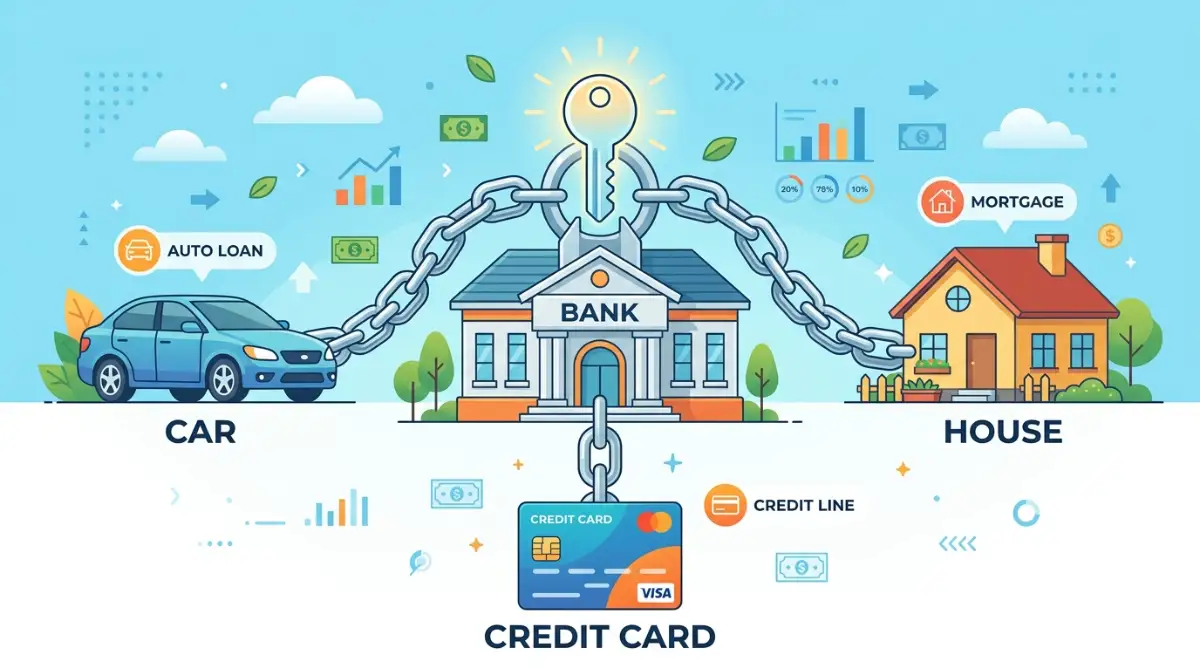
This clause essentially states that the asset you pledge today can be used to cover any other debts you have with that same institution. Let me give you a very clear, real-life example of how this destroys people financially.
Meet John. John gets a secured auto loan for a truck. Five years later, John makes his very last payment and expects to get his clean title in the mail. But John also has a credit card with the exact same bank, and he is behind on his credit card payments.
Because of the cross-collateralization clause, the bank refuses to release the title to his truck. They legally keep his vehicle trapped as security for his separate credit card debt. John is stunned to find out he cannot sell his fully paid-off truck until he clears his unsecured credit card balance.
This happens entirely legally, every single day. When you put an asset on the line, you are opening up your entire financial life to the lender's scrutiny. You must read every single line of the agreement to ensure your asset is only tied to one specific loan.
The Impact on Your Future Borrowing Power
Another major thing that happens behind the scenes is the immediate restriction of your future financial flexibility. Putting a heavy lien on your primary asset changes your overall debt-to-income and asset-to-liability ratios.
If an emergency happens a year later and you need another loan, other banks will look at your financial profile and see that your best assets are already locked up. You become a much higher risk to new lenders.
Even if you have plenty of equity left in your house, a second lender will be very hesitant to give you money. They know that if you go bankrupt, the first bank gets all their money back first. The second lender might get absolutely nothing.
This means pledging your property today could stop you from starting a business, paying for emergency medical care, or sending a child to college tomorrow. You are trading your future flexibility for immediate cash.
You need to clearly understand that a secured borrowing option is not just a quick fix for today's problem. It is a long-term commitment that shapes your financial decisions for the next five to thirty years. Every single choice you make will now revolve around keeping that pledged asset safe from the auction block.
Smart Strategies to Protect Your Peace of Mind While Pledging Assets
Before you hand over the legal rights to your property, you need a solid game plan to keep yourself safe. You do not have to just sit there and accept whatever scary terms the bank throws your way. There are actual, practical steps you can take today to protect your family from aggressive lending tactics. Let us look closely at how you can keep total control over your financial situation.
First, you should always get your own independent appraisal before walking into the lender's office. Lenders will usually send their own appraiser to value your home or vehicle. Naturally, that person works for the bank, so they will always give a heavily discounted estimate. By hiring an independent expert, you get a much more realistic market value on paper.
This independent document gives you amazing bargaining power. If the bank tries to lowball the value of your collateral, you can push back by showing them your official appraisal. This simple step can sometimes get you approved for thousands of dollars more without having to pledge any additional items.
Next, you must build a specific "shadow emergency fund" that is completely separate from your regular savings. This fund exists for one reason only: to cover your secured payment if your income suddenly stops. I recommend putting away at least three full months of payment amounts before you even sign the paperwork.
If you get sick or lose your job, this shadow fund will stop the bank from immediately starting the repossession process. If you want to learn more about handling different types of debt while building savings, checking out resources on managing unsecured loans without credit damage is a great place to start. Keeping your unsecured debts in line protects the assets you pledged for your secured debts.
Another powerful secret is to heavily negotiate the "default clauses" hidden deep inside your loan agreement. Most standard contracts say that if you are just one day late, you are technically in default. You can simply ask the loan officer to change that exact sentence before you sign.
Politely request that they write in a mandatory 15-day grace period before any default action can legally begin. Surprisingly, many local credit unions and smaller banks will agree to this if you have a decent credit history. This tiny contract change gives you a massive breathing room if a bank transfer gets delayed.
You should also set up an automated legal document review with a local consumer protection attorney. Yes, paying a lawyer for one hour of their time costs a bit of money upfront. However, having a legal expert read over the lien agreement ensures there are no hidden cross-collateralization traps waiting to destroy your future.
To understand your basic rights better, you can always check the official guidelines from the Consumer Financial Protection Bureau. They offer amazing, free information on what lenders can and cannot legally do when holding your property as security.
Finally, you need to mark your calendar for a "title release checkup" the moment you make your very last payment. Do not just assume the bank will automatically send your title back in the mail. Sometimes, their automated systems fail, and that heavy legal lien stays attached to your property for months by mistake. Call them the very next day and demand written proof that your asset is completely free and clear.

The Silent Traps That Cause Good People to Lose Everything
When dealing with asset-backed borrowing, making a simple administrative error can turn into an absolute nightmare. Good, hardworking people lose their cars and homes every single day just because they completely misunderstood how the system operates. The biggest mistakes usually happen when borrowers ignore the daily maintenance rules attached to their property.
A massive trap people fall into is completely ignoring the lender's strict insurance requirements. Many folks try to save a few dollars by lowering their auto or home insurance coverage limits. They think that as long as they are paying the monthly loan bill, the bank will not care about their insurance policy.
This assumption is entirely wrong. The bank's computer systems constantly scan national insurance databases. The second your coverage drops below their required minimum, they will automatically buy incredibly expensive forced coverage and bill you for it. If you refuse to pay that new, higher amount, they will declare your account in default and move to take your property.
Another terrible mistake is relying on verbal agreements made with a friendly bank employee over the phone. Let us say you are going through a rough patch and cannot pay this month. You call the bank, and a nice customer service rep says, "Don't worry, we will give you a 30-day extension."
You hang up feeling relieved, completely unaware that a verbal promise means absolutely nothing in the banking world. If that extension is not legally recorded in writing and signed by a manager, the aggressive collections department will still come after your asset. Always demand email confirmation for any skipped payments or extensions. If you find yourself in a tight spot with a vehicle, knowing the exact steps to take immediately if you cannot pay your auto loan this month can truly save you from repossession.
Borrowers also regularly fail to understand how a drop in property value ruins their financial safety net. Imagine you pledge a brand new truck, but a year later, the market crashes and used trucks are suddenly worthless. If you get into an accident and the insurance payout does not cover your remaining balance, the lender can actually sue you personally for the difference.
This terrifying scenario is called a deficiency judgment. You could literally lose your vehicle and still owe the bank thousands of dollars. Reading up on the legalities of property liens through educational portals like the Legal Information Institute at Cornell Law School helps you understand just how powerful these lender rights really are.
People also blindly sign documents without ever considering alternative funding methods. They get scared and immediately put their house on the line because they think it is their only hope. In reality, there are often safer ways to get money that do not risk the roof over your family's head.
Taking the time to research how to get unsecured loans with bad credit safely could completely eliminate the need to pledge your property in the first place. You might pay a slightly higher interest rate on an unsecured option, but that extra cost is worth the peace of mind knowing your home is totally safe.
Another subtle but dangerous mistake is failing to update the lender when you move or change your email address. Banks send official warning letters to the address they have on file. If they decide to call your loan due because of a technical issue, and you never get the letter, you lose your chance to fix the problem.
They will simply claim they notified you properly, and a judge will side with them. You must treat your secured lender like a very strict business partner. Keep them updated on all your contact information so you never miss a legal warning.
A lot of entrepreneurs make the massive error of tying their personal family assets to their high-risk business ventures. If a business fails, it is a tragedy, but if your family loses their primary home because you pledged it for a business expense, it destroys lives. Always look for easy collateral-free business loans before you ever put your personal family home at risk for a startup idea.
Questions Borrowers Usually Ask Before Putting Their Property on the Line
Does pledging an asset automatically lower my interest rate?
Yes, in almost all situations, putting up a piece of property significantly lowers the interest rate you are charged. Because the lender has a physical item they can take if you do not pay, their financial risk drops drastically. They pass those savings directly onto you through cheaper monthly borrowing costs.
Can the bank take my house if I am just one week late on a payment?
Legally, a bank cannot just throw you out of your house for being a few days late. Real estate foreclosure is an incredibly long legal process that requires multiple court hearings and official warnings. However, they will definitely hit you with heavy late fees and destroy your credit score almost immediately.
What actually happens if my pledged car gets completely destroyed in an accident?
If you total the vehicle, your insurance company will send the settlement check directly to your lender first. The bank takes whatever money you still owe them to clear the balance. If there is any money left over after the bank takes their share, they will eventually send that small remainder to you.
Can I legally sell the property while I still owe the bank money?
You cannot sell the item directly to a buyer without the bank getting involved in the transaction. You must arrange for the buyer's money to pay off the bank's lien first before the title can transfer. This process requires a lot of coordination between you, the new buyer, and your current loan officer.
Does the bank physically hold my actual property during the agreement?
No, you get to keep the physical possession and daily use of your house, car, or business equipment. The bank only holds the official legal title or a recorded public lien document. They only show up to physically take the item if you completely stop making your agreed monthly payments. For an interesting breakdown on how different interest rates affect these property agreements over time, seeing how do mortgage rates work for new buyers offers great insight into the math behind the scenes.
Your Next Smart Moves for a Secure Financial Future
Putting your hard-earned property on the line is definitely not a decision you should ever take lightly. By now, you completely understand that a secured borrowing option is basically a silent partnership between you and a financial institution. They get the legal power, and you get the immediate cash.
The absolute best thing you can do right now is slow down and read every single word of your paperwork. You have the power to negotiate terms, hire an independent appraiser, and build a dedicated emergency fund to protect your family. Do not let desperation push you into signing a contract that puts your entire life at risk.
If you are already in a secured agreement, start reviewing your insurance policies today to make sure you are totally compliant. A little bit of organized planning right now will completely eliminate those terrifying sleepless nights. You can totally handle this if you just treat your property with the intense caution it deserves. Also, if you ever feel overwhelmed, checking official consumer resources like the Federal Trade Commission's guide on consumer credit can give you the confidence you need to speak up.
I really hope my personal experiences help you completely avoid the financial traps and sleepless nights I went through. I learned the hard way that protecting my family’s peace of mind is so much more valuable than getting a quick cash approval from a bank. You have the knowledge now, so take a deep breath and start taking control of your financial future today!
Disclaimer: The information provided in this blog post is for general educational and informational purposes only and does not constitute financial, legal, or professional advice. Always consult with a certified financial advisor or legal professional before making any major financial decisions, signing legal contracts, or pledging personal assets. We do not endorse any specific financial institutions or lending practices.