
The Frustration of Dialing Empty Numbers Every Morning
Most cold-calling lists are a complete lie. If your reps spend three hours every morning getting voice mails and angry hang-ups, the issue is not their sales pitch. The problem is that your current scoring system hands out top marks to college students and casual web visitors who will never spend a penny. Here is how modern predictive scoring cuts through that noise and points your team directly at real buyers.
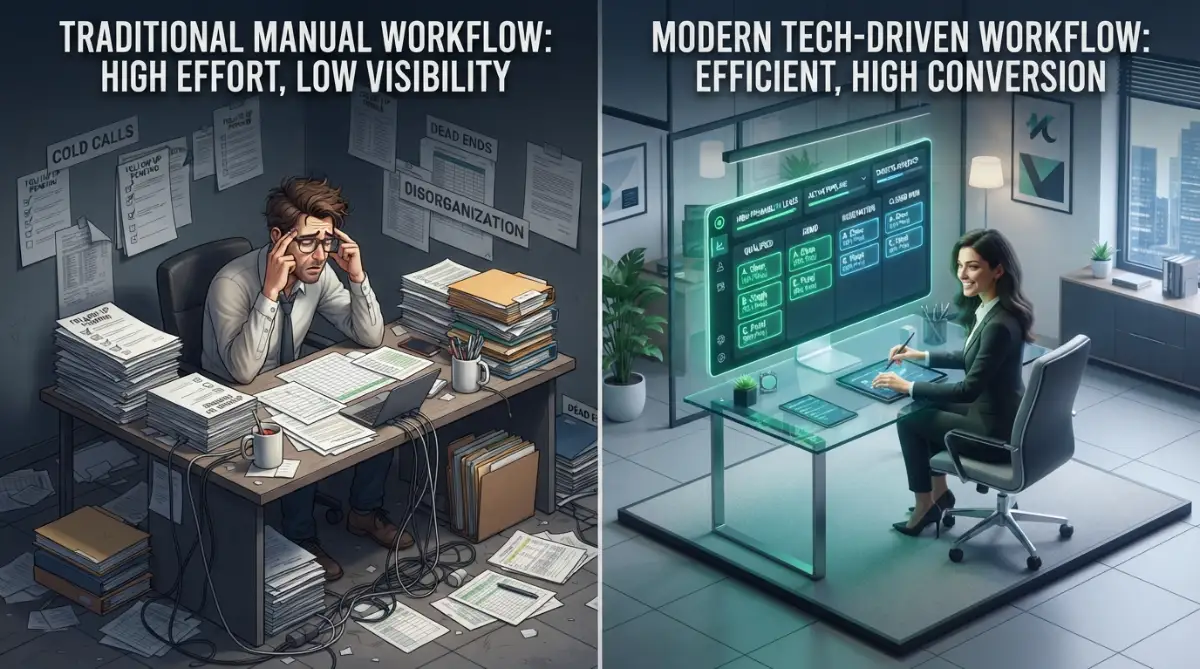
By four in the afternoon, my throat was completely dry and my spirit was broken. Out of two hundred contacts, only three people picked up the phone. Two of them angrily yelled at me to remove them from the calling list, while the third person was a student doing homework research.
That sinking feeling in my chest was something I had to deal with every single week. I was working harder than anyone else in the office, yet my conversion numbers were embarrassing. I started doubting my own skills, wondering if I was simply cut out for sales at all.
The honest truth hit me hard a few months down the road. The problem was not my pitch, my email copy, or my personal work ethic. The entire system we used to grade and qualify those incoming contacts was completely broken.
Traditional forms handed us arbitrary points whenever someone downloaded an ebook or clicked a generic link. A college student writing a paper got the exact same high score as an enterprise executive with an active budget. We treated every sign of curiosity like a clear intention to buy, and that cost us hundreds of wasted hours.
Key Takeaways for Revenue Leaders
- Static point tallies punish your team by treating idle curiosity the exact same as high-dollar purchase intent.
- Real purchase intent reveals itself when multiple team members view implementation specs, pricing tiers, and API docs in short windows.
- Implementing automatic score decay keeps your sales pipeline honest and stops reps from calling ghost accounts.
- Automated intent models should augment human reps by cutting manual research, never by replacing thoughtful conversations.
Why Traditional Point Systems Keep Failing Your Sales Team
Most sales departments still rely on basic static scoring rules that were designed decades ago. You assign ten points for an email click, twenty points for a webinar registration, and thirty points for visiting a pricing page. On paper, this system looks neat, clean, and perfectly organized.
In the real world, this rigid formula creates massive blind spots across your entire pipeline. A casual visitor can rack up eighty points in ten minutes simply by opening five old emails and browsing your blog. Your sales team rushes to call them, only to discover that the person has zero budget and zero buying authority.
Static rules also fail to account for negative behavior and time decay. If a prospect checked your pricing page three weeks ago and never came back, their score usually stays artificially high. You end up chasing cold ghosts instead of fresh prospects who are actively looking for a direct solution right now.
Reality Check: What Actually Drives a Deal
- Myth: Reading three blog posts means a visitor is ready to buy.
- Reality: Educational page views indicate basic curiosity; technical documentation visits indicate immediate buying intent.
- Myth: Enterprise executives sign up with personal Gmail accounts to browse secretly.
- Reality: Serious corporate buyers use work emails so their internal security tools clear your domain.
- What I Track Now: Repeated visits to API documentation combined with two or more distinct internal roles reviewing our pricing grid.
How Machine Learning Reads Customer Intent Before You Reach Out
Modern smart platforms do not rely on static checklists created by guesswork. Instead, they look at thousands of live data points across your entire business history to find real buying patterns. The algorithm studies every deal you won and every deal you lost over the past several years.
By analyzing historical wins, the system discovers what an actual high-value customer looks like before they ever ask for a quote. It compares job titles, company sizes, tech setups, and browsing habits with eerie accuracy. When a new prospect arrives, the system grades them based on math rather than arbitrary guesses.
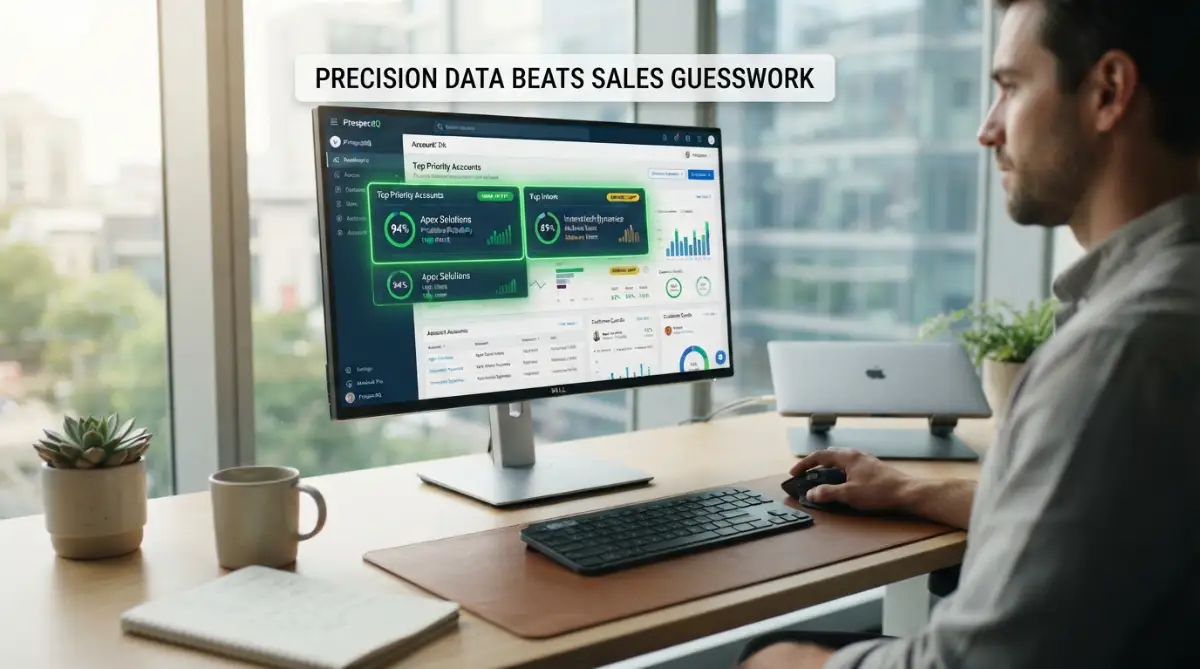
This transition from static rules to dynamic learning changes the entire workday for your reps. Instead of guessing who to call, your team opens a dashboard that highlights accounts with the highest statistical likelihood of closing. You stop gambling with your time and start focusing on genuine business opportunities.
The Core Data Signals Smart Platforms Track Behind the Scenes
Smart platforms do not just look at your website forms; they pull intelligence from multiple channels simultaneously. They monitor first-party data, such as how often a user visits your technical documentation versus your careers page. Someone reading documentation is usually testing implementation feasibility, which indicates serious evaluation.
They also track external company signals that human reps rarely have time to research. This includes recent funding rounds, executive leadership changes, and open job postings that mention specific software needs. When an account starts hiring specialists for a tool you replace, the software catches that signal instantly.
Third-party intent networks add another powerful layer of insight to the mix. These networks detect if employees from a specific company are researching your product category on review sites and industry blogs. By the time that prospect visits your website, your platform already knows they are in an active buying cycle.
Want to see how modern predictive algorithms process live customer signals right inside an automated sales workflow?
Spotting Hidden Champions: Pattern Recognition in Action
Human beings naturally rely on personal bias when reviewing incoming leads. A sales rep might prioritize a contact simply because they recognize the company brand name from television. However, that famous brand might have zero intention of buying your specific package.
Predictive algorithms remove personal bias from the initial qualification stage entirely. The software looks at operational fit, actual budget indicators, and decision-maker involvement rather than brand prestige. It often uncovers massive potential deals from quiet, mid-sized businesses that human reps would normally skip.
Furthermore, machine learning tracks multi-threaded engagement across an entire organization. If three different managers from the same company visit your site in one week, the account score spikes immediately. The platform understands that a group buying decision is underway, alerting your team to step in with the right message.
I used to spend hours manually checking company LinkedIn pages before making my morning outreach calls. My biggest mistake was ignoring smaller companies that did not have glossy websites or huge follower counts. Once we let an automated system rank accounts by actual intent data, our closed revenue jumped because we stopped judging books by their covers.
The Difference Between Buyer Curiosity and Buying Intent
Every online business attracts an enormous amount of casual curiosity. Students, competitors, freelancers, and industry researchers browse your pages every single day. A traditional scoring setup gets easily confused by this traffic and marks these curious browsers as hot leads.
Predictive engines separate idle curiosity from commercial intent by evaluating behavioral depth. A curious reader skims a blog post, downloads a free template, and disappears completely. A genuine commercial buyer visits your integration guide, checks security compliance details, and reviews customer case studies.
The algorithm also measures the velocity of these actions over short windows of time. When multiple high-intent pages are consumed within forty-eight hours, the system recognizes an active purchase project. Your sales rep can then reach out while the problem is still burning in the buyer's mind.
Common Misconceptions About Automated Scoring Systems
Many team leaders hesitate to adopt algorithmic qualification because they believe it requires massive data science teams. They assume only multi-billion-dollar corporations can afford or manage this level of intelligence. That assumption might have been true a decade ago, but modern software options connect with standard tools in just a few clicks.
Another common myth is that automated grading completely removes the human touch from sales. In reality, the exact opposite happens when you filter out the noise. When reps are not exhausted from dialing wrong numbers, they have far more time to research and personalize conversations for real buyers.
Some managers also worry that the software will overlook unconventional prospects who do not fit typical molds. However, modern models update themselves continuously as market trends shift. If a brand-new customer segment begins buying your product, the algorithm detects the trend and adjusts incoming scores automatically.
How Real-Time Scoring Speeds Up Your Sales Velocity
In modern business sales, timing is often the single deciding factor between winning and losing a deal. Research consistently shows that reaching out within the first hour of buyer interest dramatically increases your chances of closing. Waiting even twenty-four hours can cause a warm lead to forget who you are.
Predictive platforms alert your account executives the moment an account crosses a high-intent threshold. Instead of waiting for a batch report at the end of the week, reps receive immediate notifications. This speed allows your team to enter the conversation while your solution is actively being discussed internally.
This rapid response eliminates the long, agonizing gaps that typically stall enterprise deal pipelines. Prospects feel impressed by your team's relevance, responsiveness, and understanding of their current challenges. Deals that used to drag on for six months can frequently close in half that time.
Setting Up Your Foundation: Cleaning Your Input Data
An algorithm is only as sharp as the historical records you feed into it during setup. If your current customer database is packed with duplicate entries, missing company names, and outdated titles, your predictions will stumble. You must clean up your existing records before turning on predictive features.
Start by merging duplicate accounts and deleting contacts that have bounced repeatedly for years. Make sure your historical closed-won and closed-lost deal records have accurate reasons attached to them. The software needs clear examples of both success and failure to learn the subtle differences between them.
Next, standardize how your team inputs job titles, industry tags, and company sizes across all channels. When your incoming data follows a consistent format, the platform classifies records faster and with far fewer errors. Clean input data leads directly to clean, reliable prediction scores.
Aligning Marketing and Sales on True Lead Quality
One of the oldest battles in business happens between marketing teams and sales departments. Marketers celebrate hitting their monthly goal of five hundred new leads, while sales reps complain that none of those leads are worth calling. This friction creates finger-pointing and hurts overall company revenue.
Algorithmic scoring ends this argument by establishing an objective, data-backed standard for what constitutes a qualified lead. Both teams look at the same mathematical score rather than personal opinions or vanity metrics. Marketing knows precisely which campaigns bring in genuine high-scoring prospects, allowing them to optimize their spending.
Meanwhile, sales reps can no longer dismiss incoming contacts without a valid reason when the data shows high intent. The shared visibility builds trust and teamwork between both departments. Everyone focuses on the same ultimate goal: turning high-probability prospects into long-term happy customers.
Tracking Behavioral Patterns Across the Entire Buyer Journey
The modern buyer journey is rarely a straight line from viewing an advertisement to signing a contract. A prospect might read a guide today, disappear for two weeks, and suddenly return to examine your enterprise security protocols. Intelligent platforms remember every single touchpoint along this winding path.
The software weighs these events differently depending on when they happen and who performs them. An entry-level employee downloading a whitepaper carries far less weight than a department head reviewing pricing packages. By combining role authority with page intent, the system builds an accurate map of overall account interest.
This deep tracking also helps you spot expanding opportunities within existing customer accounts. When an existing client starts exploring your advanced features, their score updates to signal cross-sell readiness. Your account managers can then reach out with relevant upgrades before the client even asks for them.
Key Performance Indicators to Watch After Implementation
Switching to intelligent qualification will quickly show up in your primary performance metrics. The first number you should monitor closely is your lead-to-opportunity conversion rate. When reps focus on high-probability contacts, the percentage of discovery calls that turn into real sales pipeline should rise steadily.
You should also keep a close eye on your average sales cycle length. When you stop chasing accounts that lack budget or authority, deals move through your pipeline much faster. Your reps will spend less time sending awkward follow-up emails to prospects who were never going to buy anyway.
Finally, measure the overall win rate of your sales team and their quota attainment percentages. High morale follows directly behind steady sales success and less time spent on dead-end administrative tasks. When your reps trust the scores on their screen, they approach every call with confidence, energy, and genuine enthusiasm.
Pro-Level Tactics to Sharpen Your Predictive Pipeline
Once you have your automated scoring system online, you cannot simply let it run on autopilot. Top-performing revenue teams constantly fine-tune their algorithmic models to reflect subtle shifts in customer interest. When you train your platform on deeper signals, your conversion rates will climb much higher.
Fusing Real-Time Intent Surges With Account Decay
The timing of customer interest matters just as much as their title or budget. A prospect might show intense research activity for three days and then go completely silent for two months. If your scoring system does not lower that score over time, your reps will waste energy chasing people who have already moved on.
You should set up dynamic score decay rules directly inside your configuration settings. For example, if an account has not visited your site or opened an email in fourteen days, reduce their score by twenty percent. This small adjustment keeps your pipeline fresh and pushes active accounts straight to the top of the queue.
Look beyond basic page visits by tracking sudden spikes in specific topic research. When a mid-sized company suddenly consumes four articles about data migration in forty-eight hours, that represents an active buying project. By pairing intent spikes with automatic score decay, your reps always engage accounts during their hottest consideration window.
My Simple 14-Day Score Decay Template
- Day 1 to 3 of zero activity: Retain 100% of accumulated intent points.
- Day 4 to 7 of zero activity: Automatically reduce points by 15%.
- Day 8 to 14 of zero activity: Drop the total intent score by 40% and notify the rep.
- Beyond Day 14: Strip all positive intent weight back to base firmographic fit.
Calibrating Negative Signals to Purge Phantom Opportunities
Most sales managers focus entirely on positive actions like form fills and demo requests. However, negative signals provide equal value when it comes to saving your team precious time. Ignoring negative signals creates pipeline clutter that slows down deal closures.
Start by assigning heavy point deductions for behavior that indicates non-commercial research. For example, visitors who spend hours on your careers page or student discount FAQs should never trigger a direct sales outreach. Deducting points for these actions prevents false alarms from distracting your best closers.
You should also penalize accounts that use generic, free email domains during signup events. Legitimate commercial buyers almost always use their corporate domain names when evaluating serious tools. Filtering out throwaway email addresses protects your reps from dial-pad exhaustion.
Unifying Cross-Department Intelligence into a Single Score
A common roadblock occurs when marketing, sales, and customer service store their data in completely separate silos. A prospect might submit a negative support ticket on a free tier while marketing scores them as an elite sales lead. When departments do not share data, your outreach looks clumsy and out of touch.
Connect your product usage telemetry directly into your primary sales records. If a pilot user logs into your platform five times a day, that usage pattern is ten times more valuable than a whitepaper download. When you are transitioning your team to new software, building these unified pipelines early prevents operational headaches later.
Make sure your customer success notes feed back into the qualification algorithm as well. If certain customer profiles consistently cancel their contracts after ninety days, the platform should lower scores for similar incoming leads. Focusing only on customers who stay long-term will protect your business revenue and team sanity.
Building Smart Escalation Triggers for Enterprise Accounts
Enterprise deals rarely hinge on the actions of a single person browsing your site. In most business purchases, six to ten different stakeholders research options independently before making contact. Your scoring platform must aggregate actions across multiple individuals under the same company umbrella.
When an IT director and a financial controller from the same company visit your pricing tiers in the same week, escalate that entire account immediately. According to Gartner sales research on buyer behaviors, multi-stakeholder consensus is the single biggest hurdle in modern commercial purchasing. Recognizing group interest early allows you to offer custom briefings tailored to their cross-departmental needs.

Set up instant notifications through team chat apps whenever an enterprise account crosses your designated threshold. This allows your senior account executives to plan a multi-threaded outreach campaign before the company issues a formal procurement request. Proactive planning consistently wins more deals than reactive responses.

Costly Stumbles That Break Algorithmic Qualification
Adopting automated pipeline intelligence is an exciting milestone for any growing sales department. However, enthusiasm often blinds leadership teams to foundational operational traps. Making simple mistakes during implementation can derail your pipeline and cause your sales reps to abandon the software entirely.
Treating Predictive Systems as Set-and-Forget Magic
The most widespread mistake companies make is treating artificial intelligence like a magic wand. Leaders turn on predictive scoring and assume the software will run flawlessly without human oversight or continuous tuning. Markets change, customer preferences evolve, and competitor pricing shifts every single month.
When you do not audit your models regularly, your qualification criteria become disconnected from commercial realities. A criteria set that worked beautifully six months ago might direct your reps toward shrinking industries today. Smart revenue leaders schedule monthly reviews to ensure scoring models mirror current market opportunities.
Your marketing team must also keep pace by developing foundational AI literacy skills to understand how inbound campaigns feed machine learning algorithms. When marketers understand how scoring weights work, they build campaigns that attract genuine buyers instead of empty clicks. Alignment across both sides of the aisle ensures steady pipeline quality.
Overlooking Data Hygiene and Fragmented Records
Feeding poor-quality data into an intelligent platform produces inaccurate predictions every single time. If your database is loaded with misspelled names, duplicate accounts, and missing job titles, the scoring engine will make flawed assumptions. Your sales reps will end up calling dead numbers and lose faith in the system.
Many organizations collect duplicate contacts because their lead capture tools do not talk to each other cleanly. A single prospective customer might exist as three different records across your email tool, webinar app, and main dashboard. When this happens, the algorithm splits the user's intent score into tiny, insignificant pieces that never trigger an alert.
Schedule routine data scrubbing sessions to deduplicate customer profiles and enrich incomplete records. High-performing organizations regularly follow NIST data management standards to ensure system inputs remain structured, secure, and clean. Clean data inputs result directly in sharp, dependable prediction results.
Starving Your Algorithms of Rep Feedback Loops
Your frontline sales reps possess real-time qualitative information that software can never collect on its own. When an account executive hangs up the phone, they know instantly if the prospect had real buying intent or just pleasant manners. If that rep cannot easily log that feedback, the scoring engine stays blind to the truth.
Make it effortless for reps to flag false positives and false negatives right inside their daily screen. If a lead had an eighty-point score but lacked any realistic budget, a single click should register that reality. Over time, the software adjusts its mathematical weights based on real human interactions.
When reps feel that their personal feedback improves the system, they use the tool with far more enthusiasm. Mutual respect between human experience and algorithmic power produces the strongest sales results possible. Never let your software operate in an ivory tower away from your front-line callers.
The Danger of Software Sprawl and Disconnected Workflows
Adding another high-tech tool to an already cluttered software stack often causes massive operational drag. Reps end up checking four different browser tabs just to prepare for a single discovery conversation. This friction slows down response times and frustrates your best performers.
Before adding predictive tools, spend time reducing unnecessary software bloat so your tech stack stays lean and integrated. Your scoring alerts should live directly where your reps already spend their working day. Seamless integration speeds up adoption and keeps your team focused on revenue-generating conversations.
Over-Scoring Low-Intent Administrative Actions
When you award thirty or forty points to superficial actions, your reps spend half their day contacting junior staff members. These contacts might enjoy your educational material, but they cannot sign a purchase order. Reserve your highest point values for deep bottom-funnel engagement like implementation guides and service comparison pages.
Overlooking Privacy Governance and Prospect Trust
Modern buyer prediction relies heavily on tracking user behavior across web pages and third-party sources. While this tracking produces incredible insights, crossing ethical lines damages prospect trust before you even speak with them. Mentioning hyper-specific tracking details during an introductory cold call usually frightens prospects away.
Always maintain strict adherence to international data privacy rules and user consent mechanisms. Sales leaders must guide their teams on protecting internal business records and handling prospective buyer data ethically. Transparent, respectful data handling safeguards your brand reputation while maintaining healthy pipeline flow.
Implementation Pitfalls: Quick Checklist
- Avoid Static Point Traps: Never leave qualification values untouched for more than a quarter without reviewing win-loss patterns.
- Prevent Rep Disconnect: Ensure account executives have a clear button to flag incorrect scoring outputs immediately.
- Enforce Field Requirements: Require clean industry tags and valid company sizes on all inbound lead forms.
- Limit Vanity Metrics: Stop celebrating raw lead volume when lead qualification scores show low commercial interest.
Your Action Plan for High-Conversion Pipeline Success
Transitioning to automated buyer prediction is not about replacing human connections; it is about respecting human time. When your team stops chasing uninterested contacts, their daily work transforms from exhausting cold calling into meaningful problem-solving conversations. Every sales call becomes an opportunity to help someone who genuinely needs your solution.
Start your transition by taking small, deliberate steps rather than overhauling your entire sales floor overnight. Run your new algorithmic scoring model parallel to your legacy scoring setup for thirty days. Compare the results side by side, and watch how accurately the software highlights deals that ultimately close.
As highlighted in Harvard Business Review studies on sales lead management, businesses that contact high-intent buyers within minutes gain an insurmountable competitive edge. Automated scoring removes hesitation and guesswork, giving your account executives the confidence to strike while buyer interest peaks. The clarity that comes from accurate predictive insights will permanently change how your company grows.
I spent years feeling completely burned out because I measured my worth by how many calls I could make in a day. The moment my team trusted automated intent scoring, my daily stress evaporated and our revenue numbers doubled within months. Take the leap, clean up your pipeline data today, and watch your sales team thrive like never before.
Answers to Common Questions on Algorithmic Lead Scoring
How much historical sales data do we need before predictive models become accurate?
Most commercial scoring platforms require at least a few hundred closed-won and closed-lost deal records to spot reliable patterns. If your business is brand new with limited deal history, rule-assisted models that rely on broad industry benchmarks will serve you best until your database grows. Clean records over six to twelve months are typically enough to train an effective predictive model.
Will automated scoring replace our sales development representatives?
No, intelligent platforms are designed to assist your human team rather than replace them. The software handles the tedious data analysis so your reps can focus entirely on relationship-building, discovery calls, and strategic negotiations. Reps who use automated scoring spend more time closing deals and significantly less time hunting for basic contact information.
What is the biggest difference between intent data and behavioral scoring?
Behavioral scoring measures how an individual interacts directly with your owned properties, such as your website, emails, and product demos. Intent data tracks content consumption across independent third-party networks, revealing when companies research your broad product category elsewhere on the web. Combining both signals gives your team an accurate view of buyer readiness.
How often should our revenue team recalibrate scoring weights?
You should review your scoring accuracy at the end of every quarter to ensure the model matches your latest sales trends. If you launch a new product tier, update your pricing, or enter a different target market, recalibrate your models immediately. Regular updates keep your algorithms aligned with real-world sales outcomes.
Can predictive scoring work effectively for small businesses with low traffic?
Yes, but smaller businesses should focus heavily on firmographic fit and third-party intent rather than high-volume website telemetry. If you only receive a few dozen inquiries a month, the software helps you instantly identify which of those accounts have real enterprise budgets. This allows small teams to punch above their weight and close high-value accounts without hiring a massive sales force.
Regulatory and Editorial Disclaimer
This article is created strictly for educational, informational, and operational guidance regarding customer relationship management systems, predictive scoring mechanics, and business software strategies. The strategies, metrics, and software workflows discussed reflect general industry best practices and do not constitute formal financial, legal, investment, or technical advice. Individual organizational results will vary based on historical data quality, market conditions, team execution, and regulatory environments. Always review third-party data collection practices to ensure full compliance with regional privacy laws, including the General Data Protection Regulation (GDPR) and the California Consumer Privacy Act (CCPA), before deploying automated customer tracking tools.