The Freezing Truth: My Personal Battle with Winter Range Anxiety
You bought an electric car for a smooth, quiet ride, not to do panic math every time the temperature drops below freezing. If watching your battery meter plummet in the snow makes you sweat, you are not alone. Let us fix that range anxiety right now with a few simple tweaks to how you treat your EV during the winter.
The cabin heater was blasting warm air on my freezing toes, yet my whole body shivered from pure stress. My hands were gripping the steering wheel so hard my knuckles turned completely white. I actually thought my battery was permanently damaged from the cold.
I pulled over to the side of the icy road, convinced I was going to be stranded in the middle of a blizzard. That morning completely changed my perspective on winter driving.
I realized I was a victim of a massive misunderstanding about how electric cars actually work in cold climates. Everyday people who just want to get to work or drop their kids off at school are facing this exact same panic. You buy a beautiful new electric car, expecting a smooth and silent ride.
But the moment the temperature drops below freezing, you suddenly feel like you have to calculate every single mile with a calculator. The stress of watching that battery meter tick down can totally ruin your peace of mind. It turns a simple grocery run into an anxious math test.
But what if I told you that most of this fear is built on pure fiction? We are constantly fed terrifying myths about batteries dying instantly in the snow. Today, we are going step by step to break down these confusing rumors. We will look at exactly what happens inside your car when the snow starts falling.
Your 30-Second Winter Survival Guide
- Precondition every morning: Warm up your battery and cabin while the car is still plugged into your home charger.
- Heat the seat, not the air: Use heated seats and steering wheels to stay warm without draining massive amounts of battery power.
- Check tire pressure often: Cold air naturally deflates your tires, which forces your motors to work harder and ruins your driving range.
- Slow down a bit: Freezing winter air is thick and heavy. Driving 65 mph instead of 75 mph saves a surprising amount of battery.
Cracking the Cold Weather Code: Science Over Fear
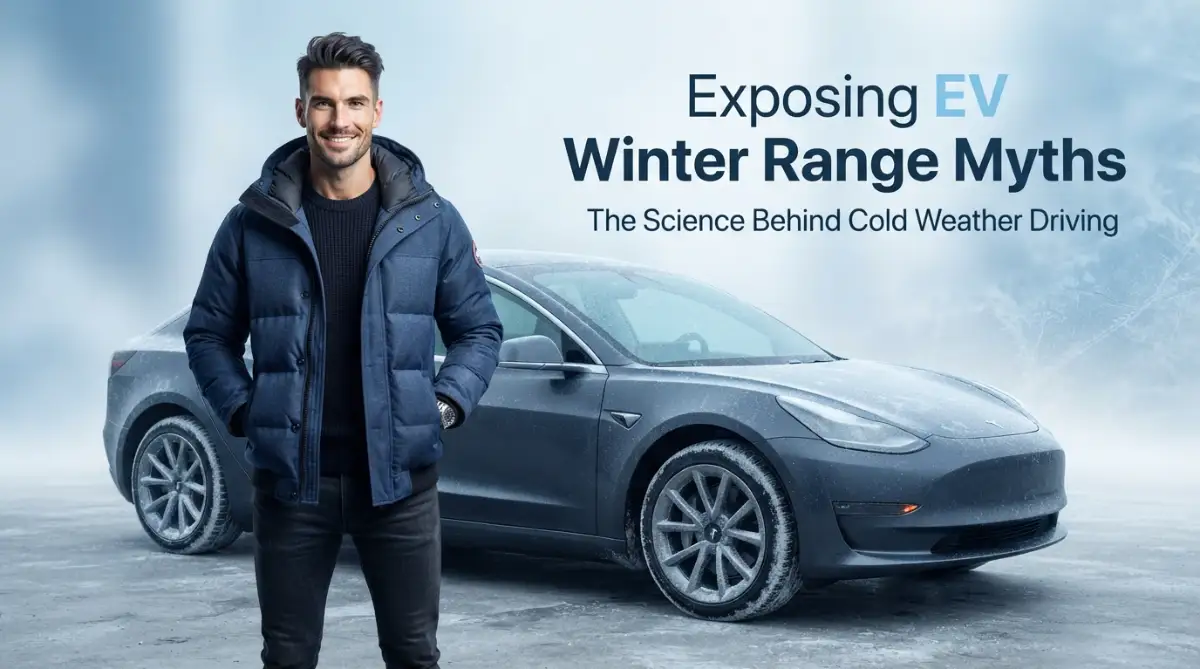
Let us clear the air right now. Yes, electric cars do lose some range when the weather gets incredibly cold. But the way people talk about it, you would think the car just shuts down the moment it sees a snowflake.
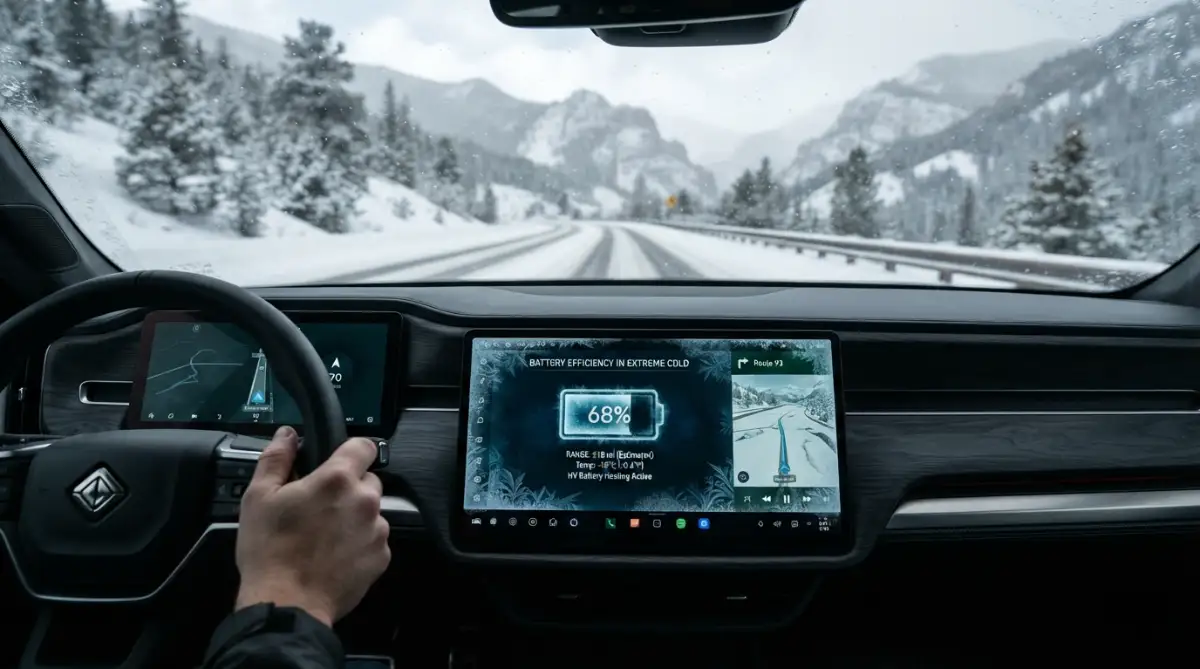
Myth 1: The Cold Permanently Damages Your Battery
One of the biggest rumors out there is that cold weather actually destroys your battery cells. People think that leaving an electric car out in the freezing snow will slowly kill the overall lifespan of the battery.
Here is the scientific reality: Cold weather actually preserves battery health in the long run. High heat is what degrades lithium-ion batteries, while cold temperatures simply slow down their chemical reactions.
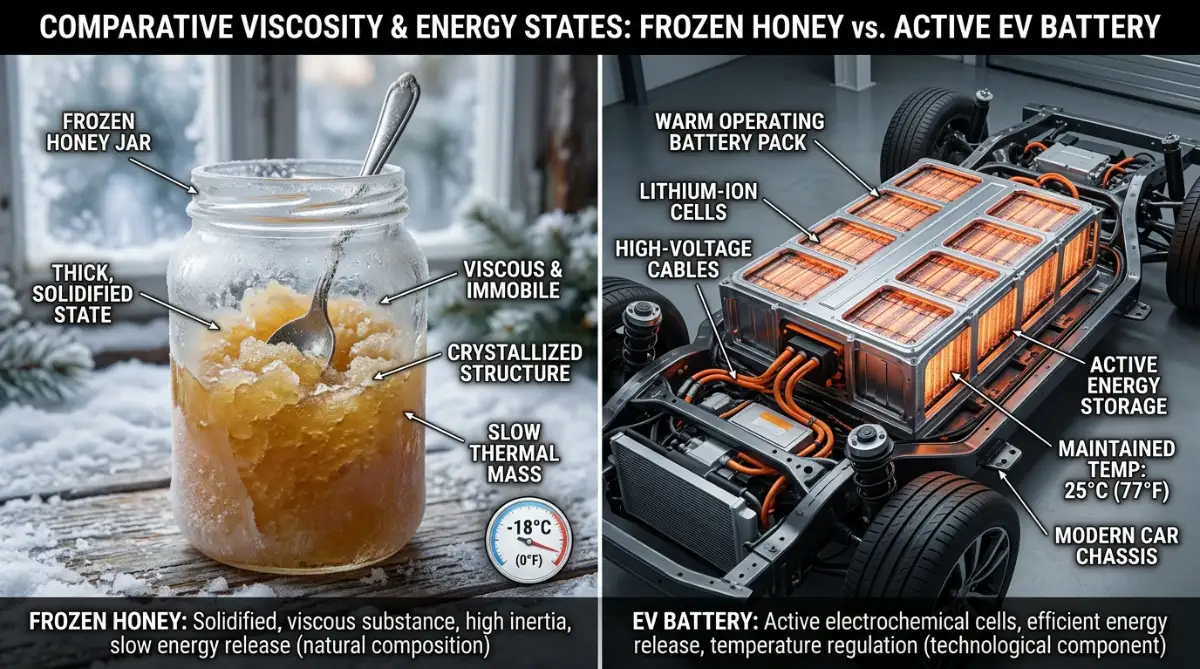
Think of your battery like a jar of pure honey. When you put honey in the fridge, it gets thick, sluggish, and very hard to pour. The honey is not ruined or expired; it just needs to warm up before it can flow properly again.
Your battery does the exact same thing when the temperature drops. It simply cannot release energy as quickly because the chemical process is temporarily frozen. Once the battery warms up through driving or internal heaters, full performance comes right back.
Are You Warming Up Your Car the Smart Way?
Quick Real-World Test: The Power of Preconditioning
- Without Plugging In: Your car uses about 10-15% of your battery just to heat up a freezing cabin in the first few miles.
- With Preconditioning (Plugged In): Your car uses 0% of its own battery for that initial heating.
- The Fix: Always set your departure time on your phone app. Let your house electricity do the heavy lifting while you drink your morning coffee.
Watch this quick breakdown on exactly how temperature impacts energy flow before you hit the road.
Myth 2: Driving is What Drains the Battery So Fast
When you see your range drop by 20% on a freezing morning, you probably blame the act of driving. You might think the motors are working twice as hard to push through the cold air and snowy roads.
While dense cold air does create a bit more resistance, it is not the main villain of this story. The true range killer is your cabin heater. In a traditional gas car, the engine creates a massive amount of waste heat.
The car simply blows that free waste heat into the cabin to keep you warm. An electric motor is so incredibly efficient that it barely creates any waste heat at all. Therefore, your car has to use precious battery power to generate heat from scratch.
Keeping the entire cabin at a cozy 72 degrees takes a massive amount of energy. You are basically running a high-powered electric space heater inside a moving metal box. This is why you see such a dramatic drop in your estimated miles.
The Preconditioning Secret Most Beginners Ignore
If there is one magic trick to surviving winter in an electric car, this is it. Most new owners treat their electric car exactly like a gas car. They get in, turn it on, blast the heat, and drive away immediately.
This is the worst possible thing you can do for your morning range. Your car has to spend a huge chunk of energy simultaneously warming up the frozen battery and warming up your freezing body.
Instead, you need to learn the art of "preconditioning." This simply means telling your car to warm up its battery and the cabin while it is still plugged into your home charger.
By pulling power directly from your house instead of the car battery, you start your journey with a 100% full charge and a perfectly warm car. The battery is already at its happy temperature, so the honey is ready to flow easily.
My Personal Confession: I used to think preconditioning was just a fancy luxury feature for people who hated cold seats. I ignored it entirely for my first month of ownership. Once I finally set the schedule on my phone app, I instantly got back almost 15% of my daily winter range without changing how I drove!
Myth 3: Fast Charging is Impossible in the Winter
Another terrifying rumor is that you cannot safely charge your car when it is freezing outside. People share photos of cars sitting at charging stations for hours with frustrated drivers inside.
It is true that a freezing cold battery cannot accept a rapid charge right away. If you try to shove high-speed electricity into a frozen battery, the car's computer will block it to prevent damage.
This makes the charging process painfully slow at first. But modern electric cars are incredibly smart machines designed to protect themselves.
If you use your car's built-in navigation system to route to a fast charger, it will do something amazing. As you drive, the car will automatically start heating up the battery pack in preparation.
By the time you actually park at the charging plug, the battery is perfectly warm. It will accept the fast charging speeds just like it would on a warm summer day. You just have to let the car know where you are going.
Real-World Adjustments for Winter Success
You do not need to freeze in the driver's seat just to save a few extra miles. Small, smart changes can make a world of difference in your daily commute.
Rethink Your Heating Strategy
Instead of heating the entire volume of air inside the car, focus on heating your body. Heated seats and heated steering wheels use a fraction of the energy compared to the main cabin blower.
You can turn the main cabin air down to a moderate level and let the seats do the heavy lifting. You will feel completely warm, but your battery will thank you.
Check Your Winter Footwear (Tires)
My Personal Tip from the Road: I switched to a dedicated set of high-quality winter tires last season. My slip-and-slide moments went down to zero. Because the car actually had grip, the traction control system stopped eating up my battery power trying to stop spinning wheels. Good tires literally save you miles.
Cold weather makes the air inside your tires contract, which leads to lower tire pressure. Driving on under-inflated tires increases rolling resistance significantly.
This means your motors have to work harder just to move the car forward. Always check your tire pressure when the weather turns freezing. Additionally, putting on proper winter tires gives you better grip, which stops the traction control system from wasting energy on slipping wheels.
Comparing the Seasons: Where Does the Energy Go?
To make this completely clear, let us look at a simple breakdown of how your car uses energy. This helps explain exactly why the winter feels so different from the summer.
As you can see, winter forces your car to fight battles on multiple fronts. But knowing this means you can plan ahead.
Overcoming the Mental Block of Range Anxiety
The biggest obstacle to enjoying your car in the winter is entirely in your head. Range anxiety is a powerful psychological trap that makes us fear the unknown.
When that estimated range number drops quickly, our brains go into survival mode. We start gripping the steering wheel, sweating, and silently praying to make it to the driveway.
You have to remember that the number on your dashboard is just a computer's guess. It is affectionately called the "Guess-O-Meter" by long-time owners.
The car is simply looking at how much energy you used in the last few miles and predicting the future. If you just blasted the heat to defrost the windshield, the computer assumes you will do that forever.
Once the cabin is warm and you turn the fan down, the computer will quickly adjust and give you those miles back. You have to trust the process and stop staring at the screen every ten seconds.
Why Eco Mode is Your Best Winter Friend
Almost every modern vehicle comes with some sort of Eco Mode setting. Many drivers ignore this button because they think it makes the car feel slow and boring.
In the middle of winter, Eco Mode is actually a massive advantage for both safety and range. When roads are icy, you do not want sharp, instant power going to the wheels.
Eco Mode gently softens the throttle pedal, making your acceleration much smoother. This prevents the tires from spinning on ice, keeping you safe and controlled.
At the same time, this smooth driving style is exactly what the battery loves most. Smooth acceleration and gentle braking are the ultimate secrets to preserving your battery life.
By pushing that simple button, you are protecting your range and your physical safety at the exact same time. It is a win-win situation that requires absolutely no extra effort from you.
The Beauty of Regenerative Braking in the Cold
If you drive an electric car, you already know about regenerative braking. It is that magical feature that slows the car down and puts energy back into the battery when you lift off the pedal.
In the freezing cold, you might notice that this feature feels significantly weaker. The car will not slow down as aggressively as it usually does.
This is simply the car protecting a cold battery from receiving too much sudden energy at once. Do not panic if the car feels like it is rolling further than normal.
As the battery warms up during your drive, the regenerative braking will slowly return to full strength. Just be prepared to use your actual brake pedal a bit more during the first few miles of your morning commute.
Planning Your Winter Road Trips Like a Pro
Taking a long road trip in the freezing cold requires a slightly different mindset. You cannot just jump in the car and speed down the highway blindly.
You need to plan your charging stops with a bit more caution than you would in July. Always aim to arrive at a charging station with at least a 15% to 20% buffer.
Winter weather is unpredictable, and heavy snow can easily slow traffic to a crawl. Having that extra buffer ensures you can run the heater if you get stuck behind a snowplow.
Use smart route-planning apps that factor in the current weather and temperature. These tools will automatically tell you exactly where to stop and how long to charge based on the cold conditions outside.
Electric cars are incredible winter machines once you understand their unique personality. The heavy battery pack sits incredibly low in the vehicle, giving you amazing balance and traction in the snow. They are quiet, safe, and warm up much faster than any gas engine ever could. By leaving the myths behind and using a little bit of smart planning, you can easily conquer the coldest months of the year without a single drop of sweat.Mastering the Freeze: Pro-Level Secrets for Maximum Winter Efficiency
When I first started driving my electric car in the middle of a brutal winter, I felt completely overwhelmed. I was reading every single forum post and watching countless videos trying to find the perfect strategy.
What I quickly learned is that surviving the cold is not about restricting your driving or shivering in a freezing cabin. It is all about working with the physics of the battery instead of fighting against them.
The most powerful secret weapon you have is your home charging setup. Many new owners try to survive the winter using a standard wall plug, which is often called Level 1 charging.
This slow trickle of electricity is simply not strong enough to heat the battery and the cabin while keeping the car fully charged. If you want to truly conquer the morning frost, you need to install a faster EV charger at home to properly prepare your vehicle.
With a high-powered wall connector, your car can pull massive amounts of energy directly from your house. This means your battery stays completely full while the internal heaters do all the heavy lifting.
The "Thermal Mass" Strategy
Let us talk about an amazing concept called thermal mass. Imagine you are pouring hot soup into a freezing cold thermos.
The cold thermos will instantly steal the heat from the soup, leaving you with a lukewarm lunch. However, if you pour boiling water into the thermos first to warm the metal, your soup will stay blazing hot all day.
Your car cabin acts exactly like that thermos on a cold morning. If you wait until you unplug the car to turn on the heat, the battery has to warm up the frozen seats, the icy dashboard, and the cold air.
By preheating the cabin while the car is still plugged into the wall, you are warming up the entire thermal mass of the interior. Once you hit the road, your car only needs a tiny bit of energy to maintain that cozy temperature.
This single habit is the absolute best way of protecting your EV battery range when the snow starts falling. You start your trip with a warm cabin, a happy battery, and a full charge.
Understanding Wind Chill vs. Actual Drag
There is a huge misconception that a bitter wind chill physically freezes your battery faster while driving. Wind chill is how cold the air feels to human skin, but your battery is completely sealed inside a metal box.
However, freezing winter winds do impact your range in a completely different way. Cold air is incredibly dense, meaning it is physically thicker than warm summer air.
Think about the effort it takes to walk through waist-deep water compared to walking on an empty beach. Your car has to push through that thick, heavy cold air, which creates massive aerodynamic drag.
According to extensive testing by the Department of Energy on cold weather efficiency, this increased aerodynamic drag forces your electric motors to work much harder. If you are driving directly into a strong winter headwind, your range will drop simply because the car is fighting the thick air.
To combat this, try slowing down just slightly on the highway during extremely windy and cold days. Dropping your speed from 75 mph to 65 mph can magically recover a huge chunk of your lost battery range.
The Hidden Power of Navigation
Even if you know your daily commute perfectly, you should always use your car's built-in navigation system during the winter. This sounds silly, but it is actually a massive pro-level secret.
Modern electric vehicles have highly intelligent thermal management systems built into their computers. When you set a destination, the car analyzes the route, the outside temperature, and the expected charging needs.
If it knows you are heading to a fast charger, it will start gently warming the battery pack while you drive. A fascinating study by the National Renewable Energy Laboratory (NREL) highlights how pre-warmed batteries accept rapid charging speeds almost twice as fast as frozen ones.
If you just drive blindly without the navigation, the car assumes you are just running local errands. You will arrive at the charging station with a frozen battery, and you will be stuck sitting there for an hour while it slowly thaws out.
The Silent Traps: Everyday Habits That Ruin Winter Range
Even with all the best planning, human nature often gets in the way of a perfect winter drive. When we are cold and anxious, we tend to make snap decisions that actually make our situation much worse.
One of the most dangerous traps is ignoring the physical condition of your tires when the temperature drops. Cold air naturally shrinks, which means the air pressure inside your tires will plummet overnight.
Driving on soft, under-inflated tires is exactly like trying to ride a bicycle through thick mud. The motors have to drag the car forward, completely destroying your estimated range in just a few miles.
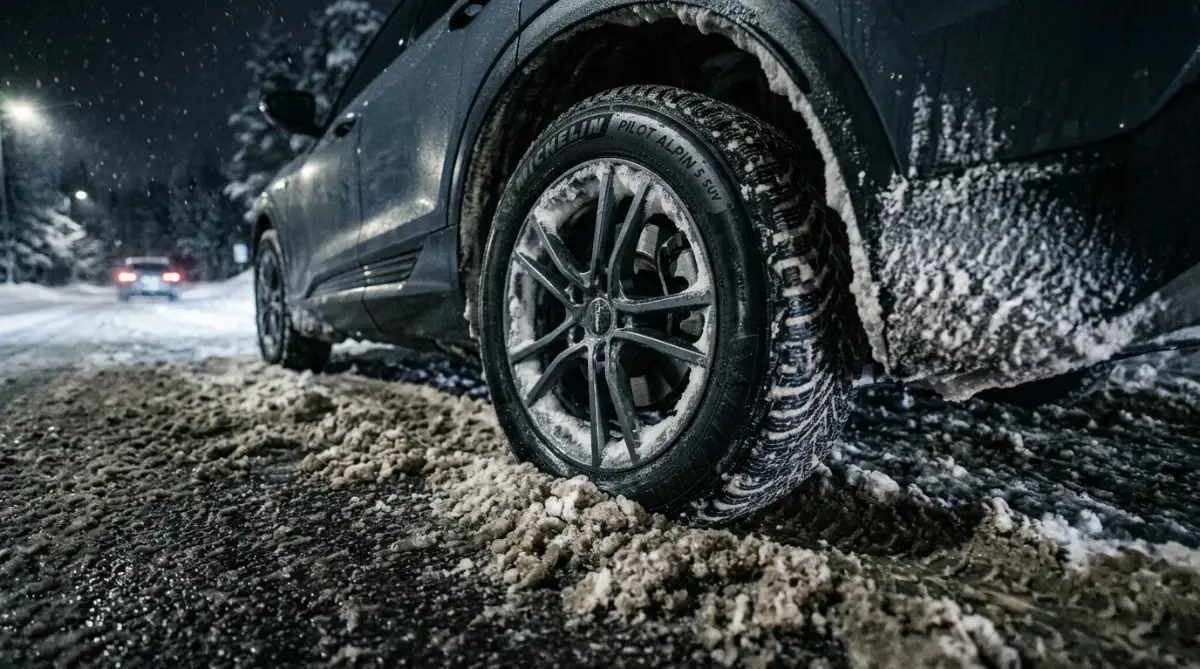
Worse yet, soft tires have terrible handling on icy roads, putting you at serious physical risk. If you slide into a barrier because of bad tires, you will find yourself standing in the freezing cold documenting evidence after a minor car accident.
Make it a strict habit to check your tire pressure on the very first freezing morning of the season. Keeping them properly inflated is the easiest free range you will ever get.
The Deep Discharge Danger
Another massive mistake people make is treating their battery like a gas tank that should be run completely dry. In the summer, pulling into your driveway with a 5% charge is perfectly fine.
In the middle of a blizzard, leaving your car sitting overnight with a nearly empty battery is a terrible idea. This is known as a "cold soak," where the entire battery pack drops to the ambient freezing temperature of the air.
If the battery is incredibly low, the car might not have enough internal energy to run its own battery heaters the next morning. You could wake up to a car that refuses to shift into gear until the sun comes out.
Always try to keep your winter battery above 20% when parking overnight without a charger. This ensures the car has enough reserve power to wake itself up and protect its delicate computer systems.
The Panic Speeding Trap
When drivers see their estimated miles dropping faster than expected, panic usually sets in. The brain completely short-circuits, and the immediate reaction is to speed up to get home faster.
This is the absolute worst possible reaction you can have in an electric vehicle. As we discussed earlier, pushing through cold, dense winter air takes a massive amount of energy.
By pressing the pedal down and speeding, you are forcing the motors to burn through the remaining battery at lightning speed. It is a terrifying cycle that leaves many new owners feeling totally helpless.
Instead, you need to practice emotional discipline and sustainable work habits behind the wheel. Take a deep breath, slow down by five miles per hour, and turn down the cabin heater.
According to research from the American Automobile Association (AAA), simply dropping your speed and relying on heated seats can comfortably get you to your destination without any tow trucks involved.
Misunderstanding Regenerative Braking on Ice
Electric cars are famous for their one-pedal driving feature, which slows the car down aggressively the moment you lift your foot off the accelerator. This is amazing for saving brake pads in the summer.
However, relying entirely on heavy regenerative braking on a solid sheet of black ice is a dangerous gamble. If the system grabs the wheels too aggressively, you can easily lose traction and go into an uncontrolled spin.
Most modern cars automatically reduce this braking force to protect the frozen battery cells anyway. But you should always go into your settings and manually set the regeneration to "low" or "snow mode" if the roads are slick.
Relying on your actual physical brake pedal gives you a much smoother, safer stop in terrible conditions. If you accidentally slide into another car because your wheels locked up, you will be stuck fighting with agents over auto claims instead of enjoying your winter.
Your New Action Plan for Stress-Free Winter Commutes
If you step back and look at the big picture, driving an electric car in the snow is actually a massive upgrade. You never have to stand outside at a freezing, dirty gas station pump ever again.
You never have to worry about a frozen engine block refusing to turn over on a Monday morning. Your electric car provides instant, beautiful heat the second you press the start button.
The weight of the heavy battery pack sits incredibly low in the frame, giving you a center of gravity that makes sliding almost impossible. These cars are absolute tanks in the snow once you put proper winter tires on them.
The secret to loving your car all year round is simply changing your daily routine. Treat your home charger like your best friend, and always plug the car in the moment you park in the driveway.
If you set up your morning preconditioning schedule correctly, you will never even notice the cold weather outside. You will step into a wonderfully warm cabin, with clear, defrosted windows, ready to take on the day.
For those who worry about the high cost of public fast charging in the winter, the solution is simple. Charge at home overnight during off-peak hours to save hundreds of dollars a month.
Financial stress from expensive charging can feel just as suffocating as when you can't make your car payment. By managing your energy smartly, your electric car remains the cheapest and most reliable way to travel, regardless of the season.
Common Questions About Winter Electric Driving
Do electric cars lose charge while parked in the freezing cold?
Yes, you might notice a very small drop in battery percentage if the car is parked outside in extreme cold for several days. This is because the car uses a tiny bit of energy to keep its internal battery management system warm and safe. However, this drain is usually just one or two percent a day, which is nothing to panic about.
Should I leave my EV plugged in during freezing weather?
Absolutely, leaving your car plugged in is the best possible thing you can do during the winter. When the car is plugged in, it pulls energy directly from the wall to keep the battery warm instead of draining its own power. A happy, warm battery will last much longer and perform beautifully when you are ready to drive.
Is it safe to drive an electric vehicle in deep snow?
Electric vehicles are actually incredible in the snow because they do not have a heavy engine sitting entirely over the front wheels. The heavy battery pack is spread evenly across the floor, providing amazing balance and traction. Just make sure you invest in a quality set of winter tires, and you will feel like you are driving a snowplow.
Will turning off the radio save battery in the winter?
Turning off your radio or your dashboard screen to save battery is a complete waste of your time. The infotainment system uses such a microscopic amount of energy compared to the main electric motors and the cabin heater. If you really want to save miles, turn down the main air blower and use your heated seats instead.
My journey from a terrified, shivering driver to a confident winter commuter completely changed how I view electric vehicles. I realized that a little bit of knowledge and a few smart daily habits easily defeat the coldest winter mornings. Take control of your charging routine tonight, and I promise you will never fear the winter roads again.
Disclaimer: The information provided in this article is for educational and informational purposes only and should not be considered professional automotive or financial advice. Driving conditions vary heavily by region, vehicle model, and individual driving habits. Always consult your vehicle's official owner's manual for specific temperature guidelines and safety recommendations. The author and publisher are not responsible for any damage, loss of range, or accidents resulting from the use of this information.