My Wake-Up Call With Unpredictable Heart Health
Let me ask you something honestly: do you ever feel a sudden weird flutter in your chest and immediately start panicking? I used to deal with that exact fear. You sit there wondering if you just drank too much coffee or if you actually need to call a doctor, feeling totally powerless because you have no way to check what your heart is actually doing right then and there. That horrible feeling of guessing is exactly why I decided to look into wearable health tech.
Naturally, panic set in almost instantly. I had no idea if it was just stress, too much coffee, or something much worse happening inside my body. My mind raced through the worst possible scenarios.
At that moment, I realized I had absolutely no way to check what was going on with my heart. I did not own a medical device, and driving to an emergency room for what might be a simple panic attack felt embarrassing. I just sat there, terrified and completely blind to my own health metrics.
That night was a major turning point for me. I realized that ignoring my cardiovascular health was a dangerous game. I started researching ways to keep track of my body without having to visit a clinic every single week.
The deeper I looked, the more I noticed a massive shift in wearable technology. People were no longer just tracking their steps or the calories they burned during a workout. They were wearing tiny medical assistants right on their wrists.

Before You Read: A Quick Summary
-
Smartwatches use smart electrical circuits and optical lights to track your heart rhythm straight from your wrist.
-
You absolutely must calibrate optical sensor watches with a real home blood pressure cuff every single month to get good data.
-
You cannot move around while taking a test. You need to sit completely still with your feet flat on the floor and your arm resting on a table.
-
These smart devices are amazing for spotting daily health trends, but they never replace a real doctor or emergency room.
The Hidden Burden of Health Anxiety
Living with constant worry about your blood pressure or heart rhythm is absolutely exhausting. It quietly drains your energy and steals your focus from the things you actually enjoy doing. You might find yourself pausing during a simple walk in the park, wondering if your heart is beating a little too fast.
For many people, the traditional method of checking these metrics is incredibly frustrating. You have to drag out a bulky cuff monitor from the closet, wrap it tightly around your arm, and sit in silence like a statue. It is not exactly something you can do while sitting in a busy office or waiting for a bus.
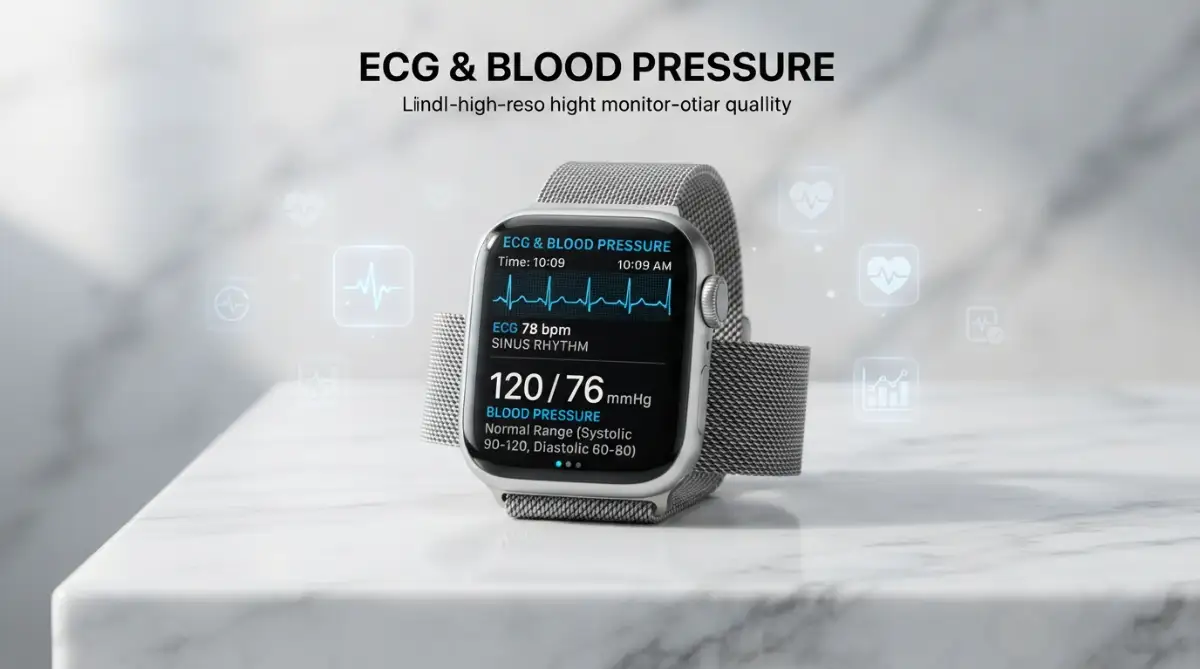
This exact struggle is why finding the best smartwatches with blood pressure and ECG monitor functions has become so essential for so many of us. These devices offer something traditional monitors simply cannot provide. They give you the gift of immediate reassurance.
Imagine feeling a strange palpitation during a stressful meeting. Instead of panicking silently, you simply rest your finger on your watch for thirty seconds. Within moments, you get a clear, easy-to-read rhythm report right on your screen.
This instant feedback completely changes how you interact with your own body. It transforms fear into actionable knowledge. You are no longer guessing about your health because you have real-time data right at your fingertips.
Understanding The Magic On Your Wrist
Before you jump into using one of these advanced devices, it helps to understand exactly what is happening inside them. I used to think smartwatches worked by some sort of pure magic. In reality, it is just brilliant, miniaturized science.
Let us talk about the Electrocardiogram, commonly known as an ECG or EKG. In a hospital, a doctor sticks multiple cold patches all over your chest and limbs to measure the electrical signals of your heart. A smartwatch does a very similar job, but it uses a clever single-lead system.
When you wear the watch on your wrist, the back sensor touches your skin. To take a reading, you touch the dial or side button with a finger from your opposite hand. This action creates a closed electrical circuit straight across your chest, allowing the watch to read your heart's electrical impulses.
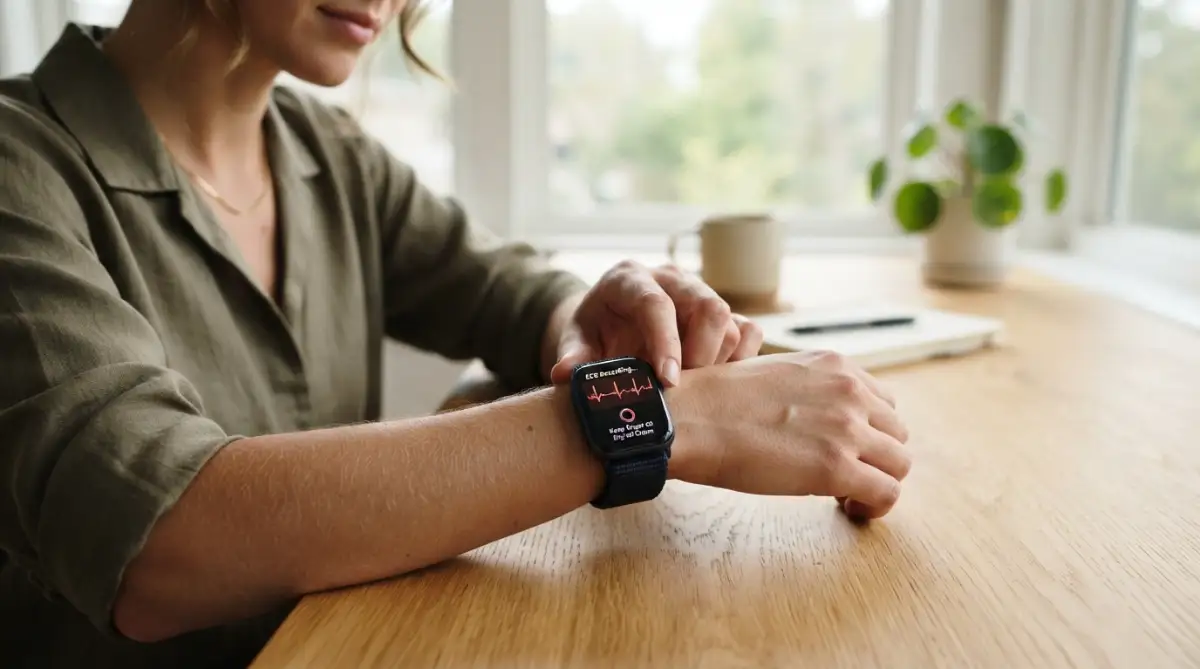 Blood pressure tracking on a watch is equally fascinating, though it works a bit differently. Some of the most advanced models actually have a tiny mechanical airbag hidden inside the strap. It inflates just like a doctor's cuff, physically squeezing your wrist to measure the pressure.
Other modern watches use optical sensors and light to estimate your blood pressure. They shine a light into your skin and measure how quickly the blood pulses through your veins. By using complex algorithms, they calculate your systolic and diastolic numbers with impressive accuracy.
Quick Comparison: Mechanical vs. Optical Smartwatches
-
Mechanical Cuff Watches: These actually have a tiny airbag inside the strap that physically squeezes your wrist. They are incredibly accurate but tend to look a bit thicker and bulkier on your arm.
-
Optical Sensor Watches: These use smart lights to read your blood flow. They look just like regular, stylish watches but you must calibrate them every single month with a real cuff to keep the math accurate.
How to Prepare for a Perfect Reading
Having a high-tech watch is wonderful, but the technology is only as good as the person operating it. I learned the hard way that user error is the biggest reason for weird or scary readings. You cannot simply take an ECG while walking up a flight of stairs and expect perfect results.
To get the most accurate data, you have to treat your smartwatch reading just like a visit to the doctor. First, you need to find a quiet space where you can sit down comfortably. Let your body relax for at least three to five minutes before you even touch the watch.
Next, pay close attention to your posture. Both of your feet should be flat on the floor, and your back should be well supported. Do not cross your legs, as this can temporarily raise your blood pressure and ruin the accuracy of the reading.

Your arm placement is incredibly important. Rest the arm wearing the watch flat on a table, right at the same level as your heart. Keep your wrist completely relaxed and avoid talking or moving while the device does its work.
Pro Tip from My Own Experience
I used to get extremely frustrated when my watch showed a totally different blood pressure reading than my doctor's office. I finally realized that I was wearing the watch band way too loosely. For accurate optical or physical readings, the watch needs a snug, firm fit against your skin—not tight enough to hurt, but tight enough that it does not slide around when you move.
The Golden Rule of Device Calibration
If you choose a watch that uses optical sensors for blood pressure, there is a step you simply cannot skip. You must calibrate the device using a traditional medical-grade arm cuff. This teaches the watch exactly how your specific blood vessels behave.
A Quick Guide to Wrist Calibration
You will be taking a reading with your traditional cuff and your watch at the exact same time. The watch app will ask you to input the numbers from the heavy cuff monitor. You usually have to repeat this process three times in a row.
This creates a baseline for the algorithms. The watch now knows what a reading of 120/80 looks like for your unique pulse wave. You will need to repeat this calibration every four weeks to keep the data reliable and safe.
Here is a great visual breakdown of how to position yourself correctly for these health scans.
Mastering Your Health Tech
Getting accurate results is all about building the right habits. This quick tutorial shows you exactly how to position your arm and body for the most precise health readings possible.
Myth vs. Reality: Setting Proper Expectations
When discussing the best smartwatches with blood pressure and ECG monitor capabilities, we have to be honest about what they can actually do. The marketing for these devices is incredibly flashy. It is very easy to expect them to act like tiny emergency room doctors.
Myth: A smartwatch completely replaces your doctor.
Reality: These devices are screening tools, not diagnostic machines. They are designed to spot unusual patterns and give you early warnings. If your watch alerts you to an irregular heartbeat, its only job is to tell you to go see a real medical professional.
Myth: The watch can detect a heart attack.
Reality: This is a very common and dangerous misunderstanding. No smartwatch on the market today can detect a heart attack. If you feel severe chest pain, shortness of breath, or arm numbness, you must call emergency services immediately, regardless of what your watch says.
Myth: Any cheap fitness band can check blood pressure.
Reality: Accurate tracking requires serious, medical-grade hardware and software that has been cleared by health authorities. Very cheap generic bands often use fake animations or wildly inaccurate software to guess your numbers. Always stick to reputable brands that have official medical certifications.
Making Sense of the Numbers on Your Screen
Taking the reading is only the first half of the journey. The second half is actually understanding what those complicated charts and numbers mean. When you take an ECG, the watch will usually give you one of a few specific results.
The best result you can see is "Sinus Rhythm." This simply means your heart is beating in a uniform, normal pattern. It is the steady, predictable drumbeat that tells you everything is functioning just as it should.
Sometimes, you might see a warning for "Atrial Fibrillation," often called AFib. This means the watch detected an irregular, chaotic heartbeat pattern. While a single warning might just be a bad reading, consistent AFib alerts mean you need to schedule a doctor's appointment right away.
What Should You Do If You Get An AFib Alert?
First, take a deep breath and do not panic. Drink a glass of water, sit quietly for ten minutes, and try taking the reading again. Sometimes a bad connection causes a false alarm. However, if you get three AFib alerts in a row over a single hour, print your PDF reports from your phone app and call your doctor's office to schedule a checkup.
When it comes to blood pressure, try not to obsess over a single reading. Blood pressure changes constantly based on your hydration, stress, and physical activity. What you are actually looking for is the long-term trend.
If your daily average slowly creeps up over a few weeks, that is valuable information. You can print out the PDF reports directly from your smartphone app. Handing those detailed charts to your doctor gives them a massive advantage in treating you.
Real-Life Scenarios Where Wrist Monitoring Shines
Let us look at how this technology actually fits into a normal day. Imagine you are caring for aging parents who live a few hours away. It is terrifying not knowing if they are taking care of their heart health daily.
Many modern smartwatches allow users to automatically share their health data with family members. You can open an app on your phone and see that your mother took her blood pressure this morning and everything looks perfectly normal. That kind of digital peace of mind is absolutely priceless.
Or consider a busy professional dealing with intense office stress. We often do not realize how badly stress impacts our bodies until we feel sick. Having a device that reminds you to breathe when your resting heart rate spikes can completely change your afternoon.
You can step out of a difficult meeting, take a quick three-minute breathing exercise guided by your watch, and actually see your heart rate drop on the screen. It is visual proof that you have control over your own body and your own stress levels.
Building a Healthier Routine Around Your Device
Buying the hardware is only step one. The real magic happens when you let the watch guide your daily habits. Most of these devices come packed with features that support a healthier cardiovascular system.
For example, regular movement is one of the best ways to keep your heart healthy. Your watch will likely nudge you to stand up and walk around if you have been sitting at your desk for too long. These gentle vibrations are a great reminder to break up a sedentary day.
Sleep tracking is another massive benefit that directly impacts your heart. Poor sleep is heavily linked to high blood pressure and irregular heart rhythms. By wearing your watch to bed, you can see how much deep restorative sleep you are actually getting.
If you notice your sleep scores are terrible, you can start making changes. You might stop drinking coffee in the late afternoon or turn off your screens an hour before bed. As your sleep improves, you will likely see your daytime heart metrics improve as well.
Hydration also plays a huge role in blood volume and pressure. Many smartwatches allow you to track your water intake right from your wrist. Tapping the screen every time you finish a glass keeps you accountable and keeps your body functioning smoothly.
The Future of Personal Health Tracking
We are living in an incredible era of personal technology. Ten years ago, the idea of having an ECG on your wrist sounded like pure science fiction. Today, it is an accessible reality that is actively saving lives around the globe.
As the sensors get smaller and the algorithms get smarter, these watches will only get better. We are already seeing companies working on non-invasive blood sugar tracking and hydration sensors. The wrist is rapidly becoming the ultimate dashboard for the human body.
However, the technology is ultimately just a tool in your toolbox. It is meant to empower you, not to make you paranoid. If you find yourself checking your ECG twenty times a day, it might be time to take a step back and breathe.
The goal is to use the data to make better lifestyle choices. Eat a little cleaner, walk a little further, and sleep a little longer. Let the watch handle the complex math while you focus on simply living a better, healthier life.
Taking charge of your personal health is the best investment you will ever make. It allows you to be more present for your family, more focused at work, and more relaxed in your daily life. A good smartwatch is simply a supportive partner on that amazing journey.
Mastering Your Digital Health Routine Like a Pro
Now that you understand the basic mechanics of these incredible wrist devices, we need to talk about long-term success. Buying the hardware is easy, but building a reliable, daily habit takes a little bit of strategy. I want to share some advanced techniques that completely changed how I manage my own daily tracking.
The most valuable thing you can do is establish a dedicated morning health window. Your body goes through massive physical changes throughout the day based on stress, food, and movement. If you check your stats at random times, your graphs will look like a chaotic roller coaster.
To get the cleanest data, take your readings immediately after waking up, before you even look at your morning emails. Empty your bladder, sit on the edge of your bed for three minutes in total silence, and then run your checks. This gives your algorithms a perfect, resting baseline to work from every single day.
You also need to become slightly obsessed with sensor hygiene. Throughout the day, your skin naturally sheds microscopic dead cells and produces natural oils. These invisible layers build up directly over the optical lights and electrical pads on the back of your watch.
When this barrier gets too thick, the weak electrical signals from your chest simply cannot reach the internal hardware. I highly recommend wiping the back of your device with a soft, dry microfiber cloth every single evening. A clean sensor is the absolute best guarantee for a perfect, error-free rhythm reading.
Another massive part of getting accurate results comes down to your software environment. These devices run on highly complex algorithms that companies are constantly refining behind the scenes. Manufacturers frequently release patches that improve sensor accuracy, making prioritizing prompt firmware updates a mandatory habit for anyone serious about their health tracking.
Building a Trustworthy Medical Archive
Your watch is going to generate a massive amount of medical data over a few months. Most modern health apps allow you to export your monthly rhythm histories into neat, professional PDF documents. Learning how to manage and share these files is incredibly empowering.
Because these health apps sync deeply personal medical history over your local internet, securing your home network should be a top priority. You definitely do not want your private health documents sitting on an unprotected, open Wi-Fi connection.
When you finally visit your doctor, do not just shove your watch screen in their face. Print out your exported PDF reports and hand them a physical copy to review. Cardiologists love seeing long-term trends because it gives them a much clearer picture of your overall cardiovascular timeline.
Just remember that not every watch app is legally cleared to act as a medical device. You should always verify that your specific brand meets strict medical software safety guidelines set by health authorities. This official clearance means the device has actually been tested against real hospital equipment.
 Dangerous Habits That Ruin Your Health Data
Even the most expensive, advanced smartwatch in the world will feed you garbage data if you use it incorrectly. I have made almost every mistake possible while learning how to use my device. Some of these errors just cause frustration, but others can be genuinely dangerous to your mental and physical peace.
The single biggest mistake people make is falling into the trap of obsessive checking. When you first get a device with these capabilities, it is very tempting to run a scan every hour. If you suffer from health anxiety, this constant checking actually triggers your body's fight-or-flight response.
Every time you anxiously wait for the watch to finish its countdown, your brain releases adrenaline. This adrenaline causes your heart rate to spike and your blood vessels to constrict. Ironically, the fear of having high numbers directly causes your watch to display terrifyingly high numbers.
The Danger of Moving and Talking
Another massive pitfall is treating a health scan like a casual, multitasking activity. I used to try taking my blood pressure while watching television and answering text messages. My watch would constantly throw error codes, or worse, give me readings that looked dangerously low.
Taking these measurements requires absolute physical stillness. If you talk, laugh, or even swallow heavily, the tiny muscles in your arm contract and shift. This microscopic movement completely throws off the delicate pressure wave detection happening on your wrist.
You must also be very careful about what you consume before tracking your metrics. Drinking a large cup of dark roast coffee or smoking a cigarette will temporarily alter your entire cardiovascular system. If you take a reading immediately after a strong espresso, you are measuring the caffeine, not your true resting baseline.
Ignoring the Real World for Digital Screens
Perhaps the most dangerous mistake of all is trusting your screen more than your own physical symptoms. Technology is amazing, but it is never perfect. A digital sensor can easily miss complex blockages or subtle cardiovascular events.
If you feel sudden, crushing chest pain, extreme dizziness, or pain radiating down your left arm, you must ignore your watch completely. Even if your screen says your rhythm is perfectly normal, these are severe medical emergencies. You should never let a consumer gadget talk you out of calling for an ambulance.
You also cannot rely on a smartwatch to completely replace traditional home monitoring equipment. While the watch is amazing for daily portability, the proper methods for home blood pressure monitoring usually involve a traditional, validated upper-arm cuff. You need that heavy medical cuff to regularly calibrate and double-check your lightweight wrist tech.
The Battery Drain Reality
Finally, people often forget that running intense health algorithms drains an enormous amount of power. I once went on a weekend trip, forgot my charger, and my watch died right when I felt a strange palpitation. The panic of having a dead medical tool is a terrible feeling.
When you rely on your device around the clock, extending your daily battery life becomes incredibly important. Get into the habit of charging your watch while you take your morning shower. This ensures you always have enough power to run a background scan while you sleep.
Your Roadmap to Better Cardiovascular Confidence
Navigating the world of wearable medical technology can feel a bit overwhelming at first. There are so many graphs, charts, and scary medical terms thrown at you on a tiny screen. But once you build a consistent routine, that fear quickly turns into incredible confidence.
You are no longer guessing about what is happening inside your chest during a stressful day. You have actual data that proves you are doing okay, or data that gently suggests you need a rest. That transition from blind anxiety to informed awareness is truly life-changing.
The goal is not to become a perfectly functioning, robotic human with flawless stats every day. The goal is simply to learn your own unique baseline and notice when things drift too far off track. Your watch is just a friendly co-pilot helping you navigate the bumps along the road.
If you ever receive an alert for an irregular rhythm, try to remain as calm as possible. It is important to educate yourself about the warning signs of atrial fibrillation so you know exactly when to seek professional help. Knowledge is your best defense against unnecessary panic.
My personal journey with this technology has taught me that health is not a destination, but a daily conversation with my body. Every morning I put my watch on, I am making a silent promise to listen to what my heart needs that day. I genuinely hope this guide helps you find that exact same peace of mind and control in your own life.
Real Questions People Ask About Smartwatch Health Tracking
Can my smartwatch definitely tell if I am having a heart attack?
Absolutely not. Smartwatches measure electrical rhythms and basic pulse waves, but they cannot detect the complex blockages that cause a heart attack. If you experience severe chest pain or shortness of breath, you must call emergency services immediately.
Do I still need to keep my traditional arm cuff monitor?
Yes, keeping your traditional cuff is highly recommended. You will need it to properly calibrate your watch every few weeks to maintain accuracy. It also serves as a great secondary tool to verify any unusual or scary readings your watch might give you.
How tight should the watch band be for an accurate scan?
Your watch band needs to be comfortably snug, sitting about two fingers above your actual wrist bone. It should not be tight enough to leave deep red marks, but it should not slide up and down your arm when you shake your hand.
Why does my smartwatch fail to read my ECG sometimes?
ECG failures usually happen because your fingers are too dry or you are moving slightly. Try putting a tiny drop of water or unscented lotion on the fingertip that touches the crown. This extra moisture instantly improves the electrical connection and creates a much cleaner graph.
Will thick arm hair or tattoos affect my daily readings?
Yes, heavy tattoos and thick hair can seriously block the optical light sensors on the back of the watch. If the green and red lights cannot penetrate your skin properly, the blood pressure algorithms will struggle. You might need to shave a small patch of hair directly under the sensor for the best results.
Can I share my daily heart metrics directly with my family?
Most premium health ecosystems have built-in sharing features inside their smartphone companion apps. You can send an invitation to a trusted family member, allowing them to see your daily averages on their own phone. This is an amazing feature for adult children taking care of elderly parents.
Disclaimer: The information provided in this article is for educational and informational purposes only and does not constitute professional medical advice. Always consult with a qualified healthcare provider or cardiologist before making any changes to your health routines or if you have concerns regarding your cardiovascular health. Wearable devices are not intended to diagnose, treat, cure, or prevent any disease.