
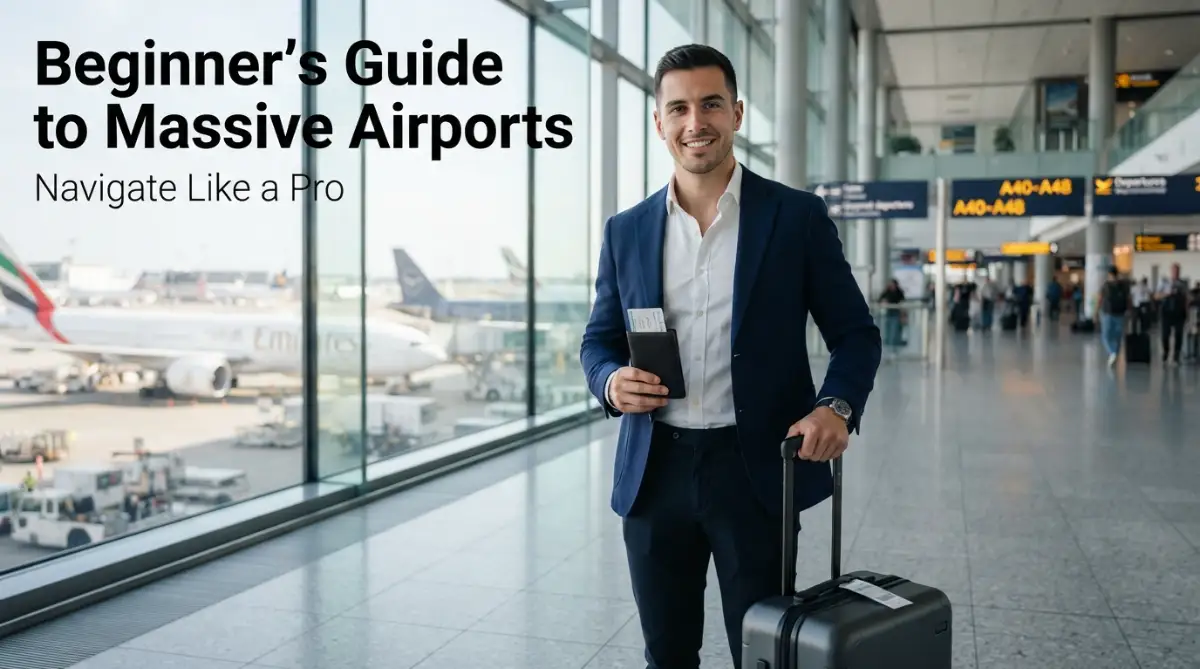
The Overwhelming Reality of First-Time Air Travel
"Let’s be honest: walking into a massive international airport for the first time is scary. Between the flashing screens, huge crowds, and endless signs, it’s easy to feel like you're lost in a giant maze. I’ve spent years navigating these terminals, and I’m going to show you that it’s actually much simpler than it looks. Forget the panic—here is your straight-to-the-point guide to surviving the airport and catching your flight without breaking a sweat."
My chest felt tight as I looked up at the endless rows of glowing digital screens flashing hundreds of different city names. I felt like a tiny ant dropped into the middle of a giant, confusing maze. Every sign pointed to strange zones, letters, and numbers that made absolutely no sense to my inexperienced brain.
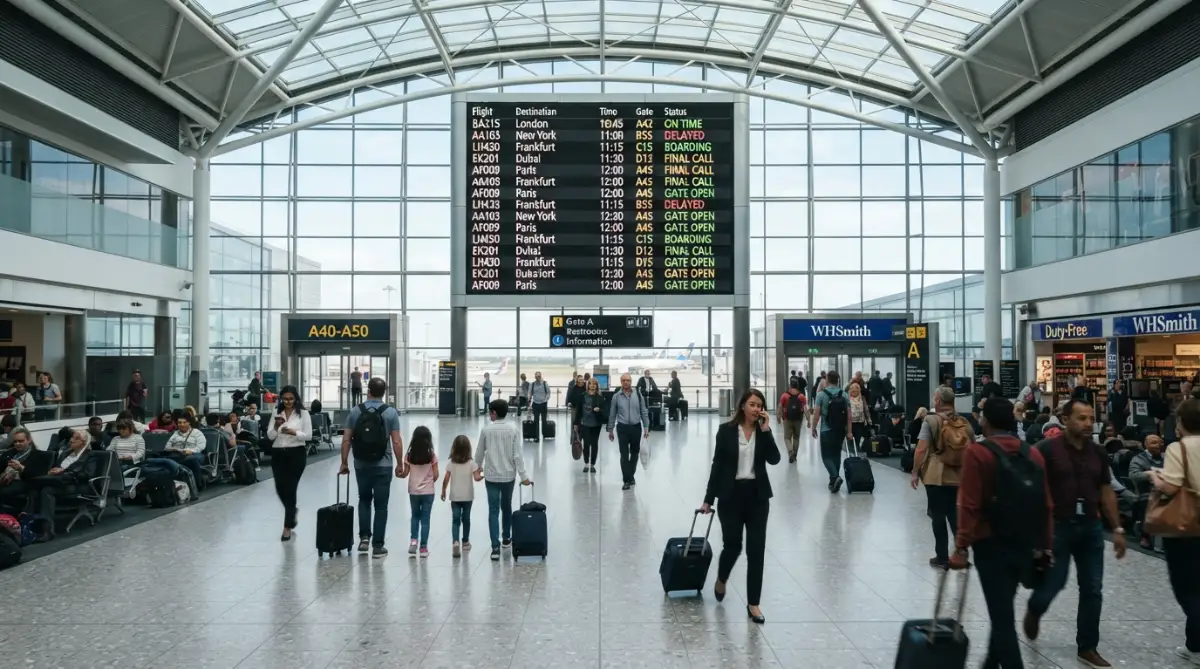
But you do not have to let this massive building control your emotions or ruin your travel experience. I learned the hard way how these giant structures actually operate, and I want to share those secrets with you. By understanding a few basic patterns, you can walk through any foreign terminal with total confidence.
"The 'Too Long; Didn't Read' Airport Checklist
Before we dive into the details, keep these 4 rules in your head:
- Arrive Early: Be at the entrance 3 hours before an international flight. No exceptions.
- Search by Flight Number: Ignore the city name on screens; look for your unique flight code (e.g., EK202).
- Prep Your Pockets: Put your keys, coins, and phone inside your bag before you reach the security bin.
- Follow the Gates: Once you cross security, find your gate first. Shop and eat only after you know exactly where your plane is."
Decoding the Blueprint of Giant Terminals
Massive international airports are designed with a very specific psychological and physical flow. Once you understand this hidden structure, the building stops being a scary monster and becomes a predictable path. Think of the terminal as a simple straight line that moves you from the front door directly to your airplane seat.
The first step in mastering this environment is understanding how the zones are strictly divided. Every single major airport on earth is split into two distinct halves: "Landside" and "Airside". Knowing the difference between these two areas will instantly solve most of your navigation confusion.
"Quick Reference: Where Do I Go?
| Your Need | The Zone | Can Family Join Me? |
| :--- | :--- | :--- |
| Checking in bags | Landside (Public) | Yes |
| Getting a coffee before security | Landside (Public) | Yes |
| Waiting at the gate | Airside (Secure) | No |
| Duty-free shopping | Airside (Secure) | No |
| Boarding the plane | Airside (Secure) | No |"
Landside vs. Airside: The Golden Rule
The Landside area is exactly where you stand when you first step out of your taxi or bus. This is the public zone where anyone can walk around, buy a coffee, or say goodbye to their family members. Here, you will find the main check-in desks, bag drop counters, and general information booths.
The Airside area is the highly secure zone that you can only enter after passing through strict security and passport checks. Once you cross into the Airside, you are officially in the waiting zone for your airplane. You cannot easily walk back to the Landside once you cross this invisible border.
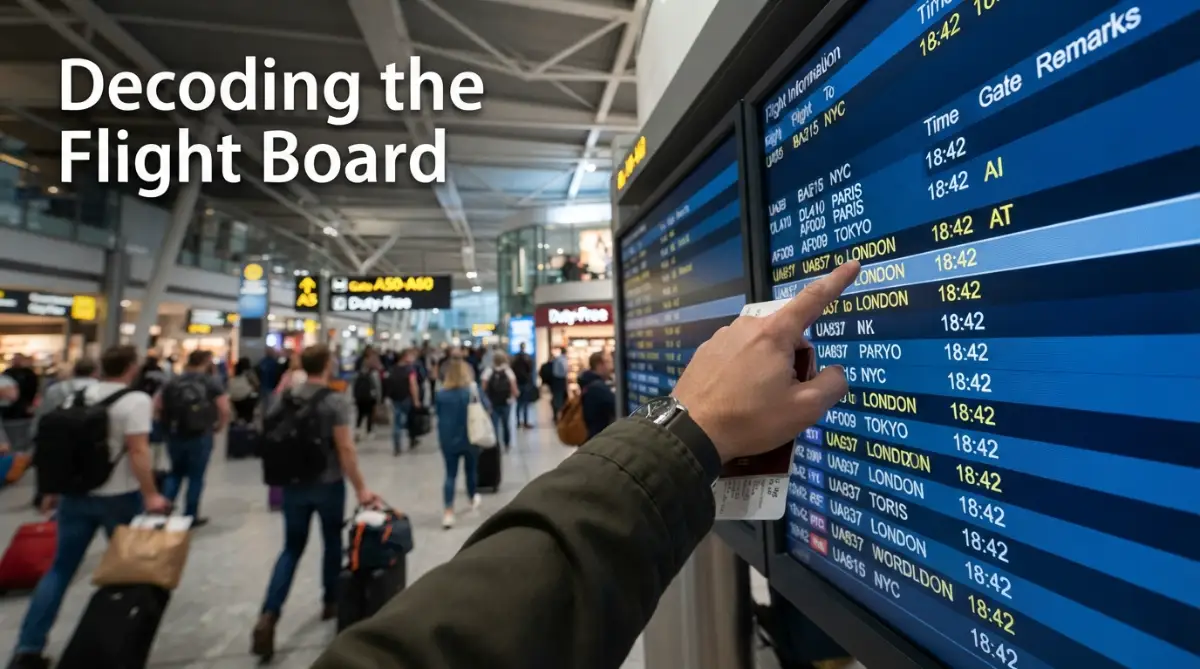
If your gate says "C14," you must first check your bags on the Landside, pass the security barrier, and then hunt for the "C" section on the Airside. Always remember that the actual airplanes are strictly parked in the Airside zone.
Mastering the Digital Flight Boards
The glowing screens you see everywhere are called Flight Information Display Systems, or FIDS for short. These screens are your best friends in a crowded building, and learning to read them quickly will save you hours of stress. Do not panic when you see hundreds of lines of text constantly flipping and changing colors.
Instead of searching for your destination city, always search for your specific Flight Number first. Cities like London or Dubai might have ten different planes flying out at the exact same time. Your flight number, like EK202 or BA114, is entirely unique to your specific airplane.
"My #1 Flight Tracking Hack:
Don’t just watch the big screens. Take your flight number (like AA123) and type it directly into Google. It will show you exactly where your plane is, if it's on time, and often which gate it’s at—sometimes even before the airport updates their own boards! This has saved me from running to the wrong gate more than once."
Once you spot your flight number on the screen, look directly across that row to find your assigned Gate Number. The screen will also tell you the current status, such as "Go to Gate," "Boarding," or "Delayed." Make it a strong habit to check these screens every 30 minutes, because gate assignments can change suddenly without any loud announcements.
The Truth About Arriving Early
There is a lot of confusing advice online about exactly when you need to show up at the main entrance. You might have friends who insist on arriving five hours early, while others rush in just sixty minutes before departure. Let us clear up this confusion with some simple logic.
Myth: You only need to arrive early if you have heavy bags to check in.
Reality: Even with no bags, the security lines and immigration checks can take over an hour on busy days.
Always aim to step out of your taxi exactly three hours before an international flight. This specific time frame gives you a comfortable safety cushion to deal with unexpected problems. If a scanning machine breaks down or you simply get lost finding the right elevator, you will still have plenty of time.
Conquering the Security Line Like a Professional
The security screening point is usually the most stressful bottleneck in the entire journey. This is where people nervously fumble with their belts, drop their boarding passes, and hold up the line. The secret to passing through smoothly is preparing your body and bags long before you actually reach the plastic bins.
Check out this helpful guide before your next trip:
[Here is an amazing video explaining exactly how to organize your bags for airport security so you never hold up the line!]
While you are standing in the slow-moving line, start taking off your heavy jacket and untying your boots. Make sure your pockets are completely empty and place your phone, wallet, and keys deep inside your backpack. Never leave small valuable items loose in the plastic screening bin, as they can easily bounce out and disappear.
Your laptop and any large electronic tablets must usually be taken out of their protective cases. Place these expensive items flat in their own separate plastic bin so the X-ray operator gets a clear view. Keep your clear plastic bag of liquid bottles at the very top of your suitcase so you can grab it in two seconds.
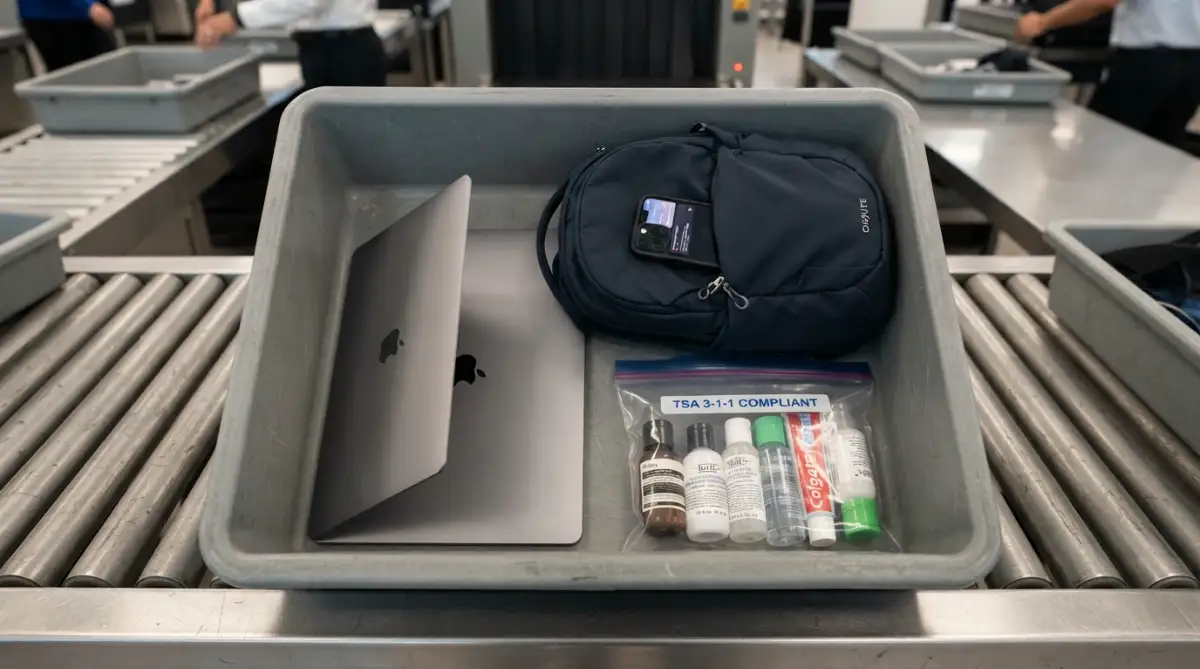
I actually used to pack my laptop at the very bottom of my heavy backpack out of a weird fear it would break. When I reached the busy security scanner, I had to dump all my messy clothes onto the dirty floor just to reach my computer, embarrassing myself in front of a hundred angry people. My biggest advice now is to always buy a bag with a dedicated, easy-access outside laptop pocket.
Navigating Between Giant Terminals
Some major international hubs are so incredibly large that they literally have their own internal train systems. You might check in at Terminal 1, only to discover your airplane is parked miles away at Terminal 4. Walking between these distant buildings is often impossible or forbidden by security rules.
Look up at the ceiling and follow the brightly colored signs pointing toward the "AirTrain," "Terminal Transfer," or "Shuttle Bus." These free transportation systems usually run every five minutes and connect all the major buildings together. Always hold firmly onto the handrails, because these automatic trains stop and start very suddenly.
If you have a connecting flight, pay very close attention to your next boarding pass.
Direct Flights vs. Connecting Layovers
If you are just passing through a foreign country on a connecting layover, follow the purple or yellow signs for "Transit" or "Flight Connections." Do not accidentally follow the crowd heading toward "Baggage Claim" or "Exit." If you walk through the exit doors, you will have to pass through strict immigration and security all over again.
Managing Spatial Anxiety and Finding Quiet Zones
Big airports use a specific psychological trick known in architecture as the "Gruen Effect." They intentionally design the curved walking paths to force you through bright, noisy duty-free shops filled with expensive perfumes and chocolates. This overwhelming sensory explosion is designed to confuse your brain and make you spend money on impulse.
If you feel your anxiety rising from all the bright flashing lights and loud announcements, look for the designated quiet zones. Many modern buildings now feature free meditation rooms, silent lounges, or even indoor gardens. These spaces have no loud speakers and offer comfortable reclining chairs where you can simply close your eyes and breathe.
When you cannot find a quiet room, simply walk toward the empty boarding gates that are not currently in use. Gates that do not have a scheduled flight for several hours are often completely deserted and wonderfully peaceful. You can sit there in total silence, charge your phone, and relax until it is time to move to your real gate.
Overcoming the Language Barrier
Stepping into a foreign country where nobody speaks your native tongue can feel incredibly isolating. You might need to ask for urgent directions to a bathroom, but the staff only speak French or Mandarin. Luckily, modern technology has made this scary problem incredibly easy to solve.
Before you even leave your house, download an offline translation app to your smartphone. By downloading the specific language pack over your home Wi-Fi, the app will work perfectly even if your phone has no internet connection abroad. You can simply type your question into the screen and show the translated text to an official security guard.
Additionally, universal symbols are used everywhere across the globe. A picture of a fork and knife always means food, a figure in a wheelchair indicates an elevator, and an airplane taking off means departures. Trust these bold visual pictures more than the confusing written words underneath them.
The Unspoken Rules of Moving Walkways
You will encounter flat, moving escalators on the floor designed to help you cross massive hallways much faster. These convenient walkways have very strict, unspoken social rules that you must follow to avoid making people angry. If you plan to simply stand perfectly still and rest your tired legs, always stand firmly on the right side.
The left side of the moving walkway is strictly reserved for people who are actually walking or running to catch a tight flight. If you block the left side with your heavy suitcase, you might cause someone else to miss their airplane entirely. Always keep your children close and ensure your loose shoelaces do not get caught in the metal teeth at the end of the track.
Preparing for Customs and Immigration
When you finally land in a new country, the journey through the giant building is not quite over yet. You must pass through the official border control, where serious officers will check your passport and visa documents. This area is usually heavily guarded, and taking any photographs with your smartphone is strictly illegal.
Have your passport, printed visa, and incoming passenger arrival card ready in your hand before you reach the officer's desk. Do not wear sunglasses or hats, as the official needs to clearly match your face to your printed document. Answer their simple questions about your trip honestly, confidently, and without adding unnecessary long stories.
Once your passport gets that satisfying stamp, you are finally free to collect your bags from the spinning carousels. Look at the digital screens above the luggage belts to find the specific carousel assigned to your arriving flight. Grab your suitcase, walk boldly through the green "Nothing to Declare" channel, and step proudly out into your new destination.
By applying these exact strategies, the loud, massive, and intimidating airport environment suddenly transforms into a simple, logical system. You can finally stop worrying about getting terribly lost and start actually enjoying the wonderful adventure of traveling the globe.Next-Level Airport Mastery and Hidden Secrets
Now that you understand the basic physical layout of the terminal, it is time to upgrade your travel skills to a professional level. Most casual flyers just wander around aimlessly until their flight is ready. However, experienced travelers use a few hidden strategies to make their journey incredibly comfortable and completely stress-free.
One of the biggest secrets in air travel is that airport lounges are not strictly reserved for millionaires or first-class ticket holders. Many people mistakenly believe they cannot enter those beautiful frosted glass doors without an expensive VIP membership. The truth is, almost anyone can buy a simple day pass to enjoy these luxurious waiting areas.
Instead of sitting on a hard metal chair near a noisy gate, you can pay a small entry fee to access a quiet lounge. These private rooms usually offer free hot meals, unlimited premium coffee, high-speed internet, and incredibly clean private bathrooms. For instance, programs like the Global Airport Lounges network allow economy passengers to relax in absolute peace away from the massive crowds.
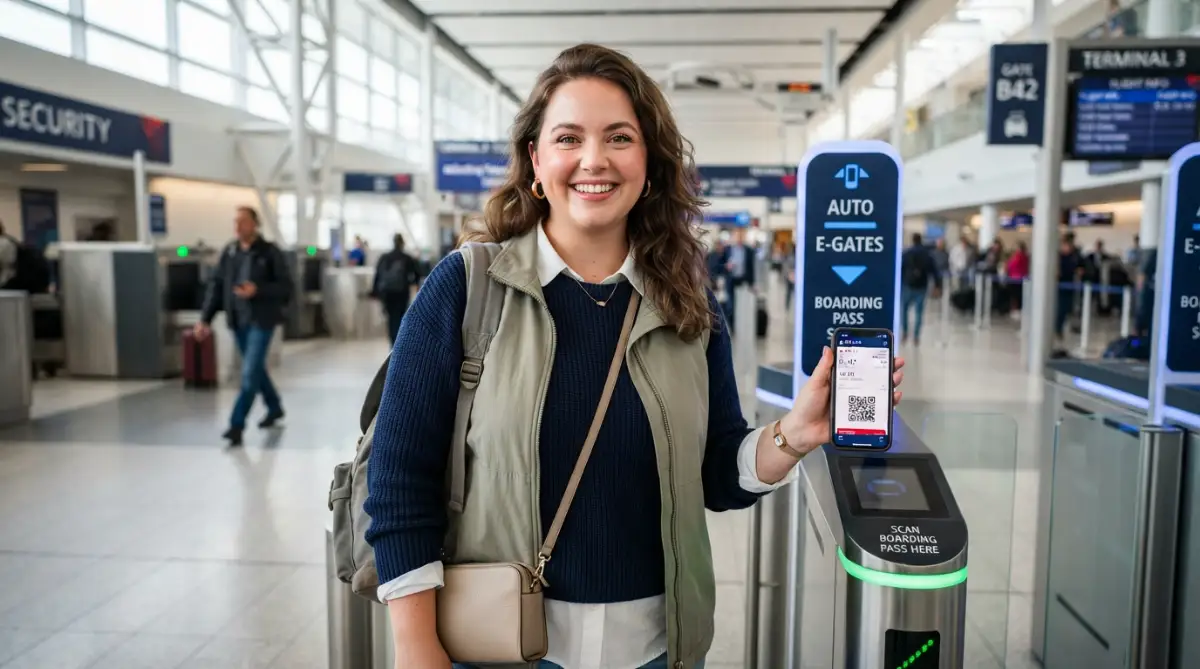
Another highly effective strategy is mastering the art of digital preparation before you even leave your house. Do not rely exclusively on the giant physical screens inside the terminal to track your airplane. Download the official mobile application for your specific airline and turn on all push notifications.
These smartphone apps will often alert you about a sudden gate change or a boarding delay long before the airport staff makes a public announcement. You can also use third-party platforms like FlightAware's live tracking system to see exactly where your inbound plane is currently flying. If you see that your incoming plane is still stuck in another country, you instantly know your departure will be delayed.
Handling Delays Like a True Expert
Flight delays are simply a normal part of global travel, but how you react to them changes everything. When a giant red "CANCELED" sign flashes on the board, hundreds of angry passengers will immediately run to the customer service desk. This creates a massive, frustrating line that can easily take three hours to clear.
Instead of standing in that miserable line, simply find a quiet corner and call the airline's global customer service phone number. The phone agent sitting in an office miles away has the exact same computer system as the stressed worker at the desk. You will often get a brand-new confirmed ticket over the phone before the people in the physical line even say hello to an agent.
During these unexpected delays, having the right financial protection is an absolute lifesaver. Many people ignore travel protection until they are stuck paying for a very expensive emergency hotel room out of their own pocket. You must always read the secret fine print in travel policies that costs you thousands to make sure meal vouchers and overnight accommodations are fully covered during long delays.
The Empty Water Bottle Trick
Buying basic food and drinks inside a secure terminal is notoriously expensive. A simple bottle of plain drinking water can sometimes cost up to six dollars simply because you have no other options. You can easily outsmart this system by bringing a high-quality, completely empty reusable water bottle from home.
Security rules only ban the actual liquid inside the bottle, not the metal or plastic container itself. Once you pass through the strict X-ray scanners, simply find one of the free filtered hydration stations located near the bathrooms. Staying fully hydrated is incredibly important for your health during long flights, as recommended by official travel health notices to prevent deep vein thrombosis.
Breaking the Language Barrier Instantly
Navigating a massive hub in Tokyo, Frankfurt, or Dubai can feel terrifying if you cannot read the local signs. Even with English translations available, you might need to ask a local security guard for urgent directions. This is where relying on technology becomes your absolute best friend.
By using the camera feature on offline translation apps, you can simply point your phone at a confusing sign and watch the text change into your native language instantly. I highly recommend spending some time learning a new language through real-life immersion basic phrases, but a reliable app is the ultimate backup plan. A simple smile and a translated screen will get you out of almost any confusing situation.
Heartbreaking Travel Blunders You Must Avoid
Even with the best preparation, human beings make silly mistakes when they are tired, hungry, and feeling rushed. One of the most dangerous trends in modern global terminals is the shift toward becoming a "Silent Airport." To reduce noise pollution, many major hubs have completely stopped making boarding announcements over the public loudspeakers.
If you are accustomed to hearing someone call your name when you are late, this silent policy will completely ruin your vacation. You could be sitting just fifty feet away from your departure gate reading a book, entirely unaware that your airplane doors are closing. You must strictly stop multitasking and improve your focus on your watch and the digital screens when your boarding time approaches.
The Duty-Free Time Warp Trap
Massive international airports are designed to look and feel exactly like high-end shopping malls. The bright lights, the smell of expensive perfumes, and the shiny displays of chocolate are intentionally designed to grab your attention. This heavy commercial environment creates a psychological time warp where minutes slip away without you noticing.
I have seen countless excited families miss their dream vacation simply because they were arguing over which designer sunglasses to buy. Getting caught up in impulse shopping is the hidden financial trap that destroys your budget and your travel schedule. Always locate your assigned boarding gate physically first, sit down to confirm the plane is there, and only then take a short walk to the nearby shops.
Ignoring Local Time Zones on Connecting Flights
When you fly across the ocean, your physical body and your smartphone often get deeply confused about what time it actually is. If you have a layover in an entirely different country, your phone might not automatically update to the local network time. This small technical glitch causes thousands of passengers to miscalculate their boarding windows every single day.
Always look for a large physical clock on the wall of the terminal as soon as you step off your first flight. Set a hard manual alarm on your phone based exactly on that local wall clock. Assuming your smartphone will fix itself magically is a massive risk you simply do not want to take.
Failing to Document Your Checked Luggage
Handing your heavy suitcase over to a stranger at the check-in desk requires a lot of blind trust. Unfortunately, millions of bags are delayed or routed to the wrong city every single month due to printing errors on the barcode tags. If your bag disappears, the airline staff will ask you to describe it in detail.
Simply saying "it is a large black bag with wheels" is completely useless when there are thousands of identical bags in the storage room. Just like documenting evidence thoroughly after a minor car bumper scratch, you need hard visual proof. Always take two clear photographs of your suitcase on your phone right before you check it in, preferably showing a unique colorful ribbon tied to the handle.
Also, never throw away the tiny, sticky baggage claim receipt the agent hands you or sticks to the back of your passport. That tiny little barcode is the only legal link between you and your personal belongings in the airline's computer system. Keep it incredibly safe inside your wallet until you are standing inside your hotel room with your bags in your hand.
Packing Prohibited Items in Carry-On Bags
Nothing slows down a security line faster than a passenger arguing with an officer over a bottle of expensive shampoo. Every country strictly enforces the rule limiting liquid containers to small sizes, usually around 100 milliliters. It does not matter if the large bottle is extremely expensive or completely brand new; the officer will throw it in the trash.
Take ten minutes at home to review the official packing guidelines provided by aviation authorities. Do not try to hide a favorite pocket knife, a large jar of peanut butter, or oversized aerosols deep inside your backpack. Getting pulled aside for a secondary physical search is embarrassing, highly stressful, and will eat up your valuable walking time.
Your Personal Blueprint for Stress-Free Departures
Walking into a massive international terminal does not have to feel like stepping into a terrifying war zone. By understanding the simple division between Landside and Airside, you immediately know exactly where you belong at all times. Reading the digital flight boards effectively gives you total control over your schedule and direction.
You no longer have to fear the intimidating security lines because you now know exactly how to pack and prepare your bins. Traveling the world should be an incredibly joyful and expansive experience, not a source of deep anxiety. Knowing how to escape the burnout and maintain sustainable habits while traveling keeps your mind fresh, positive, and ready for adventure.
Every single expert traveler you see smoothly walking past you with a coffee in hand was once a confused beginner, too. They simply learned these exact same patterns, made a few silly mistakes, and adapted their strategy for the next trip. You now have the exact same playbook they use to navigate these massive buildings with absolute ease.
My absolute biggest piece of advice is to simply give yourself the gift of extra time on your first few trips. I used to rush into the terminal completely drenched in nervous sweat, but now I arrive early, grab a warm coffee, and actually enjoy the exciting atmosphere of departure. You are about to embark on a beautiful journey, so take a deep breath, trust this blueprint, and step forward with total confidence.
Most Common Questions About First-Time Airport Navigation
How early should a beginner actually arrive at an international airport?
You should always aim to walk through the main entrance exactly three hours before an international flight departs. This generous time window ensures you will never panic if the security machines break or the check-in line is unusually long.
What happens if I miss my connecting flight because of a delay?
If the airline caused the delay on your first flight, they are legally responsible for booking you on the next available plane for free. Simply find their customer service desk or call their phone hotline immediately to secure your new boarding pass.
Can I bring my own snacks and water through the security scanners?
Yes, you can bring solid foods like sandwiches, crackers, and candy bars right through the X-ray machines without any problems. However, you must bring a completely empty water bottle and fill it up at a fountain only after you pass the security checkpoint.
How do I find my departure gate if the digital screens are confusing?
Always ignore the destination city first and look exclusively for your specific flight number on the glowing screens. Once you match your flight number, look directly across that exact row to find the correct letter and number for your gate.
Do I have to pick up my luggage during a short international layover?
If both of your flights were booked together on one single ticket, your bags will usually be transferred automatically to your final destination by the staff. However, you should always ask the agent when you first check your bags to confirm their exact final destination.
Will my mobile boarding pass work if my phone screen is cracked?
A slightly scratched screen is usually fine, but a deeply shattered screen can actually prevent the laser scanner from reading your barcode. To be completely safe, always print a physical paper ticket at the self-service kiosks when you first arrive at the terminal.
Disclaimer: The information provided in this article is for general educational and informational purposes only. Travel regulations, security guidelines, and airport policies can change frequently without notice. Always verify current rules directly with your airline and local transportation authorities before beginning your journey.