The Hidden Nightmares of a Bad Solar Setup
So, you just bought shiny new solar panels and cannot wait to see your electric bill drop to zero. That was exactly my plan, too, until my installation crew took one look at my old, rusty electrical box and laughed. Nobody tells you this upfront, but hooking up a massive modern solar array to an outdated breaker box is exactly like trying to fuel a race car with dirty gas. It will cost you thousands if you do not catch it early. Let me show you the hidden traps I fell into, so you can keep your money in your pocket and your family safe.
When the installation crew finally arrived, the lead electrician took one look at my existing electrical box, shook his head, and laughed. My system was completely outdated and heavily undersized for the massive amount of energy those new panels would pump into my home.
That one simple oversight pushed my project back by several weeks and cost me a small fortune in unexpected upgrades. I was completely shocked and felt like I had been tricked. I spent sleepless nights worrying about whether my home was actually safe or if I was sitting on a massive fire hazard.
Every single day without power during the forced upgrade was miserable for my family. The food in our refrigerator went bad, my kids could not do their homework online, and the summer heat inside the house was absolutely unbearable. We were literally sweating in the dark.
I felt incredibly guilty for not doing enough research before jumping into such a big home improvement project. The mental stress of dealing with city inspectors, aggressive contractors, and delayed utility approvals completely destroyed my peace of mind. It felt like I was bleeding money every single day.
Nobody ever warned me about the dark side of going solar, specifically the heavy burden your existing electrical system takes. That is exactly why I want to share my personal journey with you today. I want to save you from the tears, the empty wallet, and the endless frustration I went through.
Quick Cheat Sheet: Before You Upgrade
- Check your limits: You cannot safely push massive solar power through a standard 100-amp breaker box.
- Skip the DIY videos: Touching main power lines without a license will instantly void your home insurance.
- Think about tomorrow: Size your new panel to handle future EV chargers and electric stoves, not just today's solar panels.
- Do not ignore the dirt: A safe system needs deep copper grounding rods outside to stop massive lightning strikes from frying your expensive gear.
Why Your Old Electrical Box Is A Ticking Time Bomb
If you are thinking about bringing clean energy into your home, you have to look closely at your existing hardware. Most older homes were simply not built to handle modern energy demands. Think about it for a second.
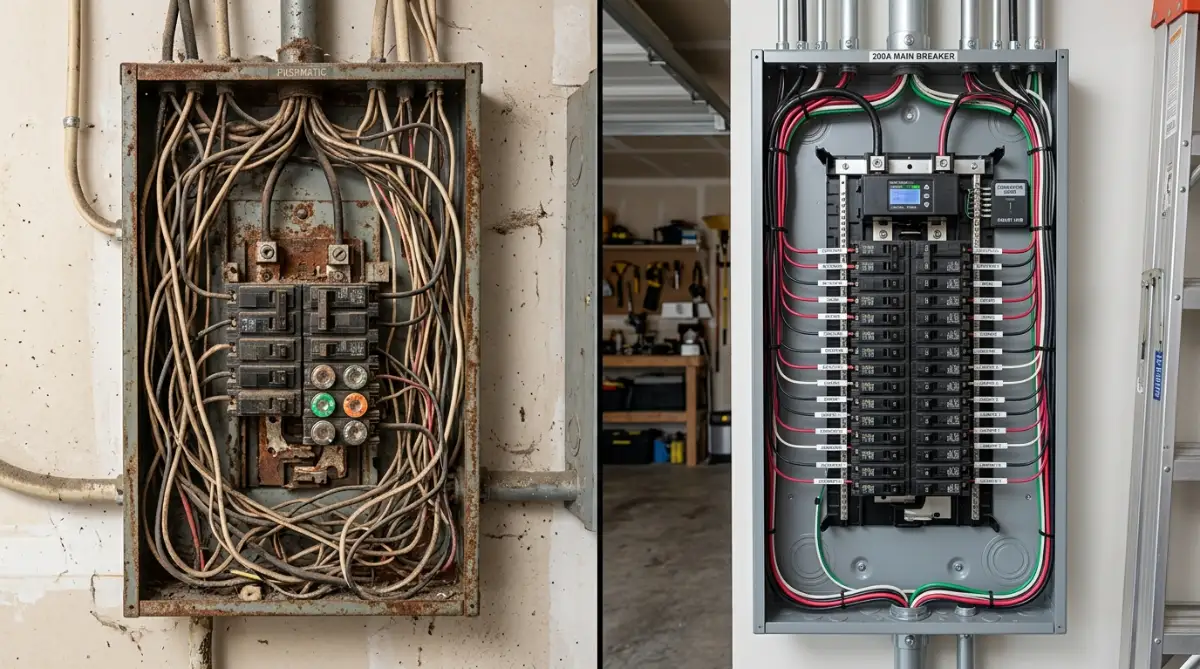
When your house was built, you probably did not have multiple large smart TVs, huge air conditioning units, an electric vehicle charger, and a massive solar array. Your home was basically built for basic lights, a fridge, and maybe a small heater.
Pushing all this new solar power through an old electrical box is exactly like trying to force a massive river through a tiny plastic garden hose. Eventually, the pressure builds up, the system overheats, and everything completely bursts. We want to avoid that specific disaster at all costs.
Never Ignore the "120% Rule" of Electrical Safety
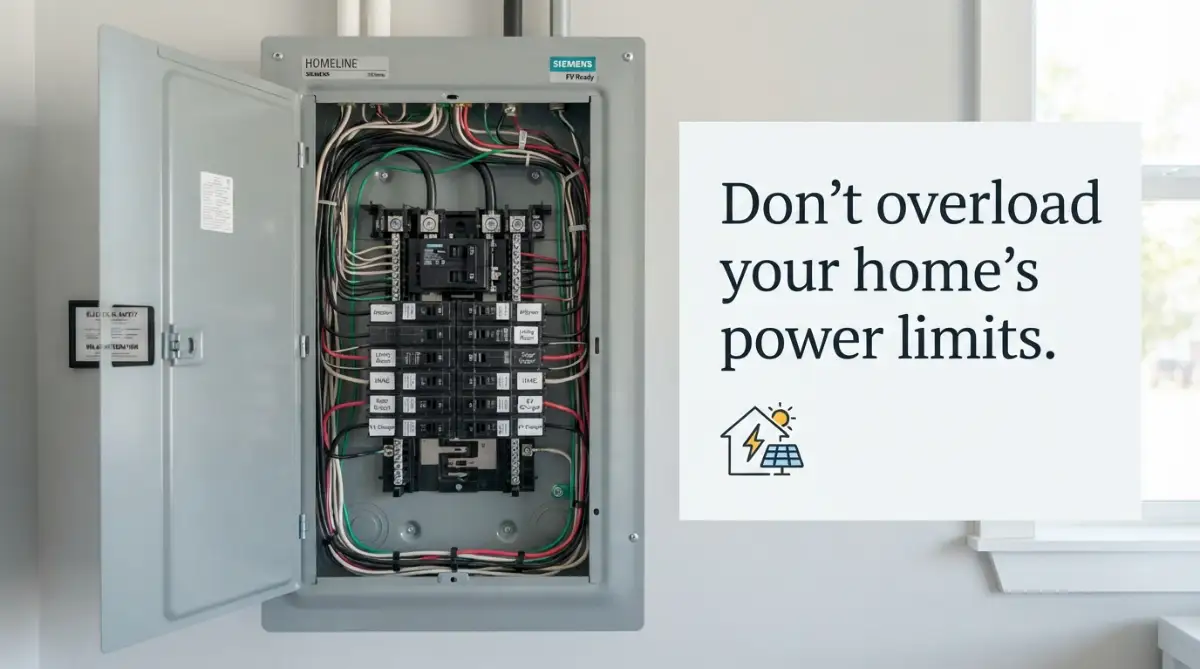
This is the absolute biggest trap that catches new solar buyers completely off guard. The National Electrical Code has a very specific safety limit known in the industry as the 120% rule. It sounds complicated, but I promise it is actually quite simple to understand.
Your main breaker box has a specific limit on how much power it can safely carry at one time. This limit is determined by the metal bars sitting inside the box, which are called busbars. The 120% rule basically states that the total power coming from your utility company and your new solar panels cannot exceed 120% of what those metal bars can handle.
If your main box is rated for 100 amps, adding a massive 40-amp solar system will push you way past the safe legal limit. Your system will constantly trip, your lights will flicker endlessly, and the internal wiring could easily melt. Melting wires inside a wall is the number one cause of sudden electrical fires.
Always ask your installer to clearly explain your current load calculations. If they brush off your questions or say "it will be fine," you should immediately find a new contractor.
Trying the DIY Route to Save a Few Bucks
I totally understand the strong urge to save money. When I saw the huge price tag for my panel replacement, I actually spent three days watching online video tutorials on how to wire a breaker box myself. It was the absolute worst idea I have ever had.
Pro Tip: I quickly realized that watching a ten-minute internet video does not make me a master electrician. My friendly advice to you is to never touch the main service lines coming from the street. One wrong move with a live wire can easily result in a fatal shock or instantly burn your entire house down.
Working with main service panels requires heavily insulated tools, deep knowledge of local codes, and exact torque specifications for every single screw. If you tighten a heavy wire too much, it can snap under temperature changes. If you leave it too loose, the connection will spark and create dangerous electrical arcs.
Leave this specific job to the licensed professionals who have proper insurance. If an expert makes a mistake, their insurance covers the massive damage. If you make a mistake doing it yourself, your home insurance company will flat-out refuse to pay you a single dime.
Here is exactly why you need a professional for this job:
The Real Cost: DIY vs. Hiring a Licensed Pro
| The Task/Risk | DIY Reality | Professional Service | The Big Takeaway |
| :--- | :--- | :--- | :--- |
| Permits & Paperwork | $0 upfront (but illegal) | $150 - $300 | The city will eventually force you to tear out unpermitted work, costing you double. |
| Tools Needed | $200+ for insulated gear | Included in their flat fee | Buying high-voltage safety tools for a one-time job is a complete waste of your cash. |
| If a Fire Happens | $0 Payout | Fully covered by their policy | Your home insurance company will instantly cancel your policy if they find out you touched the main lines. |
Failing to Plan for Your Future Energy Needs
When you finally decide to upgrade your main box, you must think about what your life will look like five or ten years down the road. This was another huge mistake I made during my own solar journey.
I only upgraded my system to barely handle the exact amount of solar I was installing that week. I completely forgot that I wanted to buy an electric car the very next year. I also forgot that my wife wanted to replace our old gas stove with a modern electric induction cooktop.
When you switch from gas appliances to electric ones, your home's energy demand shoots up rapidly. Upgrading to a 200-amp service is considered the standard today, but even that might not be enough for a fully electrified smart home.
If you plan on getting heavy electric heating systems or a fast car charger, you should strongly consider asking for a 225-amp or even a 400-amp service split. Upgrading twice because you failed to plan ahead will cost you thousands of extra dollars in unnecessary labor fees.
Skipping the Local Permitting Process
Red tape is incredibly annoying. Waiting for your city office to approve a simple piece of paper can test anyone's patience. Because of these long delays, some shady contractors might suggest doing the panel work under the radar without pulling any official permits.
You must run far away from anyone who suggests skipping the local city inspection. Your city inspector is actually your best friend in this entire process. They are the only neutral party who will come to your house and verify that the contractor actually did the job safely.
If you upgrade your box without a permit, your utility company will eventually find out. Modern smart meters actively report back to the main grid. When they see unauthorized changes, they can and will completely shut off the power to your house.
Furthermore, trying to sell a house with unpermitted electrical work is an absolute nightmare. The buyer's home inspector will catch the illegal upgrade immediately. You will be forced to rip the walls open and pay heavy municipal fines before you can ever sell the property.
Choosing Cheap, Undersized Breaker Components
Not all electrical boxes are created equal. When contractors try to give you the lowest possible bid to win your business, they often cut corners by buying the cheapest, lowest-quality parts available on the market.
A cheap panel might pass the initial inspection, but the plastic breakers inside will degrade incredibly fast under the constant, heavy load of a solar system. Solar power flows continuously for hours every single day, putting serious thermal stress on cheap components.
You should always ask for highly reputable, commercial-grade brands when discussing your upgrade. Spending an extra hundred dollars on a premium heavy-duty box will save you from random power outages during massive summer heatwaves.
Placing the New Box in the Wrong Location
When you tear out the old box, it is extremely tempting to just put the new, bigger one in the exact same spot. However, modern building codes have completely changed over the last few decades. The spot that was legal when your house was built might be highly illegal today.
The national safety rules clearly state that you must have at least 36 inches of totally clear space directly in front of the box. You cannot have any pipes, shelves, or storage bins blocking this exact area.
If your current box is crammed inside a tiny hallway closet or hidden behind a laundry machine, you are going to have to move it. Many homeowners fight their contractors on this because moving the box means cutting new holes in the drywall.
You simply have to accept this reality. If an emergency happens and the fire department needs to cut your home's power instantly, they cannot waste precious minutes digging through your messy storage closet. Proper clearance is a non-negotiable safety rule that protects your life.
Forgetting About the Exterior Grounding System
We talk so much about the box itself that we completely forget about what is happening outside in the dirt. A modern electrical system needs an incredibly strong connection to the physical earth to dump excess electricity during a power surge or a lightning strike.
When you upgrade your home to handle solar, your old grounding rod is probably not going to be enough. Older homes often used cheap, thin rods or just tied the ground wire to a random metal water pipe in the basement.
Today's safety codes require two massive, copper-coated steel rods driven eight feet deep into the solid earth. These rods must be spaced far apart and connected with heavy, thick copper wire.
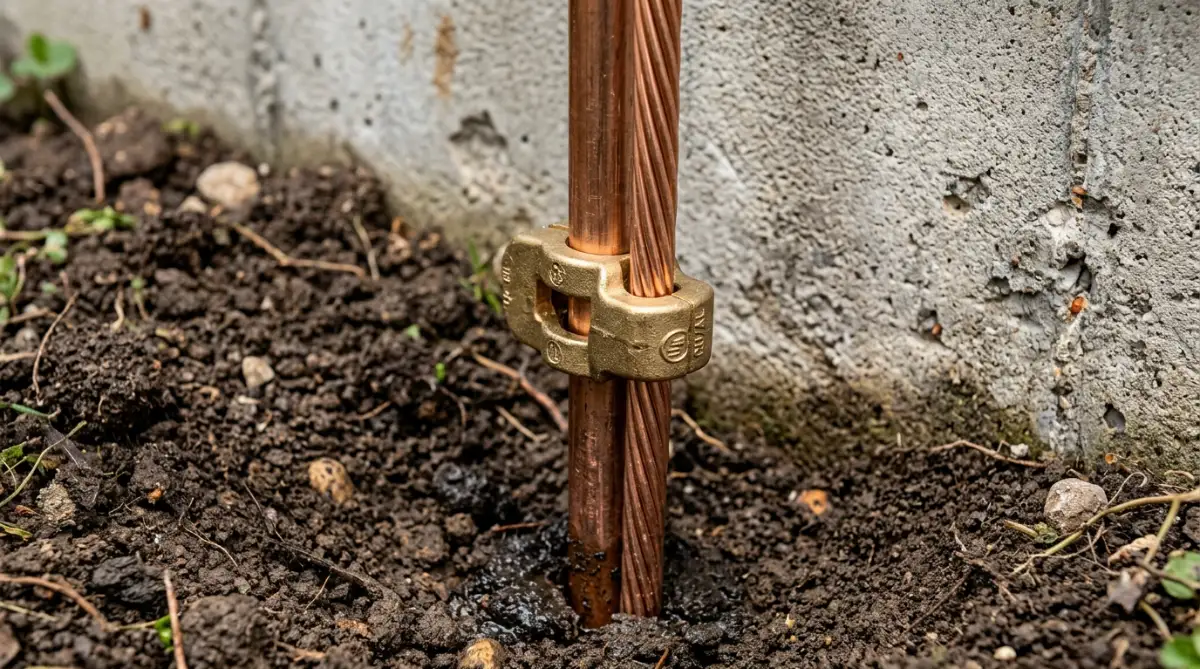
If your installer skips the grounding upgrade, a single lightning strike near your home could easily send a massive surge of raw power straight into your expensive new solar inverter. It will instantly fry your entire system, and your warranty will not cover damage caused by poor grounding setups.
Letting the Contractor Patch the Stucco or Drywall
This is a very specific, practical lesson I learned the extremely hard way. An electrician is trained to run wires and connect breakers safely. They are absolutely not trained to be professional painters or drywall finishers.
When they finish replacing the large box on the outside of your house, there will be massive holes in your exterior wall. Many electrical companies will try to seal these holes with cheap expanding foam or a terrible, messy patch job of gray cement.
This sloppy work looks absolutely terrible and completely ruins the curb appeal of your beautiful home. Even worse, if they do not seal the exterior properly, heavy rain will easily find its way inside your walls. Trapped moisture quickly turns into toxic black mold.
Always hire a dedicated, specialized professional to fix the walls after the electricians leave. A good stucco or siding expert will carefully waterproof the area around the new box and paint it to match your house perfectly. It is an extra step, but it protects the long-term value of your property.
Neglecting to Consider a Smart Electrical Panel
We live in a highly advanced era now. Upgrading to another basic, traditional "dumb" metal box is a massive missed opportunity for your home. You are spending thousands of dollars anyway, so you should really look into modern smart panels.
Smart panels allow you to completely monitor your home's exact energy usage directly from an app on your smartphone. You can see exactly how much power your new solar system is producing and precisely how much power your air conditioner is eating up.
If the power grid completely fails during a storm, a smart panel can automatically shut off your heavy appliances. It will send all your backup solar battery power only to your refrigerator and essential lights. This clever trick can make a small backup battery last for several days instead of just a few hours.
They do cost a bit more upfront, but the intense level of control and deep insight you get is absolutely worth every single penny. It turns your house into a highly efficient, energy-saving machine.
Myth vs. Fact: Are Smart Panels Just a Gimmick?
- The Myth: Upgrading to a smart electrical panel is just a flashy waste of money for tech nerds.
- The Fact: A smart panel actually acts as a digital traffic cop for your home. If a big storm knocks out the grid, the panel instantly shuts off power hogs (like your AC or pool pump) and sends your limited backup solar battery juice strictly to your fridge and internet router. This simple feature can make your backup battery last three days instead of just six hours.
Believing the Utility Company Will Be Fast
This is the final, heavy dose of reality you must prepare for. Once the solar panels are on the roof and the new breaker box is perfectly installed, you cannot just turn the system on. You legally have to wait for the utility company to grant you official permission to operate.
Many excited homeowners think this process takes just two or three days. I have seen families wait for three long months just for a simple signature from the power company.
Utility companies are incredibly slow, heavily understaffed, and often very hostile toward home solar systems. Every time a house goes solar, the power company loses a paying customer. They have absolutely no real motivation to hurry up and approve your paperwork.
You must mentally prepare yourself for this frustrating waiting game. Do not let your contractor completely disappear after they take your final payment. Make sure they clearly promise in writing to handle all the endless follow-up calls with the utility company until the system is officially turned on.
Upgrading the core heart of your home’s electrical system is not something you should ever rush or take lightly. Take a deep breath, ask your contractors hard questions, and never settle for cheap, unsafe shortcuts. Your family's safety and your peace of mind are worth far more than saving a few quick dollars today.Smart Strategies to Future-Proof Your Home’s Power
Getting your house ready for clean energy goes far beyond simply swapping out a metal box on your wall. You want this setup to run perfectly for decades without giving you a single headache. To make that happen, you need to think like a master electrician and plan for the unseen details.
One of my favorite tricks for a massive power upgrade is utilizing a secondary subpanel for your heaviest appliances. Instead of cramming everything into one main breaker box, you can separate your heavy users like your air conditioner and electric oven into their own dedicated space. This smart division takes a massive amount of physical heat and stress off your main system.
It is basically like opening a second checkout lane at a very busy grocery store. The power flows much smoother, and the internal components do not overheat during peak summer afternoons. If you ever plan on safely adding a faster EV charger in your garage, having this extra subpanel already installed will make the process incredibly easy and cheap.
You should also look closely at installing a whole-home surge protector right at the main source. Many people think small plug-in power strips will protect their expensive flat-screen TVs and computers. However, when a massive lightning storm hits, those cheap plastic strips offer absolutely zero real defense.
A heavy-duty surge shield installed directly inside your new breaker box acts like a powerful bodyguard for your entire property. If a sudden spike comes down the street lines, this device absorbs the shock instantly before it can enter your home's delicate wiring. According to official electrical fire safety guidelines, blocking power surges at the main entry point is the best way to prevent dangerous wall fires.
The Beauty of Breaker Derating
If you are on a tight budget and cannot afford a massive 200-amp service upgrade right now, there is a totally legal and highly effective trick you can use. It is called main breaker derating, and it is a massive secret many sales companies will not tell you about.
Instead of replacing the entire metal cabinet and running new wires to the street, your electrician can simply swap your main shut-off switch for a slightly smaller one. For example, changing a 200-amp main breaker down to a 175-amp breaker magically frees up extra mathematical space on your metal busbars.
This simple switch completely satisfies the strict building codes and allows you to add a large solar setup without a total tear-down. It requires very precise math based on government home energy standards, but an honest, highly experienced electrician can calculate this for you in ten minutes.
Investing in Dedicated Software Monitoring
Once your new hardware is safely attached to the house, you cannot just close the metal door and forget about it. You need real-time data to know exactly how your house is breathing and consuming energy. This is where physical hardware meets modern smart software.
You should ask your installer to add a physical consumption meter right next to your breakers. This small digital reader clips onto your main power lines and sends live usage data straight to a mobile app on your phone.
I check my own energy app almost every single morning while drinking my coffee. It tells me instantly if my kids left the heavy gaming computers running all night or if the pool pump is working too hard. Catching these hidden power drains early prevents a massive drop in solar efficiency and keeps your monthly electric bills at absolute zero.
Dangerous Pitfalls That Will Cost You Thousands
Even with a great plan, the actual construction phase of an electrical upgrade is filled with hidden traps. I have seen incredibly smart homeowners make decisions that completely wiped out their savings and left them highly vulnerable.
Let me share the most painful mistakes you must watch out for while dealing with power upgrades. These are not just tiny technical errors. These are major safety hazards that can quietly ruin your entire property investment.
The Mixed Brand Fire Hazard
When contractors are rushing to finish a job on a Friday afternoon, they might realize they are missing a specific brand of breaker switch. Instead of driving all the way back to the supply warehouse, a lazy worker will just grab whatever brand they have resting inside their work truck.
This is an incredibly dangerous shortcut. Breakers and electrical cabinets are engineered to fit together perfectly, down to the millimeter. If you jam a Square D breaker into a Siemens metal box, it might look perfectly fine on the outside.
However, the connection behind the plastic will be slightly loose. Every time electricity flows through that loose connection, it creates intense friction and raw heat. Over a few months, that heat will quietly melt the plastic casing inside the wall. I have seen homes completely burn down just because someone mixed cheap parts to save twenty minutes of driving.
Ignoring the Hidden Neutral Wire Issues
Everyone always focuses strictly on the main hot wires that carry the raw power into the house. Almost nobody pays attention to the neutral wire, which acts as the return path for all that electricity. This is a very common blind spot that causes massive headaches later on.
If your contractor uses an undersized neutral wire for your new solar setup, the returning electrical current will face heavy resistance. This heavy resistance creates a localized voltage drop across your entire house.
Suddenly, your modern refrigerator compressor will start making weird clicking noises, and your expensive LED lights will flicker constantly. This constant voltage fluctuation is a guaranteed way to cause an early solar inverter breakdown because the sensitive electronics get completely confused. Always force your installation crew to double-check the exact gauge of the neutral return path before they pack up their tools.
The "Insurance Trap" Nightmare
Here is a massive administrative mistake that almost nobody talks about. Let us say you successfully install a beautiful new 200-amp power center and a gorgeous solar array on your roof. The city inspector signs the final paperwork, and the utility company finally turns your system on. You feel incredibly happy and relieved.
But you completely forget to call your homeowner's insurance agent to update your coverage limits. Your home is now worth significantly more money because of these expensive upgrades. Your current insurance policy still thinks you have a cheap, outdated house.
If a massive storm rolls through the next month and drops a heavy tree branch straight onto your new power center, you are completely out of luck. The insurance company will only pay the replacement value of your old, cheap system. You will be forced to handle a messy property damage claim completely out of your own pocket. A simple five-minute phone call to your insurance agent prevents this entire disaster.
Blindly Trusting Online Sales Tactics
The renewable energy industry is flooded with aggressive door-to-door salespeople and flashy internet ads. These smooth talkers will gladly look at your house on Google Earth and promise you the moon. They will confidently tell you that your existing electrical box is perfectly fine just to get you to sign a contract today.
Never trust a salesperson who refuses to send a licensed electrician to physically inspect your basement or garage first. A satellite image cannot tell anyone if your internal wall wiring is melted or if your grounding rod is completely rusted away.
Signing a massive financial contract based on a salesperson's guess is a terrible idea. When the actual installation crew eventually shows up and realizes you need a forced $3,000 panel upgrade, the sales company will simply point to the tiny print in your contract and demand more money. If you are already handling sudden financial stress in other areas of your life, this surprise bill can completely break your bank account.
Forgetting About Future Home Additions
People upgrade their power limits based on exactly what they own today. This short-term thinking always leads to a massive double expense down the road. You must treat this physical box like a long-term investment for your entire property.
If you are a young couple, you might want to finish your basement next spring to build a home theater. You might want to install a heavily heated pool in the backyard for your growing kids. All of those future dreams require extra breaker spaces and massive amounts of raw power.
According to recent national renewable energy studies, homes are becoming heavily electrified at a rapid pace. If you fill up every single slot in your brand new panel today with just your solar system, you will have to pay an electrician to install a completely new subpanel next year. Always demand a box that has at least six to eight completely empty breaker slots for your future life changes.
Your Personal Blueprint for a Stress-Free Upgrade
Taking complete control of your family's energy independence is one of the smartest financial moves you will ever make. While the technical side of wires and breaker boxes seems incredibly intimidating at first, it is highly manageable when you stay organized. You now know exactly what traps to avoid and what secret strategies the professionals actually use.
Start your journey by walking outside right now and taking three clear pictures of your existing electrical box. Open the metal door and safely snap a photo of the physical switches and the manufacturer label. Having these clear pictures on your phone will give you massive leverage when you start interviewing local electrical contractors.
Pro Tip: I strongly recommend keeping a dedicated paper folder for all your home upgrade documents. Print out the local permit approvals, the hardware warranty sheets, and your final inspection certificates. If you ever decide to sell your house, handing this organized folder to a potential buyer instantly builds deep trust and easily increases your final selling price.
Do not let the fear of construction delays or shady contractors stop you from reaching your clean energy goals. Whether you are currently understanding new home mortgage rates or just upgrading a house you have lived in for decades, a modern, highly safe electrical panel is the absolute foundation of your comfort.
I know exactly how overwhelming all this complex technical jargon can feel when you just want simple answers. I went through the exact same messy stress, the sleepless nights, and the frustrating delays during my own solar journey. But trust me, when you finally flip that master switch and watch your electric meter stop spinning, every single moment of planning becomes completely worth it. You have the knowledge now, so take a deep breath and start building a safer, smarter home today.
Questions Homeowners Always Ask About Solar Upgrades
Do I really have to turn off my home’s power during the installation?
Yes, you absolutely do. Your electrician must completely cut the physical connection to the street grid to remove the old box safely without getting electrocuted. You should expect your house to be completely without power for roughly four to eight hours during a standard residential upgrade.
Can I just add a second smaller box instead of replacing the main one?
You can certainly add a subpanel to handle extra breaker switches, but it does not increase the total amount of raw power coming from the street. If your main service is only 100 amps, adding a subpanel will not legally allow you to connect a massive solar system. You must upgrade the main service entry point first based on advanced grid load management research and safety codes.
How do I know if my current electrical panel is outdated?
Walk over to your box and look for any heavily rusted metal, a distinct burning plastic smell, or breakers that feel highly loose when you touch them. If your home was built decades ago and features brands like Zinsco or Federal Pacific, you must replace them immediately. Those specific older brands are well-known fire hazards that completely fail to trip during an overload.
Does a larger electrical panel use more electricity and increase my bill?
No, a larger breaker box does not force your house to consume more power from the utility company. It simply gives you a much wider, safer highway for the electricity to travel through when you actually need it. Think of it like installing a wider water pipe; the water only flows when you physically turn on a faucet inside the house.
Is financing an electrical upgrade a bad financial decision?
Not necessarily, especially if the required upgrade is deeply tied to a massive home solar project that will eventually pay for itself. Many green energy loans allow you to bundle the roof panels and the electrical box into one simple monthly payment. Just make sure you are actively managing home improvement debts smartly so the high interest rates do not eat up all your solar savings.
Disclaimer: The information provided in this article is strictly for educational and informational purposes only. I am not a licensed electrician, financial advisor, or legal expert. Home electrical systems carry massive fatal risks and should only be modified by fully certified, insured professionals adhering to local municipal codes. Always consult with a licensed local contractor and your specific utility provider before starting any major home energy upgrades.