The Silent Nightmare Hiding Behind a Simple Toothache
Look at your toothbrush right now. If you see tiny pink spots on the bristles, your body is flashing a major warning sign that most of us simply brush off. For a long time, I treated my morning routine like a race against the clock, completely ignoring my tender gums. Let me show you why treating your mouth like an afterthought might be secretly draining your energy and putting your heart at risk.
But I was completely wrong. A few months later, I started feeling strangely exhausted all the time, and my doctor asked me a question that completely shocked me. He asked if I had visited a dentist recently, pointing out that my constant fatigue and slight chest flutters could actually be connected to severe gum inflammation.
That was the exact moment I realized my mouth was not a separate island from the rest of my body. The truth hit me hard, and it changed the way I look at my morning routine forever.
The sad reality is that we treat our teeth like disposable tools rather than living parts of our body. We do not realize that every time we ignore inflamed gums, we are leaving the front door wide open for microscopic invaders to march straight into our bloodstream.

What You Will Learn Today (At a Glance)
- The Heart Connection: How bleeding gums allow bacteria to travel straight into your bloodstream and stress your heart.
- Brain Fog & Fatigue: Why ignoring oral health might be the hidden reason you feel tired and unfocused.
- The Right Way to Brush: Why aggressive scrubbing destroys your gums, and how a gentle 45-degree angle fixes it.
- Beyond Brushing: Simple, highly effective habits like tongue scraping and using xylitol to starve harmful bacteria.
How Your Mouth Secretly Attacks Your Internal System
Let me break down exactly what happens when you skip brushing or forget to clean between your teeth. Your mouth is basically a warm, wet environment that acts as the perfect breeding ground for bacteria.
When you leave food particles behind, these tiny organisms throw a massive feast. They multiply rapidly and build a sticky, invisible film across your teeth called plaque.
If you do not wipe this plaque away within a day, it hardens into tartar. You cannot just brush tartar away; it sits at the gumline and irritates the soft tissue. This irritation is what we call gingivitis, and it is the very first warning sign that things are going wrong.
But the real danger starts when these bacteria decide they want to travel. Your gums are packed with thousands of tiny blood vessels. When your gums are inflamed, these vessels become weak and leaky.
Every single time you chew your food, you accidentally push harmful mouth bacteria straight into your bloodstream. Once they are inside your blood, they have a free ticket to travel anywhere in your body.
Quick Check: Are Your Gums Secretly Sick?
I always tell my friends to do this simple 5-second mirror test. Here is exactly what you should look for:
The Direct Pathway to Your Heart
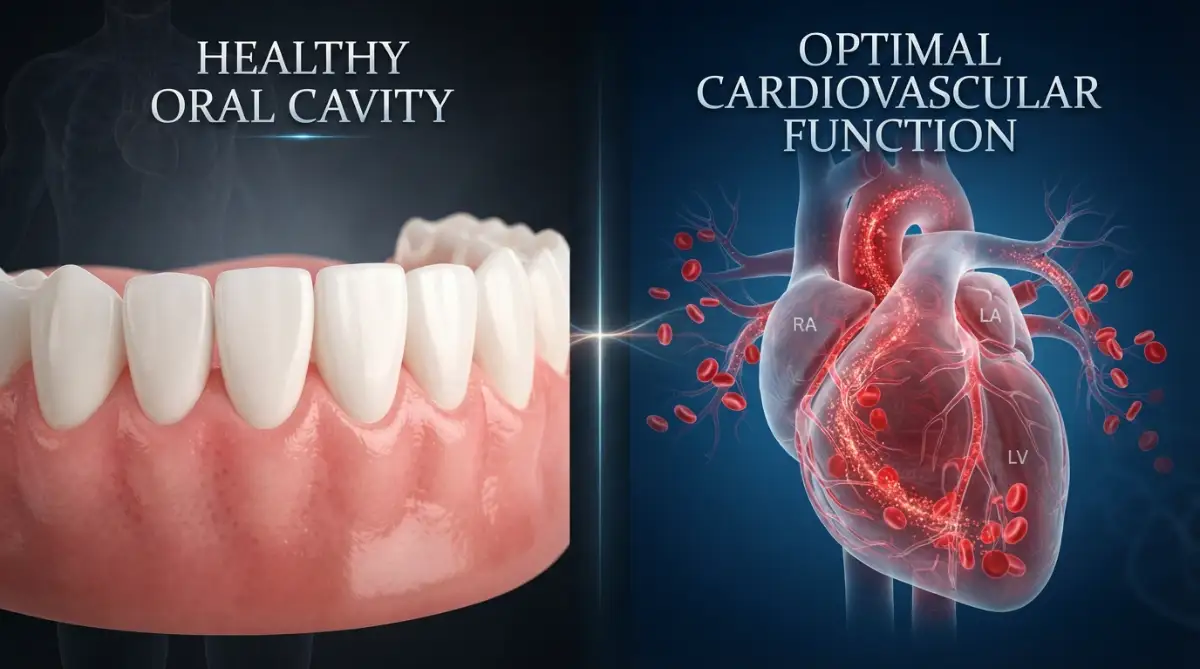
This is perhaps the scariest connection researchers have found recently. The bacteria from your infected gums do not just float around aimlessly; they love to attach themselves to the fatty plaques inside your arteries.
Over time, these bacteria trigger heavy inflammation inside your blood vessels. Your body tries to fight off this infection, which causes the artery walls to swell and thicken.
This swelling makes the pathway for your blood much narrower. When the pathway is narrow, your heart has to pump incredibly hard just to keep you alive. This unnecessary stress directly increases your risk of severe heart conditions.
Think of it like trying to push water through a garden hose that is constantly getting squeezed. Eventually, the pressure builds up to a dangerous level.
The Unexpected Brain Fog and Memory Issues
You might wonder how on earth a cavity could possibly affect your thoughts. The blood from your heart eventually travels up to your brain, carrying oxygen and nutrients.
Unfortunately, if your mouth is full of harmful bacteria, your blood carries those toxins directly to your brain cells too. Scientists have started finding specific oral bacteria in the brains of patients struggling with severe memory loss.
These toxins create low-grade inflammation inside your brain tissue. This can lead to random brain fog, making it difficult for you to focus on simple daily tasks.
If you constantly feel like your head is wrapped in cotton and you cannot concentrate, your bleeding gums might be a hidden suspect.
Respiratory Struggles You Cannot Explain
Every single time you take a breath, air passes directly over your teeth and gums before reaching your lungs. If your mouth is a hotbed of harmful bacteria, you are literally inhaling these microscopic threats all day long.
These tiny droplets of bacteria travel down your windpipe and settle deep inside your lungs. For someone with a perfectly strong immune system, this might not cause instant panic.
But if you are slightly stressed or tired, these bacteria can easily trigger chest infections. People with poor oral health often find themselves dealing with mysterious coughs that just refuse to go away.
Myth vs Reality: The Oral Health Confusion
There is so much bad advice floating around the internet about teeth. Let's look at a quick comparison to clear up the confusion.
Actionable Steps to Protect Your Body Today
Now that we understand the deep connection between our mouth and our organs, it is time to take immediate action. You do not need expensive treatments to start turning things around right now.
You just need to build a few specific habits and stick to them every single morning and night. Let's walk through the most effective ways to shut down these harmful bacteria before they reach your bloodstream.
Mastering the Art of Brushing
Most people brush their teeth like they are scrubbing a dirty floor. They grab a hard-bristled brush, apply massive pressure, and aggressively saw back and forth.
This aggressive scrubbing actually tears your gums away from your teeth, creating deep pockets where bacteria love to hide. Instead, you need to switch to a very soft-bristled toothbrush immediately.
Hold the brush at a 45-degree angle pointing towards your gums. Make tiny, gentle circles rather than long, harsh sweeps.
You should spend a full two minutes brushing. Think of it as a gentle massage for your gums, not a punishment for your teeth. This sweeping motion pulls the hidden plaque out from under the gumline without causing any bleeding.
The Unspoken Power of Cleaning Between Your Teeth
Your toothbrush can only clean the front, back, and top of your teeth. That means nearly 40 percent of your tooth surface is completely missed if you only use a brush.
This hidden area between your teeth is exactly where the most dangerous, oxygen-hating bacteria thrive. If you do not clean between your teeth, you are leaving massive colonies of bacteria untouched.
You need to physically wipe the sides of your teeth to break up these sticky bacterial colonies.
This simple habit alone can drastically lower the amount of inflammation in your body. Check out this amazing breakdown of how to do it correctly without hurting yourself.
Why Tongue Scraping is an Absolute Game Changer
Look in the mirror and stick your tongue out. If you see a white or yellow coating sitting at the back of your tongue, you are looking at millions of stinky bacteria.
Your tongue is not smooth; it is covered in tiny bumps that act like a sponge for food particles and dead cells. Brushing your tongue with a toothbrush just moves this nasty sludge around.
You need a proper metal or copper tongue scraper to pull this toxic layer completely out of your mouth.

I actually started doing this a year ago, and my morning breath completely disappeared overnight. My sense of taste got incredibly sharp, and my mouth felt instantly lighter every single morning.
Slide the scraper from the very back of your tongue to the front three or four times. Rinse it off in the sink and watch how much junk comes out of a seemingly clean mouth.
Feeding Your Oral Microbiome
We often talk about gut health, but your mouth has its very own microbiome that needs protection. The bacteria in your mouth feed directly on what you eat.
Sugar is the absolute favorite food for the worst types of bacteria. When you drink sugary sodas or eat sticky candies, these bacteria consume the sugar and instantly release powerful acids.
These acids eat away at your enamel, creating tiny holes that eventually turn into massive cavities. But it is not just about avoiding bad food; you need to eat protective foods as well.
Crunchy vegetables like carrots, celery, and apples act as natural toothbrushes. As you chew them, they physically scrub the surface of your teeth and stimulate massive saliva production.
Saliva is your body's natural defense mechanism. It is packed with minerals that constantly repair the microscopic damage caused by daily eating.
The Magic of Proper Hydration
A dry mouth is a highly dangerous mouth. Saliva is constantly washing away stray food particles and keeping the bacterial population under control.
Many common medications for blood pressure or allergies cause severe dry mouth as a side effect. If your mouth feels sticky and dry throughout the day, the bacteria are multiplying at a terrifying speed.
My Personal Tip for Nighttime Dry Mouth:
If you wake up feeling like you swallowed a sandbox, you are not alone. I actually started keeping a small bottle of xylitol-based mouth spray right on my nightstand. If I wake up thirsty at 3 AM, I just use one quick spray. It instantly stimulates natural saliva without forcing me to get out of bed, keeping my teeth protected while I go back to sleep.
Keep a large bottle of plain water with you at all times. Take frequent sips just to keep the inside of your cheeks and gums moist.
Avoid sipping on acidic drinks like lemon water all day long, because continuous acid exposure will melt your enamel over time. Drink your flavored beverages quickly, and then rinse your mouth with plain water right after.
Recognizing the Urgent Warning Signs
You need to know exactly when your body is begging for professional help. Do not ignore your gums if they start to look bright red, swollen, or puffy.
Healthy gums should look light pink and have a firm, tight texture against your teeth. If you notice your gums pulling away from your teeth and making your teeth look longer, you have a serious problem.
Constant bad breath that returns five minutes after brushing is another massive red flag. This means the bacteria have built a fortress under your gums that your toothbrush simply cannot reach.
If you experience sudden sensitivity to hot coffee or cold ice cream, do not just switch your toothpaste. This sensitivity often means the protective outer layer of your tooth is gone, and the nerve is completely exposed to the elements.
Building a Bulletproof Night Routine
What you do right before bed is the most important part of your entire dental routine. When you sleep, your saliva production drops dramatically.
If you go to bed with plaque on your teeth, the bacteria have eight straight hours of uninterrupted time to feast and multiply in a dry environment.
Never, ever skip your nighttime brushing, no matter how exhausted you feel. Make it a strict rule to clean between your teeth and brush thoroughly before your head hits the pillow.
After brushing at night, do not rinse your mouth out with water. Let the toothpaste residue sit on your teeth while you sleep.
The fluoride or natural minerals in your toothpaste need time to sink into the enamel and rebuild the weak spots. Rinsing with water just washes all that expensive protection straight down the drain.
Taking care of your mouth is not just about having a bright smile for photographs. It is a daily commitment to protecting your heart, your brain, and your overall physical health. Every time you pick up your toothbrush, remind yourself that you are actively fighting off hidden infections and adding healthy days to your life. The power to protect your body is literally sitting right inside your bathroom cabinet.
Taking Your Daily Routine Beyond the Basics
Once you master the basic habits of brushing and scraping your tongue, you can start adding a few professional tricks to your routine. These advanced strategies go far beyond just keeping your teeth white. They actively change the environment inside your mouth, making it impossible for dangerous bacteria to survive and travel to your heart.
One of the most powerful secrets in modern dental care is understanding the timing of when you brush. Most of us have been taught to brush our teeth immediately after eating breakfast. But if you just drank a glass of orange juice or a cup of hot coffee, brushing right away is a terrible idea.
Acidic drinks and foods temporarily soften the hard enamel shell that protects your teeth. If you take a toothbrush and scrub your teeth while the enamel is in this weakened state, you are literally brushing your tooth structure away. You should always wait at least thirty minutes after eating acidic foods before you brush.
If you are in a rush to get to work, simply rinse your mouth with plain water to neutralize the acid. You can also chew a piece of sugar-free gum that contains a specific natural sweetener called xylitol.
The Amazing Power of Xylitol
Xylitol is not just a regular sugar substitute; it is actually a powerful defense weapon for your body. The harmful bacteria in your mouth love to eat normal sugar, which they turn into acid. But when these bacteria consume xylitol, they cannot digest it properly, and they actually end up starving to death.
Chewing xylitol gum for just five minutes after a meal dramatically reduces the amount of plaque that forms on your teeth. According to clinical insights published by the National Institute of Dental and Craniofacial Research, maintaining a neutral pH balance in your mouth is one of the best ways to stop cavities before they even start. It is a tiny habit that takes zero extra effort but provides massive protection for your entire body.
Protecting Your Oral Microbiome
We hear a lot of talk about protecting the good bacteria in our stomach, but your mouth has its own delicate ecosystem too. You have billions of good bacteria in your saliva that actively fight off the bad bacteria trying to enter your bloodstream. When we use harsh chemicals in our mouth, we accidentally destroy this natural defense system.
You should treat your mouth with the same gentle care that you give the rest of your body. Think about how carefully you select daily products to protect your outer appearance. Just like how to choose the right skin moisturizer for your skin type to keep your face healthy, you need to choose gentle toothpastes that do not strip away your natural mouth moisture.
If you constantly dry out your mouth with bad products, you are creating the perfect home for infections. A dry mouth is a sick mouth.
Managing Stress to Save Your Gums
You might be surprised to learn that your mental state directly impacts the health of your gums. When you are constantly stressed, your body produces high levels of a hormone called cortisol. High cortisol levels make it incredibly difficult for your body to fight off simple infections.
This is exactly why your gums might suddenly feel tender or bleed more during a very stressful week at work. In fact, chronic stress is one of those 7 silent habits destroying your immune system and how to stop them. If your immune system is weak, the bacteria in your mouth will easily overpower your natural defenses.
Many stressed individuals also grind their teeth heavily while they sleep. This constant grinding puts massive pressure on the roots of your teeth, causing the gums to pull back and expose sensitive areas. Finding ways to unwind before bed is just as important for your teeth as it is for your brain.
The Unexpected Hormonal Connection
Our bodies are complex machines, and sometimes internal changes show up first in our mouth. Women, in particular, often notice that their gums become highly sensitive during specific times of the month or during pregnancy. This happens because hormonal fluctuations increase the blood supply to the gum tissue, making them overreact to even tiny amounts of plaque.
If you notice sudden changes in how your mouth feels, it might not just be a brushing issue. It could easily be tied to unexpected daily triggers that are secretly disrupting your hormonal balance. Paying attention to your mouth can often give you early warning signs about what is happening deep inside your internal systems.
 -
-
The Hidden Traps Destroying Your Hard Work
It is incredibly frustrating to put effort into your morning routine, only to end up in the dentist's chair with a massive bill anyway. Many people try their absolute best to stay healthy, but they fall into hidden traps that secretly reverse all their hard work. Let's look at the most dangerous mistakes you might be making right now without even realizing it.
The biggest trap of all is using alcohol-based mouthwashes that burn your cheeks and tongue. Commercials have convinced us that this intense burning sensation means the product is working and killing germs. But the truth is much darker and more damaging.
Alcohol dries out the soft tissues in your mouth instantly. It acts like a powerful chemical bomb, wiping out every single good and bad bacteria indiscriminately. Within a few hours, the bad bacteria return aggressively, but the good bacteria take much longer to recover.
This creates a terrible cycle where your bad breath comes back even stronger, forcing you to use more harsh mouthwash. You need to switch to alcohol-free, natural rinses that support your saliva production instead of destroying it.
The Aggressive Brushing Disaster
Another massive mistake is thinking that brushing harder means getting cleaner teeth. I have seen so many people destroy their beautiful smiles because they scrub their gums like they are cleaning dirty bathroom tiles. Your gums are made of incredibly delicate tissue that is easily torn.
When you apply too much pressure, your gums physically run away from the toothbrush to protect themselves. This causes permanent gum recession, exposing the yellow roots of your teeth to the open air. This physical damage is very similar to how to heal a damaged skin barrier from over-exfoliation. Once you scrub away that protective layer, you invite massive pain and sensitivity into your daily life.
Always let the tips of the toothbrush bristles do the work for you. If the bristles on your toothbrush look smashed and flattened after just a few weeks, you are definitely pushing way too hard.
The Silent Threat of Nighttime Mouth Breathing
How you breathe while you sleep plays a massive role in the health of your internal organs. If you sleep with your mouth wide open all night long, you are creating a severe dry desert environment inside your mouth. Without saliva flowing to wash away the food particles, plaque hardens into cement-like tartar twice as fast.
People who breathe through their mouths at night often wake up with a sticky, horrible taste and a sore throat. The Sleep Foundation warns that chronic mouth breathing not only ruins your dental health but also heavily disrupts your deep sleep cycles.
Sometimes, staying up too late scrolling on our phones causes us to fall into a restless, uncomfortable sleep where our jaw naturally drops open. This is just one of the many reasons we need to be aware of the hidden dangers of screen glare and how to protect your eyes before bedtime. Better sleep hygiene directly leads to a healthier, closed-mouth sleeping posture.
Ignoring the Tiny Whispers of Pain
Our bodies are always trying to communicate with us, but we often choose not to listen. A slight twinge when you drink cold water or a tiny bit of pink blood in the sink are warning signs. We tend to ignore these small issues because we are too busy to deal with them.
This is a dangerous game of denial. It is exactly like ignoring the hidden epidemic of early hearing loss from earbuds and how to stop it. We pretend the silent damage is not happening until we wake up one day with an irreversible problem.
Dental infections do not heal themselves. A small cavity will slowly dig deeper into the tooth until it reaches the main nerve and blood supply. By the time you feel severe, throbbing pain, the bacteria have already set up a direct pipeline straight to your heart and brain.
Your Blueprint for a Lifetime of Whole-Body Health
Protecting your body starts with a shift in your mindset. You have to stop looking at your teeth as just tools for chewing food or looking good in family photographs. Your mouth is the main gateway to your entire internal system, and how you treat it determines how healthy your major organs will be.
Taking two extra minutes every morning and night is the cheapest health insurance you will ever find. You do not need to be perfect every single day, but you do need to be consistent with the gentle habits we discussed. Keep a soft toothbrush, use a tongue scraper, and never underestimate the power of simply cleaning between your teeth.
Medical experts at the American Heart Association have made it very clear that reducing inflammation in your mouth takes immense pressure off your cardiovascular system. When your gums are healthy, your heart does not have to work overtime to fight off hidden invaders. You will naturally have more energy, less brain fog, and a much stronger immune system to tackle your daily challenges.
I remember the exact day I finally stopped treating my dental care like an annoying chore and started viewing it as an act of self-respect. My energy levels skyrocketed, my morning headaches vanished, and I felt a sense of control over my own health that I had never experienced before. You have the exact same power sitting right there next to your bathroom sink, waiting for you to use it tonight.
Things You Might Still Be Wondering About Oral Health
Can brushing twice a day completely stop gum disease?
Brushing twice a day is a great start, but it simply cannot clean the tight spaces between your teeth. If you do not wipe away the bacteria hiding between your teeth, gum inflammation will still occur. You have to clean the entire tooth surface to truly stop harmful bacteria from multiplying.
Why do my gums bleed heavily only when I try to floss?
Your gums bleed because they are already swollen and inflamed from hidden plaque sitting beneath the surface. The bleeding is actually a cry for help, not a sign that you should stop cleaning. If you continue gently cleaning those spaces every day, the bleeding will naturally stop within a week or two as the tissue heals.
Is an expensive electric toothbrush really better than a manual one?
Yes, a high-quality electric toothbrush is absolutely worth the investment for your long-term health. The rapid vibrations break up sticky plaque much faster and more gently than a manual brush ever could. It takes all the guesswork out of brushing and prevents you from accidentally scrubbing your gums too hard.
How long does it actually take to reverse early gum inflammation?
If you catch the inflammation early, you can often reverse mild gingivitis in just ten to fourteen days. You simply need to commit to a strict routine of soft brushing and cleaning between your teeth every single night. Your body wants to heal itself rapidly once you remove the source of the infection.
Can a bad tooth really cause a sudden heart issue?
While a bad tooth will not instantly stop your heart, it acts as a slow poison over many years. The bacteria constantly leak into your bloodstream, causing your arteries to swell and harden over time. This heavy, silent stress significantly increases your chances of experiencing a major cardiovascular event later in life.
Disclaimer: The information provided in this article is for educational and informational purposes only and is not intended as professional medical or dental advice. Always consult with a qualified dentist or healthcare provider regarding any medical conditions, treatments, or sudden changes in your overall health."The content is not intended to diagnose, treat, or cure any disease."