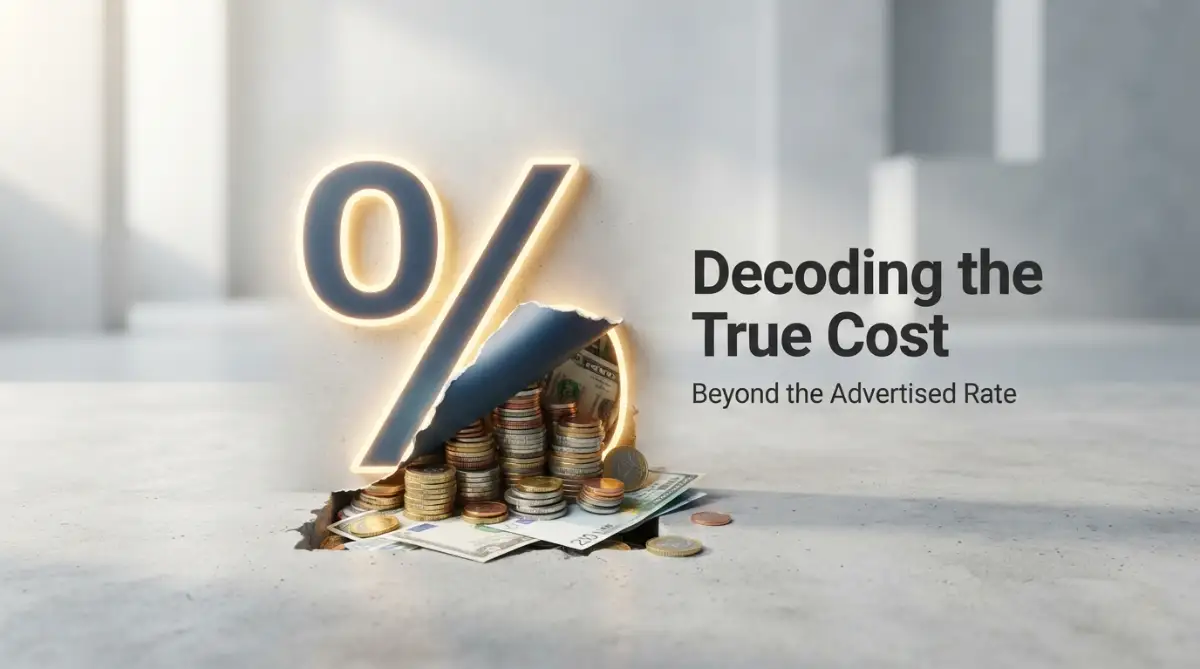
The Reality Check: When Low Rates Hide Heavy Burdens
You finally got that loan approved, and the super low interest rate looks amazing on paper. But hold on a second before you celebrate. I found out the hard way that banks are absolute masters at hiding the real cost of borrowing right under our noses. Today, I want to show you exactly how to spot those sneaky fees before they quietly drain your hard-earned money.
But a few months later, I noticed my actual loan balance was barely dropping. I quickly realized I had completely missed the hidden charges buried deep in the fine print.
My simple quick cash fix turned into a heavy financial burden that kept me awake at night. I felt tricked, frustrated, and angry at myself for not reading the details properly.
But when you check your bank account, you see unexpected deductions taking away your hard-earned money. It feels like you are trapped in an endless cycle where the financial institutions always win.
Your peace of mind vanishes when you realize the loan you took to solve a problem has actually become the biggest problem in your life. This silent pressure causes endless arguments at home and makes you doubt your ability to manage money.

Before You Borrow: Quick Takeaways
-
Do not trust the advertised rate: The big percentage on the flyer rarely includes the hidden setup fees.
-
Ask about origination charges: This is a sneaky fee banks charge just for doing their paperwork.
-
Watch out for early exit fees: Some lenders will actually punish you for paying your debt off early.
-
Demand a fixed rate: Variable rates can easily jump up and ruin your monthly household budget.
Why the Big Bold Number Rarely Tells the Whole Story
The truth is, millions of normal people face this exact same struggle every single day. We are trained to look only at the big numbers presented in loan commercials.
Banks spend millions on marketing to make their offers look irresistible to the average person. They heavily promote a low percentage rate to grab your attention instantly.
However, that single number is just the tip of a very large financial iceberg. Beneath the surface lies a complex system of administrative charges, processing fees, and penalties.
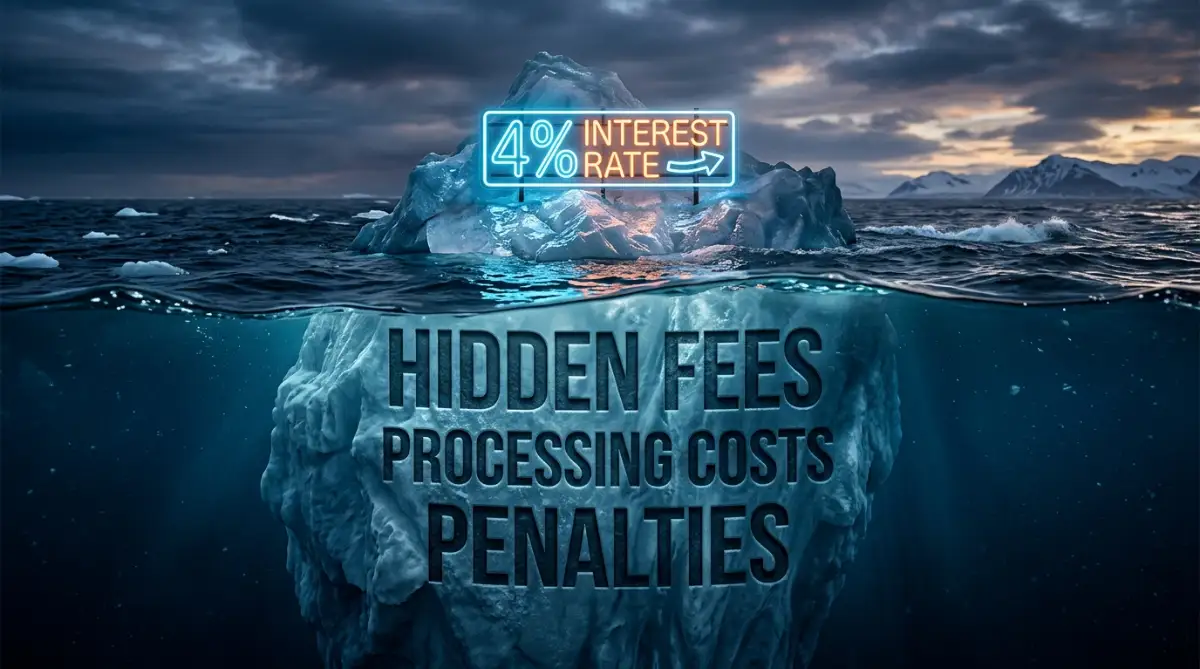
When you only focus on the advertised rate, you are walking into a long-term contract blindfolded. You might think you are borrowing a small amount, but the total payback figure can easily double.
This lack of transparency makes it incredibly difficult to budget your monthly expenses accurately. Families end up skipping vacations or cutting down on groceries just to keep up with bloated loan payments.
To truly protect your hard-earned money, you need to shift how you look at borrowing. You must learn to tear apart a loan offer and see every single hidden cost inside it.
The Myth of the Perfect Interest Rate
Most of us believe that finding the lowest interest rate means we have found the cheapest loan. This is a very common money myth that costs people thousands of dollars.
Lenders often drop their main interest rate to beat their competitors in the market. But they quietly make up for that lost profit by adding mandatory fees to your account.
For example, a loan with a 5% rate might actually cost you more than a loan with a 7% rate. This happens because the 5% loan could carry heavy setup fees that are immediately added to your balance.
Money Myth vs. Real Fact: The Rate Trap
Myth: If a bank offers you a 5% interest rate, that is exactly what you pay.
Fact: You actually pay the APR (Annual Percentage Rate). If your 5% loan comes with a heavy 3% origination fee, your true APR jumps closer to 8%. I always tell my friends to completely ignore the interest rate and only look at the APR when comparing two different banks.
If you do not know how to spot these sneaky additions, you will always pick the wrong option. Financial literacy is not just about making money; it is about keeping the money you already have.
Unmasking the Setup and Processing Fees
Whenever you ask for money, the lender has to do some paperwork to approve your request. They check your credit history, verify your income, and set up your new account.
Instead of absorbing this administrative cost, they pass it directly onto you. This is widely known as an origination fee, and it is the biggest trap in modern borrowing.
Origination fees are usually charged as a percentage of your total loan amount. If you borrow ten thousand dollars and the fee is 5%, you instantly lose five hundred dollars.
The tricky part is that lenders handle this fee in two different ways. They will either subtract it from the cash they give you or add it to your total debt.
If they subtract it, you will receive less money than you actually need for your emergency. If they add it, you end up paying interest on the fee itself for the entire life of the loan.
Before you ever sign a contract, you must explicitly ask the agent about origination charges. A truly good loan offer will either have a zero origination fee or a very small flat rate.
If you want to know exactly how to spot a bad loan, watch this quick breakdown before making your final decision:
The Trap of Paying Your Debt Too Early
Logically, if you pay off a debt early, you should be rewarded for your good financial behavior. You are giving the bank their money back faster than promised, which sounds like a positive thing.
Unfortunately, the financial system does not always reward common sense. Many lenders will actually punish you financially for trying to clear your debt ahead of schedule.
This punishment is called a prepayment penalty, and it is a massive hidden cost. Lenders make their real profit from the steady stream of interest you pay them over several years.
When you pay off the balance early, you cut off their future profit supply. To protect their own earnings, they charge you a massive exit fee to make up the difference.
Imagine getting a nice bonus at work and deciding to finally become debt-free. You call the bank to settle the account, only to find out you owe an extra six hundred dollars just for leaving early.
Always demand a loan agreement that clearly states there are no prepayment penalties. You should always have the complete freedom to pay off your own debt whenever you want.
Quick Math Example: The Cost of Paying Early
Let us say you owe five thousand dollars and decide to pay it all off two years early. A lender with a 3% prepayment penalty will hit you with a surprise one hundred and fifty dollar fee just for doing the right thing. Always read the exit terms before you take the money.
My Personal Experience with Hidden Charges
I want to share a quick reality check from my own journey with personal finance. I used to ignore the small print because the legal words gave me a headache.
I thought asking too many questions would make the bank reject my application. So, I just nodded, smiled, and signed exactly where they told me to sign.
I later realized that asking tough questions is the only way to demand respect as a customer. If a lender gets annoyed when you ask about hidden fees, you should immediately walk away from their desk.
Protecting your finances means you have to be your own biggest advocate. Nobody else is going to look out for your wallet except you.
Understanding the Cost of Being Late
Lenders know that average people will occasionally slip up on their monthly schedules. They use these small human mistakes as another major opportunity to increase their profits.
Late payment fees are aggressively added to your account the moment you miss a strict deadline. Sometimes, missing a payment by just one single day can trigger a massive penalty charge.
But the late fee is only the first part of this specific borrowing trap. If your payment bounces due to low funds, they will also hit you with a returned payment fee.
Suddenly, a simple fifty-dollar mistake turns into a hundred-dollar nightmare. This adds extra principal to your balance, meaning you will pay even more interest the following month.
Always review the penalty section of your agreement to see exactly how forgiving the lender is. Look for lenders who offer a reasonable grace period of five to ten days before applying any extra charges.
The Silent Drain of Mandatory Insurance
Sometimes, a lender will try to sell you a safety net when you take out a loan. They will offer you credit life insurance or payment protection plans to secure your debt.
They will pitch it to you by saying it protects your family if you lose your job or pass away. The idea sounds very responsible, so many people agree to add it to their plan.
However, these insurance policies are usually heavily overpriced compared to regular term life insurance. The premiums are directly baked into your monthly loan payment, quietly inflating your true cost of borrowing.
In many cases, the bank makes it sound like buying this insurance is legally required to get approved. This is almost always a tactic to squeeze more money out of a nervous borrower.
Unless you have a very specific reason to buy credit insurance, it is usually a waste of money. You are much better off using that extra cash to pay down your actual principal balance faster.
How to Calculate the Real Bottom Line
Now that you know what fees to look for, you need a simple way to measure the actual damage. The only math you need to care about is the total out-of-pocket cost.
Do not try to calculate complex daily interest rates in your head because it will just confuse you. Instead, look at the exact dollar amount of your expected monthly payment.
Multiply that monthly payment by the total number of months in your long-term contract. For instance, if you pay three hundred dollars a month for thirty-six months, your total paid is ten thousand eight hundred dollars.
Next, add any upfront fees that you paid out of pocket to get the loan started. Finally, subtract the actual amount of cash the bank deposited into your checking account.
The number you are left with is the absolute true cost of borrowing that specific money. This simple subtraction trick strips away all the marketing tricks and shows you the raw, honest truth.
When you use this simple calculation, you can compare two completely different loan offers accurately. You will clearly see which bank is actually taking less of your total income.
Taking Control of Your Financial Future
You do not need a degree in finance to master your personal borrowing habits. You just need the patience to slow down and read the documents before you sign them.
When you understand the true cost of borrowing, you take away the bank's hidden power. You transform from a vulnerable target into a highly educated and confident consumer.
Always remember that lenders need your business just as much as you need their money. You have the total right to negotiate terms, ask to waive fees, or simply take your business elsewhere.
By looking far beyond the advertised rate, you will protect your monthly cash flow. You will keep more money in your pocket, reduce your daily stress, and build a much safer financial life for your family.
Insider Secrets to Master Your Next Borrowing Experience
Taking complete control of your financial destiny requires more than just avoiding bad habits. You actually need to adopt the aggressive, proactive mindset of a seasoned money manager.
The biggest advantage banks have over everyday consumers is an information gap. They know exactly how compound interest works, while most borrowers just look at the monthly payment size.
Closing this knowledge gap is the ultimate key to keeping more of your paycheck inside your own bank account. You can completely flip the script on lenders by using a few highly guarded industry secrets.
For instance, most people do not realize that nearly every single fee on a loan estimate is entirely negotiable. Lenders act like these administrative charges are set in stone by the government, but that is simply a sales tactic.
If you have a strong credit history, you hold a massive amount of bargaining power at the negotiation table. You can confidently ask the loan officer to completely waive the origination fee just to win your business.
If they refuse, you simply stand up, thank them for their time, and tell them you are going to check with a competing bank. You will be absolutely amazed at how quickly they can suddenly "find a way" to drop those extra costs.
To gain even more confidence before stepping into a bank, I highly recommend you explore smart finance strategies that put you back in the driver's seat. Knowledge is your best shield against aggressive banking sales tactics.
The Power of the Amortization Schedule
One of the smartest things you can ever do is demand a full amortization schedule before signing any paperwork. This is basically a simple chart that shows you exactly where every single dollar of your monthly payment goes.
During the first few years of a long-term contract, you will notice something deeply frustrating. Almost your entire monthly payment goes straight toward paying the bank's interest, while your actual debt barely shrinks.
Seeing this schedule on paper completely changes how you view your daily spending habits. You suddenly realize that paying just fifty extra dollars toward your principal each month can shave years off your repayment timeline.
According to guidelines from the Consumer Financial Protection Bureau, understanding this breakdown is essential for paying off large balances early. It gives you a crystal-clear map of your financial future.
If you are currently feeling overwhelmed by multiple payments, you need a solid exit strategy right now. You can learn exactly how to escape the trap of too much debt easily by restructuring how you attack your balances.
Preparing Your Profile for Premium Offers
Banks reserve their absolute best hidden deals for people who look perfect on paper. If your credit report looks messy, you will only be offered the most expensive, heavily penalized products available.
Before you even think about applying for new credit, you need to clean up your past financial mistakes. Check your personal credit report for completely random errors or old accounts that should have been closed years ago.
If you were recently turned down for a credit application, do not panic and randomly apply everywhere else. That will actually damage your score even further and make you look desperate to automated banking systems.
Instead, you need to pause, step back, and follow a proven strategy to rebuild your financial profile after a loan rejection. Fixing the root cause of the rejection will instantly unlock thousands of dollars in interest savings.
Once your profile is strong, you can confidently explore the best options available in the finance and personal loans guide. A clean history acts like a VIP pass to the cheapest money on the market.

The Most Dangerous Financial Pitfalls to Avoid
When you are stressed out about money, your brain naturally looks for the fastest possible escape route. This emotional vulnerability is exactly what predatory lending companies prey upon every single day.
They design their entire application process to feel incredibly fast, simple, and painless. But behind that smooth digital interface lies a series of massive financial traps that can destroy your long-term stability.
One of the biggest blunders everyday people make is shopping for a loan based entirely on the monthly payment amount. A lender will happily lower your monthly bill by simply stretching your repayment plan from three years to seven years.
You might feel relieved that your monthly budget has extra breathing room right now. However, extending that timeline means you are paying interest for four extra years, quietly doubling the total cost of the money you borrowed.
The Variable Rate Nightmare
Another deeply destructive trap is falling for the illusion of a variable interest rate. Lenders will heavily promote an incredibly low starting rate to make their offer look much cheaper than a standard fixed-rate plan.
They promise that the rate is tied to the general market, making it sound very fair and balanced. What they hide in the small print is just how aggressively that rate can skyrocket when the economy shifts.
Imagine budgeting perfectly for a three-hundred-dollar payment, only to receive a letter saying your new payment is four hundred dollars. Economic studies from the National Bureau of Economic Research frequently highlight how variable rates push families into unexpected financial distress.
You completely lose the ability to predict your future expenses when you agree to a shifting rate. Always demand a fixed percentage so your payment remains exactly the same from

Ignoring the Hidden Fine Print
We live in an age where we blindly click "I Agree" on almost every digital document we see. Bringing that same careless habit into the financial world is a recipe for absolute disaster.
If you do not manually read the terms, you will easily miss administrative costs that quietly drain your bank account. You must always know how to spot hidden fees in your personal loan agreement before giving them your digital signature.
People also frequently misunderstand how specific grace periods actually work. They assume that a grace period means the bank has paused their interest charges, which is almost never true.
The interest is usually still growing quietly in the background, making your future balance even larger. This is especially true for educational debt, which is why mastering your federal student loan grace period is completely essential for young adults.
The Terrifying Spiral of Default
The absolute worst mistake you can make is ignoring your lender when you run into money troubles. Many people feel so ashamed of missing payments that they stop answering their phones and ignore official letters.
Lenders do not simply forget about the money you owe them when you go completely silent. They will eventually sell your account to incredibly aggressive third-party collection agencies who will make your life miserable.
These agencies can potentially garnish your wages, freeze your checking accounts, and completely ruin your credit score for a decade. The anxiety of having debt collectors constantly chasing you can severely impact your physical and mental health.
If you ever find yourself falling behind, you need to understand exactly what happens next. You should immediately educate yourself on surviving a default so you can protect your basic legal rights.
The Federal Trade Commission explicitly outlines consumer protection rules regarding debt collection, proving that you still have rights even when you owe money. Facing the problem early allows you to negotiate a hardship plan before the situation becomes completely unfixable.
Your Ultimate Blueprint for Smarter Borrowing
Taking the time to completely understand how money works is the greatest gift you can ever give your future self. You no longer have to feel intimidated or confused when sitting across from a smiling bank representative.
You now possess the exact tools needed to strip away the marketing tricks and reveal the honest numbers underneath. By doing the simple math yourself, you completely neutralize the hidden traps that catch so many innocent people off guard.
You will never again select a financial product just because it has a flashy low number on a television commercial. Instead, you will demand complete transparency, read the boring fine print, and aggressively protect your hard-earned paycheck.
This newfound knowledge allows you to borrow only what you absolutely need, exactly when you need it. You will start using the banking system as a helpful tool rather than letting the system constantly use you.
I completely changed my own financial reality when I stopped blindly trusting bank advertisements and finally started doing my own basic math. My biggest hope is that you use these exact strategies right now to aggressively protect your money and build the completely stress-free life you truly deserve.
Common Questions About Smart Borrowing
What is the actual difference between an interest rate and an APR?
Your interest rate is just the basic yearly cost of borrowing the principal amount. The APR (Annual Percentage Rate) includes that interest plus all the mandatory fees, giving you a much more realistic picture of your total expenses.
Can I really negotiate the extra fees on a personal loan?
Yes, absolutely. Origination fees and processing charges are often flexible, especially if you have an excellent credit score and a steady income. Always ask the loan officer to drop these fees before you agree to sign the final papers.
How does the length of my loan affect my total costs?
A longer repayment timeline will give you a much smaller monthly bill, making it feel cheaper right now. However, you will end up paying significantly more in total interest over those extra years, drastically increasing the true cost of your debt.
Are zero percent introductory credit offers a hidden trap?
They can be very helpful, but only if you pay off the entire balance before the promotional period completely ends. If you leave even one dollar unpaid when the timer runs out, the bank will often charge you massive backdated interest for the entire period.
Why do banks charge a penalty if I pay off my debt early?
Lenders expect to make a specific amount of continuous profit off your interest payments over several years. When you pay the balance early, you cut off their future profits, so they charge a prepayment penalty to quickly make up for their lost money.
Financial Disclaimer: The information provided in this article is strictly for educational and informational purposes only and does not constitute professional financial, legal, or tax advice. We are not licensed financial advisors, and the strategies discussed may not be suitable for your specific personal situation. Always consult with a certified financial planner or legal professional before making any major decisions regarding debt, loans, or investments.