My Sleepless Nights With Bulky Tech
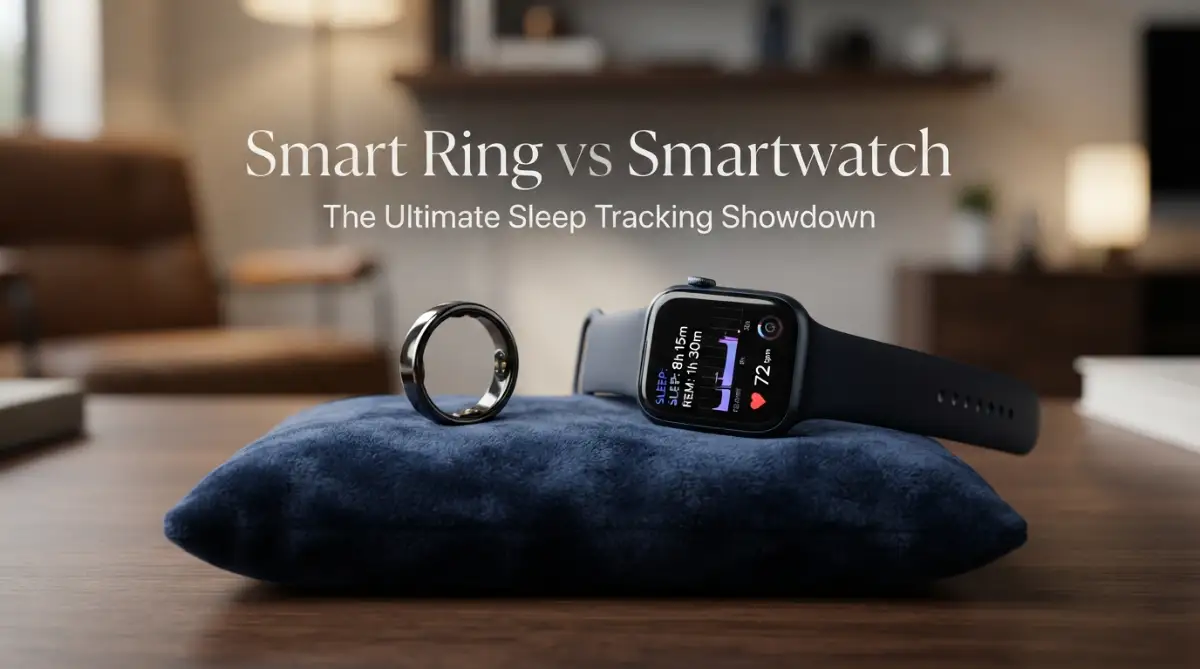
You buy a fancy sleep tracker hoping to wake up feeling fresh and full of energy. But instead, you toss and turn all night because a heavy, sweaty chunk of metal is digging into your wrist. I spent months fighting this exact battle, trading my peaceful sleep for messy health data on a smartwatch app. If you are tired of waking up with wrist pain just to get a daily sleep score, you are not alone. Let me show you why ditching my bulky watch for a tiny, lightweight ring changed my nights forever.
I just wanted to track my deep sleep and get a simple health score. Instead, the very device meant to improve my rest was actually destroying it. That morning, I angrily took the watch off and threw it on the wooden nightstand. I felt completely frustrated because I love tracking my health data, but I hated the physical discomfort.
This daily struggle made me wonder if there was a more comfortable way to monitor my nights. I began searching for alternatives that would let me sleep like a normal human being without sacrificing my morning health reports. I started testing different wearable options to see if smaller truly meant better.
Quick Takeaways: Why Smaller is Better for Sleep
-
Wrist pain and heavy straps completely interrupt your natural sleep cycles.
-
Fingers have blood vessels much closer to the skin, making ring sensors highly accurate.
-
Smart rings last almost a week on a single charge since they do not have bright screens.
-
Sleeping with a ring allows you to sleep comfortably on your side or stomach without pressure points.
The Reality of Sleep Tracking Frustration
Most people start tracking their sleep to feel more energized and focused during the day. We buy expensive watches, hoping they will act as our personal bedtime health coaches. But the reality is often much more annoying.
Thick silicone bands trap sweat against your skin, causing itchy red rashes that last for days. The bright glowing screens randomly turn on when you move your arm, blinding you and your partner in the middle of the night. You end up waking up just to adjust the strap because it feels too tight or too loose.
This constant physical awareness of wearing a bulky computer on your arm prevents you from falling into deep sleep. Your mental peace is completely ruined when you wake up tired, only to see the app telling you that you slept poorly. The stress of getting a bad sleep score combined with the physical discomfort creates a terrible cycle of insomnia. Breaking Down the Wearable Science
When we look closely at how our bodies function at night, the differences between fingers and wrists become incredibly clear. Your finger is packed with blood vessels and capillaries that sit right under the surface of the skin. This makes it an absolutely perfect spot for optical sensors to read your pulse and blood oxygen levels.
Your wrist, on the other hand, is a complicated mess of bones, thick muscles, tendons, and hair. A smartwatch has to work much harder to shoot light through all that tissue to get an accurate heart rate reading. If the watch shifts even slightly while you toss and turn, the sensors lose their connection to your skin.
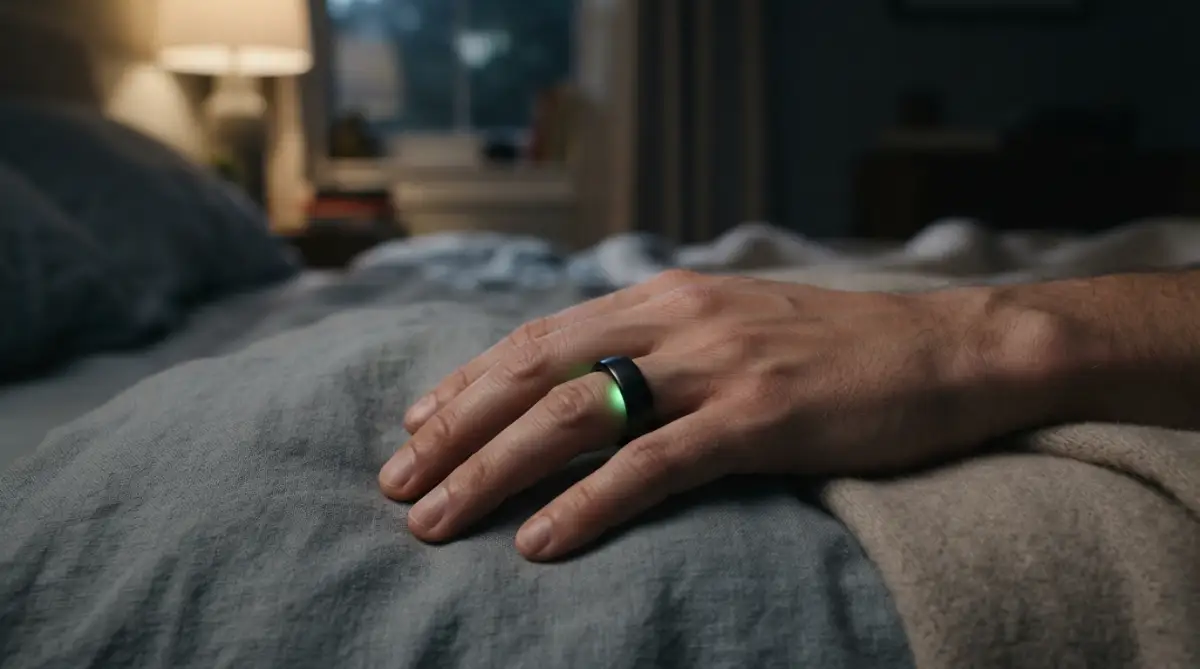 This physical shifting causes those frustrating gaps in your morning sleep graph where the device simply stopped recording. A ring wraps completely around your finger, keeping the sensors in constant, tight contact with your skin all night long. The stable positioning means you get uninterrupted data, giving you a much truer picture of your resting heart rate.
Fact Check: Wrist vs. Finger Sensors
Let's keep this really simple. Why is a ring naturally better at reading your pulse than a watch?
-
Your Wrist: Has thick skin, lots of moving muscles, dense wrist bones, and arm hair. Sensors have a tough time seeing through all of this.
-
Your Finger: Has very thin skin and hundreds of tiny blood vessels right near the surface. It is the absolute perfect window for red and green tracking lights to look inside your body.
I learned the hard way that forcing a thick silicone strap extremely tight on my wrist just to get good sensor readings actually restricted my blood flow. My hand would feel numb by morning, and the data was still completely inaccurate. Switching to a lightweight ring instantly solved this problem because it naturally conforms to the finger's shape without needing tight straps.
The Incredible Impact of Nighttime Comfort
Comfort is not just a luxury when it comes to bedtime; it is a strict biological necessity. If your brain senses any physical restriction or heavy pressure, it naturally stays on high alert. You cannot easily slip into the restorative REM sleep stages when a heavy metal object is dragging your arm down.
Think about how amazing it feels to take off tight shoes after a long day of walking. That exact same feeling of relief applies to taking off a heavy watch before sliding into bed. Smart rings weigh just a few grams, making them virtually invisible to your nervous system while you rest.
Side sleepers usually suffer the most with smartwatches because putting your hand under your pillow creates painful pressure points. With a ring, you can sleep on your stomach, side, or back without ever feeling a hard piece of metal digging into your face.
 This total freedom of movement naturally lowers your nighttime tossing and turning, which directly improves your overall sleep quality.
Myth vs Reality: Does Bigger Mean Better?
A common myth is that because smartwatches are physically larger, they must hold better, more accurate health sensors. People assume the tiny size of a smart ring limits its ability to track complex things like heart rate variability and temperature. This simply is not true in the world of modern health technology.
The miniaturization of technology means that the sensors inside a high-end ring are just as powerful as those in a premium watch. In fact, rings often measure body temperature much more accurately than watches do. Your fingers are extremities, meaning they react incredibly fast to changes in your core body temperature.
Smartwatches struggle to measure temperature changes accurately because the wrist stays relatively warm under the blankets. A ring can quickly detect the tiny temperature shifts that happen right before you get sick or when your body is recovering from an intense workout. So, despite their tiny size, rings often provide a much sharper picture of your internal health.
The Battery Life Battle
There is nothing more frustrating than getting ready for bed, only to realize your sleep tracker is completely dead. Smartwatches have huge, bright screens and complex operating systems that drain battery life incredibly fast. You usually have to charge them every single day, which completely ruins the habit of wearing them to bed.
If you charge your watch at night, you miss out on all your sleep data completely. If you try to charge it in the morning, you might forget it on the charger while rushing to work. This constant charging anxiety turns health tracking into a stressful chore rather than a helpful habit.
Because smart rings do not have screens, their battery life is absolutely fantastic. Most high-quality rings can easily last almost a week on a single charge. You can simply wear it continuously without constantly checking a battery percentage or carrying a magnetic charging cable everywhere you go.
How Actionable is the Data?
Collecting data is completely useless if you cannot understand what it means for your daily life. Both devices connect to smartphone apps that break down your light, deep, and REM sleep cycles into colorful graphs. However, the way you interact with this data is very different depending on the device you choose.
Watches actively send you notifications, buzzing your wrist to tell you your sleep score the moment you open your eyes. For many people, seeing a low score immediately creates stress and ruins their morning mood before they even get out of bed. Rings take a much more passive and gentle approach to your health information.
With a ring, you have to intentionally open the app on your phone when you are mentally ready to look at your numbers. This small change in routine makes sleep tracking feel like a mindful morning review rather than an aggressive notification. It helps you focus on long-term health trends rather than obsessing over a single bad night of rest.
Practical Scenarios: Finding Your Perfect Fit
To make this simple, let us look at some real-life situations to see which device actually fits your personal lifestyle. If you are a dedicated runner who needs to see real-time heart rate zones, GPS mapping, and pace directly on your wrist, a watch is necessary. But you can still take that watch off at night and wear a ring for the sleep tracking part.
If you are a light sleeper who wakes up at the slightest touch, vibration, or glowing light, a smartwatch is a terrible idea. You need something completely silent and dark. A smart ring will silently track everything without ever buzzing your finger or lighting up your dark bedroom.
Think about your daily wardrobe and professional style. Many people hate wearing a sporty, bulky silicone watch with nice business clothes or formal dresses. A metallic smart ring looks exactly like traditional jewelry, allowing you to track your health 24/7 without ruining your personal style.
The Durability and Hygiene Factor
We rarely talk about how dirty wearable devices can get after wearing them to the gym and then straight to bed. Watch bands trap dead skin cells, sweat, and soap, requiring constant scrubbing with a toothbrush to keep them smelling fresh. If you do not clean them perfectly, you end up taking all that bacteria right into your clean bed sheets.
Rings are typically made of perfectly smooth titanium or medical-grade resin without any tiny gaps for dirt to hide in. You can wash your hands normally throughout the day, and the ring gets cleaned at the same time. You never have to worry about a soggy fabric strap staying wet against your skin for hours.
My Personal Hygiene Tip for Wearables
I learned a quick trick to keep my ring completely clean without any extra effort. When I wash my hands with soap before bed, I just leave the ring on. I gently rub the soap around the band and rinse it off. Then, I take it off for a few seconds just to dry my finger completely with a towel before putting it back on. This simple 10-second habit prevents any skin irritation and keeps the sensors sparkling clean.
They are also incredibly durable when it comes to surviving the night. You can accidentally smash your hand against the wooden headboard while dreaming, and a titanium ring will not take any damage. A smartwatch screen, however, is delicate glass that can easily get scratched or cracked if you hit it against the wall during sleep.
The Ultimate Verdict on Nighttime Comfort
When we look at the pure purpose of sleep tracking, the goal is to monitor the body without disturbing it. Anything that adds weight, light, or physical pressure to your body actively fights against that primary goal. We want our technology to fade quietly into the background while we rest.
Smartwatches are amazing tools for active daytime tracking, checking messages, and controlling your music on the go. But they simply were not designed with the soft, quiet, and sensitive environment of a bed in mind. They are daytime tools trying to do a nighttime job.
Smart rings were built from the very beginning to be the ultimate passive health monitors. They sit on your finger completely unnoticed, quietly gathering highly accurate data while you sleep peacefully. If your main goal is to understand your nights without ruining them in the process, the smaller, screen-free option is the clear winner.
Getting the Absolute Best Results From Your Bedtime Wearable
Now that we understand why smaller devices offer a massive comfort advantage during the night, we need to talk about maximizing that potential. Simply putting a piece of technology on your body does not automatically guarantee perfect health data. You have to know exactly how to use it properly to get numbers you can actually trust.
Many people spend hundreds of dollars on premium wearables only to get completely inaccurate readings because of poor user habits. Think of your health tracker like a high-end camera lens. If you do not focus it correctly and keep the glass clean, your final picture will always be blurry.
To help you get the most out of your bedtime monitoring, I have put together some highly effective strategies. These are practical steps you can start applying tonight to ensure your sleep reports are incredibly precise.
Choosing the Perfect Finger for Flawless Tracking
When it comes to getting a solid heart rate signal, not all fingers are created equal. Most manufacturers highly recommend wearing your device on your index, middle, or ring finger for the best possible results. These fingers have the most optimal blood vessel placement for tiny optical sensors to read your pulse clearly.
The pinky finger is usually too thin, causing the device to shift around whenever you move your hand under the blankets. Your thumb has a completely different pulse pattern and is awkwardly shaped for most standard circular designs. Sticking to your middle or index finger ensures the sensors remain firmly pressed against your skin without feeling unnaturally tight.
You also need to account for the natural swelling that happens to your hands while you sleep. Your body fluids distribute differently when you lie flat, making your fingers slightly thicker by morning. If your ring feels incredibly tight before you even go to bed, it will likely cut off your circulation halfway through the night.
Mastering the Daily Charging Routine
One of the biggest advantages of minimal wearables is their amazing battery life, but you still need a smart charging strategy. If you wait until the battery is completely dead, you will inevitably forget to put it back on before falling asleep. This completely breaks your tracking streak and leaves frustrating gaps in your weekly health reports.
Instead of treating it like a phone that needs a heavy overnight charge, practice "snack charging" throughout your day. Take the device off and place it on its charger while you take a shower or do the dishes. This brief twenty-minute window is usually more than enough to top up the battery without missing any important resting data.
Developing these simple daily routines ensures you never have to deal with low battery warnings right as you get into bed. It also helps preserve the long-term health of the internal battery cell. If you want to dive deeper into preserving your everyday electronics, learning some easy habits for a longer battery life can save you a lot of money over time.
Keeping the Optical Sensors Crystal Clear
We wash our bodies and our clothes regularly, but we often completely forget to clean the technology we wear. Throughout the day, your skin naturally produces oils, and we frequently apply thick hand lotions or sunscreens. This invisible layer of grime easily builds up right over the tiny glowing sensors on the inside of your wearable.
When those sensors get dirty, they have to work twice as hard to push light through your skin to read your blood flow. This not only drains your battery much faster but also leads to weird spikes in your nighttime heart rate graphs. A simple daily wipe with a soft microfiber cloth keeps the data flowing perfectly smoothly.
I make it a habit to quickly rinse my device with plain water right after an intense, sweaty workout. You should always dry it thoroughly before putting it back on to prevent any trapped moisture from irritating your skin. Taking care of the hardware guarantees the software gives you the best possible insights.
Understanding Your Baseline Temperature
One of the most powerful features of modern finger-based trackers is their ability to read tiny changes in your body heat. However, it is deeply important to understand that these devices do not measure your absolute core temperature like a traditional oral thermometer. Instead, they establish a personal baseline over your first few weeks of wearing them.
Every morning, the app will show you how much your skin temperature deviated from your normal average. This is a brilliant way to spot the early signs of a fever before you even feel sick. It also helps you understand how our body handles thermal environments depending on your room temperature and blanket choices.
You must give the device at least two weeks to truly learn your unique bodily rhythms before judging the data. If you panic over a slight temperature rise on day two, you are likely just reacting to a warm bedroom rather than an actual illness. Patience is the ultimate key when building a reliable personal health profile.
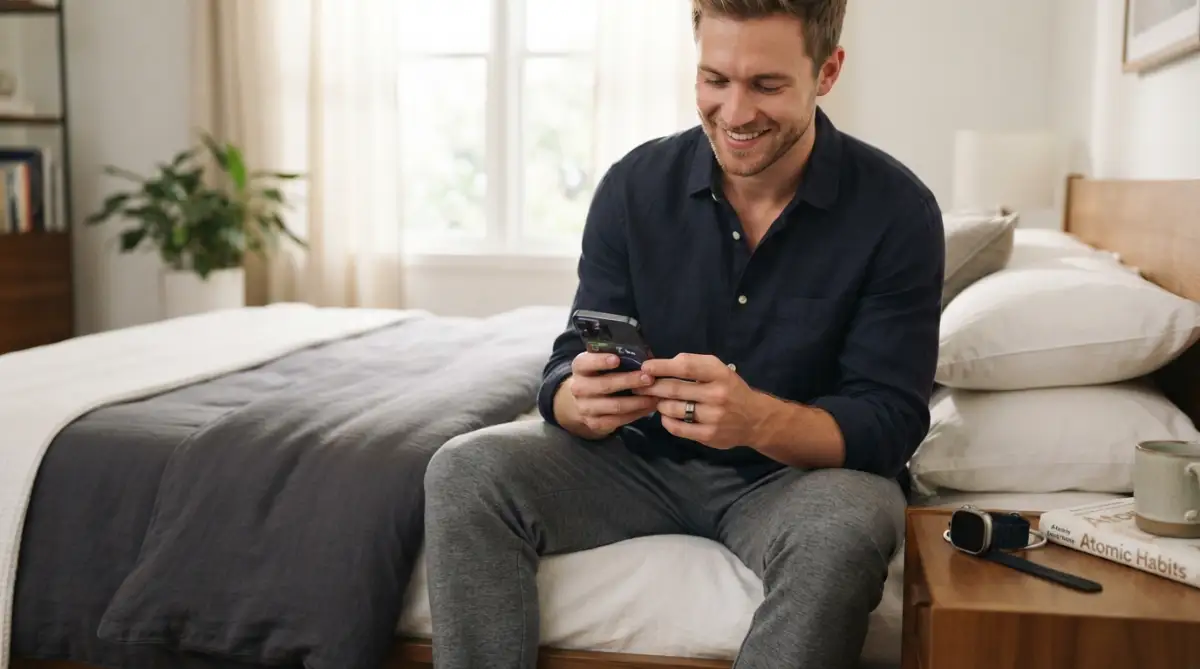 The Dangerous Tracking Traps We All Fall Into
Even with the absolute best hardware perfectly positioned on your body, human psychology often gets in the way of a good night's rest. We live in a world obsessed with data, scores, and instant feedback. This obsession can easily turn a helpful health tool into a major source of midnight anxiety.
Many people start tracking their rest hoping for a magic solution to their constant exhaustion. They buy the most expensive gear available and completely forget that technology only measures the problem, it does not cure it. Relying entirely on a gadget while ignoring your actual lifestyle choices is a massive mistake.
Let us break down the most harmful habits people develop when they start monitoring their nights. Avoiding these common pitfalls will save your mental peace and ensure your technology actually works for you, not against you.
The Nightmare of Orthosomnia
There is a growing psychological condition known as orthosomnia, which is the unhealthy obsession with achieving perfect sleep scores. People become so focused on getting a "100%" in their tracking app that the pressure actually keeps them awake. They lie in bed incredibly stiff, terrified that moving a muscle will ruin their deep sleep graph.
If you wake up feeling completely refreshed, but your app says you had a terrible night, you should always trust your body first. Allowing a digital score to convince you that you are exhausted completely ruins your natural morning energy. The data should simply act as a gentle guide, not a strict medical diagnosis of your daily worth.
I used to check my app the very second I opened my eyes, and a bad score would instantly put me in a terrible mood. Now, I wait until I have finished my morning coffee before I even glance at my health numbers. This creates a healthy emotional distance between how I physically feel and what the algorithm says.
Ignoring Basic Bedroom Hygiene
You can wear the most advanced biometric sensor in the world, but it will not help you if your bedroom environment is terrible. People often buy tracking gear hoping it will magically cure their insomnia without making any real lifestyle changes. They still drink heavy caffeine late in the afternoon and scroll through bright social media feeds right up until their head hits the pillow.
Your wearable device is just a mirror reflecting your daily habits back at you. If you really want those graphs to look better, you have to put serious effort into maintaining proper sleep hygiene every single night. Keeping your room dark, cool, and completely quiet is far more effective than any piece of technology.
A major factor ruining our rest is the intense blue light coming from our phone screens late at night. This harsh light tricks your brain into thinking the sun is still shining, completely stopping your natural melatonin production. Learning exactly how your screen settings are quietly hurting you is a massive first step toward getting deeper, more restorative rest.
Wearing the Wrong Tool for the Job
Many folks buy massive, heavy, adventure-style smartwatches because they love the rugged look during the day. Then, they try to wear that exact same bulky block of metal to bed and wonder why their wrist aches in the morning. A device designed to survive mountain climbing is naturally going to be terrible for sleeping on a soft pillow.
This often leads people to wear their watches incredibly loosely at night just to escape the physical discomfort. A loose watch completely loses contact with your skin, resulting in highly inaccurate heart rate readings and broken data graphs. You end up sacrificing both your physical comfort and the actual quality of your tracking data.
If you truly need a heavy watch for daytime GPS navigation, you should seriously consider getting a secondary, minimal device just for the night. You do not need massive screens and loud notifications when you are unconscious. Using specialized fitness trackers for sleep apnea detection or basic recovery monitoring is always a much smarter choice for the bedroom.
Forgetting the Software Side of Things
We focus so much on the physical hardware sitting on our skin that we completely ignore the invisible software running inside it. Manufacturers constantly release hidden updates that dramatically improve how accurately their algorithms interpret your physical movements. If you never connect your device to Wi-Fi to sync these updates, you are missing out on major performance improvements.
An outdated tracker might mistake your restless leg movements for light sleep, completely skewing your weekly recovery score. The engineers behind these products are always finding new ways to make the tiny sensors more efficient and precise. You are practically leaving free upgrades on the table if you ignore those little red notification dots in your app.
Make it a solid weekly habit to open your companion app and check for any necessary system downloads. Taking just five minutes to understand the real importance of firmware updates will ensure your hardware always operates at maximum efficiency.
Focusing Only on Heart Rate, Missing the Bigger Picture
Most beginners only look at their beats per minute when reviewing their morning data, completely ignoring the more advanced metrics. The true magic of modern wearables lies in tracking the tiny variations between your heartbeats. This advanced metric gives you an incredibly clear picture of your nervous system's current stress levels.
When your body is fully relaxed and recovering properly, the time between your heartbeats naturally changes slightly. If your beats are perfectly rigid like a metronome, it usually means your body is fighting off high stress, heavy fatigue, or even a coming illness. Spending some time learning about monitoring your heart rate variability will completely change how you view your daily health.
You should also remember that complex daytime tools like smartwatches with blood pressure and ecg monitor functions are rarely needed while you dream. Keep your nighttime tracking focused purely on recovery metrics like temperature shifts and breathing consistency.
Building Your Perfect Bedtime Action Plan
At the end of the day, monitoring your nighttime recovery should never feel like a stressful, demanding job. The technology you choose should seamlessly blend into your evening routine without causing any physical pain or mental anxiety. By switching away from glowing screens and heavy wristbands, you give your body the physical freedom it desperately craves.
Remember that data is only valuable if it actually motivates you to make healthier daily choices. Use your morning scores to adjust your caffeine intake, fix your room temperature, and build a more relaxing evening wind-down routine. Do not let the numbers bully you; let them gently guide you toward feeling more energetic every single morning.
I finally found my peace when I stopped forcing heavy gadgets into my delicate resting space. You absolutely deserve to wake up feeling completely refreshed, totally unrestricted, and ready to conquer your day with confidence.
Common Questions About Nighttime Wearables
Can I wear a smart ring on any finger?
While you can physically put it on any finger, manufacturers strongly suggest using the index or middle finger. These fingers provide the flattest surface and best blood flow for the optical sensors. Wearing it on your pinky or thumb often results in highly inaccurate tracking data.
Do smart rings emit radiation while sleeping?
Almost all modern health rings use standard, low-energy Bluetooth to send data to your smartphone. The energy emitted is incredibly tiny and heavily regulated for safe continuous wear against human skin. If you are still concerned, many high-end devices offer an "airplane mode" that completely shuts off all signals while you rest.
Will a smart ring track my afternoon naps?
Yes, most premium models have automatic sleep detection that kicks in when your body fully relaxes. They monitor your heart rate dropping and your movements slowing down to log those quick afternoon recovery sessions. You rarely have to press any buttons; the device handles all the tracking quietly in the background.
Are smart rings safe for people with sensitive skin?
They are generally an excellent choice for sensitive skin because they do not use thick silicone or rubber straps that trap sweat. High-quality devices are usually made from completely smooth, hypoallergenic titanium or medical-grade resin. Just remember to dry your hands thoroughly after washing to prevent moisture from getting trapped under the band.
How tight should a smart ring fit for accurate data?
The fit should feel naturally snug but never painfully tight or restrictive on your skin. You should be able to spin it around your finger with just a little bit of effort. If it easily slides off when you shake your hand, it is definitely too loose to capture a solid heart rate signal.
Disclaimer: The information provided in this article is for educational and informational purposes only and does not constitute medical advice. Always consult with a qualified healthcare professional before making any major changes to your health routines or if you have concerns regarding sleep disorders and physical wellbeing.