Why My Hard Work at the Gym Was Getting Me Nowhere
"I spent months killing myself at the gym and eating like a bird, but the scale wouldn’t budge. My belly felt soft, my face looked swollen, and I was tired all the time. It made no sense until I realized my body wasn't lazy—it was terrified. I was stuck in a high-stress loop that turned my workouts into weight-gain sessions. Here is how I finally flipped the switch."
I felt exhausted but couldn't sleep at night, and I had this constant, low-level anxiety that wouldn't go away. It wasn't until I sat down with a specialist that I learned the truth. My body was stuck in "survival mode" because my cortisol was through the roof.
I wasn't lazy, and I wasn't cheating on my diet. My hormones were simply working against me, making it impossible to lose a single pound. If you feel like you are fighting a losing battle with your body, I want you to know that I have been exactly where you are right now.
We find ourselves snapping at our loved ones for no reason because our nerves are fried. The worst part is the mirror. You look at yourself and wonder why your stomach is getting bigger even though you are barely eating.
This leads to a dark cycle of shame and more stress. You think you need to work harder, so you skip more meals or run more miles. In reality, that extra pressure is only making the problem worse.
It feels like your own body has betrayed you, and that is a lonely, scary place to be. You want to feel light and energetic again, but you don't know where the exit is.
"Cheat Sheet: How to Stop Stress-Related Weight Gain
- Stop the HIIT: If you’re burnt out, heavy workouts keep you fat. Switch to walking.
- Eat Sooner: Don't wait 4 hours for your first meal; it spikes stress hormones.
- Limit Liquid Stress: Coffee is fine, but never have it as your first drink of the day.
- The 2-Minute Rule: Two minutes of deep breathing before bed can lower cortisol by up to 20%."
The Science of Why Stress Makes You Hold Onto Fat
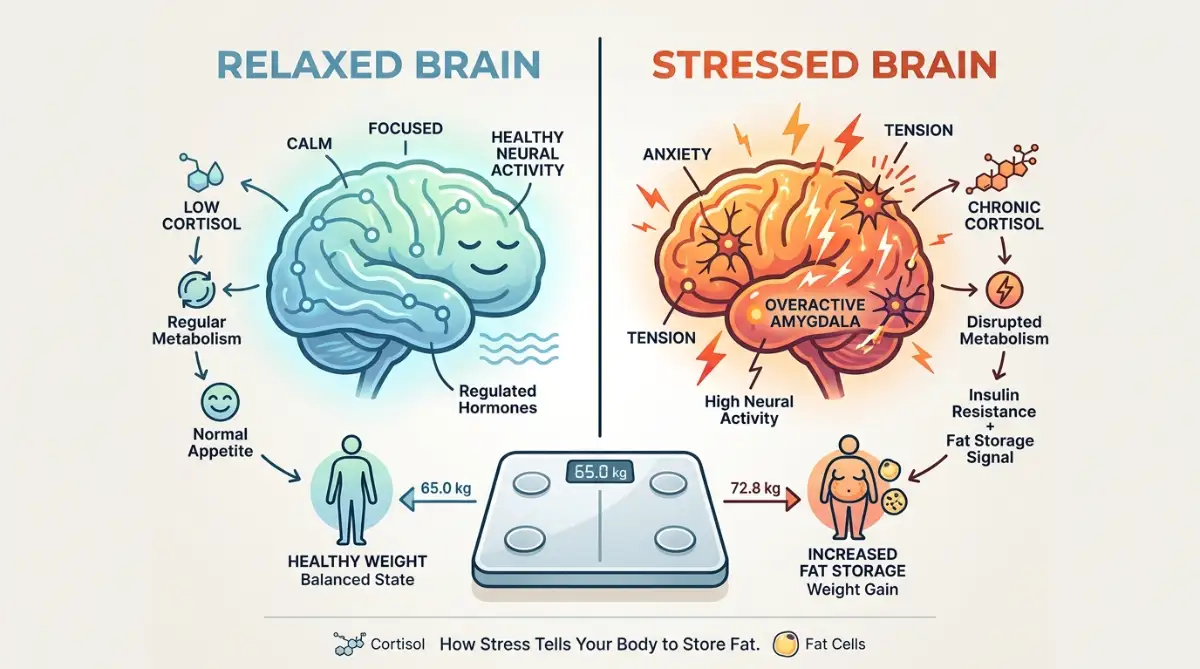
To understand why this is happening, we need to look at what cortisol actually does. Think of it as your body's built-in alarm system. Long ago, it helped us run away from dangerous animals.
When you sense danger, your brain sends a signal to your adrenal glands to pump out this hormone. It gives you a quick burst of energy and shuts down "non-essential" things like digestion.
The problem is that our modern lives are full of "fake" tigers. A mean email from your boss or a traffic jam triggers the same alarm. Because we are stressed all day, that alarm never turns off.
When your cortisol stays high for weeks or months, your body thinks there is a long-term famine coming. It starts grabbing every calorie you eat and storing it as deep belly fat.
This fat is special because it has more receptors for cortisol than fat in other parts of your body. This is why you might have thin arms and legs but a stubborn "pooch" that won't leave.
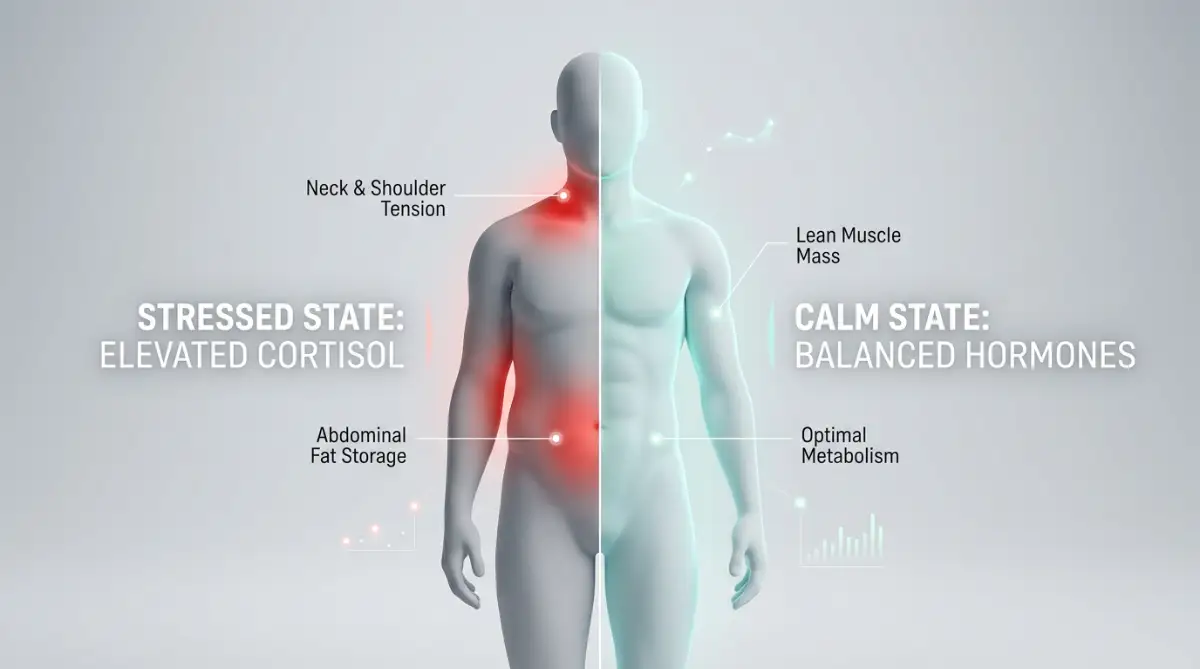
It also makes your blood sugar spike and crash. This leads to those intense cravings for cookies or bread at 3:00 PM. You aren't weak-willed; your brain is literally screaming for quick energy to handle the "threat."
How Your "Healthy" Habits Might Be Making Things Worse
This is the part that shocked me the most. I used to think that the harder I pushed myself, the faster I would see results. I was wrong.
If your cortisol is already high, doing high-intensity interval training (HIIT) can be like pouring gasoline on a fire. Your body sees that intense workout as another huge stressor.
Instead of burning fat, your body goes into a defensive shell. It holds onto water and slows down your metabolism to protect you. This is why some people gain weight when they start a hardcore boot camp.
"To help you see why your current plan might be failing, look at this quick breakdown:
The same thing happens with extreme dieting. If you cut your calories too low, your body panics. It thinks you are starving, so it raises cortisol even higher to keep you alive.
Pro Tip: I found out that my late-night gym sessions were actually the reason I couldn't lose weight. By working out hard at 9 PM, I was spiking my cortisol right when it should have been dropping. Once I switched to gentle walks and morning light, my body finally started to relax and let go of the fat.
Simple Changes to Lower Your Internal Alarm
The good news is that you can fix this without a fancy pill or a complicated plan. It starts with teaching your nervous system that it is safe.
One of the most powerful ways to do this is through your breath. When you take deep, slow breaths into your belly, you send a direct signal to your brain to turn off the alarm.
Try doing this for just two minutes before you eat. It helps your body move into "rest and digest" mode. This means you will actually use your food for energy instead of storing it as fat.
Another big factor is your morning routine. Most of us grab our phones the second we wake up. Checking emails or social media immediately spikes your stress levels for the rest of the day.
Instead, try to get five minutes of natural sunlight in your eyes. This helps set your internal clock and tells your body when to produce cortisol and when to produce sleep hormones later.
Watch this helpful breakdown to see how these hormones really work in your daily life.
The Hidden Power of Quality Sleep
You cannot out-diet or out-train a lack of sleep. When you don't sleep enough, your cortisol levels stay high the next day.
This makes you hungrier and less likely to make good choices. I noticed that if I only got five hours of sleep, I would eat almost 500 extra calories the next day without even realizing it.
Your body does its best healing and fat-burning while you are in deep sleep. If you are waking up at 3 AM with a racing mind, that is a classic sign of a cortisol spike.
To fix this, try to stop looking at screens an hour before bed. The blue light from your phone tells your brain that it is daytime, which keeps cortisol high.
Try reading a physical book or taking a warm bath instead. These small habits tell your body that the "threat" is gone and it is safe to rest.
Food Choices That Calm Your System
What you eat matters, but how you eat matters just as much. Eating while you are stressed or on the go is a recipe for weight gain.
Focus on eating whole foods that keep your blood sugar stable. Big spikes in blood sugar cause big spikes in cortisol.
Think about adding healthy fats like avocado or nuts to your meals. These help slow down the absorption of sugar and keep you feeling full and calm.
I also found that cutting back on caffeine made a huge difference. I used to drink five cups of coffee a day to stay awake.
But caffeine mimics the stress response in your body. It keeps your adrenal glands pumping out cortisol all day long. Now, I stick to one cup in the morning and feel much more balanced.
Moving Your Body Without Adding Stress
Exercise is good, but you have to choose the right kind for your current state. If you are feeling burned out, a long walk in nature is much better than a heavy lifting session.
Walking lowers cortisol and helps clear your head. It is a "low-impact" way to tell your body that it is okay to burn fat.
Yoga and stretching are also amazing tools. They help get you out of your head and back into your body.
I started doing ten minutes of gentle stretching every evening. Not only did I sleep better, but I also noticed my digestion improved almost immediately.
Consistency is much more important than intensity when you are dealing with hormonal imbalances. You want to give your body a steady stream of "safety signals" rather than one big shock to the system.
Breaking the Cycle of Perfectionism
Many people who struggle with high cortisol are "overachievers." We want to do everything perfectly, and we beat ourselves up when we don't.
This mental pressure is a major source of chronic stress. Learning to say "no" to extra tasks at work or home is a health habit.
Protecting your time and your energy is just as important as eating your vegetables. If you are constantly running on empty, your body will stay in a stressed state.
I had to learn that it was okay to leave the dishes in the sink and go to bed early. Taking care of yourself is not selfish; it is a requirement for a healthy metabolism.
When you lower the pressure you put on yourself, your cortisol will naturally start to drop. This is when the "stubborn" weight finally starts to melt away.
Why Patience is Your Best Friend
Hormones do not change overnight. It took a long time for your body to get this stressed, and it will take some time to find balance again.
Don't get discouraged if the scale doesn't move in the first week. Focus on how you feel instead.
Are you sleeping better? Do you have more energy in the afternoon? Is your mood more stable?
These are all signs that your cortisol is balancing out. Once your internal environment is healthy, the weight loss will happen as a natural side effect.
Trust the process and keep giving your body those signals of safety and care. You are doing a great job, and you deserve to feel good in your own skin.
Dealing with Mindset and Emotional Weight
Sometimes the weight we carry isn't just physical. It is the emotional stress of trying to keep up with everyone else.
Social media can make us feel like we are falling behind. This "comparison trap" is a sneaky way to keep your stress levels high.
I decided to unfollow accounts that made me feel bad about my body. Instead, I started following people who focused on holistic health and self-kindness.
Your thoughts have a direct impact on your biology. If you are constantly telling yourself that you are "fat" or "lazy," your brain treats those thoughts as threats.
Start talking to yourself like you would talk to a best friend. Encourage yourself and celebrate the small wins, like drinking enough water or taking a deep breath during a busy day.
This change in mindset is one of the most effective ways to lower your chronic stress for the long haul. It creates a foundation of peace that your body can finally thrive in.
Moving Beyond the Basics: Expert Secrets to Healing Your Hormones
Now that we understand how stress locks fat onto your body, it is time to look at some advanced ways to flip the switch. These are the things I wish someone had told me years ago. It is not just about eating less; it is about sending the right messages to your brain.
One of the best secrets I discovered is the power of magnesium. When you are stressed, your body uses up magnesium very quickly. This is often called the "stress mineral" because it helps your muscles and your mind relax.
If you are low on magnesium, your cortisol stays high, and you feel "tired but wired." I started taking a high-quality supplement and eating more pumpkin seeds and spinach. Within two weeks, my sleep improved and that tight feeling in my chest started to fade.
Another big game-changer is nutrient timing. Many people skip breakfast to save calories, but this can backfire. When you wake up, your cortisol is naturally at its highest point.
If you don't eat something, your body thinks you are in a famine and keeps those stress levels high. I found that eating a protein-rich breakfast within an hour of waking up helped calm my system. It told my body that food was available and it didn't need to stay in "survival mode."
"My '30-30-30' Rule for Stress:
If you want to stop a cortisol spike in its tracks, try this: Within 30 minutes of waking up, eat 30 grams of protein, and follow it with 30 seconds of deep belly breathing. This tells your brain that you aren't in a famine and it’s safe to start burning fat for energy."
You should also look into adaptogenic herbs. These are special plants that help your body "adapt" to stress. Things like Ashwagandha have been used for a long time to balance the functions of cortisol in the body.
I started using these herbs in my morning tea, and I noticed I didn't get as overwhelmed by small problems at work. It felt like I had a "buffer" between me and the world.
Another secret that most people miss is stimulating your vagus nerve for immediate stress relief. This nerve is like a highway that connects your brain to your gut. When you activate it, you turn off the "fight or flight" response instantly.
I do this by simply splashing cold water on my face or humming a favorite tune for a minute. It sounds too simple to work, but the science behind it is very strong. It forces your body to move into a state of calm.

I make sure to take three "micro-breaks" during my workday. Even if it is just standing up and looking out the window for sixty seconds, it breaks the cycle of stress. You have to be protective of your peace if you want your metabolism to work correctly.

The Hidden Traps That Keep You Stuck in Stress Mode
Even with the best intentions, it is very easy to fall into habits that keep your cortisol high. One of the biggest mistakes I see is the "all or nothing" mindset. You think that if you can't go to the gym for an hour, there is no point in going at all.
This mindset creates a lot of internal pressure and guilt. Guilt is a form of stress, and your body reacts to it by holding onto fat. I had to learn that a ten-minute walk is always better than doing nothing.
Another common pitfall is relying on caffeine to get through the day. I know it feels like you need that third cup of coffee to focus. But caffeine tells your adrenal glands to release more cortisol.
If you are already stressed, you are just adding more fuel to the fire. You might feel a burst of energy, but you are also disrupting your hormonal balance in a way that makes weight loss harder. I switched my afternoon coffee for herbal tea, and my energy levels actually became more stable.
Over-exercising is another trap that catches many people. If you are exhausted and you force yourself to do a hard spin class, you are hurting your progress. Your body sees that workout as a threat, not a benefit.
I have seen people lose more weight by doing less. When they replaced their heavy lifting with gentle swimming or stretching, their bodies finally felt safe enough to let go of the weight. You have to listen to what your body is telling you instead of following a rigid plan.
We also need to talk about the "screen trap." Checking your phone right before bed or as soon as you wake up is a disaster for your hormones. The blue light and the flood of information keep your brain in a state of high alert.
This is one of the habits destroying your immune system because it prevents deep, restorative sleep. I started putting my phone in another room at 9 PM. It was hard at first, but it made a massive difference in how I felt the next day.
Finally, many people ignore the importance of blood sugar. When your blood sugar drops too low because you haven't eaten, your body releases cortisol to bring it back up. This creates a roller coaster of energy and mood swings.
You need to focus on dietary shifts to stabilize blood sugar fast so your body doesn't have to rely on stress hormones for energy. Eating small, balanced meals with protein and healthy fats is the best way to stay level.
Your Path to a Calmer, Leaner Body
Changing your relationship with stress is a journey, not a destination. You don't have to be perfect at this. Even making one or two small changes can start to shift your hormones in the right direction.
I want you to think of your body as a friend you are trying to help. Instead of being angry at your stubborn weight, try to understand that your body is just trying to protect you. It thinks it is doing you a favor by storing that fat for a "rainy day."
When you start providing your body with safety, good sleep, and nourishing food, it will naturally stop holding onto that extra weight. You will notice that your clothes fit better and your mind feels clearer.
It is also important to remember that your metabolism slows down after 30, but stress makes this much worse. By fixing your cortisol, you are giving your metabolism the boost it needs to work like it did when you were younger.
You have the power to change how you feel. Start today by taking one deep breath and letting go of the need to be perfect. Your health and your happiness are worth the effort of slowing down.
I spent years fighting my own body before I realized that I just needed to be kinder to myself. Once I stopped the constant "hustle" and started focusing on peace, the weight I had been struggling with for years finally began to leave. I know you can find that same balance and see the results you have been working so hard for.
Common Questions About Stress and Weight Loss
Can cortisol really cause weight gain even if I eat healthy?
Yes, it absolutely can. High cortisol tells your body to store fat, especially in the abdominal area, regardless of your diet. It also breaks down muscle for quick energy, which lowers your metabolism over time.
How long does it take to lower cortisol levels?
You can start to see changes in your stress response in as little as two weeks with consistent habits. However, it usually takes about three to six months of a balanced lifestyle to fully reset your hormones and see significant weight loss.
Does drinking water help with cortisol?
Staying hydrated is very important because even mild dehydration is a stressor for the body. According to research on sleep and stress, being dehydrated can increase cortisol and make it harder for your body to recover from daily pressures.
Why do I crave sugar when I am stressed?
When cortisol is high, your brain thinks it needs fast energy to deal with a "threat." Sugar provides that quick burst of energy, which is why your body screams for it during stressful times. Balancing your meals can help stop these intense cravings.
Is walking better than running for weight loss if I am stressed?
If your cortisol is already high, walking is often much better. It provides the benefits of movement without spiking your stress hormones further. High-intensity running can sometimes keep your body in a "crisis mode," which stops fat burning.
What is the best time of day to relax?
The most important time to lower your cortisol is in the evening. This allows your body to transition into sleep mode. Using techniques like the relaxation response before bed can significantly improve your hormone levels the next day.
Disclaimer: This article is for informational purposes only and does not constitute medical advice. Always consult with a healthcare professional before making significant changes to your diet, exercise routine, or starting any new supplements."The content is not intended to diagnose, treat, or cure any disease."