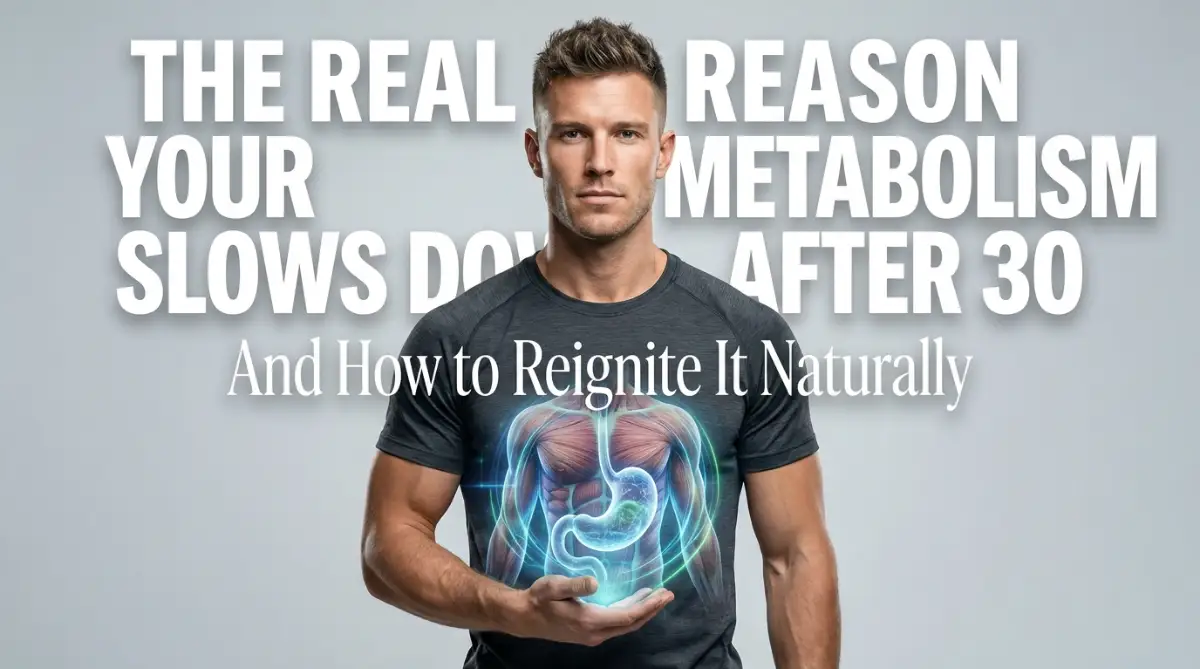
That Morning The Scale Finally Broke My Heart
You eat the exact same meals you ate five years ago, hit your steps, and yet your favorite jeans refuse to zip up. It feels like the day you turned thirty, someone sneaked into your room and switched your metabolism to low-power mode. But your body is not broken, and starving yourself is not the answer. Here is what actually changed under the hood—and how you can flip the switch back on with a few simple moves.
For a long time, I blamed it on my genetics or just bad luck. But the truth hit me hard when I realized my daily habits were completely out of sync with my changing biology. I was eating like a 20-year-old but living in a 30-something-year-old body, and the math simply did not add up.
If you are reading this right now, I know exactly how frustrated you feel. You are probably putting in the same effort you always did, but your body is not responding the way it used to. It feels like overnight, your internal engine just decided to go on strike.
You try to cut your portions, you say no to your favorite desserts, and you even force yourself to do extra cardio. Yet, your clothes keep fitting a little tighter every single month. This constant struggle takes a massive toll on your mental peace.
You wake up feeling tired, you look in the mirror and feel disconnected from the person staring back at you. Social events become stressful because you constantly worry about what to wear or what people might think. You start avoiding photos, and the simple joy of eating a nice dinner with your family turns into a guilt trip.
This invisible weight on your shoulders is exhausting. But I want you to take a deep breath and listen carefully. You are not failing, and your body is not broken.
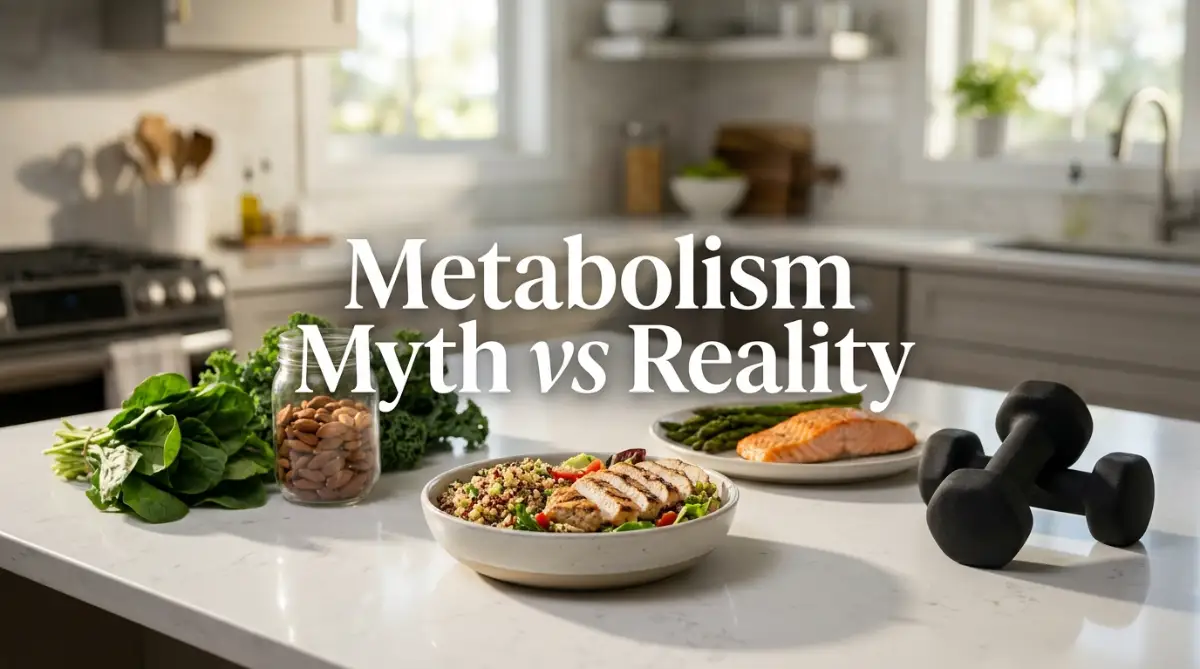
Quick Takeaways: Your Metabolism Reset Playbook
- Muscle Is Your True Engine: You do not lose metabolism with age; you lose unused muscle. Two quick strength sessions a week stop the drop immediately.
- Move More Outside the Gym: Fidgeting, walking, and standing (NEAT) burn more total energy all day long than a single 30-minute cardio jog.
- Eat Protein to Burn Calories: Your body spends nearly 30% of protein calories just chewing and digesting them (the Thermic Effect of Food).
- Stop Starving Yourself: Slashing meals signals starvation, causing your body to consume its own muscle while stockpiling stubborn body fat.
The Hidden Mechanics of Your Changing Body
To actually fix this problem, we need to understand what is happening under the hood. Think of your metabolism like the engine of a car. When you are in your early twenties, you have a massive, gas-guzzling V8 engine. You can throw almost any kind of fuel into it, and it burns right through it without a second thought.
But as we cross that big milestone of 30, our body quietly swaps that V8 engine for a highly efficient, fuel-saving compact engine. It simply does not need as much energy to keep the lights on. This happens for a few very specific, scientifically proven reasons.
The most significant change is the silent loss of muscle mass. Medical professionals call this sarcopenia, but you can just think of it as the great muscle thief. Starting around age 30, your body naturally begins to lose about three to five percent of its muscle mass every single decade if you do not actively maintain it.
Why Muscle Mass Changes Everything
Muscle tissue is incredibly expensive for your body to maintain. It burns calories just by existing, even when you are sitting on the couch watching your favorite show. Fat, on the other hand, is basically a storage unit. It just sits there, requiring almost zero energy.
When you lose that metabolically active muscle, your resting metabolic rate drops significantly. This means the number of calories you burn just breathing, sleeping, and digesting food becomes much lower.
Let me give you a real-life example to make this super clear. Imagine two people who both weigh 150 pounds. Person A has a high amount of lean muscle, while Person B has a higher body fat percentage. If they both sit in a chair and do absolutely nothing for an hour, Person A will burn significantly more calories.
So, when you lose muscle after 30, your calorie-burning furnace gets turned down. If you keep eating the exact same amount of food you always have, those extra calories have nowhere to go but straight into your fat stores.
Quick Reality Check: Is Your Metabolism Actually "Slowing Down"?
The Lifestyle Creep Effect
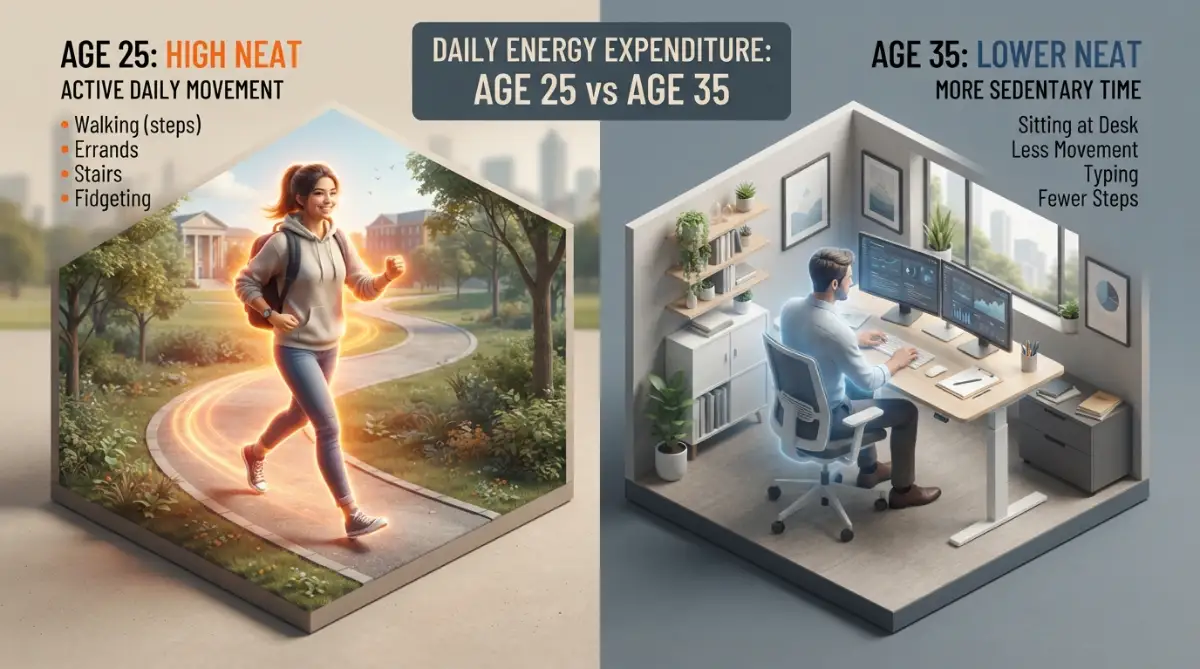
We also need to talk about lifestyle creep. In our twenties, most of us were constantly moving. We were walking across college campuses, staying out late, moving into new apartments, and generally bouncing around all day.
By the time we hit our thirties, our daily routines drastically change. We secure office jobs that require sitting at a desk for eight hours a day. We commute in cars instead of walking, and by the time we get home, we are too exhausted to do anything but sit on the couch.
This drop in daily movement is known as Non-Exercise Activity Thermogenesis, or NEAT. NEAT includes all the calories you burn doing random things like fidgeting, pacing while talking on the phone, or carrying groceries. Believe it or not, NEAT makes up a massive portion of your daily calorie burn.
When your NEAT drops because of a desk-bound lifestyle, your total daily energy expenditure crashes. You might still go to the gym for an hour, but you are completely sedentary for the other 23 hours of the day.
Here is a quick look at the difference:
How to Restart Your Internal Engine
Now that we know exactly why the engine slowed down, we can take highly specific steps to speed it back up. You do not need to starve yourself or spend three hours on a treadmill every single day.
Step 1: Send a Clear Signal to Your Muscles
If losing muscle is the primary reason your metabolism drops, then rebuilding that muscle is the absolute best way to fix it. This is where resistance training becomes your best friend.
You need to send a loud, clear signal to your body that it needs to hold onto its muscle tissue. When you lift weights, use resistance bands, or do bodyweight exercises like push-ups and squats, you create tiny micro-tears in your muscle fibers. Your body then rushes to repair these fibers, making them stronger and larger.
This repair process takes a massive amount of energy. Not only do you burn calories while you are working out, but your metabolism stays elevated for up to 48 hours afterward while your body rebuilds the tissue.
Pro Tip: When I first started trying to fix my metabolism, I wasted months just jogging on a treadmill, and I ended up feeling softer and weaker. The real magic happened for me when I swapped two days of cardio for basic dumbbell strength training at home.
You do not need to become a bodybuilder to see the benefits. Just two or three days a week of challenging your muscles can completely shift your body composition over time.
Step 2: The Thermic Power of What You Eat
You probably know that food gives you calories, but did you know that digesting food actually burns calories? This is called the Thermic Effect of Food (TEF).
Not all foods are created equal when it comes to TEF. Fats and carbohydrates are very easy for your body to break down, meaning they burn very few calories during digestion. Protein, on the other hand, is highly complex.
Your body has to work incredibly hard to break protein down into amino acids. In fact, up to 30 percent of the calories you consume from pure protein are burned off just through the digestion process.
This means if you eat 100 calories of lean chicken breast or eggs, your body might only actually absorb about 70 of those calories. The other 30 are used up just trying to process the meal.
By increasing your daily protein intake, you are literally forcing your metabolism to work harder every time you eat. Plus, protein is the building block your body needs to create that new, metabolically active muscle we just talked about.
Step 3: Prioritize Deep Recovery
We live in a culture that glorifies lack of sleep, but this is the fastest way to ruin your metabolism. When you are constantly exhausted, your body produces high levels of cortisol, the main stress hormone.
High cortisol levels signal your body to store fat, especially around your midsection, as a survival mechanism. It also makes your body highly resistant to insulin, meaning the carbohydrates you eat are more likely to be stored as fat rather than used for immediate energy.
Furthermore, poor sleep completely messes up your hunger hormones. It increases ghrelin, the hormone that makes you feel ravenously hungry, and decreases leptin, the hormone that tells you when you are full.
If you want your body to burn energy efficiently, you must give it time to reset. Aim for seven to eight solid hours of sleep every single night. Make your bedroom as dark and cool as possible, and stop scrolling on your phone an hour before bed.
Step 4: Sneak Movement Into Every Corner of Your Day
Remember when we talked about NEAT earlier? The good news is that you can easily increase your daily movement without putting on gym clothes or sweating profusely.
You just need to become an active person in your daily life. If you work at a desk, set a timer to stand up and stretch every 45 minutes. Take your phone calls while pacing around your living room or office instead of sinking into your chair.
Park your car at the very back of the parking lot when you go to the grocery store. Take the stairs instead of the elevator whenever you have the chance. These small, seemingly insignificant choices add up to hundreds of extra calories burned by the end of the week.
Think of it like saving spare change in a jar. A few coins here and there might not seem like much, but over a few months, you suddenly have a significant amount of money. The exact same principle applies to daily movement and your resting heart rate.
The Myth of "Broken" Metabolism
Before we move forward, we need to address a massive elephant in the room. Many people believe they have severely damaged or permanently broken their metabolism through years of yo-yo dieting.
While it is true that your body can adapt to very low-calorie diets by slowing things down, this is a temporary survival mechanism, not a permanent sentence. Your body is incredibly smart. If you are not giving it enough food, it slows down all non-essential functions to keep you alive.
You might feel cold easily, your hair might lose its shine, and your energy levels will definitely plummet. But the moment you start feeding your body adequate nutrients and rebuilding your muscle, your metabolism will respond.
It is completely possible to have a faster, more efficient metabolism at 35 than you did at 25, provided you change your daily habits. It simply requires a strategic approach rather than blind restriction. You have to feed the engine properly if you want it to run at maximum capacity.
Step 5: Hydration and Your Cellular Engine
We often overlook the most basic element of human life when trying to solve complex body issues. Water is the medium through which all cellular activities take place, including the breakdown of stored fat.
When you are even mildly dehydrated, your cellular processes begin to slow down. The liver, which plays a massive role in fat metabolism, cannot function optimally if it is constantly trying to help your kidneys manage a lack of water.
Drinking enough water throughout the day keeps your internal systems running smoothly. Some studies even suggest that drinking cold water can temporarily boost your resting energy expenditure because your body has to work to heat the water to your core temperature.
I highly recommend starting your day with a large glass of water before you even think about coffee. Keep a reusable bottle next to your workspace and aim to empty it at least three or four times before you clock out for the day.
Real-Life Application: Putting It Together
So, how do you actually apply all of this information starting tomorrow morning?
First, look at your breakfast. Are you eating a bagel or a bowl of cereal? Swap that out for a protein-heavy option like eggs or Greek yogurt. This single change will increase your morning TEF and keep your hunger hormones stable until lunch.
Next, find two days in your upcoming week where you can dedicate 30 minutes to lifting weights. You do not need a fancy gym membership. A simple pair of dumbbells at home is more than enough to start sending that muscle-building signal to your body.
Finally, track your daily steps. Most modern smartphones have a built-in health tracker that counts your steps automatically. Check your daily average. If you are currently hitting 3,000 steps a day, make it your goal to reach 5,000 next week. Once that becomes easy, push for 7,000.
You are entirely capable of turning this around. Your thirties should be a time where you feel strong, capable, and full of life, not tired and constantly battling your own body. By taking control of your muscle mass, your protein intake, and your daily movement, you can absolutely reignite that internal fire.Mastering the Hidden Chemistry of Your Changing Body
Once you understand the basic mechanics of muscle loss and daily movement, you are ready to look slightly deeper into how your internal chemistry works. Diet and exercise are powerful tools, but they are only half of the complete picture.
To truly reignite your internal furnace, you must learn to manipulate your body's hidden chemical signals. Think of this like tuning a beautiful musical instrument. You can hit the right keys, but if the strings are out of tune, the music will still sound terrible.
Let us look at a few advanced strategies that health experts use to keep their energy high, long after their twenties have passed. These are the small daily adjustments that separate temporary results from permanent life changes.
Aligning Your Meals with Your Circadian Rhythm
Most of us eat whenever we feel like it, regardless of what the sun is doing outside. However, your digestive system operates on a very strict internal clock known as the circadian rhythm.
Imagine your digestive tract as a massive factory. During daylight hours, all the workers are on the floor, the machines are running, and the factory is highly efficient. When the sun goes down, the factory manager sends most of the workers home.
If you eat a massive, heavy meal late at night, you are basically dumping a massive pile of work onto a nearly empty factory floor. Your body struggles to process those calories efficiently. Instead of using that food for immediate energy, it is highly likely to be stored directly as fat while you sleep.
Try to shift your largest meals to the middle of the day when your internal machinery is running at peak capacity. I highly suggest implementing a simple eating window, where you finish your final meal at least three hours before your head hits the pillow.
This simple timing shift gives your body the chance to fully digest your food before you sleep. You will wake up feeling lighter, your morning energy will skyrocket, and your resting heart rate will drop significantly overnight.
The Secret World Inside Your Gut
We rarely think about our stomach unless it is growling for food, but your gut microbiome is essentially the command center for your entire body. Your digestive tract is filled with trillions of bacteria that actively control how many calories you extract from your food.
If you have a poor balance of gut bacteria, your body becomes incredibly efficient at extracting and storing fat from everything you eat. You could be eating a perfectly healthy salad, but bad gut bacteria will squeeze every single calorie out of it and store it away for winter.
On the flip side, a healthy, diverse microbiome acts like a natural filter. It helps process food quickly, pushes waste out efficiently, and even produces natural energy-boosting chemicals.
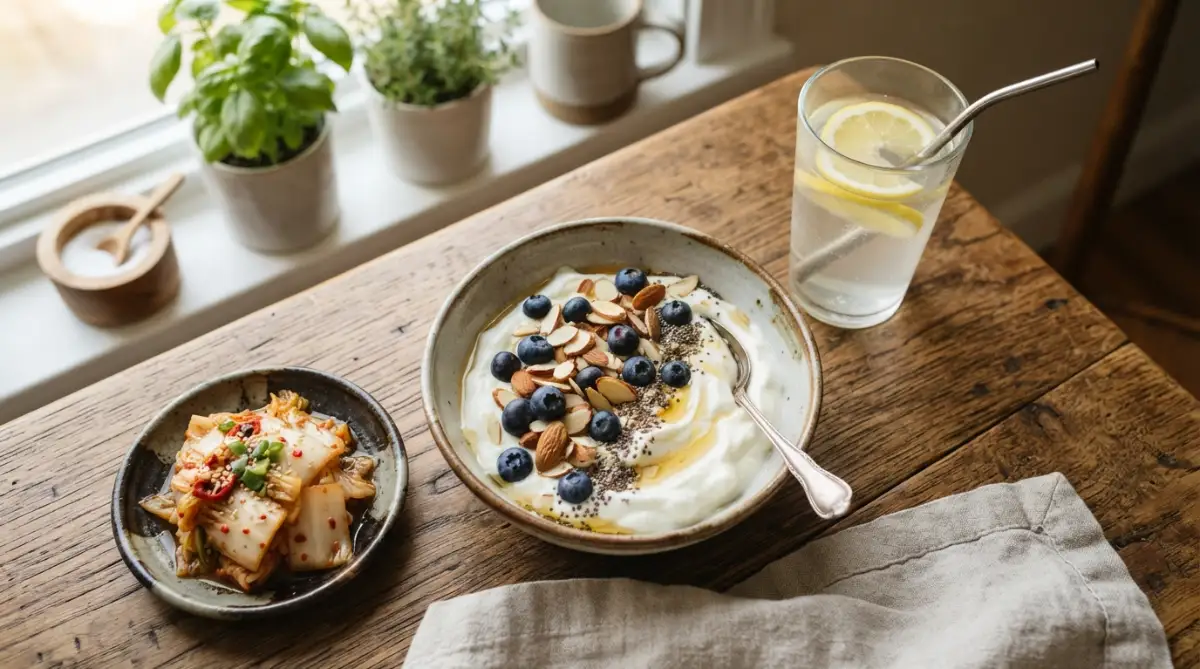
To fix your gut, you need to feed the good bacteria exactly what they love. Start adding fermented foods like real Greek yogurt, kimchi, or sauerkraut to your daily plate. More importantly, you must drastically increase your dietary fiber through fresh vegetables and whole grains.
Think of fiber as the broom that sweeps out the bad bacteria while simultaneously feeding the good guys. When your gut is happy, your entire internal engine runs significantly smoother.
The Silent Threat of Hidden Inflammation
We often talk about stress as a mental issue, but your body experiences it as a physical threat. Chronic, low-grade inflammation is like having a fire alarm constantly ringing in the background of your daily life.
When your body is inflamed, it goes into a highly defensive state. It refuses to burn stored fat because it thinks you are in the middle of a medical emergency. You might be hitting the gym and eating perfectly, but inflammation will bring your progress to an absolute halt.
Many times, this inflammation comes from unexpected sources. You might have food sensitivities you do not know about, or you might be exposed to daily environmental stressors. According to recent clinical endocrinology studies, keeping your cellular inflammation low is heavily tied to maintaining a youthful metabolic rate.
Even simple daily habits can create a cascade of physical stress. If you constantly rely on caffeine to survive the afternoon, or if you are dealing with unexpected daily triggers that are secretly disrupting your hormonal balance, your cortisol levels will stay artificially high.
Take a serious look at your daily routines. Sometimes, simply taking ten minutes to sit quietly and breathe deeply can completely turn off your body's physical stress response. You have to signal to your brain that you are safe before it will allow you to shed any extra weight.
Believe it or not, even your morning hygiene routine plays a part in this process. Chronic gum disease, for example, creates a massive inflammatory response throughout your entire bloodstream. If you are ignoring basic habits, you could be quietly damaging your vital organs and keeping your body in a fat-storing state.
The Dangerous Traps That Will Break Your Internal Clock
When people realize their clothes are fitting a little tighter, they usually panic. This panic leads to extreme, impulsive decisions that actually make the root problem ten times worse.
If you want to protect your internal engine, you must learn to recognize these common pitfalls. Falling into these traps will not just stall your progress; they will actively destroy the healthy muscle and energy you currently have.
Trap 1: The Starvation Illusion
The absolute biggest mistake you can make is slashing your food intake to extreme lows. I have watched close friends try to survive on 1,200 calories a day, relying on nothing but dry toast and plain salads.
Your body is not a simple math equation; it is a highly intelligent survival machine. When you suddenly cut your food intake drastically, your brain thinks a global famine has started. Its immediate response is to hold onto every single ounce of body fat to keep you alive.
Instead of burning fat, your body will actually start eating its own muscle tissue for energy. Remember earlier when we talked about how important muscle is for burning calories? Crash dieting destroys that exact muscle.
When you eventually give up and start eating normally again, your body will have less muscle than before. This means your resting energy burn is now permanently lower, leading to rapid weight gain. This is exactly why the medical consensus on resting metabolic rates consistently warns against extreme, restrictive diets.
My Simple "Metabolic Floor" Rule:
Whenever you want to drop body fat, never drop your food intake below your lean body weight in pounds multiplied by 10. For instance, if you carry 120 pounds of lean mass, eating under 1,200 calories tells your thyroid to dial back energy burn. Give your body enough fuel to repair itself, or it will treat your workouts like an emergency and hold onto every ounce of fat.
Trap 2: The Cardio Marathon Mindset
Another massive trap is thinking you can out-run a slow internal engine. Many people over 30 suddenly decide to run five miles a day to get back in shape. While cardiovascular health is amazing for your heart, excessive cardio without proper nutrition is a recipe for disaster.
Endurance running sends a very specific signal to your body: you need to be light and efficient to survive these long distances. To become lighter, your body will happily shed heavy muscle tissue.
You end up becoming what the fitness industry calls "skinny fat." You might weigh less on the scale, but your body composition is completely soft, and your internal calorie burn is lower than ever.
Instead of spending hours on a treadmill, you should prioritize short, heavy resistance training. This builds the muscle you need to raise your daily calorie burn while also serving as one of the best methods to preserve bone density as you age.
Trap 3: Trading Sleep for Productivity
In our modern culture, we proudly wear our lack of sleep like a badge of honor. We stay up late answering emails or scrolling through social media, then force ourselves out of bed with strong coffee.
This habit is completely destroying your body's ability to regulate energy. When you lack deep sleep, your body becomes highly resistant to insulin. This means the carbohydrates you eat the next day are much more likely to be sent straight to your fat cells instead of being used for energy.
According to major research organizations, deep sleep directly impacts how your body burns fat. Without adequate rest, your body physically cannot repair the muscle tissues you broke down during exercise.
You are essentially digging a hole that gets deeper every single night. Ignoring your rest is one of the most common habits destroying your immune system and shutting down your natural energy production. Make sleep your ultimate priority, and watch how quickly your body responds.
Your New Morning Action Plan
We have covered a massive amount of ground today. You now understand exactly why your body feels different after crossing into your thirties. More importantly, you know exactly how to fight back and regain control of your energy.
You do not need an expensive gym membership, and you definitely do not need to buy any magic supplements. Real, lasting change comes from stacking tiny, positive habits on top of each other every single day.
Here is exactly what you should do starting tomorrow morning:
1. Rehydrate Immediately: Before you drink your morning coffee, drink a large glass of room-temperature water. This wakes up your digestive system and flushes out the overnight toxins.
2. Upgrade Your Breakfast Protein: Look at your morning plate and ask yourself where the protein is coming from. Swap out the heavy carbs for eggs, lean meats, or a high-quality protein shake to kickstart digestion.
3. Move With Purpose: Find small pockets of time to move your body. Park further away at the grocery store. Do ten squats while waiting for your coffee to brew. Never sit for more than an hour without standing up to stretch.
4. Lift Something Heavy: Dedicate just two days a week to challenging your muscles. Use dumbbells, resistance bands, or your own body weight to remind your body that it needs to stay strong.
5. Protect Your Evenings: Create a strict cut-off time for your final meal. Turn off the bright overhead lights in your house an hour before bed, and put your phone in another room so you can actually get deep, restorative rest.
You are entirely capable of feeling just as energetic as you did ten years ago. It just takes a little bit of strategy and a commitment to respecting your changing biology.
I remember the exact moment I decided to stop fighting my body and start working with it instead. My clothes fit better now, my daily energy is incredibly stable, and I finally have peace of mind knowing I am in total control of my health. Take that first small step tomorrow morning, and I promise you will never look back.
Burning Questions About Your Changing Body
Do men and women experience this slowdown at the same time?
While both men and women start losing muscle naturally around age 30, the hormonal shifts look very different. Women often experience more noticeable shifts due to fluctuating estrogen levels, while men typically see a slow, steady decline in natural testosterone. However, the core solution of strength training and high protein applies perfectly to both.
Can drinking green tea actually speed up my engine?
Green tea contains a natural compound called EGCG, which has been shown in some studies to temporarily increase your body's calorie-burning rate. While it is a healthy drink packed with antioxidants, it is not a magic solution on its own. You should view it as a small bonus on top of your proper diet and exercise routine.
Is it too late to rebuild muscle if I am already over 40?
It is absolutely never too late to start building physical strength. In fact, resistance training becomes even more important as you cross into your forties and fifties to protect your joints and bone density. Your body will always respond positively to physical challenges, no matter what your birth certificate says.
Will eating frequent, small meals speed up my digestion?
The idea that eating six small meals a day "stokes the metabolic fire" is largely a fitness myth. Total daily calorie and protein intake matter significantly more than how often you eat. Find an eating schedule that comfortably fits your daily lifestyle without causing you unnecessary stress.
Why do I suddenly feel cold when I try to lose weight?
When you eat less food than your body requires, it tries to conserve energy by slightly lowering your core body temperature. This is a totally natural survival response to a calorie deficit. If you feel freezing all day long, it might be a clear sign that you need to slightly increase your daily food intake.
Medical & Health Disclaimer: The information provided in this blog post is strictly for educational and informational purposes only and does not constitute professional medical advice. Always consult with a qualified healthcare provider or a certified nutritionist before making drastic changes to your diet, starting a new exercise routine, or treating any underlying health conditions. We do not guarantee any specific physical results, and individual experiences may vary."The content is not intended to diagnose, treat, or cure any disease." Visit this....