
The Night I Almost Quit Crypto Because of "Safe" Advice
"Most crypto 'experts' give advice that actually makes you lose money. I followed their 'safe' DCA rules for months, only to see my portfolio shrink while they kept posting screenshots of their gains. If you’re tired of seeing red charts and wondering why your 'disciplined' buying isn't working, you’re in the right place. I’m going to show you why the standard DCA strategy is broken and how I fixed mine to actually see real profits."
Everyone told me that "Dollar-Cost Averaging" or DCA was the ultimate secret to winning in crypto. They said it was the "lazy way" to get rich without stressing over the charts.
I followed that advice blindly, thinking I was being smart and disciplined. But as my portfolio kept shrinking, I realized something was very wrong with the way people talk about this strategy.
I felt lied to, and honestly, I felt like a failure as an investor. My mental peace was gone, and I spent every hour checking prices, wondering when the "average" would finally work in my favor.
Quick Wins: How to Fix Your DCA Plan Today
- Stop Buying Junk: Only use DCA for top-tier assets (BTC/ETH). If the project has no future, "averaging down" is just losing money faster.
- Watch the Fees: If you’re buying small amounts on expensive exchanges, the fees will eat 10-20% of your gains.
- Use the Fear Index: Buy more when everyone else is panicking. That’s how you actually lower your average entry price.
- Have an Exit Plan: You must decide when to sell before the market goes up. Don't wait until the hype takes over.
The Mental Toll of Following Broken Investment Myths
Most people enter the crypto world looking for a way to escape financial stress. They want a simple system that lets them grow their savings without becoming a full-time day trader.
When they hear about DCA, it sounds like a dream come true. You just buy a little bit every week or month, and eventually, you win, right?
But for many, this "simple" strategy turns into a nightmare when the market stays bearish for months or years. You watch your hard-earned money disappear into a "falling knife" because a YouTube guru told you to keep buying.
It is not just about the money; it is about the feeling of being stuck in a loop. You are doing what the "experts" said, yet you are the one losing sleep while they post screenshots of their gains.
Why Your Current DCA Plan Might Be Failing You
To fix your strategy, we need to look at the hard truth behind the numbers. Most people think DCA is just a "set it and forget it" button, but in crypto, that is a dangerous mindset.

Let's break down why the common way of doing things often leads to poor results. This is about logic and how markets actually move when things get messy.
The Myth That DCA Works for Every Single Coin
DCA Reality Check: Bitcoin vs. Altcoins
One of the biggest lies in the crypto space is that you can DCA into any project and come out ahead. This works for blue-chip assets like Bitcoin or Ethereum because they have a history of recovering.
However, if you try to DCA into a random altcoin that has no real utility, you are just throwing money into a sinking ship. I have seen people "average down" on coins that went to zero.

My realization was painful: DCA only works if the asset has the fundamental strength to eventually reach a new all-time high. If you are buying a dying project, you aren't averaging down; you are just losing more money faster.
Pro Tip: I learned the hard way that I should only use DCA for assets I plan to hold for at least three to five years. If I wouldn't trust a coin for that long, I don't touch it with an automated buying plan. This single shift in my mindset saved my portfolio from several "hype" coins that crashed and never came back.
Understanding the Math of Diminishing Returns
Many investors believe that buying more at lower prices will always drastically lower their average entry point. While this is true in the beginning, it changes over time.
After you have made 20 or 30 purchases, adding one more small buy doesn't change your average price very much. This is a mathematical reality that many people ignore.
If you have already spent $10,000, adding another $100 at a lower price barely moves the needle. This means your "safety net" becomes less effective the longer you do it without adjusting your size.
Is DCA Actually "Low Risk" in a Volatile Market?
People call DCA a low-risk strategy, but that is a bit of a simplification. In a market that can drop 90% in a few weeks, buying all the way down is still very risky.
The risk isn't just the price dropping; it is the "opportunity cost" of your capital. While your money is stuck in a losing DCA position, you might miss out on other great opportunities.
We need to stop thinking of DCA as a magic shield. It is a tool for managing "timing risk," but it does nothing to protect you from "asset risk."
A Logical Approach to Buying the Dip
If you want to survive the crypto waves, you have to be more strategic than the average person. You cannot just blindly click "buy" every Monday morning and hope for the best.
Here is how you can start looking at the process through a more scientific lens. We want to use data to guide our hands, not just emotions or "hope."
Setting Hard Rules for Your Assets
Before you start a DCA plan, you must have a strict "whitelist" of coins. This list should be based on real research, not Twitter trends.
Ask yourself if the project has active developers and a clear use case. If the answer is "I don't know," then it doesn't belong in your DCA bucket.
I personally stick to the top two or three coins for my automated buys. This reduces the chance of my "average" becoming a permanent loss.
Adjusting Your Buy Size Based on Market Fear
A better way to DCA is to use "Dynamic DCA." Instead of buying the same amount every time, you buy more when the market is in "Extreme Fear."
There are tools like the Fear and Greed Index that can help you see when people are panicking. Buying more when others are scared is a proven way to lower your average price more effectively.
My Personal "Fear-to-Buy" Scale
I don’t just buy the same amount every week. I look at the market mood first:
- Extreme Greed: I cut my buy amount by 50% or stop entirely.
- Neutral: I stick to my regular $100/week plan.
- Fear: I increase my buy to $150.
- Extreme Fear: This is when I go big and buy $250+ because that’s where the real profit is hidden.
When everyone is greedy and the price is at an all-time high, you might even want to reduce your DCA amount. This keeps you from over-investing at the very top of the cycle.
Watch this video to see how professional investors adjust their buy orders during a market crash:
The Truth About "Time in the Market"
You have probably heard the phrase "Time in the market beats timing the market." This is the foundation of the DCA philosophy.
While it is mostly true, it assumes the market will always go up eventually. In crypto, this isn't a guarantee for 99% of the coins out there.
You need to combine "Time in the market" with "Quality of the asset." Without quality, time just means you are holding a bag of worthless digital dust for a long period.
Avoiding the "Sunk Cost" Trap
A major psychological problem with DCA is the "Sunk Cost Fallacy." This happens when you keep putting money into a bad investment because you have already put so much in.
You feel like if you stop now, all your previous buys were a waste. This leads to people "DCA-ing" all the way to the bottom of a project that is never coming back.
I had to learn to say "No" to my own ego. Just because I bought a coin at $10 and $5 doesn't mean I must buy it at $1.
Sometimes, the smartest move is to stop the DCA and move that capital into a stronger asset. It is better to have a fresh start in a winning project than to be the captain of a sinking ship.
Building a Buffer for Your Strategy
One thing I never did in the beginning was keep a cash reserve. I spent every cent of my "investing budget" as soon as I got it.
Now, I keep a portion of my funds in a stablecoin or a savings account. This "dry powder" allows me to make extra buys if there is a massive, unexpected crash.
Why Small Wins Matter More Than Big Hits
We all want that 100x gain that changes our lives overnight. But the reality of DCA is that it is designed for steady, boring growth.
If you are looking for a "lottery ticket," DCA is the wrong strategy for you. This tool is for people who want to build wealth over years, not weeks.
Accepting that "boring is good" was a huge turning point for me. Once I stopped looking for "moons" and started looking for "averages," my stress levels dropped instantly.
The Role of Discipline Over Emotion
The biggest enemy of any investor is their own brain. We are wired to feel pain when we see red and excitement when we see green.
DCA is supposed to take the emotion out of the equation. By automating your buys, you don't have to "decide" to buy when the news is scary.
But this only works if you actually stick to the plan when things get tough. I have seen so many people start a DCA plan, only to cancel it the moment a real crash happens.
That is the exact moment when the strategy is supposed to be working its magic! If you stop buying during the crash, you lose the entire benefit of the "averaging" process.
Using Technology to Your Advantage
You don't have to manually buy your crypto every week. Almost every major exchange has a "Recurring Buy" feature.
I highly recommend using this because it removes the temptation to "wait for a slightly better price." Whenever I tried to time my "weekly buy" manually, I usually ended up missing the best price anyway.
Let the machines do the work for you. Set the schedule, check the fundamentals once a month, and go live your life.
The Importance of a "Take Profit" Plan
Wait, isn't DCA about buying? Yes, but a complete strategy also needs an exit plan.
Many people DCA "in" for years but never have a plan to DCA "out." They watch their portfolio go up 500% and then all the way back down to zero.
Debunking the DCA myth means realizing it isn't just a buying strategy. You can also "Dollar-Cost Average" your way out of a position to lock in gains.
I started selling small 5% chunks of my portfolio whenever the market hit a new milestone. This way, I always have some profit in my pocket, regardless of what the market does next.
Final Thoughts on the First Steps of Smart DCA
We have covered the pain of following bad advice and the reality of how the math actually works. You now know that DCA isn't a magic wand, but a calculated tool.
It requires the right asset, the right timing (or lack thereof), and a very strong stomach. Most importantly, it requires you to be honest with yourself about why you are investing.
In the next part of this guide, we will look at more advanced ways to optimize your entries. We will also talk about the specific mistakes that even "pros" make when the market gets crazy.
For now, take a look at your current holdings. Are you buying because the project is good, or just because you are afraid to stop?
Your future self will thank you for being brave enough to ask that question today. Smart investing is 10% math and 90% character.
Stay disciplined, keep your head clear, and remember that the market is a tool for transferring money from the impatient to the patient. You have the power to be on the winning side of that equation.Turning Simple Habits Into a Professional Wealth System
Now that we understand the basics, I want to show you how to take your strategy to the next level. Buying at the same time every week is a good start, but it is not the only way to play this game.
If you want to grow your wallet faster, you have to be a bit more flexible with your plan. I call this the "Smart Buyer’s Edge" because it uses the market’s mood to your advantage.
Instead of being a robot that buys regardless of the price, I started looking at a simple rule. When the market feels like it is falling apart, I double my buy amount.
When the market is hitting the news and everyone is excited, I cut my buy amount in half. This is often called "Value Averaging," and it helps you get more coins for the same total investment.
By doing this, you are naturally saving your crypto portfolio by not overpaying during the hype. It sounds simple, but most people are too scared to buy more when the price is low.
I had to train my brain to see a red chart as a "sale" at a grocery store. If your favorite shoes are 50% off, you buy them; you don't run away in fear.
Another secret I use is checking the "Relative Strength Index" or RSI. You don't need to be a math genius to use this tool on a chart.
If the RSI is very low, it means the asset is "oversold," which is usually the best time to let your DCA plan run. If it is very high, the asset might be "overbought," and it might be time to wait a few days.
This little bit of extra effort can lower your average entry price significantly over a few months. It turns you from a passive observer into a strategic participant in the market.
Remember, the goal is to build a system that works while you sleep. But even a system needs a tune-up every now and then to stay efficient.

The Invisible Traps That Drain Your Savings
Even with a great plan, I see many people fall into deep holes that are hard to climb out of. These aren't just market mistakes; they are mental traps that catch even the smartest investors.
One of the biggest mistakes is "DCA-ing into a Dead Project." Just because a price is lower doesn't mean it is a bargain.
I once kept buying a coin because it dropped from $2 to $0.50. I thought I was getting a steal, but the project had no developers left and no real future.
Before you commit your hard-earned cash, you must spend time reading cryptocurrency whitepapers to see if the project is actually alive. If you don't do this, you might be throwing money into a black hole.
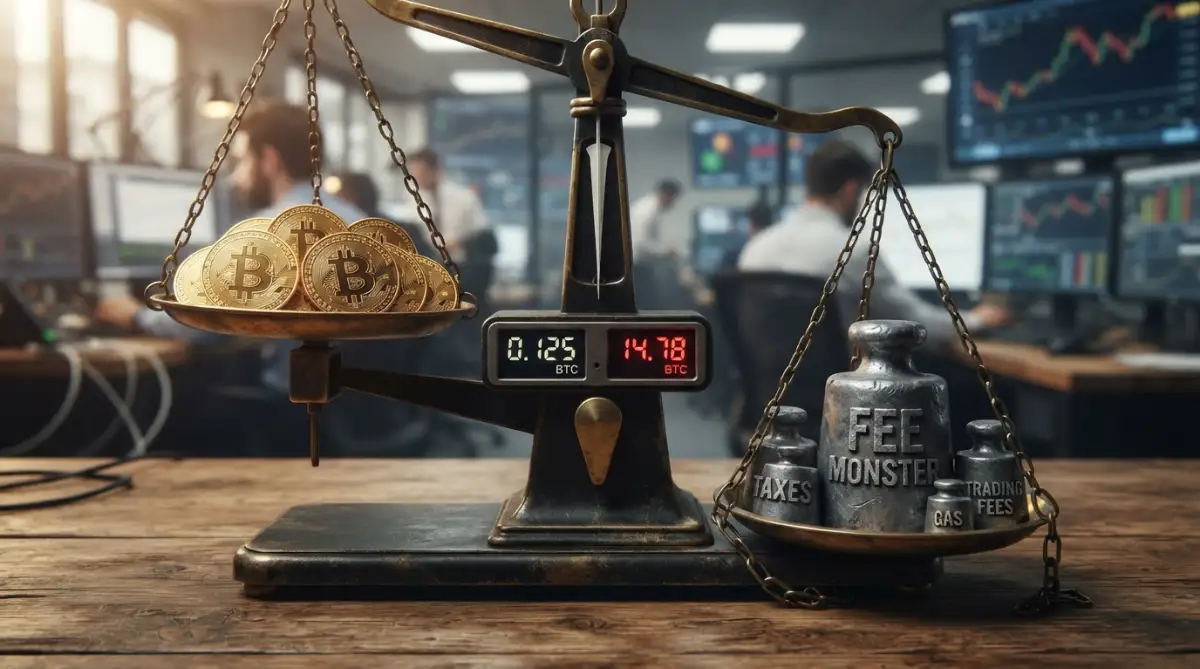
Another trap is ignoring the "Fee Monster." If you are buying $10 worth of crypto and paying $2 in fees every time, you are losing 20% of your money instantly.
Over a year, those fees will eat your profits alive and leave you with much less than you expected. I suggest making larger buys less often if the fees on your platform are too high.
There is also the "Emotional Stop" trap. This happens when the market crashes 30% and you get so scared that you turn off your automated buys.
By stopping your plan at the bottom, you lose the chance to lower your average price when it matters most. You end up only buying when the price is high and skipping the "sale" prices.
This behavior is why many people say DCA doesn't work for them. They only follow the plan when they feel good, but the plan is designed to work when things feel bad.
You also need to watch out for hidden traps in your wallet that can lead to losing your assets entirely. No matter how good your buying strategy is, it won't matter if your security is weak.
I have seen friends lose their entire DCA stacks because they clicked a bad link or shared their private keys. Be as careful with your security as you are with your investment strategy.
Staying Strong When the Market Tests Your Patience
The path to financial freedom is never a straight line, especially in the world of digital assets. You will have weeks where you feel like a genius and months where you feel like a fool.
The trick is to look at the big picture instead of the daily noise. I stopped looking at my portfolio value every day because it only caused me stress.
According to research by the Cambridge Center for Alternative Finance, the crypto market moves in cycles that can last several years. If you don't have the patience to sit through the boring parts, you won't be there for the exciting parts.
Think of your DCA plan like planting a tree. You don't dig it up every morning to see if the roots are growing; you just water it and let it be.
Most people fail because they want the fruit before the tree has even grown a single leaf. They get frustrated and quit right before the market starts to recover.
I survived the worst crashes by reminding myself why I started in the first place. I wasn't trying to make a quick buck for a weekend trip; I was building a future for my family.
When you have a deep "why," the "how" becomes much easier to handle. You stop caring about the 10% drops because you are focused on the 500% potential over the long term.
You should also keep an eye on how the bigger economy works. Understanding things like inflation and interest rates can help you stay calm when the whole world is panicking.
The SEC Investor Education portal offers great insights into how traditional investors use these same tools. It shows that these methods have worked for decades, not just in crypto, but in every market.
By learning from the past, you can avoid the emotional roller coaster that destroys most new investors. Knowledge truly is the best shield against market volatility.
Smart Answers to Your Pressing Questions
I know you probably have a few specific questions floating around in your head. Let's tackle some of the most common things people ask me about this strategy.
Is DCA better than just buying a large amount at once?
For most people, yes, it is much better because it lowers your stress. Unless you have a crystal ball to find the exact bottom of the market, buying in chunks is safer. It prevents you from putting all your money in at the very top of a bubble.
What should I do if the price keeps falling for months?
If you still believe in the project, this is actually the best time to keep buying. This is where the real wealth is made, by accumulating more when the price is low. However, make sure you double-check the news to ensure the project hasn't failed fundamentally.
Can I start a DCA plan with a very small amount of money?
Absolutely, you can start with as little as $5 or $10 a week on many platforms. The habit of saving and investing is more important than the actual dollar amount when you are starting. Over time, these small amounts grow into a significant sum thanks to the power of compounding.
When is the right time to stop buying and start selling?
You should have a goal in mind, like a specific price target or a total portfolio value. Once you reach that goal, you can use a "Reverse DCA" to sell small amounts slowly. This helps you lock in profits without the fear of selling everything too early or too late.
Your Path to a Brighter Financial Future?
Managing your money in the crypto world doesn't have to be a source of constant worry. By using a smart buying plan and avoiding the common traps, you are already ahead of most people.
The most important thing I can tell you is to stay consistent. The market will try to scare you, tempt you, and bore you into giving up.
If you can stay the course, you will see that the volatility is actually your friend, not your enemy. It is the very thing that allows you to buy assets at a discount and grow your wealth.
I believe that anyone can succeed in this space if they keep a cool head and follow a simple, logical plan. I have seen it work for myself, and I have seen it work for countless others who refused to quit.
Start small if you have to, but start today. Every day you wait is a day of growth you are missing out on.
I am so excited for you to start this journey and see what you can achieve. Just remember to be patient with yourself and the process, and the results will eventually follow.
Take that first step now, even if it feels small. You have the tools, you have the knowledge, and now you have the plan to make it happen.
Disclaimer: This content is for educational and informational purposes only and does not constitute financial, investment, or legal advice. Cryptocurrency markets are highly volatile and involve significant risk. Always perform your own research and consult with a professional financial advisor before making any investment decisions. I am not responsible for any financial losses you may experience.