My Heart Sunk When I Saw My Wallet Balance Was Zero
I lost every single cent in my crypto wallet in less than three minutes. It wasn't a complex hack or a giant market crash—it was a tiny mistake that most people make every day. If you think a strong password is enough to keep your money safe, you're already in danger. I’m sharing my story and these specific steps because I don’t want you to wake up to a $0 balance like I did.
Everything I had worked for over the last six months was gone in a flash. I felt sick to my stomach, and my hands wouldn't stop shaking. I had made a tiny, silly mistake that I thought didn't matter.
That mistake cost me my entire savings and weeks of sleep. I spent nights staring at the ceiling, wondering how I could be so careless. It wasn't just about the money; it was the feeling of being violated and helpless.
I don't want you to ever feel that sinking feeling in your gut. Many people think they are safe because they have a "strong password." But in the world of digital assets, things work very differently than a traditional bank.
If you lose your coins, there is no manager to call and no "forgot password" button to save you. You are your own bank, and that responsibility can be heavy if you aren't prepared. Most new investors fall into the same traps because they just don't know the rules of the game yet.
Let’s talk about these traps so you can keep your hard-earned money where it belongs—with you. We need to look at the reality of how hackers think and how our own habits can sometimes be our worst enemies.
🛡️ Your 30-Second Security Checklist
Before you read any further, make sure you aren't breaking these three golden rules:
- Never screenshot your seed phrase. If it's digital, it's hackable.
- Ditch SMS codes. Switch your 2FA to an app like Google Authenticator today.
- Test before you send. Always send a tiny
1−
1−
- 2 test transaction before moving your life savings.
The Secret Keys That Most People Handle Wrongly
One of the biggest things new people get wrong is how they handle their seed phrase. Think of your seed phrase as the master key to your entire vault. If someone gets these 12 or 24 words, they own your money instantly.
I once met a guy who took a screenshot of his seed phrase and saved it in his Google Photos. He thought it was safe because his phone had a lock. But when his email got hacked, the thief found that photo in seconds and drained his wallet.
Never, ever store your secret words on anything connected to the internet. This includes your email, "notes" apps, or even a photo on your phone. The safest way is the old-school way: write it down on a piece of paper.
Actually, paper can burn or get wet, so many experts suggest engraving it on a small piece of metal. Keep this physical copy in a place where only you can find it. If you lose this phrase and your phone breaks, your money is gone forever.
Seed Phrase Security: Myth vs. Reality
I used to think people were being paranoid when they talked about "offline storage." Then I realized that hackers have bots constantly searching for text that looks like a seed phrase. It only takes one mistake for a bot to find your keys and empty your account before you even wake up.
The Danger of Leaving Your Money on Exchanges
When you buy crypto on a big platform, it feels like it is "yours." You see the balance in the app, and it looks safe. But there is a famous saying in this community: "Not your keys, not your coins."
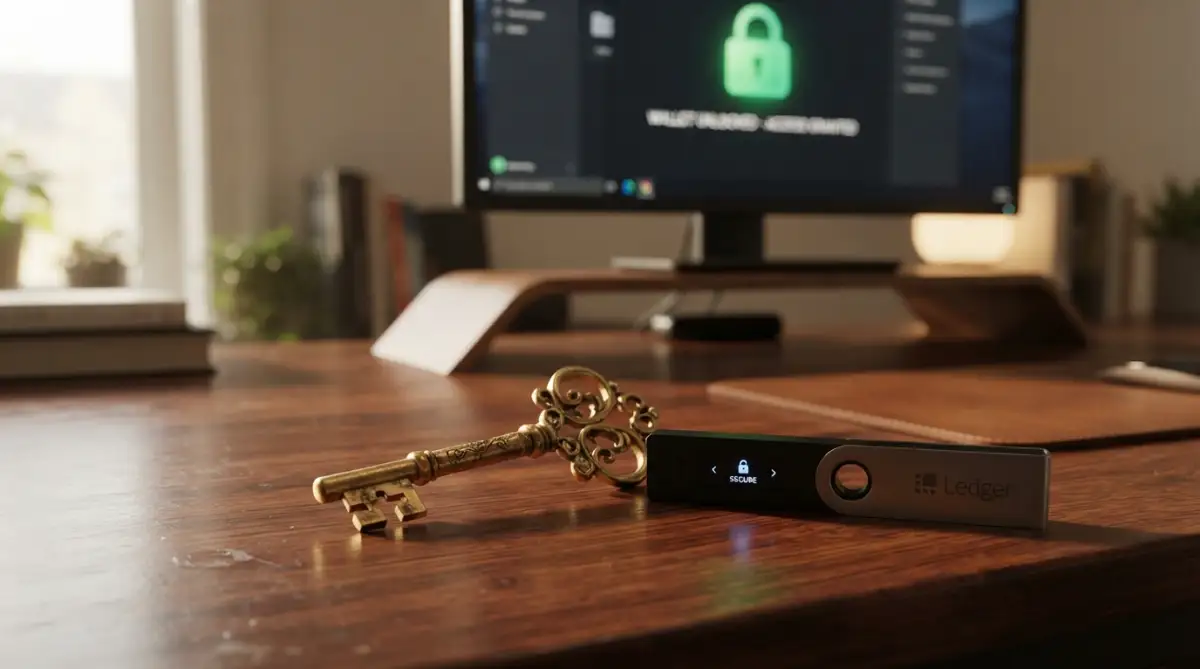
When your money stays on an exchange, the exchange actually holds the keys. If the exchange gets hacked or goes out of business, you might lose everything. We have seen big platforms disappear overnight, leaving millions of people with nothing.
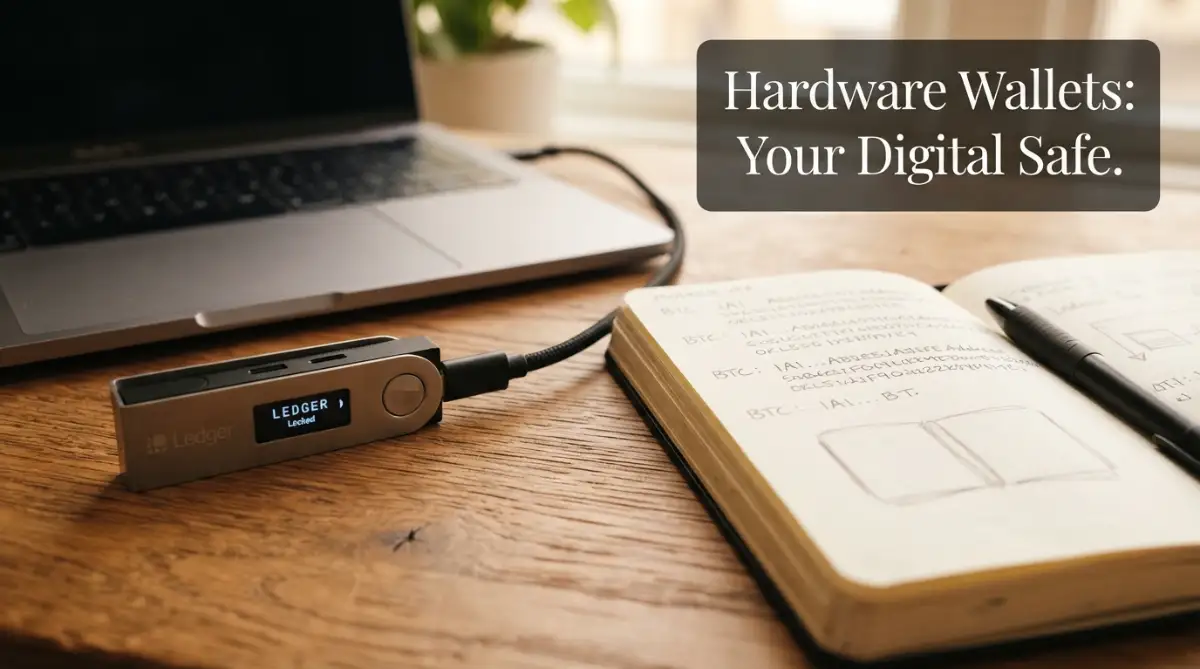
For small amounts of money that you use for trading, an exchange is fine. But for your long-term savings, you should move your assets to a personal wallet. This gives you full control over your digital wealth.
Moving your coins to a "cold wallet" or a hardware device is a huge step in the right direction. It might feel a bit technical at first, but it is the only way to be truly safe. I felt so much more relaxed once I moved my main holdings off the big platforms.
Pro Tip: I remember when I first started, I was terrified of making a mistake while sending crypto to my own wallet. My realization was that I should always send a tiny "test" amount first. If that small amount arrives safely, then I send the rest. This simple habit has saved me from a lot of anxiety and potential loss!
Why Your Phone Number Is a Weak Link
Most of us use our phone numbers for two-factor authentication (2FA). It seems easy and secure because you get a text message code. However, this is actually one of the most common ways people get hacked through "SIM swapping."
A hacker can call your phone company and pretend to be you. They trick the company into moving your phone number to a new SIM card that they own. Once they have your number, they can reset your passwords and steal your crypto.
To stay safe, you should stop using SMS-based 2FA for anything related to your crypto. Instead, use an app like Google Authenticator or a physical security key like a YubiKey. These apps live on your device and don't rely on your phone signal.
Switching to an app-based 2FA is a quick fix that makes you much harder to hack. It only takes five minutes to set up, but it builds a massive wall between you and the scammers. I made this switch right after my first scare, and it changed how I viewed my security.
Which Security Layer Should You Use?
- SMS 2FA (Risky): Easy to set up, but very easy to bypass via SIM swapping.
- Authenticator Apps (Better): Google Authenticator or Authy. These live on your device, not your SIM.
- Hardware Keys (Best): Tools like YubiKey. You physically have to touch a button to log in. No touch, no entry.
Watch this video to see exactly how to set up your security the right way and avoid the most common traps.
The Fake "Helpful" Person in Your Messages
If you ever ask a question in a crypto group on Telegram or Discord, be very careful. Within seconds, you might get a private message from someone with a professional profile picture. They will offer to "help" you or ask you to "validate" your wallet.
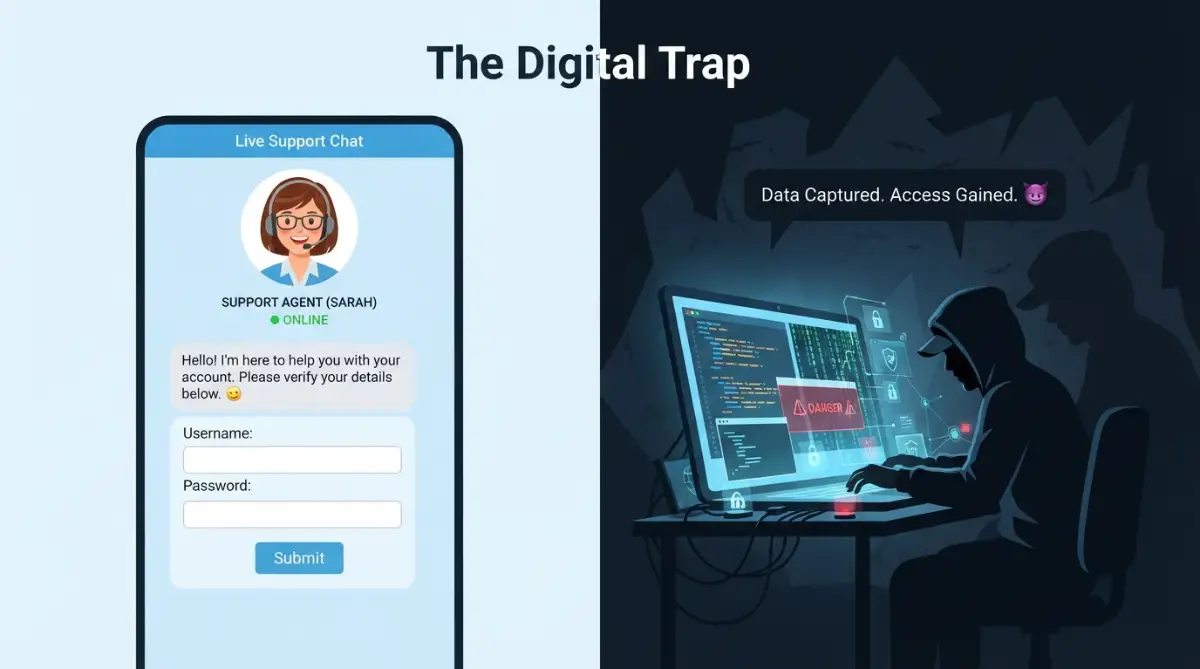
These people are almost always scammers. They are very polite and sound very smart, which is why so many new investors trust them. They will send you a link to a professional-looking website and ask for your seed phrase.
Real support teams from wallet companies will never, ever send you a private message first. They will never ask for your secret words. If someone asks for your keys, they are trying to rob you.
It can feel lonely when you are learning something new, and a "helpful" stranger seems like a blessing. But in the crypto world, you must be skeptical. I learned to ignore all private messages and only use official help channels.
Clicking Links Without Thinking
Phishing is still one of the most successful ways hackers steal assets. You might get an email that looks exactly like it came from your wallet provider. It might say there is a "security update" or your "account is locked."
Because you are worried, you click the link and enter your details. But the website is a fake copy designed to steal your info. Always check the URL in your browser very carefully before typing anything.
A good habit is to bookmark the official websites you use. Never click links from emails or social media ads to go to your wallet or exchange. Go directly to the site through your own bookmark.
Scammers even pay for ads on Google to show their fake sites at the top of search results. I once almost clicked a fake link that looked exactly like a popular exchange. Now, I always double-check the spelling of the website name.
The Risk of Public Wi-Fi
We all love free Wi-Fi at coffee shops or airports. But using public Wi-Fi to check your crypto accounts is like talking about your bank balance in a room full of strangers. It is very easy for hackers to watch the data on these open networks.
If you must check your accounts while you are out, use your phone’s cellular data instead. It is much more secure than any public hotspot. If you use a laptop, a trusted VPN can help hide your activity from prying eyes.
I used to be casual about this until I learned how easy it is for someone to "sniff" data on a public router. Now, my crypto apps stay closed unless I am on my secure home network. It’s a simple rule that adds another layer of protection.
Using the Same Password Everywhere
This is a classic mistake that isn't just about crypto, but it's much more dangerous here. If you use the same password for your email and your crypto exchange, you are doubling your risk. If one small website gets leaked, your whole financial life is at risk.
You should use a unique, long password for every single service you use. I know it's impossible to remember dozens of complex passwords. That is why a good password manager is a life-saver for any investor.
A password manager creates random strings of letters and numbers that are almost impossible to guess. It stores them securely so you don't have to write them on sticky notes. This one tool can stop a lot of headaches before they even start.
I started using one a few years ago, and it took a huge weight off my shoulders. I no longer had to worry about remembering "CryptoPassword123!" for every site. It made my digital life both easier and much safer.
The "Too Good to Be True" Offers
The crypto world is full of "giveaways" and "doubling" schemes. You might see a video on YouTube or a post on Twitter saying a famous person is giving away Bitcoin. All you have to do is send them some first, and they will send double back.
This is a 100% scam every single time. No one is giving away free money on the internet. These scams look very real because they use stolen videos and fake comments to trick you.
New investors often get blinded by the hope of quick gains. I've seen smart people fall for this because they were in a rush to grow their portfolio. Remember, if it sounds too good to be true, it definitely is.
Protecting your assets means staying calm and logical. Don't let greed or "FOMO" (fear of missing out) cloud your judgment. Slow and steady growth is much better than losing everything to a flashy scam.
Not Updating Your Software
Your wallet apps and your phone's operating system need to stay updated. These updates often include "security patches" that fix bugs hackers use to get in. If you ignore these updates, you are leaving your digital doors unlocked.
I used to click "remind me later" on update pop-ups for weeks. Then I realized those updates were literally building shields for my money. Now, I try to update my security-related apps as soon as the new version comes out.
It only takes a few minutes to keep your software fresh. It’s a small task that pays off in big ways by keeping you ahead of the bad guys. Think of it like changing the oil in your car; it keeps everything running safely.
Sharing Too Much on Social Media
When you start making money in crypto, it's natural to want to share your success. But talking about your "bags" or showing screenshots of your balance makes you a target. Scammers look for people who are doing well and then try to hack them.
The more anonymous you stay, the safer you are. You don't need to tell the world how much crypto you own or which wallets you use. Privacy is one of the best security features you can have.
I learned to be very quiet about my investments. I talk about the technology and the ideas, but never my personal numbers. This keeps the "digital vultures" away from my doorstep.
Staying safe isn't just about fancy tools; it's about your daily habits. By avoiding these common slips, you are already doing better than 90% of new investors. Your future self will thank you for taking these steps today.
Building Your Digital Fortress Like a True Pro
Now that we have covered the basics, let’s talk about taking your safety to the next level. Most people stop at a strong password, but you aren't most people. You want to make it absolutely impossible for a hacker to touch your coins.
One of the best things I ever did was start using a dedicated device for my crypto work. I have an old laptop that I wiped completely clean and only use for my wallet transactions. It never visits social media sites, and it doesn't have random apps installed.
When you use your everyday phone for everything, you are at higher risk. You click on random ads or download games that might have hidden trackers. By using a "clean" device, you cut off those paths for hackers. It might seem like extra work, but the peace of mind is worth every second.
Another advanced trick is the "25th word" or a passphrase. Most wallets give you 12 or 24 words as a backup. A passphrase is an extra word that you choose yourself. Even if someone steals your 24 words, they can't get your money without that secret 25th word.
I keep my 25th word only in my head. This means even if a thief finds my written backup paper, they still see an empty wallet. This is a brilliant way to stay safe if you ever feel physically threatened or worried about your home security.
You should also look into Multi-Signature (Multi-Sig) wallets. Think of this like a high-security bank vault that requires two or three different keys to open. You could have one key on your phone, one on your laptop, and one on a backup device.
A hacker would need to steal all three devices at the same time to move your money. This is very hard for them to do. You can learn more about securing your accounts by following a general guide to online safety from security experts.
I also want to talk about your emergency plan. What happens to your digital assets if something happens to you? Many people forget this part. If your family doesn't know how to access your keys, your money is gone forever.
I created a "legacy folder" for my loved ones. It doesn't have my actual keys in it, but it has a step-by-step guide on where to find them. It explains how to use the hardware wallet and who they can trust to help them.
Sharing this information safely is a big part of being a responsible investor. You don't want your hard work to vanish just because of a lack of planning. Always think two steps ahead when it comes to your wealth.
Finally, make sure you are understanding the basics of the projects you invest in. If you don't understand how a coin works, you might not notice when its security is weak. Knowledge is just as important as a hardware wallet.
Silent Traps That Drain Your Savings Before You Notice
There is a very sneaky trick called a "dusting attack" that many new investors don't know about. You might wake up and see a tiny amount of a random coin in your wallet that you never bought. It looks like free money, right?
Please, do not try to trade or move those coins. Hackers send these tiny amounts to track your wallet and figure out who you are. If you interact with them, you might accidentally give them a way to see more of your personal data.
I once saw a friend lose his mind trying to "clean up" these dust coins. He ended up connecting his wallet to a fake "cleaning site" and lost everything. The best thing to do with random coins you didn't buy is to just ignore them.
Another huge mistake is clipboard hijacking. This happened to me once, but I caught it just in time. There is malware that watches what you "copy" on your computer. When you copy a long crypto address, the malware swaps it with the hacker’s address.
When you go to paste it, you think you are sending money to your friend or your own exchange. But if you don't check every single letter, you are actually sending it to a thief. I now have a rule: I always check the first five and last five characters after I paste any address.
You also need to be careful with fake mobile apps. Scammers sometimes get fake versions of popular wallets onto the official App Store or Play Store. They use the same logo and the same name to trick you.
Before you download any app, go to the official website of the wallet company. Use the link on their site to find the real app. I once saw an app that had 4.5 stars but was actually a scam tool. Reviews can be faked, so always go to the source.
Social media "airdrops" are another common pitfall. People will tag you in a post saying you won free tokens. They ask you to connect your wallet to their site to "claim" your prize. The moment you click "connect," you might be giving them permission to spend your real coins.
I have a very simple rule for myself: Never connect my main wallet to a site I don't 100% trust. If I want to try a new site, I use a "burner wallet" with only $5 in it. If the site is a scam, I only lose $5 instead of my life savings.
If you are worried about the risks of the market, you should also learn simple ways to survive sudden market crashes. Security isn't just about hackers; it's also about how you handle the stress of price drops.
Lastly, avoid using public charging stations at airports or malls. Hackers can use those USB ports to put malware on your phone. This is called "juice jacking." Always use your own wall plug and a standard outlet to keep your device safe.
A Smart Plan for Your Long-Term Safety
The world of crypto changes every day, but your safety habits should stay the same. Think of your security like a house. You don't just put a lock on the front door; you also close the windows and maybe get a dog.
One of the best habits you can start is regular security audits. Every few months, I sit down and check my accounts. I see which apps have access to my wallet and I remove any that I don't use anymore.
You can find more info on how to spot scams and stay safe from official consumer protection sites. They keep track of the newest tricks that thieves are using.
Also, consider getting a hardware security key. This is a physical device you plug into your computer to log in. It is much safer than a text message code because a hacker cannot steal it over the internet. They would have to physically take it from your pocket.
I also recommend using a Privacy Browser. Some browsers track everything you do and sell that data. Browsers that focus on privacy stop trackers and make it harder for websites to build a profile on you. This keeps your crypto activities much more private.
Remember to stay calm when things go wrong. Most people make mistakes when they are in a rush. If you get a scary email saying your account is hacked, don't click anything. Take a deep breath, go to the official website yourself, and check your status there.
Being a successful investor means being a safe one. You have worked hard for your money, so don't let a simple mistake take it away. You can find more smart info for your journey by staying curious and always learning new things.
I really believe that anyone can be safe in this space if they just take it slow. You don't need to be a computer genius. You just need to be careful and follow the rules we talked about today.
Actually, the fact that you are reading this right now shows you are already ahead of most people. You are taking the time to learn, and that is the biggest protection you can have. Keep that curious spirit alive as you grow your portfolio.
I honestly feel so much better knowing my assets are behind several layers of protection. It allows me to focus on my life and my family instead of worrying about hackers every hour. You can reach that point too, starting right now.
Take one small step today. Maybe it's changing your 2FA app or finally buying that hardware wallet. Each small action builds a bigger wall around your future. You've got this, and I'm rooting for your success!
Common Questions About Digital Asset Safety
What happens if I lose my hardware wallet?
Don't panic! Your money is not actually "inside" the device; it is on the blockchain. As long as you have your 12 or 24-word seed phrase, you can buy a new device and recover everything. The device itself is just a key to get in.
Is a strong password enough to keep me safe?
Actually, no. A password is only the first line of defense. Hackers can use "brute force" to guess it or steal it through fake websites. You always need to use a second layer, like a physical security key or an authentication app.
Can a hacker steal my coins if they only have my public address?
No, they can't. Your public address is like your email address—people can see it or send you things, but they can't get inside. To take your money, they would need your private key or your secret seed phrase.
Is it safe to store my seed phrase in a digital vault?
I strongly advise against it. Any digital storage that is connected to the internet can be hacked. Even if the vault is "encrypted," it is still a risk. Writing it on a piece of metal or paper and hiding it physically is still the gold standard for safety.
Disclaimer: This article is for educational and informational purposes only. It does not constitute financial, legal, or professional security advice. Cryptocurrency investing involves high risk, and you should always do your own research or consult with a professional before making any investment decisions. The author and website are not responsible for any financial losses or security breaches you may encounter.