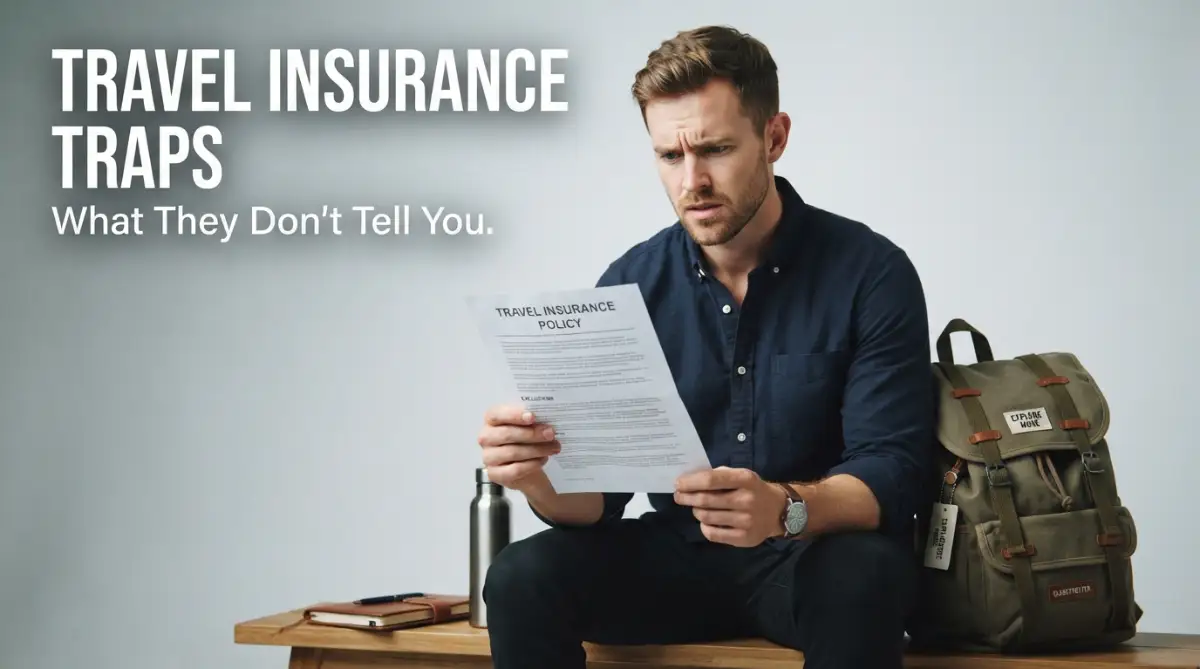
The Day My Safety Net Turned Into a Trap
I lost five thousand dollars over a single meter of altitude. I thought my premium travel insurance had my back when I broke my leg on a hike, but I was dead wrong. Because I was at 2,501 meters instead of their strict 2,500-meter limit, they refused to pay a single dime. That expensive wake-up call taught me exactly how insurance companies use sneaky fine print to trap travelers, and I am going to show you how to beat them at their own game.
Then the phone call came. My insurance company told me they wouldn't pay a single cent. Why? Because I was hiking at an altitude of 2,501 meters. My policy only covered up to 2,500 meters. One single meter cost me five thousand dollars.
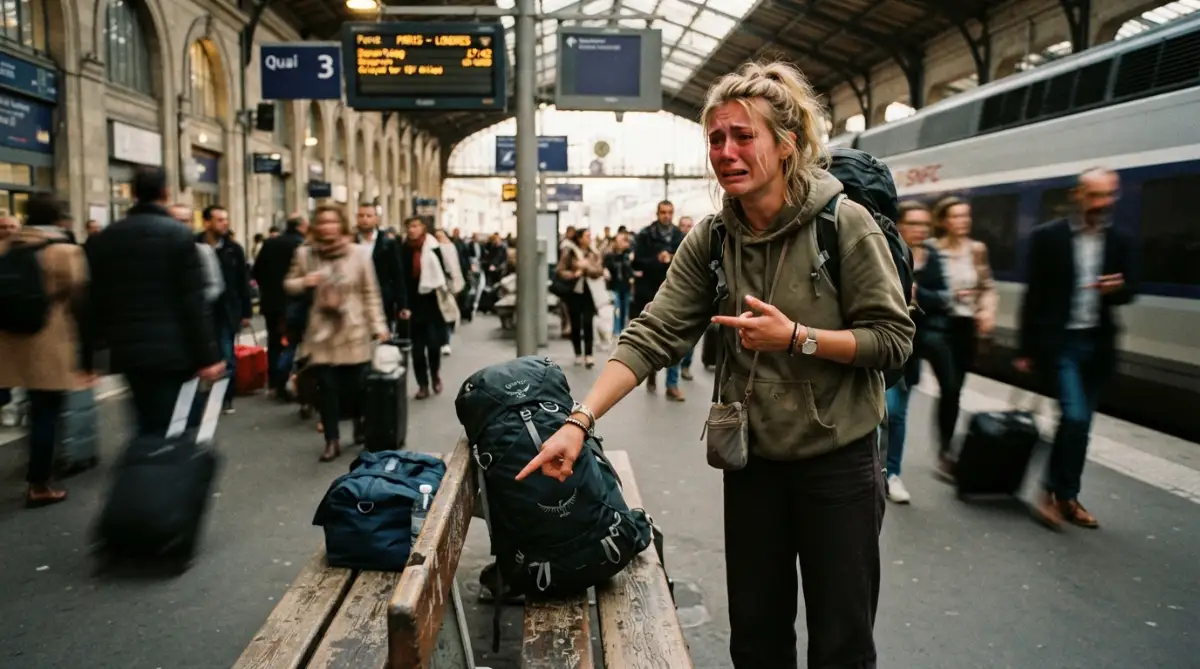
That moment changed how I look at travel. I realized that most of us buy insurance for "peace of mind." But we are actually buying a piece of paper full of traps. My heart sank as I looked at my credit card balance. I felt cheated and alone in a foreign country.
Before You Pack Your Bags: 4 Things You Need to Know
- Check the exact altitude and depth limits before you book any hikes or scuba dives.
- Never admit to drinking alcohol if you get hurt, as a single drink can instantly void your medical claim.
- Keep your bags within arm's reach; insurance companies love to use the word unattended to reject theft claims.
- Get an International Driving Permit before you rent a scooter abroad, or your medical bills will fall entirely on you.
Why Standard Policies Are Often Not Enough
Many travelers feel a false sense of security. You pay your premium and think you are covered for everything. But the reality is much more painful. Insurance companies are businesses, and they use complex language to protect their profits.
Standard policies are designed for "average" tourists. They expect you to stay in hotels and walk on paved streets. If you are a backpacker, your life is not "average." You take risks, you explore, and you live differently. This is where the gap begins.
I have seen people lose their entire life savings over a small mistake. They didn't read one line on page 45. They didn't know that "unattended" meant leaving a bag for two seconds. This is the reality we face as international backpackers.
The Hidden Trap of Adventure Activity Levels
Most backpackers love a bit of excitement. You might go for a trek, rent a scooter, or try scuba diving. In your mind, these are normal travel activities. In the eyes of an insurance company, these are "extreme sports."
I once met a guy who was denied a claim for a sprained ankle. He was "jogging" on a trail. The insurance company called it "off-road running," which wasn't covered. It sounds crazy, but it happens every day.
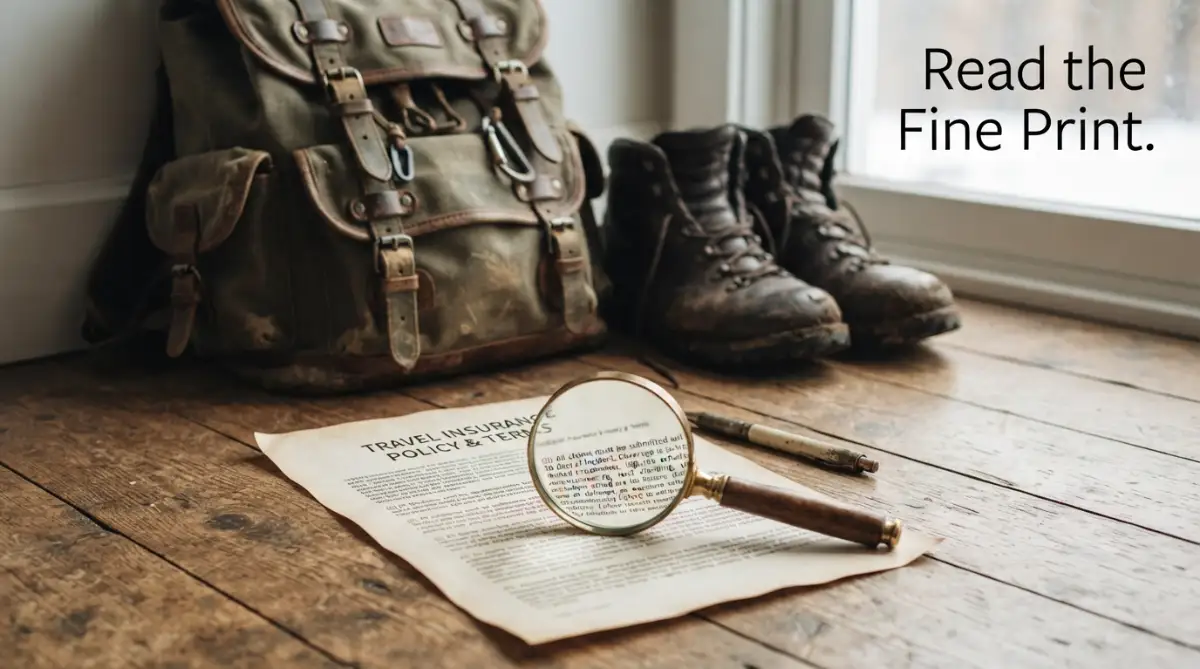
You must check the specific list of covered activities. Don't assume "hiking" means all hiking. It often excludes anything involving ropes, crampons, or high altitudes. If you plan to do something even slightly active, email them first. Get their confirmation in writing.
Myth vs. Fact: Adventure Sports Coverage
Myth: If my policy says it covers scuba diving or hiking, I can go as deep or as high as I want.
Fact: Most basic policies cap your dive depth at 18 meters (60 feet) and your hiking altitude at 2,500 meters. If you dive to 20 meters and get hurt, your claim goes straight into the trash. Always check the exact numbers in your policy booklet.
The "Alcohol Exclusion" That No One Talks About
This is perhaps the most dangerous loophole of all. Almost every travel policy has an alcohol clause. If you have an accident and there is alcohol in your blood, they can deny your claim. It doesn't matter if the accident wasn't your fault.
Imagine you are walking across the street after one beer at dinner. A car hits you. If the hospital does a blood test and finds alcohol, the insurance company might walk away. They will say your "judgment was impaired."
I always tell my friends to be extremely careful. You don't have to be drunk for this to apply. The wording is often very vague. It gives them the power to reject expensive medical bills over a single drink.
I once talked to a traveler who lost her claim because she mentioned she had a glass of wine hours before her fall. It was a small detail that cost her dearly. Now, I never mention alcohol to an adjuster unless it is absolutely required.
The Mystery of the "Unattended" Item
We all know we should watch our bags. But did you know that "unattended" has a very strict definition? If your bag is stolen while it is three feet away from you, it might be "unattended."
If you put your backpack in the overhead bin of a bus and it gets stolen, you might not be covered. Why? Because you weren't "actively looking" at it. Most policies require you to keep your gear within arm's reach or in a locked safe.
I learned this the hard way when my camera was taken from a hostel locker. The locker didn't have "visible signs of forced entry." Because there were no scratches on the lock, the company said I must have left it open. They refused to pay.
Understanding the Pre-Existing Condition Maze
This is a big one for long-term backpackers. A "pre-existing condition" isn't just a major illness. It can be something as small as a back pain you saw a doctor for two months ago.
If you get sick abroad and they find any link to your past, they will fight the claim. They look at your medical records from years back. If you didn't declare it when you bought the policy, you are in trouble.
Always be honest about your health. Even if it raises the price a little bit, it is better than having a useless policy. A "clean" medical history is what they want, but very few people actually have one.
The Problem with Local "Unlicensed" Transport
Backpackers use scooters, tuk-tuks, and local buses. These are cheap and fun. But insurance companies hate them. If you are riding a scooter without a local license AND a license from your home country, you are not covered.
Most people don't have a motorcycle license in their home country. They think because they can rent a bike in Bali, they are fine. They are not. If you crash, the medical bills will stay with you forever.
Check the local laws and your policy requirements. If it says you need an International Driving Permit (IDP), get one. Don't give them an easy excuse to say "no" when you need them the most.

If you want to see how these insurance traps look in the real world, watch this eye-opening video. It breaks down the fine print in a way that is easy to understand.
Watch this video to understand how insurance companies avoid paying claims.
The "Reasonable Care" Escape Clause
There is a phrase in almost every policy called "failure to take reasonable care." This is a giant "catch-all" for insurance companies. If they can argue you were being "careless," they don't have to pay.
What does "careless" mean? It’s whatever they want it to mean. Walking alone at night? Careless. Leaving your phone on a table while you reach for a napkin? Careless. Carrying too much cash? Careless.
I always suggest taking photos of how you secure your items. If you use a lock, take a picture of it. If you use a hotel safe, take a picture. You need evidence to fight the "careless" argument.
The "Notification Window" Nightmare
When something goes wrong, you are usually in shock. You want to get to a doctor or a police station. But your policy has a clock. Most companies require you to notify them within 24 or 48 hours of an incident.
If you wait three days to report a theft because you were in a remote area, they might reject you. They will say you "denied them the chance to investigate."
I always keep the emergency number of my insurance company saved in my phone and written in my notebook. Call them as soon as you are physically able to. Even if you don't have all the details yet, get the claim started.
The "Approved" Provider Trap
Some policies only pay if you go to a hospital they like. If you go to a different clinic because it was closer, they might only pay a small part of the bill. Or nothing at all.
In an emergency, you don't always have a choice. But if it’s not life-threatening, you must call them first. Ask them which hospital to go to. They often have "preferred providers" where they handle the billing directly.
I had a friend who went to a private clinic for a stomach bug. The bill was $800. The insurance only paid $200 because the clinic was "out of network." She had to pay the rest herself.
Quick Q&A: Dealing with Hospitals
Question: What if the approved hospital is an hour away, but a private clinic is right across the street?
Answer: Unless you are dealing with a massive, life-threatening emergency, go to the approved hospital. If you choose the closer clinic for a minor stomach bug without calling your insurance first, they will stamp your file as unauthorized and make you pay for everything.
The Difference Between "Cancellation" and "Interruption"
These two words sound the same, but they are very different. "Cancellation" is before you leave. "Interruption" is after you have already started your trip.
I’ve seen people try to claim for a flight home because of a family emergency, only to find their policy only covered "cancellation." They were already on the road, so the policy didn't apply.
You need a policy that covers both. Backpacking is unpredictable. Family members get sick, or you might get a job offer back home. Make sure your policy covers your "trip interruption" for multiple reasons.
Why "Cashing Out" a Claim is Hard
Even if they approve your claim, getting the money is a long journey. They will ask for original receipts, police reports, and medical notes. If you lose a single piece of paper, the process stops.
I keep a digital folder on my phone. Every time I get a receipt or a document, I take a photo immediately. I upload it to the cloud. Don't rely on physical paper in a backpack. It gets wet, lost, or crumpled.
The insurance company wants to see that you followed every rule. They want to see that you reported the theft to the local police within 24 hours. They want the "Police Report Reference Number." Without it, you are just a person telling a story.
The Ghost of "Government Warnings"
If your government issues a travel warning for a country, your insurance might become void. If you are already there, you might be okay for a few days. But if you enter a country AFTER a warning is issued, you are on your own.
I always check my country's travel advisory website before crossing a border. It only takes a minute. If the status has changed to "Do Not Travel," your insurance is likely dead. This happens often with civil unrest or natural disasters.
The "Cash and Currency" Exclusion
Most backpackers carry some cash. But standard insurance almost never covers stolen cash. If they do, the limit is usually very low, like $100.
They will cover your phone or your laptop (with a high deductible), but they won't cover your wallet's contents. I never carry more cash than I am willing to lose. I use travel cards instead because they have their own protections.
I once met a traveler who lost $1,000 in a bus theft. He thought his insurance would cover it. They didn't give him a cent. It was a hard lesson to learn at the start of a six-month trip.
The "Depreciation" Reality Check
If your two-year-old laptop is stolen, don't expect the price of a new one. Insurance companies use "depreciation." They will say the laptop is now only worth 40% of its original price.
Then they subtract your "excess" or "deductible." If your laptop is worth $400 after depreciation and your excess is $250, you only get $150. For many backpackers, this makes a claim almost pointless.
I always look for policies that offer "New for Old" replacement. It costs more, but it actually helps you replace your gear if it gets stolen. Otherwise, you are paying for insurance that doesn't really cover the cost of your life.
Final Thoughts on Being a Smart Traveler
You don't have to be afraid of travel insurance. You just have to be smarter than the policy. Treat it like a game where the rules are hidden. Your job is to find them before the "game" starts.
I spend hours reading the "Target Market Determination" and the "Product Disclosure Statement" (PDS). It’s boring, but it’s the most important thing I do for my trip. It's the difference between a minor accident and a financial disaster.
I have traveled to over forty countries now. I have had my share of scares and close calls. The biggest lesson I’ve learned is that I am my own best advocate. No one is going to save you if you don't save yourself first.
Keep your documents ready. Stay sober when you are in risky areas. Know your limits. And most importantly, know exactly what that piece of paper you bought actually covers. That is the true secret to long-term backpacking.
Smart Ways to Build an Unbeatable Safety Wall
I have learned that having a policy is only the first step. To really stay safe, you need to understand how to stack your protections. Most people don't know that their credit card often has built-in travel insurance. This is usually "secondary" coverage.
If you have a secondary policy and a primary one, they can work together. If your main insurance doesn't cover the full cost of a lost bag, your credit card might pay the rest. I always call my bank before I leave. I ask them for a written list of what they cover for international trips.
Another secret is the "Secondary Payer" clause. Some policies will only pay after you have tried to get money from your health insurance at home. This can be a huge headache when you are in a foreign hospital. I always look for a policy that offers "Primary Coverage" so I don't have to deal with multiple companies at once.
I also suggest keeping a "Digital Paper Trail." This is my favorite expert tip. Every time I talk to a hostel owner or a tour guide, I take a photo of their business license if I can. If something goes wrong during a tour, I have proof that the company was a real business. Insurance companies love to say a company was "unlicensed" to avoid paying.
Protecting Your Gear Like a Professional
Your backpack is your home. If it disappears, your trip becomes a nightmare. Most standard policies have a "Single Item Limit." This means even if they cover $3,000 for luggage, they might only pay $250 for your expensive laptop.
I always buy an "Endorsement" or a "Rider" for my electronics. This is an extra bit of coverage specifically for high-value items. It usually costs a few dollars more, but it means I get the full value back if my laptop is stolen. I learned this after my camera was taken in South America and I only got a fraction of its value.
Also, be careful about where you store your gear. Many policies won't cover items stolen from a car between 9 PM and 6 AM. They call it "overnight storage," and they hate it. If you are on a road trip, always bring your valuables into your room at night.
I once spent an hour trying to explain to a claims adjuster why I left my bag in a locked trunk. They told me I didn't take "reasonable care." It’s one of the common reasons for claim rejections that travelers face every day.
The Residency and "One-Way Ticket" Secret
This is a loophole that ruins many long-term travelers. Most travel insurance requires you to have a "permanent residence" in your home country. If you sold your house and quit your job to travel for three years, you might not be "resident" anywhere.
If the insurance company finds out you don't have a home address to go back to, they might cancel your policy. I always keep a "base" address, like my parents' house. I make sure my mail goes there and my bank accounts are linked to it.
Also, watch out for the "One-Way Ticket" rule. Some policies only work if you have a return flight booked. If you are a backpacker who "goes with the flow," this can be dangerous. Always check if your policy allows for "open-ended" travel.
If you don't have a return ticket, you might need a different type of insurance called "Expat Insurance" or "Global Health Insurance." These are designed for people who live on the road. They are more expensive but they actually cover you when you don't have a home base.
The Power of Local Documentation
When you are in a foreign country, the rules for "proof" are different. If you get sick, don't just leave the hospital after paying. You need a "Medical Report" that shows the diagnosis and the treatment.
I always ask for the report in English if possible. If they can't do that, I take a very clear photo of the local language version and use a translation app to check it. I also make sure the hospital stamp is on every single page.
If you are a victim of a crime, you must get a police report. In some countries, the police are slow or don't want to write a report for small thefts. I stay there until I get it. I’ve even used a small gift or a lot of patience to get that paper. Without it, your insurance claim is dead on arrival.
It is very similar to how people need to gather evidence for other types of insurance issues. For example, knowing why insurance claims get rejected in the auto world can help you understand what adjusters look for in travel claims too. They want facts, dates, and official stamps.

Costly Errors That Can End Your Journey
One of the biggest mistakes I see is travelers buying insurance at the very last minute. They buy it at the airport or while they are waiting for their flight. This is a bad idea because most policies have a "waiting period."
If you buy your policy today and get sick tomorrow, they might not cover you. Many companies have a 48-hour or even a 7-day waiting period for certain benefits. I always buy my insurance the same day I book my flights. This way, the "cancellation" benefit starts working immediately.
Another huge mistake is not checking the "Excess" or "Deductible." I met a traveler who had a $500 excess on a policy she bought for $50. When her $400 phone was stolen, she couldn't even make a claim. She had spent money on a policy that was literally useless for her gear.
Always choose an excess that you can actually afford. If you are on a tight budget, a "Zero Excess" policy is usually better. You pay more at the start, but you don't have to worry about finding $250 in the middle of a crisis.
The Danger of Ignoring Government Sites
Many backpackers ignore the official travel advice from their home countries. They think, "Oh, it’s just the government being scared." But insurance companies use these sites as their rulebook.
If the U.S. Department of State or your local equivalent says "Level 4: Do Not Travel," your policy is probably dead. If you go anyway and get caught in a protest or a storm, you are paying for everything yourself. I check the U.S. State Department travel advisories every time I move to a new country.
I also see people failing to check medical requirements. If you go to a country where a "Yellow Fever" vaccine is required and you don't have it, your medical coverage might be void. The World Health Organization provides great travel health and safety guidelines that you should read.
If you get a tropical disease and the insurance sees you didn't take the recommended vaccines, they can argue you were being "negligent." They will say you didn't take "reasonable care" of your health. This is a very easy way for them to save thousands of dollars at your expense.
The Mistake of Underestimating Financial Stress
When you are far from home and your claim is denied, the financial stress is overwhelming. I have seen travelers have panic attacks in hospital lobbies. They don't know how they will pay their rent when they get back because all their money went to a doctor in Thailand.
If you find yourself in this spot, you need a plan. Sometimes people have to take out emergency loans just to get home. It’s a very difficult situation, much like handling unexpected financial stress when you can't pay your bills.
I always suggest having an "Emergency Fund" that is separate from your insurance. This fund should be enough to buy a flight home and pay for one week in a hotel. Insurance is a safety net, but it is a slow one. You need cash for the first few hours of a crisis.
Don't assume your family can just "wire you money." In some countries, receiving large amounts of money can be very hard or take a long time. Having your own backup plan is the only way to ensure you don't end up stranded and broke.
Taking Charge of Your Travel Future
I want you to feel empowered, not scared. Traveling the world is the best thing I have ever done. It taught me more than any school or job. But it also taught me that being prepared is a sign of respect for your own future.
When you take the time to read the fine print, you are protecting your dreams. You are making sure that one bad day doesn't end your entire adventure. You are being a smart, professional traveler who knows how the world works.
I now travel with a small folder of documents and a lot of confidence. I know what to say to a doctor and what to say to a police officer. I know how to talk to my insurance company so they listen. This knowledge is your best armor.
My best advice is to treat your insurance like your passport. You wouldn't leave home without checking if your passport is valid. Treat your policy with that same level of care. You deserve to explore this beautiful world without the heavy weight of "what if" hanging over your head.
Answers to Your Most Burning Travel Insurance Questions
Can I buy travel insurance if I am already abroad?
Yes, but your options will be limited. Most standard companies only allow you to buy a policy before you leave your home country. However, there are specialized "backpacker" insurance companies that allow you to start a policy while you are already on the road. Just be prepared for a waiting period before the coverage actually starts.
Does travel insurance cover me if I get a moped or scooter?
Only if you follow every single rule. You must have a valid license in your home country and usually an International Driving Permit. You also must be wearing a helmet and not have any alcohol in your system. If you miss even one of these rules, the insurance company will almost certainly reject your claim for any accident.
What should I do if my insurance claim is denied?
Don't give up immediately! You have the right to appeal the decision. Ask the company for a clear explanation of which "exclusion" they are using. If you have proof that you followed the rules, send it to them again. Sometimes, a "no" is just the start of a negotiation, and being persistent can help you win your case.
Is it worth getting insurance for a short trip?
Absolutely. Most accidents don't happen because of how long you are traveling. They happen because of bad luck or simple mistakes. A short three-day trip can still result in a $10,000 hospital bill if you have a bad fall. For the price of one nice dinner, you can protect yourself from a life-changing debt.
Does insurance cover my phone if I lose it?
Usually, no. "Loss" is different from "Theft." If you just leave your phone on a bus or drop it in the ocean, most policies won't pay. They only cover "Theft" where you can prove someone took it from you. You will also need a police report to prove the theft occurred.
Disclaimer: This article is for informational purposes only. I am not a licensed insurance broker or a legal professional. Travel insurance policies vary wildly depending on your country of residence and the specific company. Always read your Product Disclosure Statement (PDS) and consult with a professional advisor before making any financial decisions regarding your travel safety.