
When Your Home Breaks and Your Heart Follows
Water pouring through the ceiling wasn't even the worst part. The real panic hit me two hours later when I tried reading my insurance policy and realized I had absolutely no clue if I was covered. If you are staring at a flooded floor or a cracked roof right now, take a deep breath. I have been in your shoes, fought the insurance headache, and figured out exactly how to force them to pay what you actually deserve. Let me show you how to beat them at their own game.
Many of you are probably feeling that same weight right now. You look at a cracked wall, a burnt kitchen, or a flooded basement and feel a pit in your stomach. It’s hard to sleep when you’re worried about repair costs that keep going up. You might feel like you're in a boxing match against a giant company that has all the power.
The truth is, filing a claim is an emotional roller coaster. It takes away your peace of mind and replaces it with endless phone calls and confusing legal words. You just want things to go back to normal, but the path there feels blocked by a mountain of red tape. It’s okay to feel overwhelmed, but you don't have to stay that way.
I learned the hard way that there is a right way and a wrong way to talk to insurance companies. If you say the wrong thing or miss one tiny photo, they might deny your claim entirely. That is why I want to share my journey and the steps I took to finally win. You deserve to have your home repaired without losing your mind in the process.
Quick Takeaways for a Winning Claim
- Stop the damage fast, but take hundreds of pictures before you clean up a single thing.
- Read your "Declarations Page" so you know your true coverage limits before you make the first phone call.
- Communicate through emails instead of phone calls so you always have a solid paper trail.
- Never accept the very first check if it does not cover your real contractor quotes.
Why Is Getting a Fair Settlement So Hard?
It feels like they speak a different language. They use terms that make you feel confused so that you just give up and take whatever small amount they offer. This lack of clear communication is what causes so much pain for homeowners. You aren't just fighting damage; you're fighting a system that isn't always on your side.
I spent weeks researching and talking to experts to figure out how to level the playing field. I realized that the "struggle" isn't just about the physical damage. It's about the lack of information. Once you know the "rules" of their game, the fear starts to fade away. You start to realize that you have more power than you think.
Your Roadmap to a Successful Claim
Now that we understand the emotional side, let's get into the actual work. To get your money, you have to be more organized than the insurance company. This is not just about filling out a form; it is about building a case, almost like a lawyer would.
Start with Immediate Safety and Damage Control
The moment something goes wrong, your first job is to stop things from getting worse. I learned this when my leak started. If I hadn't turned off the main water valve, the damage would have doubled in an hour.
Insurance companies have a rule called "mitigation." This just means you have to try to protect your property from more damage. If you have a hole in the roof, put a tarp over it. If a pipe is leaking, turn off the water. If you don't do this, the company might say the extra damage is your fault and refuse to pay for it.
Myth vs. Fact: Protecting Your Property
- Myth: I should leave everything exactly as it is and wait for the insurance adjuster to arrive.
- Fact: Wrong! You must take action to stop further damage immediately (like throwing a tarp on a leaky roof or shutting off the main water valve). Just make sure you snap lots of clear photos before you start moving your stuff.
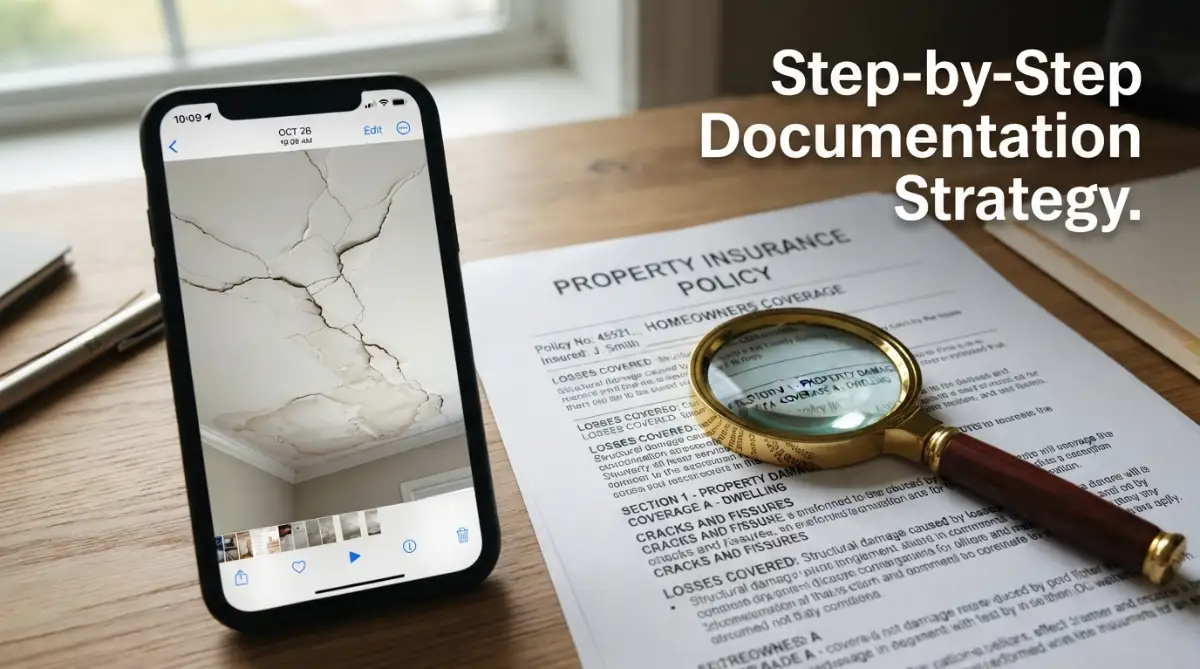
My Personal Mistake: I once waited too long to dry out a wet corner of my basement. A week later, mold started growing. Because I didn't act fast to dry it, the insurance company tried to say they wouldn't cover the mold cleanup. Don't make my mistake. Act fast and keep the receipts for any emergency supplies you buy.
Create a "Visual Evidence Vault"
Before you clean up anything, you need to take photos. And I mean lots of photos. When I did my claim, I took over 200 pictures of one room. I took wide shots to show the whole area and close-ups to show the detail of the damage.
Think of your photos as the only proof of your loss. Once you clean up, the evidence is gone. I also suggest taking a video. Walk through your home and talk while you film. Explain what happened and point out things that might not be obvious in a photo, like a weird smell or a soft spot in the floor.
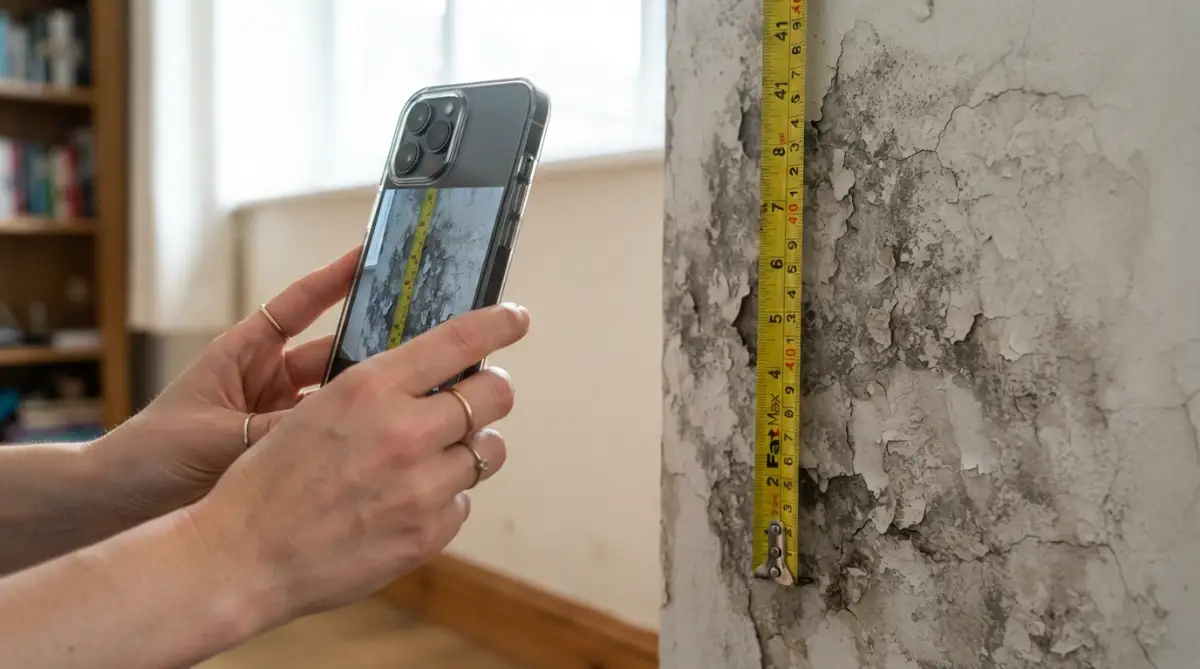
Pro Tip: Use a ruler or a common object like a coin in your photos. This helps the insurance adjuster understand the size of a crack or the depth of the water. It sounds small, but it makes your evidence look much more professional and harder to argue with.
Deciphering Your Policy Like a Pro
Most of us never read our insurance policy until something breaks. I was guilty of this too. When I finally opened mine, it looked like it was written in code. However, you need to find two main things: your "Declarations Page" and your "Exclusions."
The Declarations Page tells you how much total coverage you have. The Exclusions list things they won't pay for. For example, many standard policies don't cover "flood" damage (from rising ground water) but they do cover "water damage" (from a burst pipe). Knowing the difference is what saved my claim.
Know Your Terms: What Actually Gets Paid?
Let's clear up the money part so you don't get shortchanged:
- ACV (Actual Cash Value): The company pays you what your old stuff is worth today. (Expect a tiny check).
- RCV (Replacement Cost Value): The company pays you enough to buy a brand-new version of the item at today's store prices. (This is what you want!).
If you don't understand a word, look it up or ask a friend. You need to know what you are entitled to before you call the company. This gives you confidence. When you speak to them, you can say, "According to my policy on page 5, this should be covered." That makes them realize they can't easily push you around.
Watch this video to understand how to read your insurance policy without getting a headache.
The Art of the Initial Phone Call
When you call your insurance company to report the damage, keep it simple. You might feel like sharing your whole life story, but stay focused on the facts. Tell them what happened, when it happened, and what you have done to prevent more damage.
The person on the phone is taking notes that will stay in your file forever. I always suggest having a notebook ready before you call. Write down the name of the person you talk to and the "Claim Number" they give you. This number is your new ID for everything related to this event.
Avoid using "guessing" words. Instead of saying "I think the pipe broke because it was old," just say "The pipe broke and caused water damage." If you guess, they might use your words to deny the claim based on "wear and tear" or "lack of maintenance." Stick to the facts you can see with your own eyes.
Setting Up Your Claim Organization System
You are going to get a lot of emails, letters, and phone calls. If you aren't organized, you will lose important info. I used a simple physical folder and a digital folder on my computer.
Every time you talk to someone from the insurance company, write it down. Note the date, the time, and what was discussed. If they promise you something over the phone, send them a quick email afterward saying, "Just to confirm our call, you said the adjuster will be here on Tuesday." This creates a "paper trail" that they can't deny later.
Why a paper trail matters: Insurance adjusters are busy. They handle dozens of cases at once. If they forget a detail, your notes will be the proof you need to keep things moving. It also shows them that you are serious and paying attention.
Working with the Adjuster Without Fear
The insurance company will send an "adjuster" to look at your house. This is a big moment. This person decides how much money you get. When they arrived at my house, I was nervous, but I had my "Visual Evidence Vault" ready.
Don't just let them walk around alone. Follow them. Show them the damage you found. Point out things they might miss, like damage inside cabinets or under the floor. Remember, they are looking for ways to save the company money. Your job is to make sure they see every single bit of damage.
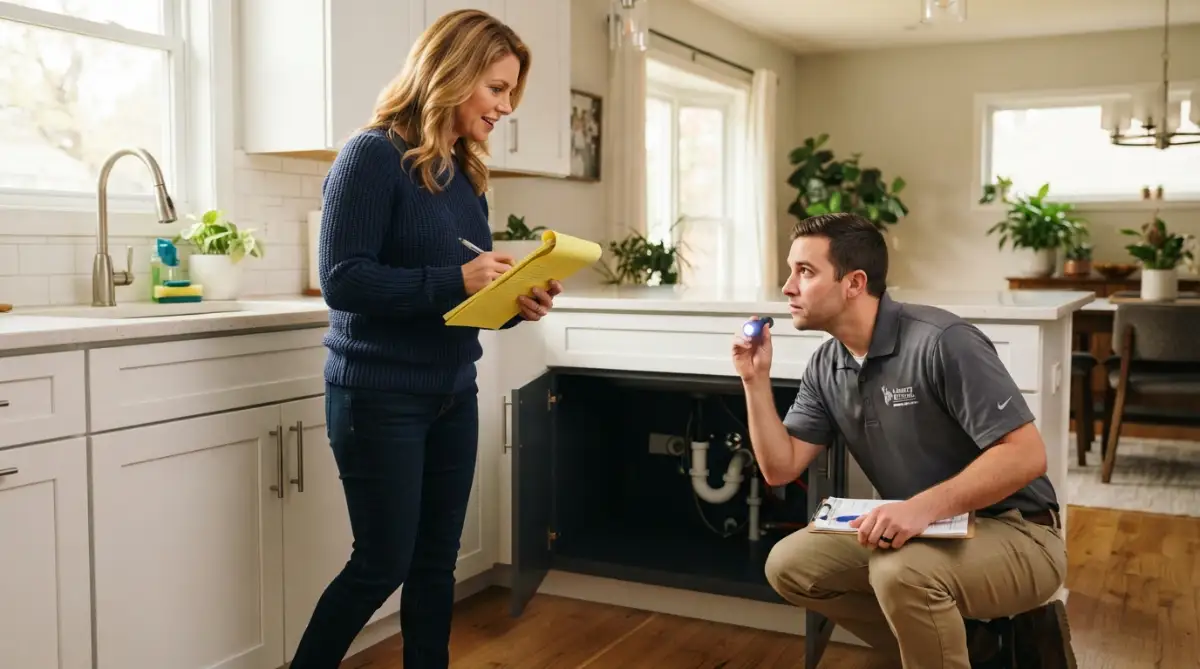
I found it very helpful to have a list of all my damaged items ready for them. I included the brand, how old it was, and how much it cost to buy new. Providing this list makes the adjuster's job easier, which often leads to a faster and more fair report.
Dealing with the "Low-Ball" Offer
Eventually, the company will send you an offer. Most of the time, the first offer is lower than what you actually need. When I got my first check, it wasn't even half of what the repairs cost. I felt like crying, but then I remembered that this is just a starting point.
You don't have to accept the first check as the "final" payment. You can ask for more if you can prove it costs more. Get quotes from local contractors to show the real cost of the work. If your contractor says it costs $10,000 but the insurance only offers $5,000, send those quotes to your adjuster.
Logical proof is your best friend here. If you show them three different prices from local businesses, it’s hard for them to say their low number is correct. It takes patience, but fighting for the extra money is worth it for your home’s future.
Managing the Repair Process
Once you start getting the money, you have to manage the repairs. I learned that it's best to wait until you have a clear agreement from the insurance company before signing big contracts with builders. You want to be sure the money is coming before you commit to paying someone else.
Keep every single receipt from the repair work. Even small things like nails or cleaning supplies add up. Sometimes, once the repairs start, the workers find more damage hidden behind walls. If this happens, don't panic. You can "re-open" the claim or ask for a "supplement."
I had to do this when we found mold behind my kitchen cabinets. I took more photos, called my adjuster, and showed them the new problem. Because I had been so organized from the start, they approved the extra money without much of a fight.
Final Thoughts on Staying Strong
Filing a property damage claim is a marathon, not a sprint. There will be days when you feel like giving up. I had those days too. But if you follow these steps—documenting everything, staying organized, and knowing your policy—you will be in a much stronger position.
Your home is worth the effort. You have paid for this protection, and you deserve to get the help you were promised. Take it one step at a time, keep your cool, and don't be afraid to ask for what is fair. You are your own best advocate, and with a little bit of work, you can turn this disaster into a successful recovery.
Stay focused on the goal: a safe, repaired, and happy home for you and your family. You’ve got this!
Hidden Strategies to Maximize Your Settlement
Once you have the basics down, it is time to look at the professional secrets that most homeowners never hear about. I learned these tricks after months of talking to experts and making my own mistakes. One of the biggest things you need to understand is the difference between "Actual Cash Value" and "Replacement Cost Value."
Actual Cash Value or ACV only pays you what your item is worth today, including the wear and tear. If your 10-year-old TV breaks, they might only give you $50 for it. However, if your policy has "Replacement Cost Value," they should give you enough money to buy a brand-new version of that same TV. I always tell my friends to check this part of their policy immediately because it can mean a difference of thousands of dollars.
You should also keep a detailed maintenance log for your home starting right now. I keep a digital folder with receipts for every roof repair, plumbing check, and even HVAC cleaning. When you show the insurance company that you take great care of your home, it is much harder for them to blame the damage on "poor maintenance." It builds a wall of proof around your claim that they cannot easily knock down.
Another secret weapon is the "Appraisal Clause" found in most policies. If you and the insurance company simply cannot agree on the repair cost, you can invoke this clause. It allows an independent person to look at the damage and set a fair price. I found that just mentioning the word "appraisal" often makes the insurance company offer a bit more money because they want to avoid the extra work.
If your claim is very large or complex, you might want to think about hiring a "Public Adjuster." These are professionals who work for you, not the insurance company. They take a small percentage of your settlement, but they often find damage that you missed. I have seen claims double in value simply because a public adjuster found hidden structural issues behind a wall.
You also need to stay on top of your local building codes. If a storm ruins your deck, the new deck might need to follow newer, stricter safety rules. Most people don't know that many policies include "Law and Ordinance" coverage. This extra bit of money helps you pay for those expensive code upgrades that weren't there when your house was first built.
Lastly, never forget that you can ask for "Additional Living Expenses" if you can't stay in your home. I didn't realize at first that my insurance would pay for my hotel stays and even the extra cost of eating out while my kitchen was being fixed. Keep every single food and hotel receipt during this time. These small costs add up very quickly and can be a huge relief for your bank account.
To keep these good results over the long term, I suggest doing a "mini-inspection" of your own every six months. Check your pipes, look at your roof with binoculars, and test your sump pump. By catching small issues early, you prevent the giant disasters that lead to stressful claims. This proactive habit will save your sanity and your wallet for years to come.
Understanding the real value of your property is a big part of this journey. For example, understanding assessed value vs market price can help you realize if your insurance coverage limits are actually high enough to protect your investment. Being informed is your best defense against being underinsured.

The Blunders That Could Cost You Thousands
It is so easy to make a mistake when you are stressed and tired. I remember the urge to just clean everything up and throw away the ruined furniture immediately. This is one of the most common "trap" behaviors that homeowners fall into. If you throw away the evidence before the adjuster sees it, the insurance company has a perfect excuse to deny that part of your claim.
I once talked to a neighbor who lost half his settlement because he started permanent repairs too early. He was so eager to fix his roof that he hired a crew before the insurance company sent an adjuster. By the time the adjuster arrived, the old damage was gone, and there was no way to prove how bad it had been. It was heartbreaking to see him pay for those repairs out of his own pocket.
Another huge mistake is being "too honest" with your guesses. When an adjuster asks, "How old was this roof?", and you say, "Oh, maybe 20 years," you might be hurting yourself. If it was actually only 15 years old, your guess just lowered the value of your claim. It is perfectly okay to say, "I am not 100% sure, let me check my records and get back to you."
Sometimes, people try to be "too tough" or aggressive with the insurance staff. I get it; you are angry and your house is broken. But the person on the other end of the phone is more likely to help someone who is polite and organized. If you scream at them, they might put your file at the bottom of the pile. Treat the process like a professional business meeting, even if you feel like crying inside.
You should also be very careful about signing any "final" release forms too quickly. Some companies will send a check very fast, but the fine print says that by cashing it, you agree to never ask for more money for that claim. I always wait until my contractor has finished at least half the work before I feel comfortable that no "hidden" damage will pop up. If you sign too early, you are stuck with whatever that first check covered.
Ignoring the small stuff is another pitfall that haunts homeowners later. A tiny water stain on the ceiling might seem like nothing, but it could mean there is mold growing in the attic. If you don't report it now, the insurance company won't pay for it later when the ceiling finally falls in. You have to be a detective and report every single suspicious mark or smell you find.
I also see people failing to check the background of the people they hire. During a disaster, "storm chasers" often come to town offering quick fixes. Always make sure your contractor is licensed and has good reviews. Checking for red flags during a first-time home inspection can actually teach you a lot about what to look for when someone is repairing your home too.
Finally, don't miss your deadlines. Every state and every policy has a "statute of limitations" or a time limit for filing. If you wait too long because you are busy, you might lose your right to file a claim forever. I set reminders on my phone to check in with my adjuster every single week until the case is closed. This keeps the momentum going and ensures nothing falls through the cracks.
Moving Forward with Confidence
The journey through a property damage claim is one of the toughest things a homeowner can face. It tests your patience, your memory, and your emotional strength. But remember, you are not alone in this. Millions of people have walked this path and come out on the other side with a home that is even better than before.
By taking photos, staying organized, and refusing to settle for a low offer, you are taking back control of your life. You are moving from being a "victim" of a disaster to being a "manager" of your recovery. That shift in mindset is where your real power lies. Every receipt you save and every phone call you log is a step toward your peace of mind.
I have seen people lose everything and rebuild it all by being persistent. The insurance company has their experts, and now, through this guide, you have the knowledge to be your own expert. You don't need a law degree to win; you just need a good folder, a charged phone camera, and a bit of patience.
I truly believe that you have the strength to handle this process and get every penny you are owed. My own experience taught me that while the damage is temporary, the skills you learn while fighting for your home will last a lifetime. Don't wait for the insurance company to lead the way—take the first step today, start your "evidence vault," and show them that you are ready to protect your sanctuary.
Common Questions About Property Claims
What should I do if my insurance claim is denied?
If your claim is denied, don't panic or give up right away. I suggest asking the insurance company for a written letter explaining exactly which part of your policy they used to make that decision. You can then gather more evidence, like a letter from an expert or a contractor, and file an "internal appeal" to have them look at it again.
How long does the insurance claim process usually take?
The time can vary depending on how big the disaster was, but a typical claim takes anywhere from a few weeks to a few months. I found that staying in constant contact with my adjuster and sending paperwork quickly helped speed things up. If a major storm hit your whole city, expect things to move a bit slower because the adjusters are very busy.
Can I choose my own contractor for the repairs?
Yes, in almost all cases, you have the right to choose who works on your home. The insurance company might suggest a "preferred contractor," but you are not forced to use them. I prefer picking my own local contractor because I know they are working for me and my home's best interests, not the insurance company's bottom line.
Will filing a property damage claim make my insurance rates go up?
It is possible, but it depends on the cause of the damage and your history. If the damage was caused by a "natural disaster" like a massive hailstorm, some states actually have laws that prevent companies from raising your rates. I always think that getting the money to fix my home is more important than worrying about a small increase in my monthly bill.
What if the insurance check is not enough to cover all the repairs?
If the check is too small, you should not sign any document that says the claim is "full and final." I recommend getting a detailed written estimate from your own contractor and sending it to your adjuster. This is called asking for a "supplement," and it is very common when contractors find more damage once they start working.
Disclaimer: This article is for informational purposes only and does not constitute legal or professional insurance advice. Insurance laws and policy terms vary by location and company. Always consult with a licensed insurance professional or a legal expert regarding your specific situation. We are not responsible for any actions taken based on the content of this post.