The Hidden Struggle We All Ignore
I spent three years buying expensive mattresses, ergonomic chairs, and fancy back braces. None of it worked. The constant, nagging ache in my lower back just would not go away. I figured my spine was the problem, but a visit to a physical therapist completely shocked me. The real issue was not my back at all—it was a totally ignored muscle group hidden deep inside my pelvis that had simply given up from years of sitting.
I felt completely shocked because I thought core workouts meant doing heavy crunches or planks. I never realized that a hidden group of muscles at the base of my pelvis could control so much of my daily physical stability. Simple tasks like lifting a grocery bag or standing for long hours suddenly felt like a chore. My mental peace took a heavy hit because I constantly worried if my back would give out while walking outside. I felt frustrated, tired, and deeply disconnected from my own physical body.
This silent struggle affects millions of people every single day without them even realizing the root cause. You might feel a sudden, unexpected leak when you laugh too hard, or experience a nagging hip tightness. These little physical annoyances slowly chip away at your daily confidence and emotional well-being. When your foundational support system weakens, your whole body tries to compensate in awkward ways. You stop enjoying your favorite activities, avoid social gatherings, and live in constant fear of sudden discomfort.
Quick Action Guide
- Deep Back Pain Fix: Often, lower back pain is a direct result of a weak pelvic floor, not just a spine issue.
- Ditch the Crunches: Heavy ab workouts ignore your deep stabilizers. Focus on mindful breathing instead.
- The Soda Can Concept: Your core works on pressure. Slouching or holding your breath ruins that internal support system.
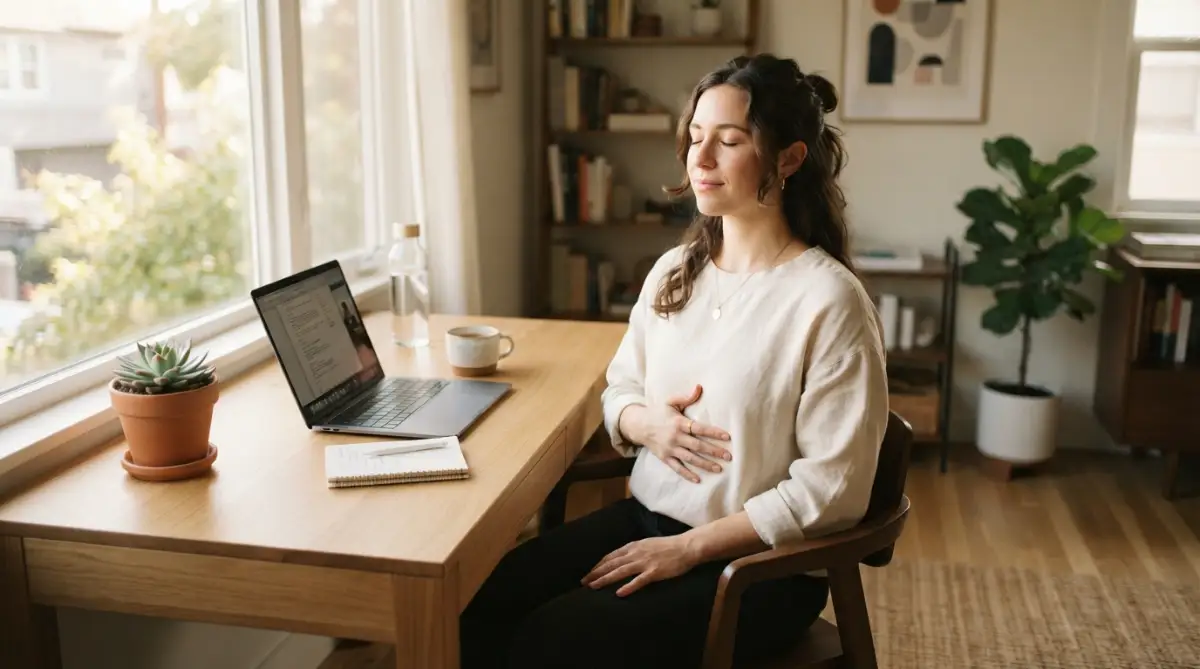
- Easy Daily Fix: Take micro-breaks to reset your posture and practice slow belly breathing while sitting at your desk.
Understanding Your Body's Invisible Foundation
To fix a problem, you first need to understand how your body is truly built. Your pelvic floor acts like a supportive hammock of muscles stretching from your tailbone to your pubic bone. These muscles hold your bladder, bowels, and reproductive organs safely in place. They work quietly behind the scenes every time you breathe, walk, jump, or lift something heavy. Without them functioning properly, your entire upper body alignment falls out of balance.
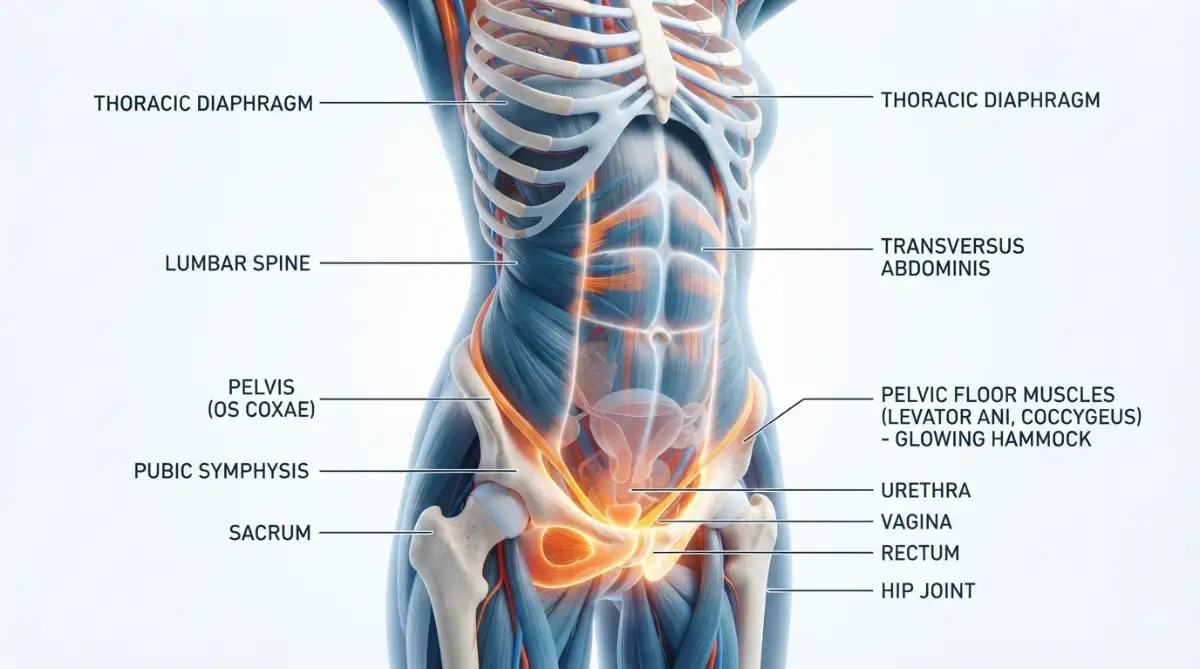
Think of your core as a soda can where the top is your diaphragm and the bottom is your pelvic floor. If the bottom of the can gets dented or weak, the entire structure loses its internal pressure and strength. Doing endless sit-ups only works the outer layer of your abs while completely ignoring the base. This is why so many fitness enthusiasts still suffer from chronic back pain despite having visible six-pack abs. True physical strength requires a balanced system where every single muscle layer works together in harmony.
ore Strength Myths vs. Everyday Facts
Let us clear up some common confusion before we move forward. You might recognize a few of these misconceptions:
Myth: Doing 100 sit-ups a day will fix your back pain.
Fact: Sit-ups only target the outer abs. If your deep foundation is weak, sit-ups actually push more pressure downward, making things worse.
Myth: Pelvic floor issues only happen to pregnant women.
Fact: Office workers, heavy weightlifters, and men dealing with stress face these exact same internal muscle weaknesses.
Myth: You need a hard, rigid core all day.
Fact: Squeezing your stomach tight all day creates muscle fatigue. Your core needs to breathe, expand, and contract naturally like a balloon.
Practical Ways to Rebuild Your Core Base
Rebuilding strength in this hidden muscle group does not require hours at a gym or heavy equipment. You can start integrating simple, mindful habits into your daily routine right from today. The key is consistency, patience, and learning how to properly connect with muscles you cannot see. Let us look at some practical, science-backed steps to wake up your foundational support system.
Mastering Mindful Diaphragmatic Breathing
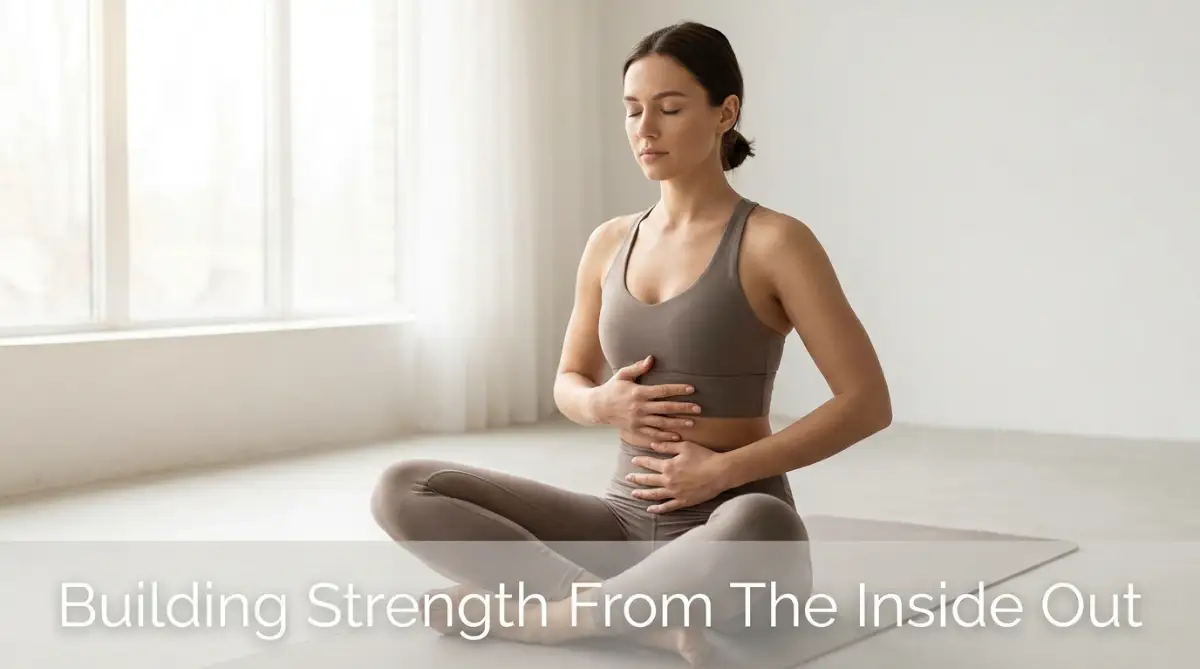
Your breath and your pelvic floor are directly connected like partners in a delicate dance. When you inhale deeply, your diaphragm moves down and your pelvic floor naturally relaxes and expands. When you exhale slowly, your diaphragm moves up and your pelvic floor gently lifts and contracts. Most of us breathe shallowly into our chest, which completely bypasses this natural internal movement.
To practice this, lie down comfortably on your back with your knees bent and feet flat on the floor. Place one hand on your chest and the other on your lower belly just below your navel. Take a slow breath in through your nose, letting your belly rise while keeping your chest relatively still. As you exhale softly through your mouth, feel your belly fall and gently draw your lower core inward.
I remember when I first tried this exercise, I could barely feel any movement at all down there. My mind was so used to forcing movements that letting go and breathing naturally felt surprisingly difficult. I had to remind myself to slow down and stop straining my neck and shoulder muscles. After a few days of daily practice, the mind-muscle connection started to wake up naturally.
Integrating Everyday Posture Awareness
Your daily sitting and standing habits play a massive role in how much stress your pelvic floor has to handle. Slouching forward in your chair creates constant downward pressure on your lower internal organs and muscles. Over time, this constant pressure stretches and weakens the supportive hammock structure without you even noticing.
Whenever you sit at your workspace, try to keep your feet flat on the floor and your weight evenly distributed. Imagine a gentle string pulling the crown of your head straight up toward the ceiling to lengthen your spine. This small adjustment instantly relieves unnecessary pressure from your lower back and pelvic region.
Here is a quick pro tip that completely changed my daily routine during long working hours. Whenever my computer screen notification beeped, I used that exact moment to check my posture and take one deep breath. I realized that my old habit of holding my breath while typing was tightening my core and causing fatigue. By pairing deep breathing with micro-breaks, my lower back stiffness reduced drastically within just two weeks.
Gentle Mobility and Stabilization Movements
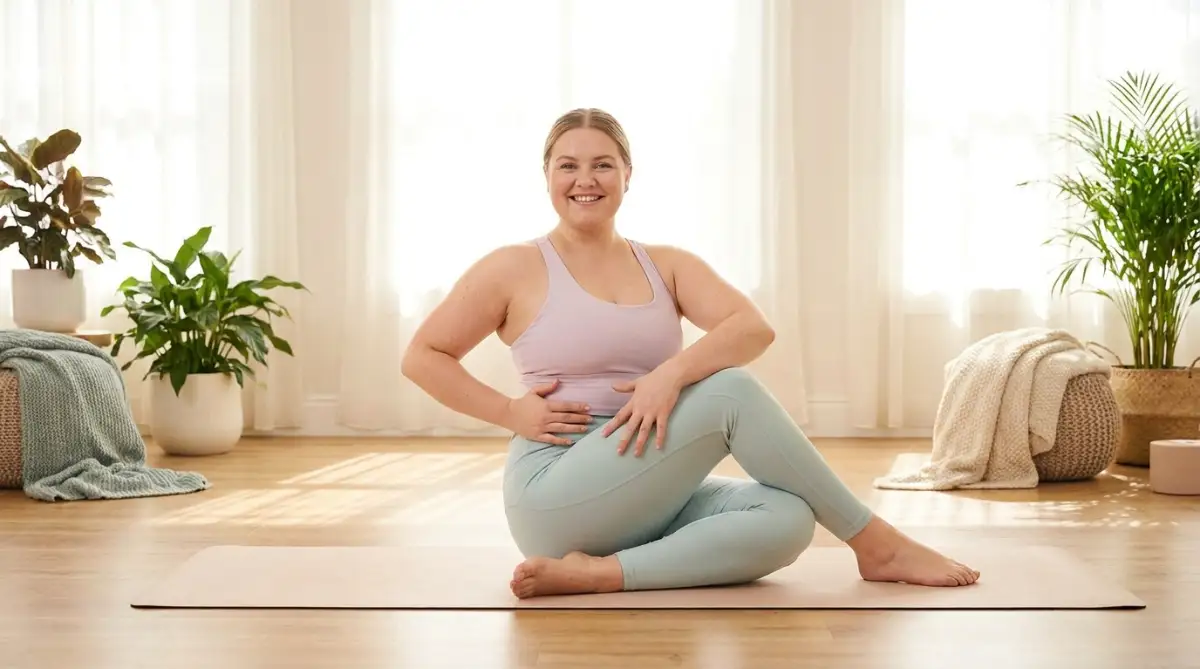
You do not need intense workouts to keep these deep muscles healthy and responsive. Gentle movements that encourage hip mobility and pelvic tilting can work wonders for your daily comfort. These exercises help release chronic tightness in the surrounding glutes and inner thighs, allowing the core to function properly.
One great exercise is the gentle pelvic tilt performed while lying down on a soft mat. As you inhale, gently arch your lower back slightly away from the floor. As you exhale, flatten your lower back against the mat by tilting your pelvis upward. Move slowly and fluidly between these two positions without using brute force or holding your breath.
A quick way to feel this mind-muscle connection is what my therapist calls "The Fake Cough Test". Sit up straight and place your hand on your lower stomach. Now, give a sharp, fake cough. Did you feel that sudden inward pull under your hand? That fast reaction is your deep core doing its job to stabilize your organs during sudden pressure. Your goal is to learn how to activate that exact feeling gently, without actually coughing.
Another helpful movement is the bridge pose, which activates your glutes, hamstrings, and deep core stabilizers simultaneously. Squeeze your glutes lightly as you lift your hips, making sure not to push up too high. Focus on a smooth, controlled motion rather than rushing through the repetitions to get a better workout.
If you want to dive deeper into visual demonstrations and expert routines, you can check out guided tutorials online.
Watch this helpful video demonstration to learn proper breathing and core alignment techniques:
Taking care of your body's foundation is a lifelong journey that rewards you with better posture and daily freedom. By paying attention to these overlooked muscles, you can transform your physical health and overall quality of life. Start small, stay consistent, and listen closely to what your body is trying to tell you every single day.
Mastering Advanced Core Control and Long-Term Stability
When you want to keep your foundational strength stable over the years, standard exercises are only the starting point. Many people learn how to breathe correctly and perform basic tilts, but they stop right when progress begins. To maintain deep core integrity, you must weave mindful movement into your daily physical habits without overcomplicating things. Think of your core like a finely tuned musical instrument that requires regular, gentle adjustments rather than harsh daily bashing. If you want to dive deeper into overall body mechanics, you can read more about how choosing the wrong footwear is slowly destroying your body's foundation to see how foot alignment affects your pelvis.
Long-term success relies heavily on how you handle everyday transitions, such as getting out of bed or lifting light objects. Instead of blindly rushing through your morning routine, try exhaling gently as you engage your core to stand up. This small habit protects your lower internal joints and prevents sudden pressure spikes inside your abdominal cavity. Research from academic journals like the Journal of Physical Therapy Science shows that mindful stabilization during routine tasks significantly reduces chronic lower back discomfort over time. When your baseline movement patterns improve, you stop wearing down your joints prematurely.
Another advanced secret is paying close attention to your daily sitting habits while working or resting for long hours. Slouching crushes your lower abdominal space and forces your deep stabilizing muscles to turn off completely. You can fix this by setting a gentle reminder on your phone to check your posture and reset your breathing every hour. To enhance your general physical longevity, it is also smart to explore how to protect sensitive skin from the sun myths vs reality for well-rounded self-care habits. Consistency with these minor tweaks builds a resilient body that handles unexpected physical stress with ease.
Dangerous Pitfalls That Sabotage Your Progress
When people first discover the importance of deep core work, they often make the mistake of over-contracting their muscles. I remember trying to squeeze my lower core as hard as possible all day long, thinking tighter meant better results. That constant, harsh tension actually backfired, causing severe muscle fatigue and even more tension in my lower back. Your body needs a natural balance of tension and complete relaxation to function properly.
Another common trap is holding your breath during physical exertion, which pushes downward pressure directly onto your pelvic floor. Whether you are lifting a heavy box or pushing through a workout set, exhaling through the effort is essential. If you hold your breath, you create an internal traffic jam that weakens your natural structural support. For related insights on lifestyle stressors, you might find it helpful to read about are chronic high-cortisol levels secretly sabotaging your stubborn weight loss. Ignoring these subtle body signals can stall your recovery and leave you feeling frustrated.
Many individuals also expect overnight miracles and give up when they do not see immediate changes in their physical strength. Rebuilding deep internal stability takes steady, patient dedication because these tissues adapt much slower than outer muscles. Pushing yourself into advanced routines too quickly can lead to strain, forcing you to step back and restart. Listen closely to your physical feedback loops, and never push through sharp pain or unusual discomfort.
Your Path Forward to Lasting Core Health
Building a resilient body starts from the inside out through mindful daily habits, proper breathing, and gentle postural awareness. You do not need complicated equipment or exhausting workout regimens to protect your foundational support system over the years. By focusing on quality movement and avoiding common over-exertion traps, you create a sustainable routine that supports every single step you take. Small, intentional changes compound over time, leading to lasting comfort, better posture, and renewed physical confidence in your daily life.
I realized that taking care of my inner core was the missing puzzle piece that finally brought peace back to my daily routine. By listening closely to my body and practicing patience every single day, I unlocked a deeper level of physical freedom. You have the exact same power to transform your foundation starting right now, so take that first mindful breath today.
Answers to Common Questions About Core and Pelvic Wellness
Is core strengthening through breathing safe for everyone?
Yes, gentle diaphragmatic breathing and basic stabilization are generally safe and beneficial for almost all adults. However, if you have chronic pelvic pain or underlying medical conditions, it is always wise to consult a healthcare professional before starting a new routine.
How long does it take to notice improvements in core stability?
Most people begin to notice subtle improvements in posture and body awareness within two to three weeks of daily practice. Deep muscular adaptation takes time, so consistency is much more important than intense, occasional effort.
Can men benefit just as much as women from these exercises?
Absolutely, because both men and women share a very similar deep core and pelvic floor muscular structure. Men often experience massive improvements in lower back support and posture stability by incorporating these mindful habits.
Disclaimer
The information provided in this article is for educational and informational purposes only and is not intended as medical advice. Always consult with a qualified healthcare provider or physical therapist before starting any new exercise routine, fitness program, or physical therapy regimen, especially if you have pre-existing health conditions or chronic pain."The content is not intended to diagnose, treat, or cure any disease."