The Secret Struggle My Feet Taught Me About Health
If your lower back throbs after a quick grocery run or your knees ache by 3 PM, your shoes might be lying to you. We spend hundreds of dollars on ergonomic chairs and gym passes, yet we walk around on stiff, flat soles that throw our entire skeleton out of line. I spent years popping painkillers before realizing my favorite flat sneakers were the real villain behind my joint pain. Here is how your footwear silently wrecks your posture—and the exact steps you can take today to fix it.
It is honestly scary how many of us are walking around in "foot coffins" without even knowing it. We spend so much money on gym memberships and healthy food, but we forget the very foundation that carries us. When your feet are not supported correctly, your entire body has to compensate for that lack of balance. You might feel a sharp pain in your neck or a dull ache in your hip and wonder why. Most people never connect these dots to the shoes they put on every morning. It is a slow, silent process that steals your energy and ruins your mood day by day.
I have spoken to so many people who feel like they are trapped in a body that is failing them. They feel tired, grumpy, and physically drained by the end of the work day. Often, they blame stress or lack of sleep, but the real enemy is under their heels. A bad pair of shoes changes the way you walk, which then changes the way your bones sit on top of each other. It is like building a house on shifting sand. No matter how nice the walls are, the house will eventually start to crack.
This struggle is real for millions of workers, parents, and students who choose style over support. We live in a world that sells us shoes based on brand names and flashy colors. We rarely see advertisements talking about the natural shape of the human foot. Because of this, we have lost the basic knowledge of what a "good" shoe actually feels like. We have accepted foot pain as a normal part of life, but I am here to tell you it is not. You deserve to move through the world without feeling like every step is a chore.
📌 Summary: 4 Rules to Protect Your Posture
- Shop in the Afternoon: Your feet naturally swell through the day; shopping after 2 PM prevents you from buying shoes that become painful by evening.
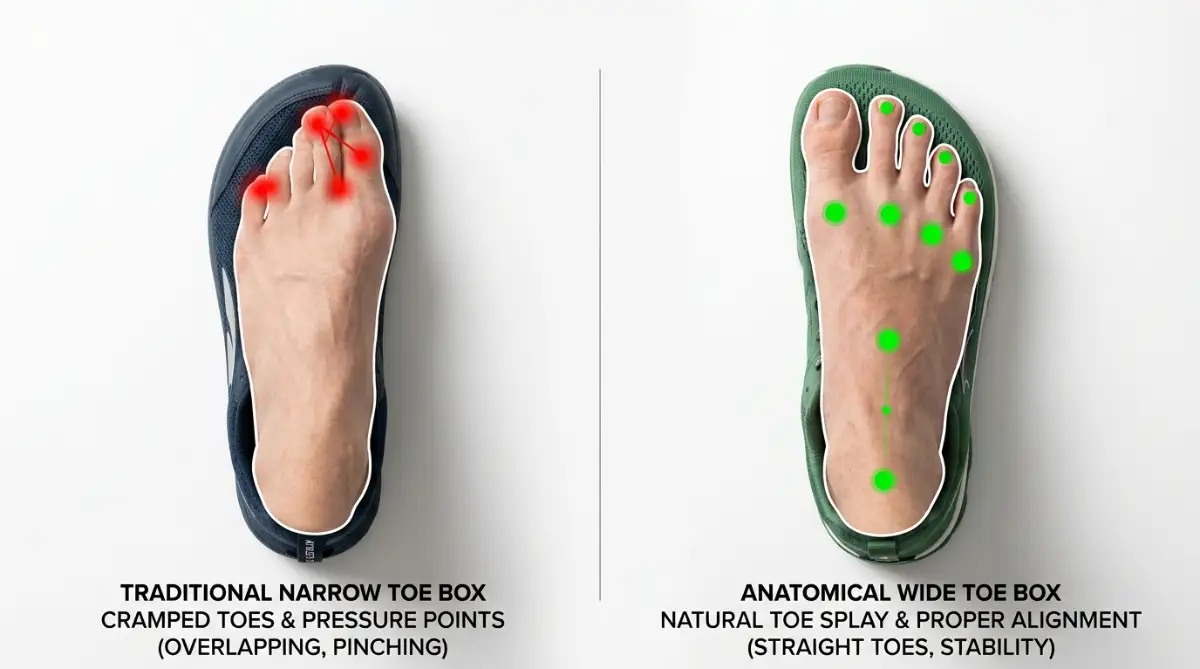
- Check the Toe Splay: Your toes must spread out flat. If a shoe squeezes your pinky toe inward, your lower back will work double-time to balance your walk.
- Rotate Daily: Never wear the same pair two days in a row—give the foam 24 hours to bounce back to its original shock-absorbing shape.
- Ditch the 500-Mile Shoes: Most walking shoes lose their structural support between 300 and 500 miles, even if the outer fabric still looks brand new.
Why Your Current Shoes Might Be Your Biggest Enemy
To fix a problem, we first have to understand how it works on a deeper level. Your body is a connected chain of bones, muscles, and nerves. If the bottom link of that chain—your feet—is out of place, everything above it will suffer. This is often called the "kinetic chain" in the medical world. When you choose shoes that are too tight, too flat, or too high, you are forcing your body to move in ways it was never meant to.
The Science of the Arch and Shock Absorption
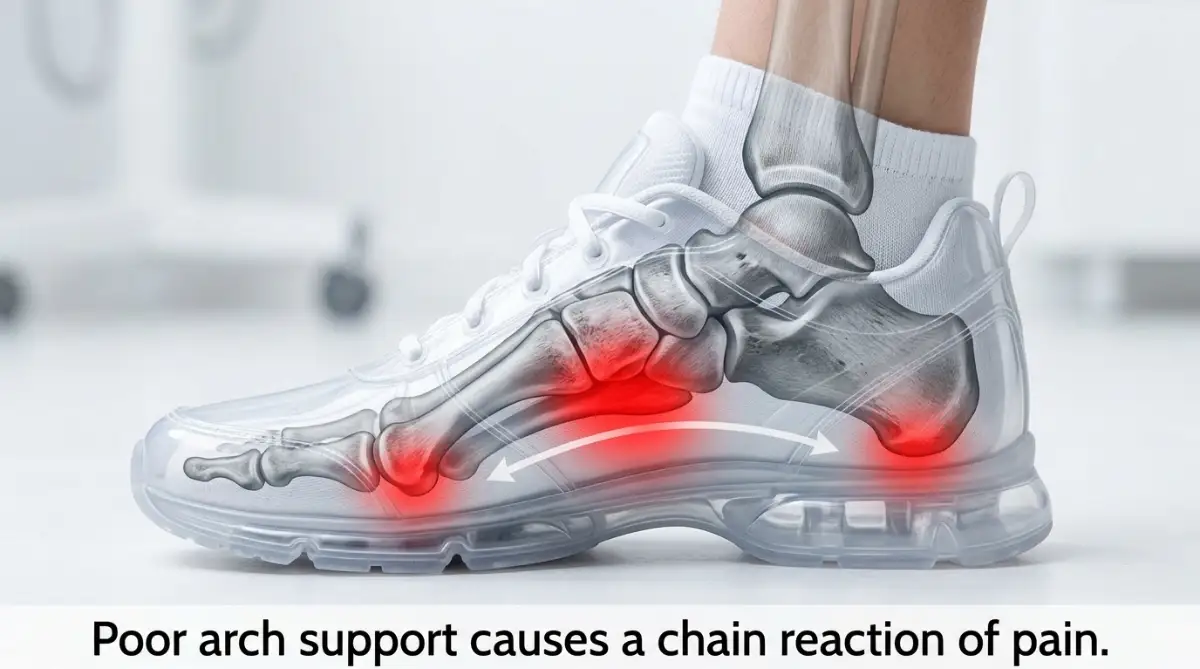
Your feet have a natural arch that acts like a spring in a car's suspension system. Every time your foot hits the ground, that arch flattens slightly to absorb the impact. If you wear shoes with no arch support, that shock travels straight up into your ankles, knees, and spine. This is why people who wear flat flip-flops or thin canvas shoes often have chronic back issues. The "wrong footwear" basically removes your body's built-in shock absorbers.
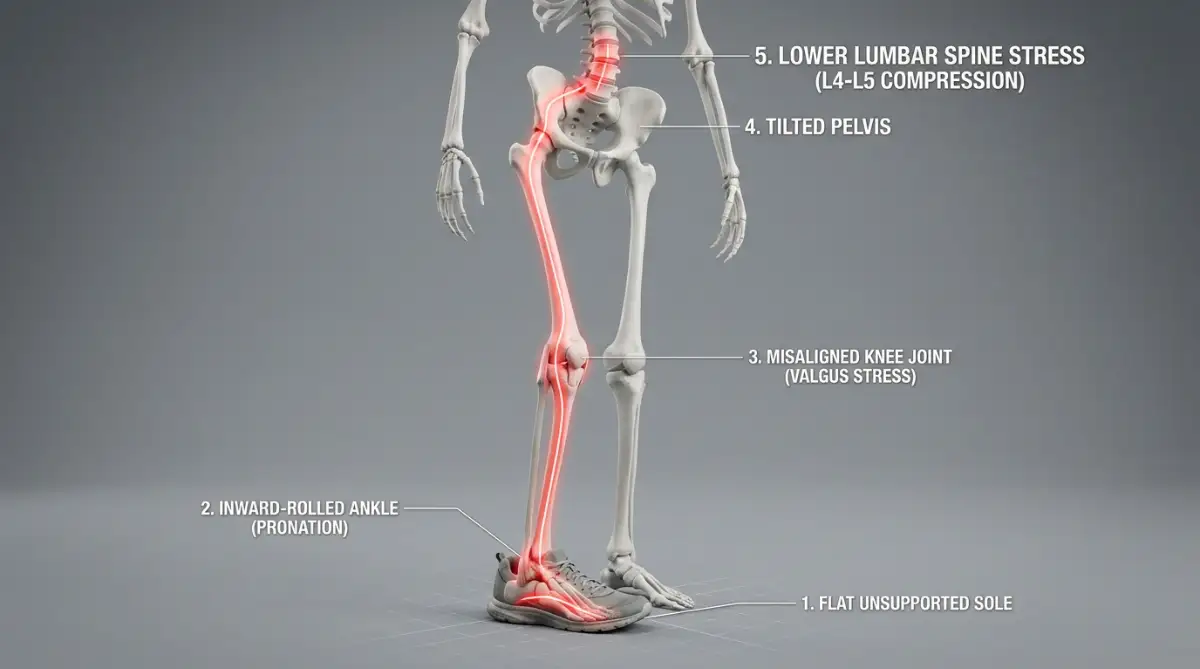
Without that support, your foot might "over-pronate," which means it rolls inward too much. This rolling motion pulls on the tendons in your legs and rotates your shin bone. Over time, this causes your kneecap to move out of its proper track. It is a perfect example of how a small issue at the bottom creates a big disaster in the middle. You might go to a doctor for knee pain, but the real solution is often sitting in your closet.
Pro Tip: I used to buy my shoes first thing in the morning because the store was quiet. I later realized my feet were at their smallest then! Now, I always go shoe shopping in the afternoon when my feet are slightly swollen from walking. This ensures the shoes I buy stay comfortable all day long, not just for the first hour.
The Danger of the Narrow Toe Box
One of the most common mistakes is wearing shoes that are too narrow at the front. Most modern shoes come to a point at the toes, but human feet are naturally wide at the toes. When you cram your toes together, you are stopping your foot from balancing you properly. This leads to painful problems like bunions and hammer toes. Even worse, it weakens the muscles in your feet because they can no longer move naturally.
When your toes cannot spread out, your brain loses some of the "data" it needs to keep you balanced. Your body then has to use larger muscles in your hips and back to keep you from falling. This is why you might feel exhausted even if you haven't done any heavy lifting. Your back is working overtime just to keep you upright because your feet are trapped in narrow boxes. Choosing footwear with a wide toe box is one of the fastest ways to feel more stable.
If you want to see exactly how your walk affects your health, watch this expert breakdown of foot mechanics.
High Heels and the Shift in Gravity
We cannot talk about the wrong footwear without mentioning high heels. While they might look great for a night out, they are a nightmare for your posture. High heels shift your entire center of gravity forward onto the balls of your feet. To keep from falling on your face, your body has to lean your lower back forward and your upper back backward. This creates an "S" curve in your spine that puts massive pressure on your nerves.
Wearing heels for a long time can actually shorten the tendons in your calves. This makes it painful to even walk barefoot or in flat shoes later on. It is a physical change to your anatomy that can take months of stretching to fix. While I am not saying you can never wear them, it is important to know the cost. Your body pays a price for every inch of height you add to your heel.
The Role of Cushioning and Material
Not all cushioning is created equal, and too much can be just as bad as too little. If a shoe is too soft, like a marshmallow, your foot will wobble around inside it. This lack of stability forces your ankles to work harder to stay steady. On the other hand, a shoe that is as hard as a rock provides no protection against the hard pavement. You need a balance of firm support and enough padding to take the edge off each step.
The material of the shoe also matters for your overall foot health. Non-breathable materials like cheap plastic or thick synthetic leather trap heat and moisture. This creates a playground for bacteria and fungi. Healthy feet need to stay dry and cool to prevent infections and skin irritation. When your feet are healthy on the skin level, you are much more likely to stay active and keep moving.
Understanding Your Unique Foot Type
Everyone has a different foot shape, which is why there is no "one size fits all" shoe. Some people have high arches, while others have "flat feet." If you have high arches, you need more cushioning to help with shock. If you have flat feet, you need more "motion control" to keep your foot from rolling too much. Choosing the wrong footwear often happens because we don't know our own foot type.
A simple way to check is the "wet test." Get the bottom of your foot wet and step onto a piece of cardboard. Look at the print you leave behind. If you see your whole foot, you likely have flat feet. If you only see a thin line on the outside, you have high arches. Knowing this simple fact can change the way you shop forever. It helps you look past the brand name and focus on what your body actually needs to stay healthy.
Quick Diagnostic: Match Your Foot Print to the Right Sole
Long-Term Effects on the Spine and Neck
Most people are shocked to learn that their neck pain could be caused by their shoes. It seems so far away, but the connection is real. Your spine is like a tall tower of blocks. If the very bottom block is tilted, every block above it must tilt the other direction to stay balanced. This creates tension in the muscles of your neck and shoulders. You might spend hundreds of dollars on neck massages, but the tension will keep coming back if your shoes are the problem.
Chronic misalignment leads to early wear and tear on your spinal discs. This can result in long-term conditions like sciatica or herniated discs. It is much easier to change your shoes today than to deal with spinal surgery years from now. Prevention is always the best medicine, and it starts with the choices you make in the shoe store. Your future self will thank you for being mindful of your foundation today.
The Myth of "Breaking In" New Shoes
We have all heard the advice that you need to "break in" a new pair of shoes. This is actually a huge myth that causes a lot of unnecessary pain. A well-designed shoe should feel comfortable and supportive the moment you put it on. If a shoe hurts in the store, it will likely hurt even more after walking a mile in it. You are essentially waiting for your foot to deform enough to fit the shoe, rather than the shoe fitting your foot.
When you try on shoes, walk around the store for at least five minutes. Do not just stand in front of the mirror. Pay attention to any rubbing or pinching. If you feel any "hot spots" on your skin, put the shoes back on the shelf. Your feet should never have to suffer for the sake of a shoe. True comfort comes from a perfect fit right from the start.
Why Price Does Not Always Equal Quality
Many people think that if they spend $200 on a pair of designer shoes, they are doing something good for their health. Unfortunately, many expensive brands focus 100% on style and 0% on ergonomics. You can find a $60 pair of shoes that provides excellent support and a $500 pair that ruins your feet in an hour. Don't let a high price tag fool you into thinking a shoe is "healthy."
Look for features like a removable insole, a firm heel counter, and a flexible forefoot. These are the signs of a shoe built for humans, not just for photos. It takes a bit of research to find the brands that care about foot health, but it is worth the effort. You are investing in your ability to walk, run, and move for the rest of your life. That is an investment that always pays off.
My 15-Second In-Store Shoe Stress Test
Before you tap your card at the checkout counter, run these three quick physical checks on any shoe:
- The Torsion Twist: Grab the heel with one hand and the toe with the other. Try to wring it like a towel. If it twists like a wet rag, it will offer zero stability to your arch.
- The Heel Counter Pinch: Squeeze the very back cup of the shoe behind your ankle. It should feel firm like hard plastic, not collapse like thin cardboard.
- The Natural Bend Line: Push the toe upward against the floor. The shoe should only bend where your toes naturally bend—never in the dead center of the arch.
Small Changes for a Pain-Free Life
You don't have to throw away every pair of shoes you own right now. Start by identifying the ones you wear most often—your work shoes or your daily walking sneakers. If these are worn out or unsupportive, replace them first. You can also look into high-quality orthotic inserts to add support to your existing shoes. These small steps can make a huge difference in how your body feels by the end of the week.
Listen to your body. If you feel tired or achy, take a look at what is on your feet. Your body is always communicating with you through these small signals. When you start choosing footwear that respects your foundation, you will be amazed at how much energy you regain. You will find yourself walking faster, standing taller, and feeling more confident. Your foundation is the base for everything you do, so make sure it is strong and supported.
Pro Secrets for Choosing Shoes Your Body Will Love
Once you understand the basic damage bad shoes cause, it is time to look at the advanced ways to fix it. Most people think buying a new pair of sneakers is enough, but there is a lot more to it. I found out the hard way that even "good" shoes can become bad if you don't use them correctly. You need to think about your shoes like a professional athlete thinks about their equipment.
One secret I learned from a physical therapist is the importance of shoe rotation. You should never wear the same pair of shoes two days in a row. Shoes need time to decompress and let the cushioning return to its natural shape. If you wear them every day, the foam stays squashed and stops protecting your joints. Keeping two or three pairs in your daily mix helps each pair last longer and gives your feet a slightly different support system every day.
Another professional tip is to perform a "stability test" before you buy anything. Hold the shoe by the heel and the toe, then try to twist it like you are wringing out a towel. A healthy shoe should be firm in the middle and only bend at the toes. If the shoe folds in half or twists easily in the center, it won't support your arch. This simple check can save you from months of unnecessary back pain.
Improving your foundation also involves what you do when you are not wearing shoes. I started doing "foot gym" exercises every evening while watching television. I use my toes to pick up small towels or marbles from the floor. This strengthens the tiny muscles in the arch that modern shoes usually let go to sleep. Stronger foot muscles mean you won't rely as much on the shoe's structure to keep you balanced.
You should also pay attention to how your shoes support your bone health. Wearing the right footwear is a major part of foolproof methods to preserve bone density and ward off osteoporosis. When your feet are aligned, your bones sit naturally and avoid the grinding that leads to long-term wear. It is amazing how much better your hips feel when your feet are doing their job correctly.
Many experts suggest checking your socks as well as your shoes. Thick, cotton socks can bunch up and create pressure points that change how you walk. I switched to thin, moisture-wicking socks that allow my feet to feel the inside of the shoe better. This improved my "proprioception," which is just a fancy word for how your brain senses where your feet are. Better sensing leads to better balance and fewer trips or falls.
If you are dealing with circulation issues, your footwear choice is even more important. Poorly fitted shoes can restrict blood flow to your toes, making recovery from exercise much slower. You might even find that improving your footwear works well alongside effortless dietary shifts to stabilize blood sugar fast. Good blood flow is essential for healing the micro-damage that happens to our feet every day.
Finally, consider the surface you walk on most often during your day. If you work on hard concrete, you need much more shock absorption than someone who walks on carpet. I realized that my "office shoes" were fine for sitting, but they were killing me during my commute on city sidewalks. Always match the shoe's technology to the environment where you spend the most time. This level of detail is what separates people with chronic pain from those who stay active and healthy.

Sneaky Mistakes That Keep Your Body in Pain
Even when we try to do the right thing, we often fall into common traps that ruin our progress. One of the biggest mistakes is holding onto shoes for way too long. We all have that favorite pair of sneakers that feels like "home," but they have a hidden expiration date. Most athletic shoes lose their supportive power after about 300 to 500 miles of walking.
If you look at the bottom of your shoes and see that the tread is worn down on one side, they are already damaging your body. Worn-out soles force your ankles to tilt, which sends a wave of misalignment up to your knees and hips. I used to think I was saving money by wearing shoes until they fell apart. I eventually realized I was just trading the cost of shoes for the cost of doctor visits and physical therapy.
Another emotional trap is buying shoes based on "size" rather than "fit." Shoe sizes are not standard across different brands or even different styles from the same brand. I used to be a "Size 10" no matter what, but that led to many painful blisters and cramped toes. Now, I ignore the number on the box and focus on having a thumb’s width of space at the front. If you have to squeeze into it, your body will eventually pay the price through inflammation.
Ignoring the connection between your feet and your fascia is another silent mistake. Your feet are covered in a thick layer of connective tissue that runs all the way up to your head. If your shoes are too tight, this tissue gets tight too, leading to headaches or stiff shoulders. You can learn more about this by unlocking the secrets of fascia release to eliminate unexplained body aches. Many people spend years treating their back pain when the real problem is the tight tissue in their feet.
Some people also make the mistake of switching to "minimalist" or "barefoot" shoes too quickly. While these shoes can be great for foot strength, your body needs time to adjust after years of wearing thick heels. Jumping into thin shoes overnight can cause stress fractures or severe heel pain. It is a journey that requires patience and a slow transition to avoid injuring your foundation.
Don't forget that your feet change as you get older. Ligaments tend to stretch out, and your arches might drop slightly over time. I was shocked to find out that my feet had grown a half-size larger in my thirties. If you haven't had your feet measured by a professional in a few years, you might be wearing the wrong size right now. This simple oversight is often the root cause of chronic foot fatigue.
Lastly, many people forget that their daily habits are all connected. You might have great shoes, but if you have other poor lifestyle choices, your body will still struggle to recover. It is worth checking out these 7 silent habits destroying your immune system and how to stop them to ensure your whole body is supported. A healthy foundation requires a balanced approach to both your gear and your daily routine.
Starting Your Journey Toward a Stronger Foundation
Fixing your relationship with your footwear is one of the most rewarding things you can do for your health. It is not just about avoiding pain; it is about feeling light and energetic again. When your feet are happy, your whole outlook on life tends to improve. You start looking forward to walks and outdoor activities instead of dreading the physical cost.
Take a look in your closet today and be honest with yourself about what you see. If a shoe hasn't been comfortable for months, it is time to let it go. You don't need a hundred pairs of shoes; you just need a few high-quality pairs that respect your anatomy. Small adjustments in how you shop and how you care for your feet will yield massive results over time.
According to the American Podiatric Medical Association, almost 77% of people have experienced significant foot pain, yet many don't seek help. You don't have to be part of that statistic. By making informed choices, you are taking control of your mobility and your long-term wellness. Your body is a masterpiece of engineering, and it deserves a foundation that is stable and strong.
Studies published in the Journal of Foot and Ankle Research show that proper footwear can significantly reduce the risk of fall-related injuries in older adults. This proves that your choices today are protecting you for the future. Every step you take in a supportive shoe is an investment in a life without limits. You have the power to stop the "slow destruction" of your foundation starting right now.
I remember the day I finally put on a pair of shoes that actually fit my feet correctly. It felt like a weight had been lifted off my entire body, and the constant back ache I had lived with just vanished. I want you to feel that same sense of relief and freedom in your own life. Please don't wait until the pain becomes unbearable to start caring for the feet that carry you every day.
Common Questions About Footwear and Body Health
How often should I really replace my daily walking shoes?
Most experts recommend replacing your primary walking or running shoes every 300 to 500 miles. For a person who walks 30 minutes a day, this usually means getting a new pair every six months. Even if the outside looks clean, the internal cushioning often breaks down much sooner than the tread.
Can wearing the wrong shoes cause permanent damage?
Yes, long-term use of poorly fitted shoes can lead to structural changes like bunions, hammer toes, and chronic nerve compression. It can also cause early-onset arthritis in the knees and hips due to constant misalignment. The good news is that switching to better shoes can stop this progression and relieve most symptoms.
Are expensive designer shoes better for my back than cheaper sneakers?
Not necessarily, as many high-priced fashion brands prioritize aesthetics over orthopedic support. You should always look for specific features like arch support and a firm heel counter rather than a brand name. Some of the best shoes for your body foundation are mid-priced options designed specifically for foot health and ergonomics.
Is it better to walk barefoot around the house or wear slippers?
It depends on your floor surface and your specific foot type. Walking barefoot on hard tile or hardwood floors can be tough on your heels and arches over time. If you have flat feet, wearing a supportive indoor slipper or sandal is usually much better for your spine and joint health.
Disclaimer: The information provided in this article is for educational and informational purposes only and is not intended as medical advice. Always consult with a healthcare professional, podiatrist, or physical therapist before making significant changes to your footwear or exercise routine, especially if you have pre-existing health conditions."The content is not intended to diagnose, treat, or cure any disease."