
Waking Up Exhausted: The Hidden Reason Your Body Always Hurts
Have you ever crawled out of bed feeling like you wrestled a bear all night? You stretch, your back pops, and your neck is so stiff you can barely look at your phone. I used to think I just slept weird, but it turns out, something much sneakier was causing my morning aches. Let me show you exactly what is going on under your skin and how I finally fixed it without spending a dime on doctors.
Millions of normal people are walking around right now carrying a heavy burden of unexplained physical pain. You might be one of them, spending your hard-earned money on temporary pain relief creams or expensive massage appointments that only help for a few hours.
This hidden tension slowly steals your mental peace, making you snap at your loved ones because you are just so tired of hurting. When your body is constantly fighting chronic discomfort, you cannot focus on your work, and even fun weekend activities start to feel like heavy chores.

Quick Fixes Before We Start:
- Stop aggressively foam rolling—slow, gentle pressure actually melts the knots faster.
- Drink water all day with a tiny pinch of sea salt to properly rehydrate your sticky tissues.
- Do tiny "micro-movements" every hour to stop your body from gluing itself into a chair shape.
- Learn to breathe deeply through your stomach to tell your nervous system it is safe to relax.
The Secret Web Inside You: Understanding Your Connective Tissue
Before we fix the problem, we need to understand exactly what is happening under your skin. Imagine wearing a full-body sweater made of extremely tight, thin yarn that wraps around every single muscle, bone, and organ in your body.
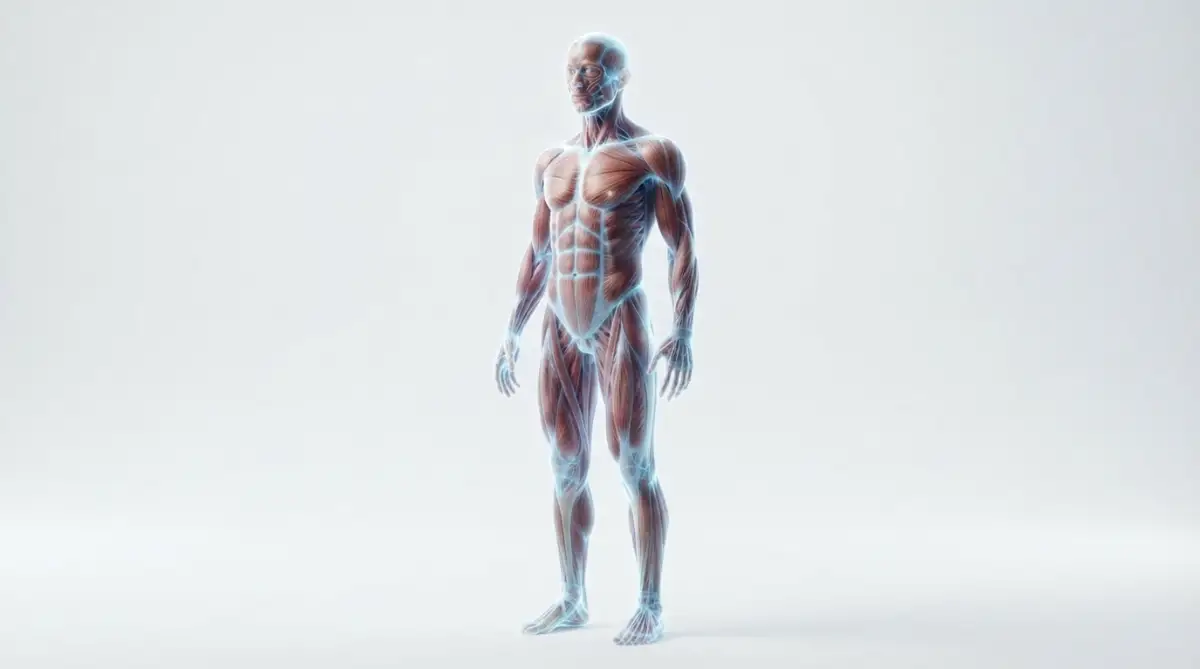
This internal sweater is exactly what scientists call your fascia. It is a continuous web of connective tissue that holds your entire physical structure together. When this tissue is healthy, it is slippery, smooth, and stretchy, allowing your muscles to glide past each other without any friction.
However, when this connective tissue gets damaged by bad posture, physical trauma, or even extreme mental stress, it becomes thick and sticky. The smooth fibers dry out and lock together, forming tight knots that restrict your blood flow and limit your natural movement.
Here is a real-life scenario to make it crystal clear. Imagine you pull down hard on the bottom corner of your shirt right now. You will immediately feel the fabric pulling tight against your opposite shoulder.
Your internal web works exactly the same way, which explains why a tight hip can cause mysterious pain all the way up in your neck. This is why massaging your sore shoulder never gives you lasting relief, because the actual root cause of the tension might be hiding in a completely different part of your body.
Try This 10-Second Posture Test Right Now:
- Stand up flat against a wall (make sure your heels, butt, shoulders, and head touch it).
- Try to raise both arms straight up to touch the wall behind you.
- Did your lower back arch way off the wall? Or did your shoulders hurt?
- My result: I could not even get my hands past my ears without my back bending. If you failed this test too, it means your front side is completely glued down!
Myth vs Reality: Why Traditional Stretching Fails
As you can see from the simple breakdown above, treating your body with aggressive force is never the right answer. When you force a tight, dried-out web to stretch, it usually fights back by snapping tighter.
To safely melt away these hidden knots, we must approach our body with patience, science, and the right techniques. Let us walk through the exact steps you can take today to free your restricted tissues and finally find true comfort.
Gentle Strategies to Melt Away Hidden Body Knots
If you want to completely eliminate those mysterious aches, you need to change the way you think about physical recovery. We are not going to force anything, bend painfully, or push through agonizing pain limits.
Instead, we will use smart, gentle methods to convince your nervous system that it is completely safe to let go of the stored tension. These highly effective methods will help rehydrate your tissues and bring fresh oxygen back into your sore spots.
The Slow Sponge Method: Rehydrating Your Internal Web
Your internal connective tissue acts exactly like a regular kitchen sponge. When a sponge dries out, it becomes hard, brittle, and impossible to bend without breaking it into pieces.
But when you soak that same sponge in warm water, it becomes incredibly soft, bouncy, and easy to twist. Your body needs constant, deep hydration to keep those tiny fibers slippery and smooth.
Drinking a single large glass of water in the morning is simply not enough to fix a chronic problem. You need to supply your body with consistent sips of water throughout the entire day, combined with natural electrolytes like a tiny pinch of sea salt.
This continuous supply of water slowly pushes its way into the dried-out, painful knots, softening them up from the inside out. Once the tissue is properly hydrated, your daily movements will naturally start to iron out the sticky spots.
I used to make a massive mistake when trying to fix my tight back muscles. I would grab a hard foam roller and aggressively roll up and down as fast as I could, thinking I was crushing the knots. I quickly realized that moving too fast just causes the muscles to lock up in fear, making the pain much worse the next day. The real secret is moving incredibly slow, almost like you are melting into the floor, giving the tissue enough time to actually relax and reshape itself.
Finding and Fixing Your Hidden Trigger Points
A trigger point is a highly sensitive spot within your muscle fibers that feels like a hard marble under your skin. These tiny spots are the main villains causing your mysterious aches, because they can send a shooting pain to a totally different area.
To safely release these spots, you do not need expensive equipment; a simple tennis ball or a soft massage ball works perfectly. Place the ball against a wall and gently lean your sore back or shoulder into it.
Do not roll back and forth frantically. Instead, hunt for a tender spot, and once you find it, simply hold your body still right on top of it. Breathe deeply through your nose, letting your body weight slowly sink into the soft ball.
Hold this gentle pressure for about two full minutes, and you will slowly feel the tight marble melt away into a soft, relaxed muscle. This exact process allows fresh, warm blood to rush back into the blocked area, washing away the painful chemicals that cause your aches.

Ready to see this technique in action? Check out this incredibly helpful visual breakdown below.
If you are a visual learner who wants to see exactly how to position your body for maximum relief without accidental injury, this amazing video demonstration is exactly what you need right now.
The Power of Micro-Movements Throughout the Day
One of the biggest reasons our internal web gets glued down is staying in the exact same position for hours at a time. Sitting at a computer desk, staring down at a phone, or driving a long distance tells your body to freeze in that specific shape.
Your body is highly intelligent, so if you sit hunched over for eight hours, it will literally build extra connective tissue to lock you into that hunched position. To prevent this sticky buildup, you need to introduce simple micro-movements every single hour.
You do not need to do a sweaty workout; just stand up, reach your arms wide to the ceiling, and gently twist your torso from left to right. Roll your shoulders backward five times, take a deep breath, and gently tilt your ear toward your shoulder.
These tiny breaks act like a regular oil change for a car engine, keeping the natural fluids moving properly through your entire system. If you commit to doing this for just one minute every hour, your chronic stiffness will drastically decrease within a few short days.
Breaking the Stress and Pain Cycle
There is a fascinating and often ignored connection between your daily mental stress and the physical tension stored in your body. When you feel worried about work, finances, or family issues, your brain immediately sends a tiny danger signal down your spine.
Your shoulders naturally creep up toward your ears, your jaw clenches tight, and your breathing becomes very shallow. Over time, your connective tissue literally absorbs this emotional stress and physically tightens up like a protective armor.
No amount of stretching or massage will permanently fix your body aches if your mind is constantly living in a state of fear and high alert. You have to actively teach your nervous system how to feel completely safe again.
The Ultimate Breathing Technique for Tissue Relaxation
The fastest way to signal safety to your brain is through slow, intentional breathing exercises. When you breathe deeply into your lower belly, it activates a calming nerve in your body called the vagus nerve.
This important nerve acts like an internal brake pedal, instantly slowing down your heart rate and telling your muscles it is okay to soften. Try sitting in a quiet room, placing one hand on your stomach, and breathing in through your nose for a count of four.
Hold that fresh air inside for just a moment, and then slowly exhale out of your mouth for a count of six. The slightly longer exhale is the secret key that physically forces your tight, bound-up tissues to finally let go.
Repeat this simple breathing pattern ten times before you go to bed, and you will notice your body feels significantly lighter and much less painful. Combining this deep breathing with your daily hydration and gentle movement is the absolute best way to win the battle against unexplained aches.
You have the power to heal your body from the inside out, simply by listening to its hidden signals and giving it exactly what it needs to thrive. Take it one day at a time, be gentle with yourself, and enjoy the wonderful journey back to a pain-free, comfortable life.
Taking Your Tissue Healing to the Next Level
Once you understand the basic concept of softening your internal web, you can start using some highly effective professional strategies at home. These advanced methods go beyond simple stretching and target the exact biological mechanisms that keep your body locked up.
Most people completely ignore the role of temperature when trying to fix their physical aches. If you have ever tried to spread a block of freezing cold butter on a piece of soft bread, you know exactly what happens.
The butter destroys the bread because it is completely rigid, hard, and unyielding. Your internal connective tissue behaves in the exact same way when you wake up in a cold room with a stiff body.
Before you try to massage or move your sticky muscles, you need to introduce gentle, penetrating heat to the area. Taking a warm shower for ten minutes or using a high-quality heating pad on your lower back changes the physical state of your tissue.
The heat acts like a warm knife on that cold butter, turning solid, tight knots into a fluid, workable material. This simple temperature shift makes every other healing technique ten times more effective.
My Personal "Heat or Ice?" Cheat Sheet
- Woke up feeling stiff? Use a heating pad for 10 minutes.
- Just rolled your ankle? Grab the ice pack right away.
- Nagging back ache from sitting all day? Heat is your best friend.
- Sharp, hot pain after a heavy workout? Ice it down.
- Rule of thumb: Never use ice on stiff, glued-down muscles—it just freezes the tension even harder!
The Pin and Stretch Technique for Stubborn Knots
Sometimes, a regular massage ball just cannot break up a knot that has been stuck in your shoulder for months. In these situations, physical therapists use a brilliant method called the pin and stretch technique.
You can easily do this yourself at home without paying for an expensive clinic visit. First, you find the tender spot in your muscle and apply firm but tolerable pressure with your fingers or a massage ball.
Instead of moving your fingers around, you keep them completely still, effectively pinning that piece of tissue down against your bone. Then, you slowly move the nearby joint to stretch the muscle underneath your fingers.
For example, if the knot is in your forearm, you press down on the sore spot and then slowly bend your wrist up and down. This action forces the sticky layers of tissue to glide past each other, breaking apart the hidden glue that causes your discomfort.
If you want to read more about how these internal structures interact, there is some excellent fascia research from the National Institutes of Health that explains exactly how these layers slide.
Fueling Your Body for Deep Tissue Repair
You cannot build a strong, flexible body if you are feeding it poor-quality materials every single day. Your connective web is primarily made of collagen, a special type of protein that requires specific nutrients to stay healthy and elastic.
If your daily diet is packed with highly processed snacks and excessive sugar, you are actively creating inflammation inside your joints. This internal swelling makes your tissues feel like they are constantly burning, which explains those heavy, unexplained aches.
To give your body the exact tools it needs to repair itself, you must focus on eating foods rich in natural Vitamin C and amino acids. Citrus fruits, bell peppers, and high-quality bone broth provide the exact building blocks your body uses to create fresh, stretchy collagen.
When you combine good nutrition with movement, your aches slowly fade away because you are fixing the root cause of the damage. In fact, making effortless dietary shifts to stabilize blood sugar fast can dramatically reduce the daily inflammation that makes your muscles feel so stiff.
Using Vibration Therapy to Hack Your Nervous System
Our brains are constantly receiving millions of signals from our nerve endings every single second. When you have a tight knot, the nerve endings in that area are screaming danger, which tells the brain to keep the muscle locked up tight.
You can actually trick your nervous system into relaxing by using localized vibration therapy. When you place a vibrating massage tool on a painful spot, the rapid shaking creates a new, non-threatening signal.
Your brain gets distracted by the vibration and temporarily forgets about the pain signal, allowing the muscle fibers to finally let their guard down. You do not need to push a massage gun deep into your bones to get this benefit.
Simply floating a gentle vibrating tool lightly over your skin for two minutes is enough to completely change the tissue tension. This exact method is highly recommended when exploring understanding chronic pain management through the American Physical Therapy Association, as it prioritizes nervous system safety over aggressive force.

The Hidden Traps That Keep You in Chronic Pain
When people finally discover the secret to releasing their tight internal web, they often get overly excited and rush the process. This enthusiasm is great, but it usually leads to some massive mistakes that can actually make your physical discomfort much worse.
Your body is a highly sensitive machine, and if you approach this healing journey with the wrong mindset, you will quickly hit a frustrating plateau. Let us look at the most common traps people fall into, so you can easily avoid them.
Trap 1: The "No Pain, No Gain" Illusion
We have all been taught that physical recovery requires intense sweating, heavy breathing, and a lot of painful effort. When people buy their first foam roller, they usually throw their entire body weight onto it and roll violently back and forth.
They grit their teeth and hold their breath, believing that extreme pain means the knots are breaking down. This is the absolute worst thing you can do to your delicate connective tissue.
When you inflict sudden, sharp pain on your body, your nervous system panics and triggers a natural defense mechanism. The surrounding muscles instantly tighten up like a solid brick wall to protect your internal organs from the perceived attack.
By pushing too hard, you are literally training your body to hold onto tension even tighter than before. Always remember that tissue release should feel like a satisfying, "good" discomfort, never a sharp, breathtaking agony.
Trap 2: Chasing the Symptoms Instead of the Source
One of the most frustrating things about unexplained body aches is that the pain is rarely located where the actual problem lives. If you have a constant, burning pain between your shoulder blades, you might spend hours rubbing your upper back.
However, because your internal web is connected from head to toe, that shoulder pain might actually be caused by incredibly tight chest muscles pulling your shoulders forward. If you only massage the spot that hurts, you are playing a never-ending game of whack-a-mole.
You must look at your body as a complete system rather than isolated parts. If your lower back hurts, you should probably spend time rolling out your tight hamstrings and the front of your hips.
Ignoring the connected nature of your body will leave you stuck in a constant loop of temporary relief and returning pain. Learning how to balance your entire structure is also one of the most foolproof methods to preserve bone density and ward off osteoporosis as you age.
Trap 3: Ignoring Your Sleep and Stress Hormones
You can spend an hour every single day perfectly rolling out your muscles and stretching your tight spots. But if you are sleeping poorly and stressing out constantly, your tissues will immediately tighten right back up overnight.
When you do not get enough deep sleep, your body cannot flush out the chemical waste products that build up inside your muscles during the day. Furthermore, high mental stress floods your system with cortisol, a hormone that directly breaks down healthy connective tissue.
If you are dealing with mysterious pains, you absolutely must prioritize a calm evening routine and seven to eight hours of solid rest. You might not realize it, but there are many unexpected daily triggers that are secretly disrupting your hormonal balance and keeping your muscles locked in a state of stress.
Protecting your sleep environment and learning how to manage your daily anxiety is just as important as doing your physical stretching exercises. To see how these lifestyle factors connect, you can review how hydration impacts connective tissue elasticity according to sports medicine experts to understand the full picture of recovery.
Your Personal Blueprint for a Pain-Free Life
You do not have to accept chronic discomfort as a normal part of your daily reality. Your body has an incredible, built-in capacity to heal itself, provided you give it the right environment and the proper gentle inputs.
The secret to winning this battle is not found in a magical pill or an expensive one-time physical therapy session. True healing happens in the small, consistent habits you practice every single day in the comfort of your own home.
By drinking more water, using gentle heat, and practicing slow micro-movements, you are actively telling your body that it is finally safe to relax. Remember to breathe deeply when you find a tender spot, and trust the slow melting process instead of forcing the issue.
If you are worried that your aches are tied to deeper health issues, you should also look into the 7 silent habits destroying your immune system and how to stop them. A strong immune system works hand in hand with healthy connective tissue to keep you moving freely and comfortably.
I remember exactly how exhausting it felt to wake up hurting every single day, wondering if I would ever feel normal again. But once I started treating my body with patience and using these gentle tissue release tricks, my mysterious aches completely vanished, and my energy came rushing back. You deserve to live a comfortable, active life, and I highly encourage you to start using just one of these simple methods today!
Common Questions About Fixing Tight Connective Tissue
How long does it actually take to release these deep knots?
You can feel temporary relief from a tight spot in just two to three minutes by using slow, gentle pressure and deep breathing. However, completely reshaping your internal web and fixing bad posture habits usually takes a few weeks of consistent, daily practice.
Is normal walking good for this type of physical tension?
Yes, gentle walking is incredibly helpful because it acts like a natural pump for your bodily fluids. The natural swinging of your arms and legs gently hydrates your internal tissues without putting too much aggressive stress on your joints.
Can extreme mental stress really cause physical lumps in my body?
Absolutely, your brain directly controls your muscle tension as a defense mechanism against perceived threats. When you stay stressed for long periods, your body actually builds thicker, stickier tissue to permanently hold you in a protective, guarded posture.
Should I be using ice or heat on sticky, tight muscles?
For tight, sticky, and dehydrated tissue, gentle heat is almost always the better choice because it melts the tightness and encourages blood flow. Ice is generally only helpful for sudden, acute injuries where you need to quickly reduce visible, hot swelling.
Why do I feel slightly sore the day after doing these exercises?
A mild soreness is completely normal because you are waking up tissues that have been glued down and ignored for a very long time. As long as it feels like a soft workout soreness and not a sharp pain, it just means fresh blood is finally returning to the area to heal it.
Disclaimer: The information provided in this blog post is for educational and informational purposes only and is not intended as medical advice. Always consult with a qualified healthcare professional or physical therapist before beginning any new physical exercise or pain management routine, especially if you have chronic health conditions or severe undiagnosed pain."The content is not intended to diagnose, treat, or cure any disease."