

The Day My Dream Vacation Ended Before Boarding The Plane
Think your passport is safe because the expiration date says 2026? Think again. I learned the hard way that a valid date doesn't mean a thing if you don't know the "secret" rules of international travel. In this guide, I’ll show you why a small coffee stain or a 4-month window can ruin your $3,000 vacation in seconds—and exactly how you can stop it from happening.
I handed my passport to the airline agent with a huge smile on my face. She scanned it once, frowned, typed something furiously on her keyboard, and then looked up at me with eyes full of pity.
"I am so sorry," she said quietly. "I cannot let you board this flight. Your passport expires in four months."
I stared at her in complete disbelief. I remember arguing that my trip was only for two weeks, so my passport would still be perfectly fine when I returned home. She patiently explained the rules of my destination country, but all I could hear was a loud ringing in my ears.
In a matter of seconds, my entire vacation was instantly wiped out. I had to drag my heavy suitcase back home, feeling utterly embarrassed and completely heartbroken.
Before You Pack: 60-Second Document Audit
- The 6-Month Rule: Check if your destination requires 6 months of validity beyond your return date. Most do!
- Blank Pages Count: Ensure you have at least 2-4 completely empty pages for stamps.
- Damage Check: Any liquid stains or small tears on the info page mean you need a new passport immediately.
- Digital Backup: Keep a high-quality scan in your email and a printed copy in your suitcase.
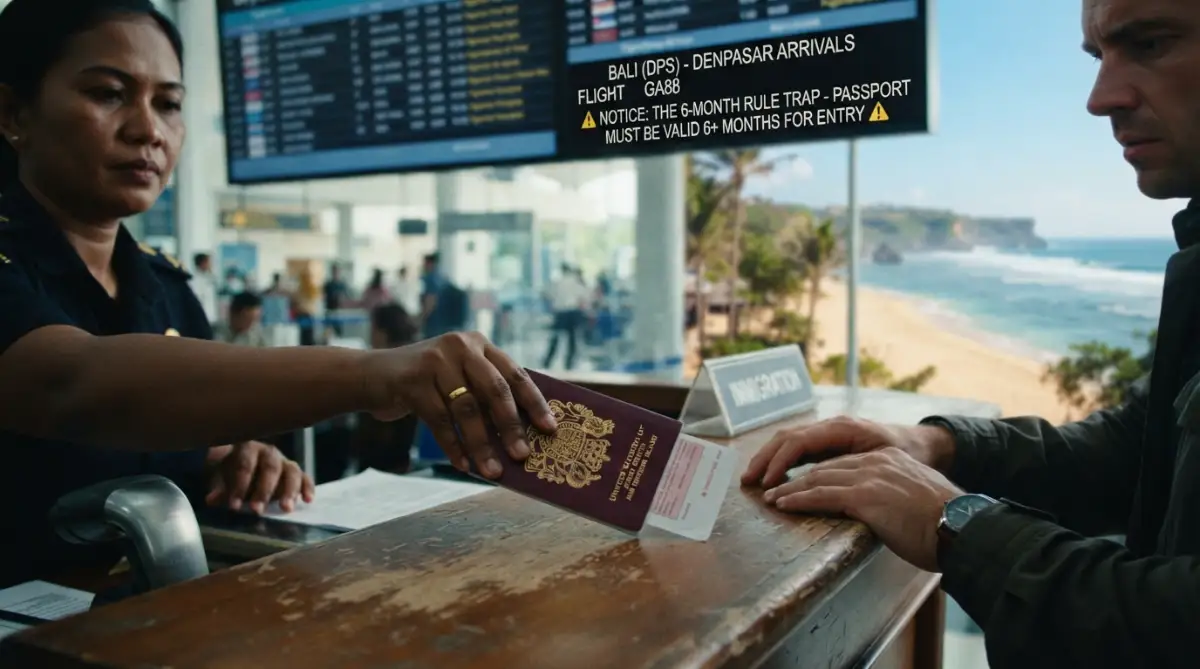
This nightmare happens to thousands of regular families and solo travelers every single day. People assume that an expiration date means you can use the document right up until that exact day. Unfortunately, international travel rules operate in a completely different reality.
When you get turned away at the gate, your travel insurance usually will not cover a single penny of your losses. They consider passport issues to be the traveler's personal responsibility. This creates massive financial panic and ruins what should be the happiest time of your year.
The Silent Six-Month Expiration Trap
Most countries around the world enforce what is known as the "six-month validity rule". This means your passport must be valid for at least six months beyond the date you plan to leave their country.
Why do they do this? Border security wants a safety net in case something unexpected happens to you during your trip. If you get sick, miss your flight, or face legal trouble, you might be stuck in their country longer than expected.
The "Big Three" Validity Rules (Quick Check)
- 6-Month Rule: Required by China, Thailand, and most of the Middle East.
- 3-Month Rule: Common for the UK and many European (Schengen) countries.
- Day of Departure: Only a few countries (like Mexico) allow you to enter if your passport expires the day you leave.
They need an absolute guarantee that your home country will take you back. If your document expires while you are stuck abroad, you technically become an undocumented person. No government wants to deal with the headache of processing someone without active identification.
Before we move to the next hidden trap, watch this quick breakdown of exactly how airlines check your documents before you fly. This insider knowledge could literally save your next vacation from disaster.
The Blank Page Requirement Nobody Mentions
Expiration dates are not the only thing that will get you sent home from the airport. You also need to pay close attention to the inside pages of your little blue or red book. Many popular tourist destinations strictly require you to have two to four completely blank visa pages.
If you are a frequent traveler, your pages fill up much faster than you realize. Immigration officers need empty space to put their entry and exit stamps. Some countries even require a full blank page just to paste a large visa sticker when you arrive.
I always thought my passport was fine as long as there was a tiny blank corner left for a small stamp. I was completely wrong. My Pro Tip for you is to physically count your empty pages before booking any international ticket; never assume an officer will squeeze a stamp into a crowded page.
The Empty Page Cheat Sheet
| Destination | Required Blank Pages | Why? |
| :--- | :--- | :--- |
| South Africa | 2 Full Pages | They need space for big entry/exit stamps. |
| India | 2 Blank Pages | Required for the physical visa sticker. |
| Italy | 1 Blank Page | Enough for a standard Schengen stamp. |
| Kenya | 2 Blank Pages | One for the visa, one for the stamp. |
If you hand an immigration officer a full book, they will simply deny your entry. They are not allowed to stamp over older visas or important text. It is entirely up to you to ensure your document has the required physical space before you leave home.
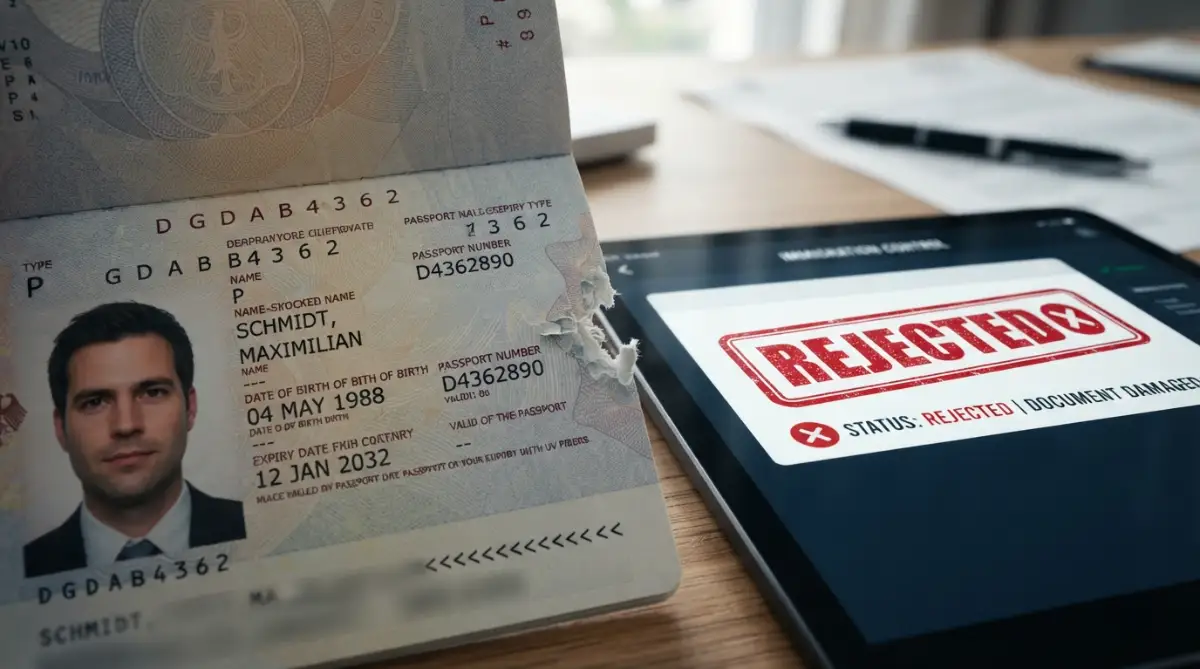
A Quick Guide to Acceptable vs. Unacceptable Passport Wear
The Hidden Dangers of Minor Physical Damage
You might think a small coffee stain on page 14 is not a big deal. However, border security officers are trained to look for any signs of tampering or forgery. Even the smallest tear on the personal information page will raise massive red flags at customs.
Water damage is one of the most common reasons travelers are unexpectedly denied boarding. If the electronic chip inside your document gets wet and stops scanning properly, airlines will not let you fly. The electronic chip contains all your biometric data, which is heavily relied upon by modern security systems.
A friend of mine once tried to travel with a passport that had accidentally gone through the washing machine. It was completely dried out and looked mostly fine to the naked eye. The airline scanner could not read it, and he missed his best friend's wedding overseas.
The Transit Country Confusion
Many travelers try to save money by booking flights with long layovers in foreign countries. What they do not realize is that transit countries have their own strict document rules. Even if you never plan to leave the airport terminal, you still have to meet their entry requirements.
Let's say you are flying from New York to Bali, with a short layover in Singapore. Bali might only require your passport to be valid for exactly your length of stay. However, Singapore strictly enforces the six-month validity rule for every single person who lands on their soil.
If you do not meet Singapore's requirements, the airline in New York will not let you board the first leg of your flight. You cannot just promise them that you will stay inside the transit area. The airline gets heavily fined if they transport someone with invalid documents, so they take zero risks.
Myth vs Reality: Common Travel Misconceptions
Myth: If I buy a return ticket, the destination country won't care about my expiration date.
Reality: Your return ticket means absolutely nothing if your document does not meet the legal validity requirement. The computer system will automatically flag your profile.
Myth: I can just get an emergency renewal at the embassy once I arrive.
Reality: Embassies abroad take weeks to process non-emergency renewals. More importantly, the airline will never let you get to the destination country in the first place.
Myth: Children's passports last exactly as long as adult passports.
Reality: Children's documents typically expire much faster (usually in five years). Parents often forget this and end up stranded at the gate while the adults are cleared to fly.
Understanding the Visa vs. Passport Validity Clash
Another massive source of confusion is having a valid visa inside an expiring passport. Let us imagine you have a ten-year tourist visa stamped on page five. You look at it and feel incredibly confident about your upcoming holiday.
However, your actual passport book expires next month. Many travelers wrongly assume that the ten-year visa overrides the document's expiration date. This is a very expensive mistake to make.
Your visa is only a permission slip to enter the country. Your passport is your actual proof of identity. If the identity document is no longer valid, the permission slip inside it becomes completely useless at the border.
Some countries allow you to travel with both your old expired book (containing the valid visa) and your new book. Other countries demand that you transfer the visa to the new document entirely. You have to actively check the specific rules of the embassy before packing your bags.
Why the Schengen Area is Extremely Strict
If you are planning a romantic European vacation, you need to be extra careful. The European countries within the Schengen Area share a unified border policy that catches many tourists completely off guard.
Their rule is quite specific and slightly confusing. Your travel document must be valid for at least three months after the day you plan to leave the Schengen territory. In addition to that, the document must have been issued within the last ten years.
This ten-year issue causes massive headaches for people who renewed their documents early and received extra validity months added on top. The European scanners will only look at the issue date. If the issue date is exactly ten years and one day old, you will be denied entry, regardless of the printed expiration date.
How to Protect Your Peace of Mind
All of this information might sound incredibly overwhelming. The good news is that these disasters are completely avoidable if you take just a few minutes to prepare. You just need to build a new habit of checking your documents the same way you check your bank balance.
Set a calendar reminder on your phone exactly nine months before your document expires. This gives you plenty of time to take new photos, fill out the forms, and wait for the government processing times. Paying for standard processing is much cheaper than paying for an emergency rush service.
Treat your travel document like it is made of pure gold. Keep it away from liquids, pets, and humid environments. When you take care of the small details ahead of time, you can finally relax and just enjoy the beautiful vacation you worked so hard for.Next-Level Strategies to Keep Your Travel Documents Safe and Valid
You already know the basic rules about expiration dates and empty pages. Now, I want to share some expert-level secrets that frequent flyers use to avoid border control nightmares. These are the practical steps you can take today to protect your peace of mind and your hard-earned vacation money.
One of the smartest things you can do during your next renewal is to request a large book. Many governments offer a standard document with about twenty-eight pages, but they also offer an expanded version with over fifty pages.
The best part is that this larger book usually costs the exact same amount as the standard one. If you love exploring new countries, checking that specific box on your application will save you from running out of blank visa space too early. You will never have to worry about replacing your document prematurely just because you travel often.
Another closely guarded secret in the travel community is the legal second passport. Yes, you read that right. Certain governments actually allow citizens to hold two valid passports at the exact same time under specific conditions.
This usually applies if you are traveling between countries with heavy political conflicts. For example, if you have an entry stamp from a specific nation, a neighboring rival country might automatically deny your entry. By carrying a secondary book, you can present a completely clean document and avoid being turned away at immigration.
Building a Bulletproof Digital Backup System
We often think about protecting the physical book, but what happens if it gets lost or stolen while you are overseas? This is where having a proper digital backup system becomes a total lifesaver. Simply snapping a quick photo on your phone is a good start, but it is not nearly enough to get you out of a stressful situation.
I always recommend creating a highly secure, encrypted folder on your cloud storage drive. Inside this folder, you should save a high-resolution scan of your main photo page. You also need to scan any active visas and entry stamps you currently hold.
If your bag gets stolen in a foreign city, you can walk into your local embassy and pull up these high-quality scans from any computer. The embassy staff can process your emergency replacement much faster when they have visual proof of your original document's numbers and issue dates.
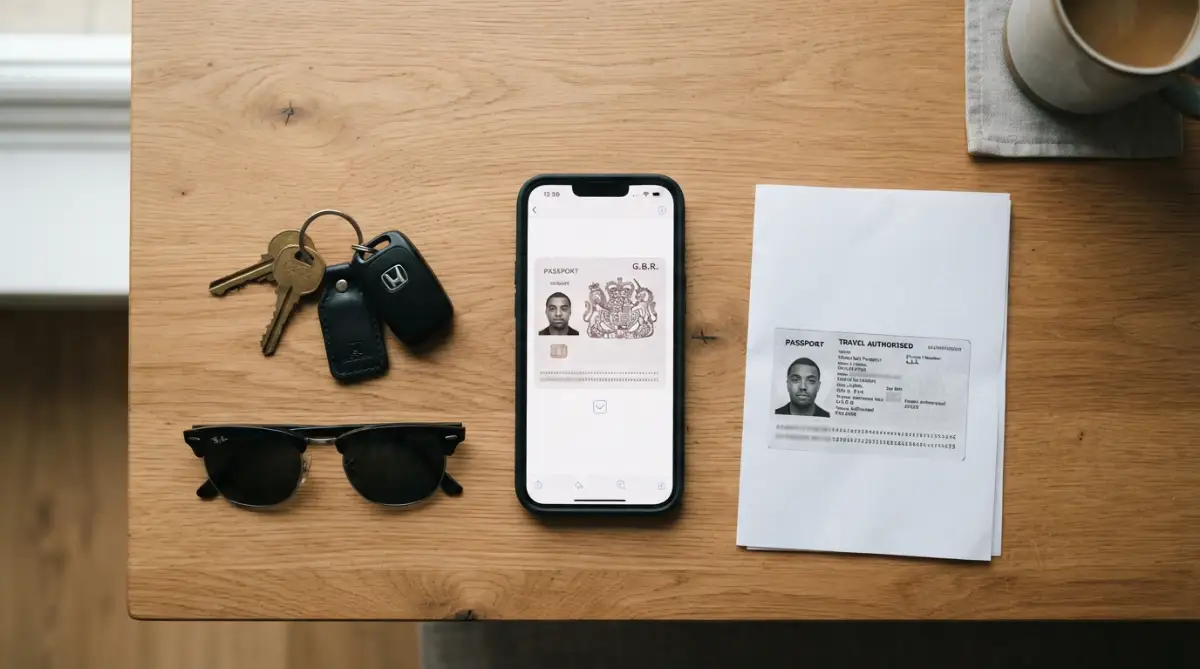
You should also leave printed copies of these pages with a trusted family member back home. If you lose your phone and cannot access your cloud drive, you can simply call them from a hotel lobby. They can email your details directly to the embassy, saving you days of frustrating delays.
Taking these extra precautions is a lot like understanding the secret fine print in travel policies that costs you thousands of dollars. The more you know about the hidden rules, the better protected you are against unexpected disasters. Always check your destination's specific entry rules through trusted databases like IATA's personalized travel document requirements to ensure your paperwork matches their legal demands.
The Physical Protection Tricks Nobody Thinks About
Let us talk about how you physically carry your little book while moving through crowded airports. I used to just toss mine into the front pocket of my backpack alongside my keys and water bottle. That was a terrible habit that almost caused my main information page to tear completely off.
You should always invest in a high-quality, water-resistant cover. The electronic chip inside your document is highly sensitive to moisture, bending, and extreme heat. A sturdy cover acts like a protective shield against accidental coffee spills or unexpected rainstorms.
However, you must remember to take the cover off before handing your book to a customs agent. Immigration officers hate struggling with tight leather covers, and some will flat-out refuse to process you until you remove it. Keep it protected in your bag, but present it bare when you reach the official desk.
Additionally, consider using an RFID-blocking sleeve. Modern travel documents contain chips that broadcast your biometric information. While security breaches are rare, a blocking sleeve ensures that nobody can scan your personal identity details while you are waiting in a busy terminal.

The Disastrous Errors That Trap Everyday Travelers
Even the most experienced globetrotters make simple mistakes that lead to massive heartbreak at the airport. I have seen families forced to turn around at the boarding gate simply because they assumed their paperwork was fine. Let us break down the most dangerous pitfalls you must actively avoid.
The most common trap is booking your non-refundable flights and hotels before physically holding your travel document in your hands. People often see a massive discount online and panic-buy their tickets immediately. If you want to stop using incognito mode for flights and actually plan smartly, you need to check your expiration date first.
Government processing times for renewals can change without any warning. You might read online that a renewal takes four weeks, only to find out the system is suddenly backlogged for three months. If your new book does not arrive in time, the airline will not offer you a refund for your missed flight.
It is incredibly painful to lose thousands of dollars just because of a minor scheduling error. This is a lot like the hidden financial trap that destroys 90% of new startups; poor upfront planning always leads to heavy losses later. Always secure your physical paperwork before swiping your credit card for a massive vacation package.
The Dangerous Habit of DIY Document Repairs
Another massive mistake people make is trying to fix minor physical damage by themselves. If your toddler accidentally rips a page, your first instinct might be to grab some clear tape. Please, never do this under any circumstances.
Immigration officers are trained to treat any tape, glue, or unnatural modifications as signs of active forgery. If they see a taped page, they will immediately pull you into a secondary screening room. You will be aggressively questioned, and your document will likely be confiscated right on the spot.
Even if you just wanted to fix a loose binding, the government officially considers that document to be tampered with and invalid. If you notice a tear, water damage, or loose threads, you have to bite the bullet and apply for a brand new replacement.
The "Just Getting By" Mentality at Customs
Some travelers try to talk their way past airline agents when their documents fall short of the requirements. They will argue, plead, and promise that the destination country's border agents will just let it slide. This is a terrible strategy that simply does not work in modern travel.
Airlines face massive government fines if they transport a passenger with invalid identification. They are legally required to fly you back to your home country at their own expense if you get rejected upon arrival. Because of this massive financial risk, gate agents have absolutely zero flexibility to bend the rules for you.
It does not matter if your cousin traveled to the same country last month with an expiring book. Security policies change overnight based on new political agreements or updated border control software. Your only job is to present a flawless, valid document that easily scans green in their computer system.
When you constantly worry about being rejected at the gate, your travel anxiety completely ruins the joy of the trip. If you want to truly escape the burnout of daily life, you need a vacation that starts smoothly from the moment you leave your house. Taking chances with your paperwork is the fastest way to invite chaos into your hard-earned time off.
Your Action Plan for Stress-Free Global Adventures
You now possess more knowledge about border security rules than the average traveler will ever learn. Understanding these strict guidelines is not about creating fear; it is about taking full control of your travel experience. When you handle the boring paperwork details upfront, the rest of your journey becomes an absolute breeze.
I highly recommend creating a permanent travel checklist in your phone's notes app right now. Set a clear rule for yourself and your family: nobody books a flight until every single travel document has been physically inspected. Check the front cover, flip through every single page, and loudly read the expiration date out loud.
When you treat your identification with a high level of respect, you eliminate ninety percent of the stress associated with international airports. You will confidently walk up to that check-in counter, hand over your perfect little book, and receive your boarding pass with a huge smile.
I know how devastating it feels to lose a dream vacation over a simple technicality because I lived through it. My biggest hope is that this information empowers you to take charge of your planning so you never have to experience that sinking feeling at the gate. Take a deep breath, double-check those expiration dates tonight, and go pack your bags for the adventure of a lifetime!
Common Questions Travelers Have About Validity Rules
Does the six-month rule apply to the day I enter or the day I leave?
Most countries require your document to be valid for six months beyond your planned date of departure from their country. If you are staying for two weeks, you actually need six and a half months of validity from the day you arrive. Always calculate your timeline based on your return flight, not your arrival date.
Can I travel domestically if my document recently expired?
In many regions, you can use other forms of government-issued identification for domestic flights, like a standard driver's li