
The Shocking Mail That Changed How I View Homeownership
Let's be real, nobody likes getting mail from the local tax office. When I bought my first place, I thought my monthly mortgage payment was the finish line. Then my first tax assessment showed up, and I realized I had a lot to learn. You don't need to be a math genius to handle this—you just need to know how the local government actually grades your house and where to look for easy errors. Let me show you exactly how it works.
I spent hours reading over strange terms like "assessed value" and "millage rates" until my brain physically hurt. It felt like I was reading an alien language, and the sudden stress of owing thousands of extra dollars kept me awake for days. I honestly questioned if I made a massive financial mistake by buying a house at all.
You are definitely not alone if you feel this exact same panic right now. So many hard-working people save up for years to buy a home, only to have their peace of mind shattered by confusing local tax letters. This sudden financial shock can easily ruin your daily mood and create intense tension inside your household.
What You Will Take Away From This Guide:
- Why your home's official "assessed value" is usually lower than the price you actually paid for it.
- How an escrow account stops you from having to pay one massive, scary bill at the end of the year.
- The simple way to spot hidden mistakes on your public property card and fight back to lower your costs.
- Why doing secret, unpermitted home repairs can create a massive legal headache when you try to sell later.
Thinking of Property Taxes as a Neighborhood Subscription Fee
Let us make things incredibly simple right from the start. Think of your annual property tax as a mandatory subscription fee for living in your specific town or city. When you subscribe to a streaming service, you pay money to access movies and shows.
When you pay your local government, you are essentially buying access to a functioning community. Your money pays for the public schools in your area, even if you do not have children of your own. It pays the salaries of the local police officers and firefighters who keep your family safe while you sleep.
Without this local funding, the roads outside your driveway would quickly fill with massive potholes. The local parks where you walk your dog would become overgrown and unusable. So, while writing that big check feels painful, it helps build the exact community you chose to live in.
The Secret Difference Between Market Value and Assessed Value
The biggest point of confusion for most beginners is understanding how much their home is actually worth on paper. You might have just bought your beautiful house for $350,000. Naturally, you assume the government will base your bill on that exact number.
However, local governments use something entirely different called an assessed value. The assessed value is simply a specific number assigned to your house by a local government worker known as an assessor. Their main job is to figure out a fair baseline for taxation, not to tell you how much you could sell the house for today.
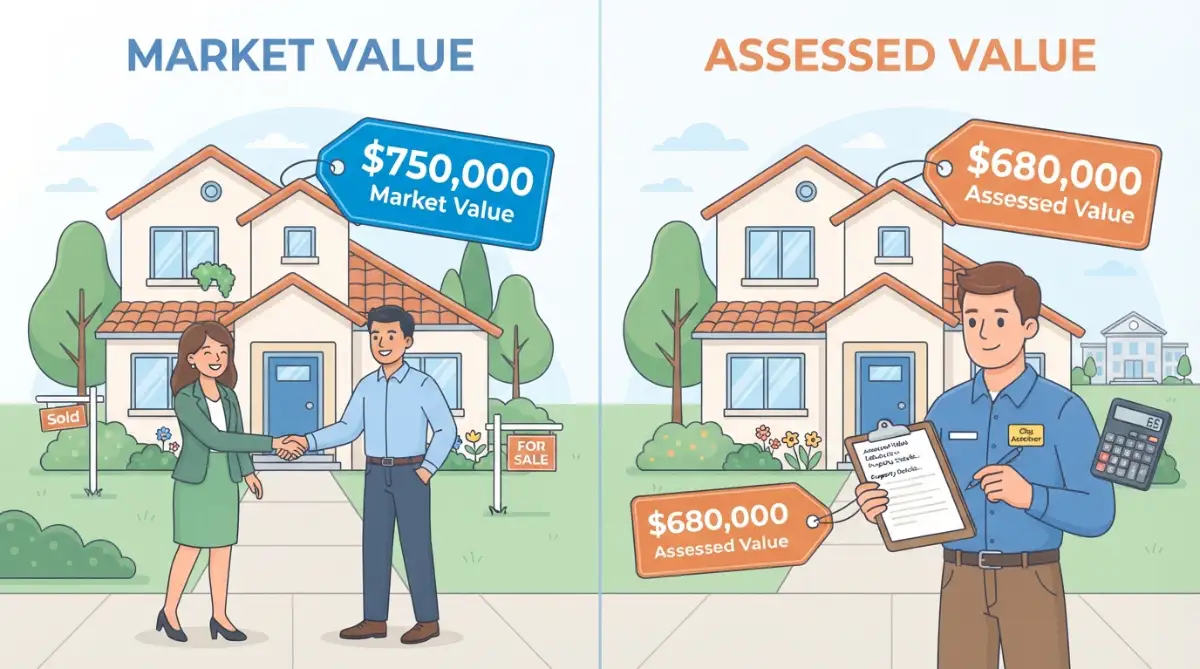
In many places, the assessed value is significantly lower than what you paid. For example, your
350,000homemightonlyhaveanassessedvalueof∗∗
350,000homemightonlyhaveanassessedvalueof∗∗
280,000** according to the local tax office. This is actually a very good thing for your wallet because it means you owe less money overall.Pro Tip: I completely ruined my own mood once by assuming my taxes would be based on my high purchase price. I spent weeks stressing out, only to find out my local government caps the assessed value at a much lower rate. Always check your county's specific assessment rules before you start panicking over imaginary math!
The local government uses the assessed value to calculate your property taxes, not the amount you originally paid for the home.
How the Local Government Calculates Your Final Bill
Now that we know the government uses an assessed value, we need to talk about the actual math. Do not worry, you do not need a math degree to figure this part out. Your local town or county creates a specific percentage they charge every property owner.
This percentage is often called a tax rate or a millage rate. Let us say your local town sets a tax rate of exactly 2%. If your home has an assessed value of $200,000, you simply multiply that number by 2%.
In this scenario, your total bill for the entire year would be exactly $4,000. The exact percentage changes depending on where you live. A quiet rural town might charge a very low rate, while a busy neighborhood with amazing public schools might charge a much higher rate.
Real-World Math: How Location Changes Your Bill
| Property Status | Assessed Value | Local Tax Rate | Your Annual Bill |
| :--- | :--- | :--- | :--- |
| House A (Rural Town) | $320,000 | 1.5% | $4,800 |
| House B (City Suburb) | $320,000 | 2.8% | $8,960 |
Notice how the exact same assessed value can cost you over $4,000 extra a year just based on the zip code you choose!
Want a complete visual breakdown of how this math works in real life? Check out this incredibly helpful video that makes calculating your exact bill easier than ever.
Myth vs Reality: Breaking Down Common Misunderstandings
There are so many wild rumors about real estate expenses floating around the internet. Let us clear up some of the most common misunderstandings right now. Knowing the facts will save you a lot of unnecessary stress down the road.
Escrow Accounts: Your Ultimate Weapon Against Financial Panic
One of the smartest things you can do as a homeowner is set up an escrow account with your mortgage lender. If you try to save thousands of dollars on your own for a single payment at the end of the year, you will probably fail. Life happens, cars break down, and suddenly that tax money gets spent on an emergency.
An escrow account acts like a forced, automatic savings account managed directly by your bank. Instead of paying one giant bill in December, your bank divides the total annual cost by twelve. They simply add this smaller amount to your normal monthly mortgage payment.
For example, if you owe
3,600fortheyear,thebankaddsexactly∗∗
3,600fortheyear,thebankaddsexactly∗∗
300** to your monthly housing bill. Every time you pay your mortgage, a piece of that money goes safely into your escrow account. When the massive bill finally arrives, your bank pays the local government directly from that saved money. You literally do not have to lift a finger or write a single check.Smart Ways to Prove Your House is Worth Less
Sometimes, the local tax assessor makes a big mistake and overvalues your home. If they think your house is worth way more than it actually is, you will end up paying an unfairly high bill. The good news is that you have the right to fight back and appeal the decision.
If you receive an assessment letter that feels way too high, start gathering hard evidence immediately. Walk around your property and take clear photographs of any major damage. If your roof is heavily leaking, or your foundation has massive cracks, your home is worth less money.
You can also look at recent sales of similar houses in your exact neighborhood. If your neighbor just sold a house identical to yours for $250,000, but the government says yours is worth $350,000, you have a very strong case. You simply take this evidence to the local assessment office and file a formal appeal to get your bill lowered.
Finding Hidden Discounts Through Local Exemptions
Many new homeowners leave free money on the table because they simply do not know about local exemptions. An exemption is basically a legal discount the government offers to specific types of people. The most common one across the country is called a Homestead Exemption.
A Homestead Exemption simply means you live in the house as your primary, everyday residence. If you own a house and actually sleep there most nights, the government will often lower your assessed value automatically. They do this to reward long-term residents and keep housing affordable for normal families.
There are also highly specific discounts for different groups of people. Many areas offer massive tax breaks for senior citizens living on a fixed income. You can also find heavy discounts if you are a military veteran or if you have a documented disability. All you usually have to do is fill out a simple one-page form at your local county office to claim these savings.
Action Step for New Buyers: Please don't wait until tax season to do this! Most counties have a strict, non-negotiable deadline (usually between January and April) to file your Homestead Exemption paperwork. Hop on your county assessor's website today and search "exemption deadline". Missing it by a single day means you pay the full price for another 12 months.
Why Your Bill Might Suddenly Jump Next Spring
It is a terrible feeling to open your mail and see that your required payment has suddenly increased. This happens quite often, and it is usually due to two very common reasons. The first reason is that your local government simply voted to raise the overall tax rate to fund a new project.
Maybe the town desperately needs a new high school, or they need to buy brand-new fire trucks. The local leaders will vote to increase everyone's rate slightly to gather the needed cash. The second reason your bill might jump is due to a booming real estate market.
If hundreds of people suddenly want to move to your neighborhood, home values will naturally shoot up. When the local assessor sees homes selling for record prices, they will increase the assessed value of every house on the street. While it means you owe more money today, it also proves your personal investment is growing rapidly in value.
The Danger of Ignoring Your Local Assessment Letters
We all have a habit of throwing boring-looking government mail directly into the trash can. When it comes to real estate documents, ignoring your mail can lead to complete disaster. If you fail to pay your required local taxes for a long time, the government can actually take your house away.
This terrifying process is called a tax foreclosure. The county will legally seize your property and auction it off to the highest bidder just to recover the money you owe. This is why understanding your local deadlines is absolutely non-negotiable for anyone who owns a home.
Make sure you know exactly what month your county mails out their official bills. Put a giant red circle on your calendar so you know exactly when the payment is due. Staying organized and opening your mail the same day it arrives will keep your family safe and secure in your beautiful new home.
Insider Secrets to Keeping Your Homeownership Costs Dangerously Low
Once you understand the basic math behind your local assessments, you can start playing offense. You do not have to just sit back and accept whatever massive bill the local government sends your way. Smart homeowners use a few incredibly effective strategies to keep their annual housing costs as low as legally possible.
The most powerful weapon you have is something called a property record card. This is an official public document that the local assessor's office keeps on file for your specific house. It lists every single detail the government believes is true about your property.
You would be absolutely shocked to learn how often these official records contain massive errors. Sometimes, the assessor accidentally writes down that you have four full bathrooms when you actually only have two. Other times, they might list your small outdoor storage shed as a fully finished guest house.
If the government thinks your house is bigger or nicer than it actually is, they will charge you way more money. You can usually request a copy of this card directly from your county clerk or download it from their official website. Reviewing this document line by line takes about ten minutes, but it could save you thousands of dollars over the years.
The Hidden Impact of Home Renovations
We all want to make our new houses look beautiful and modern. However, you need to understand that major renovations can heavily impact your local assessment value. When you pull official permits from the town to build a giant new deck or a swimming pool, the tax office gets a notification.
Once the work is officially completed, the assessor will usually increase the paper value of your property. This means your beautifully remodeled kitchen will directly cause your annual government bill to increase. I am definitely not telling you to stop improving your house, but you need to budget for the future financial impact.
Pro Tip: I once built a large wooden deck in my backyard without realizing it would trigger a brand-new assessment. When my bill jumped up the following spring, I was completely caught off guard. Always calculate the long-term tax increase before you sign a contract with a home remodeling company.
Mastering the Art of the Successful Appeal
If you find errors on your property card, or if you simply believe your home is overvalued, you must file an appeal. Many beginners are terrified of challenging the local government, thinking they will get into legal trouble. In reality, filing a tax appeal is a totally normal and heavily encouraged process.
To win your case, you need to act like a real estate detective. You must gather concrete proof that similar houses in your exact neighborhood are valued much lower than yours. You can often find excellent guidelines on how to structure your argument by reviewing free resources from the National Taxpayers Union Foundation, which actively helps citizens navigate unfair assessments.

Never go into an appeal hearing complaining about how high your bill is. The local review board honestly does not care if you think the taxes are too expensive. They only care if your specific property was assessed unfairly compared to the houses directly next door.
Navigating Escrow Shortages Without Panicking
Even if you set up an automatic savings account with your mortgage lender, things can still go wrong. One of the scariest letters you can receive is an escrow shortage notice from your bank. This happens when your local taxes increase, but your bank did not save enough of your monthly payments to cover the new, higher bill.
When this happens, your bank will actually pay the massive bill for you so you do not lose your house. However, they will immediately ask you to pay them back for the money they covered. They will give you the option to write one giant check immediately, or they will heavily increase your monthly mortgage payment for the next twelve months to recover their funds.
If you are already living on a tight budget, a sudden spike in your monthly housing cost can feel devastating. This is exactly why understanding how mortgage rates work alongside your local taxes is incredibly important before you buy a property. You should always keep a separate emergency fund in your personal bank account just to cover unexpected escrow shortages.

The Most Dangerous Financial Traps New Homeowners Fall Into
The journey of homeownership is filled with hidden emotional and financial landmines. Because nobody teaches us these concepts in high school, we are often forced to learn through painful, expensive mistakes. If you can actively avoid these common traps, you will protect your mental health and keep your savings account intact.
One of the most tragic mistakes beginners make is ignoring official letters from the county clerk. People often assume that because they pay their mortgage on time every month, they have nothing to worry about. They toss boring white envelopes into the recycling bin without ever opening them.
If you miss your assessment notice, you completely lose your right to file an appeal for that entire period. The county gives you a very strict window, usually just a few weeks, to challenge their numbers. Missing that small window means you are legally forced to pay the higher amount, even if the government made a massive mathematical mistake.
Relying on Desperate Measures to Pay the Bill
When a surprise tax bill arrives and your bank account is empty, panic quickly sets in. Many overwhelmed homeowners start making irrational financial decisions out of pure fear. They might try to take out dangerous, high-interest loans just to get the government off their backs.
Other homeowners might try to juggle multiple credit cards or look into complex financial restructuring. If you are ever tempted to go down this route, you must start by debunking common myths about debt consolidation loans to protect yourself. Borrowing bad money to pay off the government usually just creates a much larger, more painful financial disaster later on.
The Danger of Doing Unpermitted Work
We talked earlier about how renovations can increase your assessed value. Because of this, some homeowners try to outsmart the system by doing massive home projects secretly without pulling any official town permits. They might finish their entire basement or add a new bathroom in the dark.
This might keep your tax bill low temporarily, but it creates a massive legal nightmare when you eventually try to sell the house. When a new buyer brings in a professional home inspector, they will immediately realize the work was done illegally. The town can actually force you to rip out the new construction entirely, or they will charge you massive penalty fees.
You will also likely be hit with a massive bill for years of unpaid back-taxes. Trying to hide major improvements from the local assessor is never worth the intense stress and legal danger. To understand your rights and the proper procedures, you should always check the official consumer guides provided by the Consumer Financial Protection Bureau regarding housing regulations.
Assuming Zillow Tells You Your Exact Tax Burden
We all love looking at popular real estate websites to see beautiful photos of houses for sale. These websites often have a small section that estimates what your monthly taxes will be. Beginners frequently base their entire family budget around these random internet estimates.
You must understand that these third-party websites are just guessing based on outdated algorithms. They do not know about your local town's upcoming budget votes, and they do not know if the current owner is receiving a massive senior citizen discount. If you buy a house based on a Zillow estimate, you might face a devastating reality check when the real bill arrives.
Always look up the actual, official records on your local county website before you buy a home. You can often learn exactly how your local county operates by reviewing resources from the National Association of Counties, which explains local government funding. Relying on hard data instead of internet guesses will save you from severe buyer's remorse.
Your Personal Action Plan for a Stress-Free Homeownership Journey
Taking control of your real estate expenses does not require a degree in finance or advanced accounting skills. It simply requires a little bit of organization, a calm mindset, and the willingness to ask questions. Now that you understand how local assessments actually work, you are already miles ahead of the average homebuyer.
Start by finding a quiet hour this weekend to review your own property records. Go online, find your county assessor's database, and look up your specific address. Check every single detail listed on your public card to ensure the government is not overcharging you for a bathroom that does not exist.
Next, call your mortgage lender and ask them for a detailed breakdown of your escrow account. Make sure you fully understand exactly how much they are saving for you every single month. By staying proactive and organized, you turn a terrifying financial mystery into a simple, manageable household chore.
I know exactly how overwhelming all this paperwork feels when you are just trying to enjoy your new home. My own journey started with absolute panic, but taking just a few hours to learn the rules changed everything for me. You have worked incredibly hard to buy your house, and taking control of your local taxes will ensure you get to keep it peacefully for decades to come.
Simple Answers to Your Biggest Local Tax Questions
What happens if I completely forget to pay my property taxes?
If you miss your deadline, the local government will start charging you aggressive late fees and heavy interest. If you continue to ignore the bills for a long period, they will eventually place a tax lien on your house. Ultimately, they have the legal power to foreclose on your property and sell it to recover the money you owe.
Does my property tax bill go down if my house loses value?
Yes, it absolutely can go down, but it usually does not happen automatically. If the housing market crashes and your home loses value, you must file a formal appeal to the local assessor to prove the new, lower value. Once they agree that your home is worth less, your future bills will decrease accordingly.
Why do my neighbors pay a completely different tax amount than me?
Your neighbors might have a different house layout, more square footage, or extra features like a finished basement that increase their assessed value. Additionally, they might qualify for special exemptions, like a senior citizen discount or a military veteran tax break. Because of these unique variables, no two houses will ever have the exact same financial footprint.
Do I still have to pay property taxes after my mortgage is fully paid off?
Yes, you are required to pay local property assessments for as long as you legally own the real estate. Once your mortgage is fully paid off, your bank will no longer manage your escrow account for you. You will become completely responsible for saving up the money and paying the local government directly every single year.
Can I negotiate my tax rate with the local government?
You cannot negotiate the actual percentage rate, as that is voted on and set by the local town or county officials for everyone. However, you can fiercely negotiate the assessed value of your specific home through the official appeals process. Lowering your home's official value on paper is the only legal way to lower your final bill.
Disclaimer: The information provided in this article is for general educational and informational purposes only and does not constitute financial, legal, or real estate advice. Property tax laws, assessment rates, and local regulations vary significantly by county and state. Always consult with a licensed tax professional, real estate attorney, or your local government assessor's office before making any major financial decisions regarding your property.