The Heartbreak of Losing Your Own Brand Identity
- Getting a cease-and-desist letter in your inbox on a random Tuesday will completely ruin your week. I found out the hard way that buying a .com domain and setting up a basic state LLC does not actually protect your brand name across the country. If you sell products online or run a growing service business, here is the exact, step-by-step roadmap I used to lock down my brand so no one could take it from me.
My logo looked amazing, my packaging was perfect, and orders were finally starting to roll in. Then, out of nowhere, I received a cold, demanding email from a lawyer.
Another company claimed they owned my business name, and they ordered me to shut everything down immediately. I was completely terrified and felt entirely alone.
I thought simply buying my domain name and registering my LLC was enough to protect me. I was completely wrong, and that mistake almost cost me my entire business.
This happens to thousands of hardworking people every single day. You pour your life savings, your passion, and your endless energy into building something you can call your own.
You sacrifice your weekends and miss out on family time just to get your small business off the ground. But without proper legal protection, anyone can sweep in and steal the name you worked so hard to build.
You have to throw away boxes of expensive inventory just because your name is printed on it. You lose the trust of your customers, your search engine rankings, and your peace of mind.
It feels incredibly unfair that large corporations have armies of lawyers, while small business owners are left to figure things out alone. The constant anxiety of getting a cease-and-desist letter hangs over your head every time you make a sale.
No one should have to live with that kind of fear hanging over their dreams. You deserve to sleep soundly at night, knowing your hard work is legally protected.
The good news is that securing your brand is not as scary or impossible as it sounds. You just need a clear, friendly roadmap to guide you through the process safely.
📌 Quick Action Summary: 4 Rules to Keep Your Brand Safe
- An LLC is not a trademark: An LLC only registers your business locally with your state; it does not stop competitors nationwide.
- Stick to arbitrary or suggestive names: Unique names like Kodak or Netflix pass government reviews much faster than descriptive names like Soft Cotton Shirts.
- Never use the ® symbol early: Only use the ™ symbol while your application is pending. Using ® without official approval is illegal.
- Mark your calendar for Year 5: You must file a Section 8 declaration between years 5 and 6 to keep your trademark active.
Myth vs Reality: Understanding Your True Legal Rights
Before we get into the exact steps, we need to clear up some massive misunderstandings. Most new business owners fall into the same traps I did.
They assume that because the government gave them a business license, their name is safe. Let me explain why this is a dangerous assumption.
Myth: Registering an LLC or Corporation means you own the trademark.
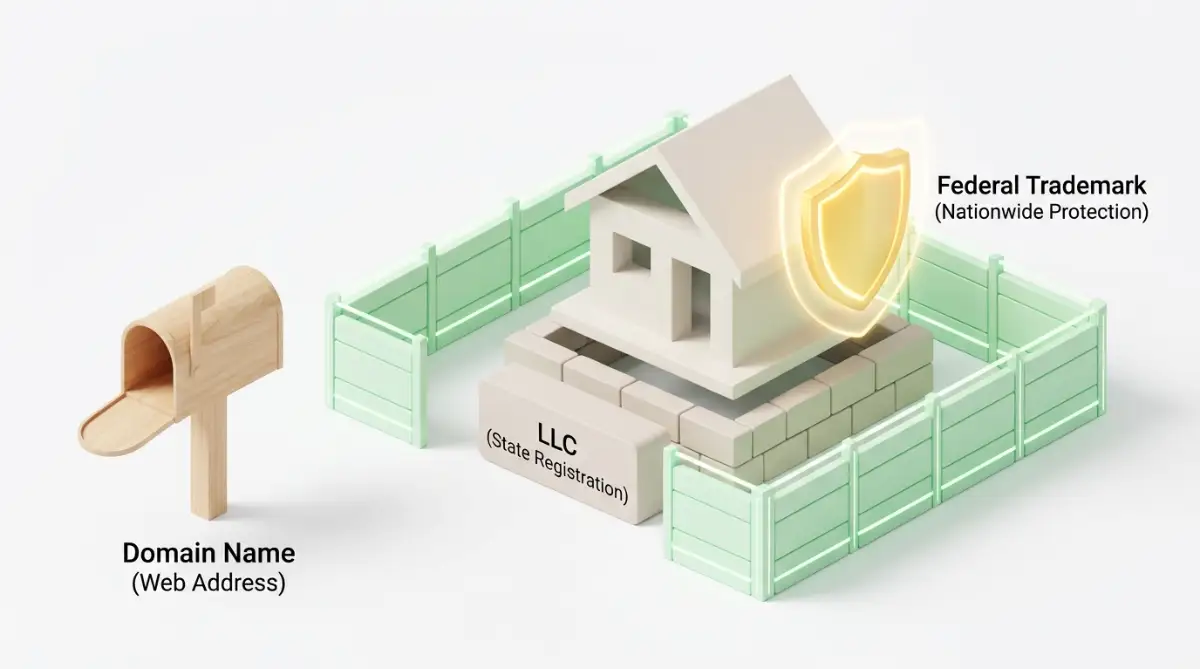
Reality: An LLC only protects your name within your specific state for tax and administrative purposes. It does not give you federal rights to stop someone in another state from using your name.
Myth: Buying the .com domain name gives you ownership of the brand.
Reality: A domain is just a digital street address. You can own the web address, but someone else can still own the actual legal rights to the name you are using.
To make this super easy to understand, let's look at a simple breakdown:
Think of building your business like buying a plot of land. Your LLC is the foundation, and your domain name is the sign pointing to your house.
A trademark is the giant, impenetrable fence that keeps trespassers from stealing your property. Without that fence, your brand is totally exposed to anyone walking by.
How to Choose a Name That the Law Will Actually Protect
Not all business names are created equal in the eyes of the law. If you pick a name that is too plain, the government simply will not let you protect it.
The legal system categorizes names into different levels of strength. You want to aim for the strongest category possible to make your application a breeze.
Generic Names (Impossible to Protect):
You cannot legally own a name that simply describes exactly what you sell. For example, you cannot trademark the name "Fresh Apples" if you are selling literal apples.
The government wants to leave basic words available for everyone to use. If they let one person own the word "Bicycle" for a bike shop, no one else could run a bike business safely.
Descriptive Names (Very Hard to Protect):
These are names that heavily describe a feature of your product. Think of names like "Speedy Car Wash" or "Soft Cotton Shirts."
While you might eventually get a trademark for these, you usually have to prove you have been using the name for five years. It is a long, difficult road that beginners should generally avoid.
Suggestive Names (Great Choice):
These names hint at what you do, but require a little bit of imagination. A classic example is Netflix.
It suggests movies on the internet, but it does not literally say "Internet Movies." These names are strong, memorable, and much easier to register safely.
Arbitrary and Fanciful Names (The Absolute Strongest):
This is the golden ticket of brand naming. These are completely made-up words or real words used in completely unrelated ways.
Apple is a perfect example of an arbitrary name for computers. Kodak is a perfect example of a totally made-up, fanciful word.
I learned this the hard way when I filed my first application for a highly descriptive name. I wasted hundreds of dollars and waited months, only to get rejected because the name was simply too generic for the government to protect. Always aim for something unique, catchy, and entirely your own.
Conducting a Deep Clearance Search to Avoid Disaster
This is where you save yourself from future lawsuits. Before you spend a single penny on an application, you must make sure the name is actually available.
Many people skip this step because they do a quick Google search and assume they are safe. A Google search is simply not enough to protect you from legal trouble.
You need to search the official government database where all registered names live. In the United States, this is called the USPTO (United States Patent and Trademark Office) database.
You are not just looking for exact matches. The law protects against names that are "confusingly similar."
If your brand is called "Blue Bear Coffee" and someone already owns "Blew Bare Cafe," you will get rejected. The words sound identical when spoken out loud, which confuses customers.
Check out this excellent video breakdown that shows you exactly how to navigate the trademark database step by step.
When doing your search, you should also check alternate spellings and plural versions. Try swapping letters, like replacing an "S" with a "Z" or a "C" with a "K".
If you find a name that is very close to yours, you need to look at what they sell. Two companies can share a name if they sell completely different things.
For example, Delta Airlines and Delta Faucets peacefully coexist. Nobody is going to accidentally buy an airplane ticket when they are looking for a kitchen sink.
Quick Confusion Test: Will Your Name Pass?
Before you file, run your name through this 3-question filter:
- Sound-Alike Test: Does it sound identical when read out loud on a podcast? (e.g., "Klean" vs "Clean")
- Market Overlap Test: Are you targeting the exact same customer group or selling in the same retail aisle?
- Meaning Test: Does your name translate to the same exact meaning in another language?
- If you answered "Yes" to any of these within your niche, pick another name immediately.
However, if you find a similar name selling products in your specific industry, you must pivot. It is infinitely cheaper to change your name now than to fight a losing legal battle later.
Identifying Your Specific Class of Goods or Services
When you apply for a trademark, you do not just get a blanket monopoly over a word. You only get protection for the specific categories of things you actually sell.
The government has organized everything in the world into 45 different classes. 34 of these classes are for physical goods, and 11 are for services.
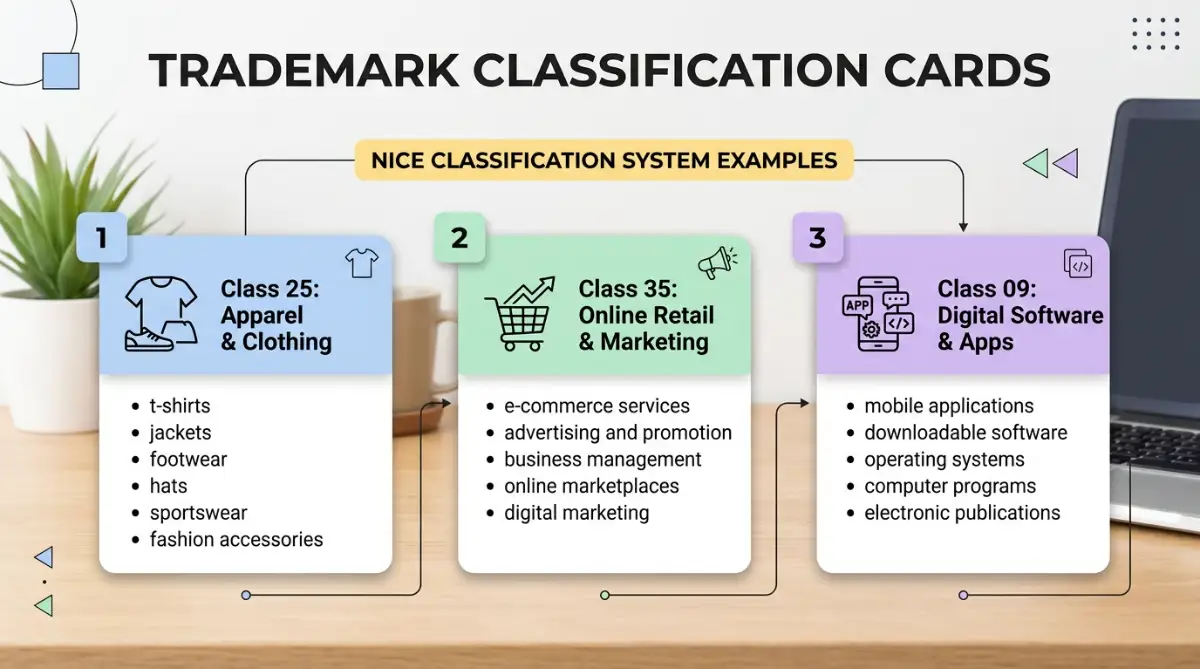
If you sell organic t-shirts, you will file under Class 25 for clothing. If you offer business consulting, you will file under Class 35 for advertising and business services.
This step requires careful thought and honesty. You cannot just pick a bunch of random classes hoping to protect your name in industries you are not actually in.
You must prove to the government that you are actively using your brand in every single class you claim. If you claim you sell shoes but only sell hats, your application could be entirely cancelled.
Filing in multiple classes also increases your application fees. The government charges you a filing fee for every single class you select.
As a beginner on a budget, stick to the one or two core classes that define your main business. You can always file new applications later as your company grows into new territories.
The Difference Between 'Use in Commerce' and 'Intent to Use'
The application will ask you a very specific question about your current business status. You must tell the government if you are already selling products, or if you just plan to soon.
If you have already made a genuine sale to a real customer under your brand name, you apply as "Use in Commerce." This is the fastest and cheapest route.
To prove this, you will need to upload a specimen. A specimen is just a fancy legal term for a real-life photograph of your product.
This cannot be a digital mockup or a Photoshop rendering. It must be a clear picture of a physical tag on a shirt, or your product sitting on a retail shelf.
If you have a great idea but have not launched yet, you can file an "Intent to Use" application. This essentially calls dibs on the name before anyone else can snatch it.
It tells the government you are actively working towards launching your brand. However, this route costs a little more money in the long run.
Once your business actually launches, you have to file a second form proving you are finally making sales. Only then will your trademark be officially registered and granted.
Submitting Your Application: Navigating the Legal Maze
Once your search is clear and your class is chosen, it is time to face the actual paperwork. You will complete this process entirely online through the official government portal.
You have two main options when paying your filing fees. The first is called TEAS Plus, and the second is TEAS Standard.
TEAS Plus is much cheaper, usually costing around $250 per class. However, it requires you to be extremely precise and pick your goods from a pre-approved government list.
TEAS Standard is more expensive, often costing around $350 per class. It gives you the freedom to write your own custom descriptions if your product is highly unique.
Real Cost Breakdown: What You Actually Spend (Per Class)
- USPTO Base Filing Fee (TEAS Plus): ~$250 (Non-refundable government fee)
- USPTO Base Filing Fee (TEAS Standard): ~$350 (If your goods aren't on the standard list)
- Section 8 Maintenance (Year 5-6): ~$225 per class
- DIY Total vs Attorney: DIY costs roughly
250–
250–
350 flat; hiring a flat-fee lawyer typically adds 400–
400–
- 800 for peace of mind.
For 99% of small businesses, TEAS Plus is the best and most affordable way to go. Just make sure you read every single prompt carefully before clicking next.
One tiny typo in your business address or owner name can cause massive headaches down the road. Double-check everything, take a deep breath, and hit submit.
The Waiting Game: What Happens After You Hit Submit
Do not expect to get your registration certificate in the mail next week. The government operates at a very slow pace, and the line is incredibly long.
It usually takes anywhere from six to nine months just for a government attorney to look at your file. During this time, your application will just sit there in a pending status.
Eventually, an Examining Attorney will review your case. Their entire job is to look for reasons to deny your application based on strict legal rules.
If they find an issue, they will send you something called an Office Action. This sounds terrifying, but it is actually very common.
An Office Action is simply a letter asking for clarification or a minor correction. Sometimes they just want you to reword your product description to be more clear.
You usually have three to six months to reply to an Office Action. If you ignore it, your application will die permanently, and you will lose your filing fee entirely.
If your application is flawless, it moves on to the publication phase. The government will publish your name in an official journal to let the public know about your brand.
For 30 days, anyone in the world can step forward and complain if they think your brand harms theirs. If the 30 days pass quietly, you are officially in the clear.
Soon after, you will receive your shiny registration certificate. You can finally start using the prestigious ® symbol next to your business name.
Knowing When to Call in a Professional Guide
I strongly believe that intelligent business owners can learn to do many things on their own. Filing a simple, straightforward application is totally possible for a beginner.
However, there are moments when trying to save money can actually ruin your business. If your situation is complex, a DIY approach might be a terrible idea.
If your clearance search revealed a name that is suspiciously similar to yours, do not guess. A trained legal professional can tell you immediately if it is safe to proceed.
If you are expanding internationally, the rules change drastically. A single application in your home country will not protect you overseas.
Hiring a professional takes away the sleepless nights and the fear of making a silly typo. They act as a shield between you and the confusing government bureaucracy.
Many professionals offer flat-fee packages specifically designed for tight budgets. Weigh the cost of their fee against the cost of losing everything you have built.
Protecting your brand is the smartest investment you will ever make in your journey. Take a deep breath, follow these steps methodically, and secure the bright future of your small business.
Next-Level Strategies to Keep Your Brand Safe Forever
Once you actually get that beautiful registration certificate in your hands, you might think the hard work is entirely over. I used to believe that the government would simply step in and protect my business name automatically.
That is actually a huge misunderstanding that catches many beginners completely off guard. The government only grants you the official right to use the name, but they do not act as your personal brand police.
It is entirely your responsibility to monitor the market and stop other people from copying you. If you sit back and let people use names similar to yours, you can actually lose your legal rights over time.
This process is called "brand dilution," and it happens when a name becomes so common that it loses its unique power. To stop this from happening, you need a solid game plan to protect your territory long after the paperwork is done.
Becoming Your Own Trademark Monitor
You do not need to hire an expensive private investigator to keep an eye on your brand. You can actually set up automated systems that do the heavy lifting for you while you sleep.
The easiest and most effective tool is setting up free Google Alerts for your exact business name. You should also create alerts for common misspellings or slight variations of your brand.
Whenever a new website, article, or social media page pops up using your name, Google will send you an email immediately. This allows you to catch copycats early before they can steal your hard-earned customers.
I also highly recommend searching major social media platforms like Instagram and TikTok every single month. A simple search can reveal new accounts trying to ride on the coattails of your success.
If you find someone infringing on your rights, you must document everything immediately. Just like the step-by-step process of documenting evidence after a minor car accident, taking clear screenshots and saving URLs is incredibly important for building a solid legal case.
The Art of the Friendly Cease and Desist
Finding a copycat can make your blood boil, and your first instinct might be to send an angry, aggressive email. I strongly advise against jumping straight into a hostile legal battle.
Often, the person using your name is just another beginner who honestly made a mistake. They likely never checked the official database and have no idea they are breaking the law.
Instead of threatening a massive lawsuit right away, send a polite but firm "soft" cease and desist message. Let them know you own the federal rights to the name, and nicely ask them to rebrand within a specific timeframe.
This friendly approach works wonderfully most of the time, saving both of you from massive legal bills. If they refuse or ignore you, then it is time to bring in a professional attorney.
You can read more about understanding trademark infringement rules directly through trusted legal resources like the Legal Information Institute. It helps to know exactly what counts as a true violation before you make serious accusations.
Expanding Your Protection Across Borders
If your business is entirely local, a standard United States registration is perfectly fine. However, if you sell physical products online, you might eventually get customers from Canada, Europe, or Australia.
Your domestic registration completely stops at your country's border. Someone in London could legally start a company using your exact name and logo without any consequences.
If you plan on taking your brand global, you should look into international filing systems. The Madrid Protocol is a special system that lets you apply for protection in over 100 countries using just one single application.
You can explore detailed information on registering international trademarks safely through the World Intellectual Property Organization. It requires a bit more budget, but it is an amazing tool for fast-growing e-commerce stores.

The Most Dangerous Legal Traps Beginners Fall Into
Throughout my journey of building multiple small businesses, I have seen brilliant entrepreneurs lose everything over simple paperwork errors. The legal system is incredibly unforgiving if you miss a single rule.
You cannot afford to guess your way through this process because mistakes remain permanently on the public record. Let's look at the most common disasters you absolutely must avoid.
Using the ® Symbol Way Too Early
This is by far the most common and dangerous mistake I see excited new business owners make. They design a beautiful logo, file their application, and immediately slap the ® symbol on all their packaging.
You are legally forbidden from using the circle-R symbol until your application is 100% approved and registered by the government. Using it beforehand is actually considered fraud in the eyes of the law.
If the examining attorney catches you doing this, they can completely throw out your application. Worse, competitors can report you for deceptive business practices.
While you are waiting for official approval, you are only allowed to use the basic ™ symbol. The ™ simply tells the public you are claiming the name, but it holds no federal legal weight yet.
Ignoring the Government’s strict Deadlines
The government does not care if you are on vacation, sick, or simply too busy running your shop. When they send you a deadline for an Office Action or a renewal, that date is absolute.
Your protection does not last forever on autopilot. Between the fifth and sixth year of registration, you must file a "Section 8 Declaration" to prove you are still using the name.
If you miss this specific window, the government will completely cancel your registration without a second thought. You will lose all your rights and have to start the entire expensive process over again.
Missing these details is just like ignoring the secret fine print in travel policies that costs you thousands. You always need to read the official letters and mark the exact dates on a reliable calendar.
Drastically Changing Your Logo Design
Many brands start out with a specific logo, but decide to rebrand a few years later. They change the font, update the colors, and add new graphic elements to look more modern.
They incorrectly assume their original trademark application still covers this shiny new design. The truth is, your legal protection only covers the exact image you submitted on your original application.
If you completely change your visual identity, you no longer have protection for the new look. A competitor could easily copy your new design, and your old legal documents will not help you at all.
If you are just protecting the actual spoken words of your brand, you should file a "Standard Character" application. This protects the name itself, regardless of what font, color, or style you decide to use in the future.
Filing with the Wrong Ownership Details
When you fill out the application forms, you have to clearly state who owns the brand. Many solo entrepreneurs just put their own personal name down as the owner.
If you have an LLC or a Corporation, the business entity should be listed as the official owner, not you personally. Mixing up personal and business assets is a massive legal headache waiting to happen.
If you file under the wrong legal entity, your application might be considered totally invalid during a court dispute. This is one of those silent reasons your personal loan application gets rejected, and it works the exact same way with government forms.
Always double-check that your official business name and current address match your state records perfectly. Consistency is the key to sailing through the government review process without delays.
If you ever feel overwhelmed by the technical jargon, I highly recommend checking out free resources from the Small Business Administration on intellectual property. They offer incredible, easy-to-understand guides specifically designed for everyday folks like us.
Your Personal Action Plan for Brand Security
We have covered a massive amount of ground today, but you do not need to feel overwhelmed or anxious. Protecting your business is entirely doable when you break it down into small, manageable steps.
First, take a deep breath and brainstorm a completely unique, catchy name that does not just describe what you sell. Do a thorough clearance search to make sure you are not stepping on anyone else's toes.
Next, gather your absolute best evidence showing your product out in the real world. A clear photo of a branded price tag or a live e-commerce listing is all you really need.
Take your time filling out the official application, paying close attention to your specific class of goods. Choose the exact categories that fit your business model today, not what you dream of doing ten years from now.
Remember that patience is going to be your best friend during this long journey. The government moves incredibly slowly, but checking your email regularly ensures you never miss a critical update.
Finally, do not be afraid to ask for professional help if your situation gets messy. Sometimes, investing a little bit of money upfront saves your entire company from a devastating lawsuit later.
If you happen to face unexpected business hurdles while going through this, knowing your rights is essential. You can learn more about protecting your legal rights during a company layoff to keep your personal finances secure while building your new empire.
Building a business from scratch is one of the bravest things a person can do. You have already done the hardest part by bringing your amazing idea to life.
Now it is time to build that heavy iron fence around your property so no one can ever take it away. I know you have the strength and intelligence to get this done right.
I really want to see your business thrive, grow, and become a trusted household name. Take that first step today, protect your brilliant ideas, and never let anyone steal the dream you worked so hard to build.
Common Questions About Brand Name Protection
Can someone steal my name if I just have an LLC?
Yes, they absolutely can if you only rely on state registration. An LLC only prevents someone from using your exact name within your specific state for tax purposes. If you want nationwide protection to stop copycats everywhere, you need a federal trademark.
Do I really need to hire a lawyer for a simple application?
You do not strictly need a lawyer if your application is incredibly simple and straightforward. However, if your clearance search shows similar names, or if you get a complicated Office Action, a lawyer is highly recommended. Trying to fix a complex legal issue yourself can end up costing you your filing fee.
How long does this legal protection actually last?
The beautiful thing about this protection is that it can theoretically last forever. You just need to keep using the name in business and remember to file your renewal paperwork. You usually have to renew between the fifth and sixth year, and then every ten years after that.
Can I protect a logo and my brand name together?
You can technically apply for both together in one single application to save money. However, if you change your logo later, your name might lose its legal protection. It is always safer to file one application for the standard words, and a completely separate one for the graphic logo.
What is the exact difference between the TM symbol and the R symbol?
The TM symbol simply tells the public that you consider the name to be your property, but it is not federally registered yet. You can use TM right now without any official paperwork at all. You can only use the official ® symbol after the government completely approves your application.
Disclaimer: The information provided in this blog post is for educational and informational purposes only and does not constitute legal advice. I am not an attorney, and reading this guide does not create an attorney-client relationship. Trademark laws are complex and frequently change. You should always consult with a qualified intellectual property lawyer regarding your specific business situation before making any legal decisions or filing official documents.