
The Brutal Reality of Your First Few Months Writing Online
Writing online for a living sounds like a dream until you're staring at a $0 bank balance and a "seen" message from a client who promised to pay you. I spent my first few months thinking a laptop and a cup of coffee were all I needed. I was wrong. It’s not just about writing well; it’s about surviving a system that’s designed to ignore you. Let's get real about why your pitches are failing and how to actually turn this into a paycheck.
I was so confident that I would replace my day job income within a month. I spent hours setting up a fancy profile on different freelance platforms. I even bought a customized coffee mug that said "World's Best Writer" on it.
But then, reality hit me like a ton of bricks. Weeks went by, and my email inbox remained completely empty. I sent out dozens of proposals every single day, only to be met with dead silence.
Every time a client rejected me or ignored my message, it felt like a personal attack. I watched other people bragging about their high-paying writing gigs on social media. This constant comparison completely destroyed my mental peace and made me want to quit altogether.
I realize now that I was blindly falling into the exact same traps that almost every new writer faces. You wake up every morning with a burning desire to succeed, but you end up spending hours doing the wrong things.
You lower your prices just to get a single job, only to end up working long hours for pennies. This constant cycle of rejection and burnout ruins your sleep, drains your energy, and makes you deeply frustrated.
If this sounds like your current daily life, take a deep breath right now. You are absolutely not a bad writer, and you are not broken. You are just making a few invisible errors that are quietly sabotaging your entire business.
Let us fix these hidden traps right now so you can finally start landing clients who respect your time.
⚡ The "No-Nonsense" Success Summary
If you're tired of shouting into the void, here’s the game plan we’re covering:
- Stop Being a Ghost: Why generic pitches are getting you blocked and how to fix them.
- The Price Trap: Why charging $5 is actually harder than charging $50.
- Business vs. Hobby: The tiny mental shifts that move you from "struggling" to "booked solid."
- Platform Freedom: How to find clients where your competition isn't looking.
Treating Your Words Like a Hobby Instead of a Real Business
Most beginners treat their writing career like a fun little side project. They do not have a set schedule, a clear plan, or a proper workspace. They write from their bed while watching television, expecting clients to take them seriously.
If you want people to pay you real money, you have to treat this like a real business from day one. Hobbyists write only when they feel inspired or motivated. Professionals sit down and do the work, even when their brain feels tired and empty.
When clients see that you lack a professional process, they immediately run the other way. They want to hire someone who takes deadlines seriously and communicates like a genuine business owner.
The Niche Expert vs The Generalist Trap
One of the biggest blunders you can make is trying to write about everything under the sun. When you tell a client that you can write about health, technology, pet food, and finance, you look desperate. Clients do not want a jack-of-all-trades; they want a specific expert for their specific problem.
Think about how you choose a doctor when you are sick. If your heart hurts, you do not go to a general doctor who also fixes teeth and eyes. You go to a dedicated heart specialist, and you are willing to pay them significantly more money.
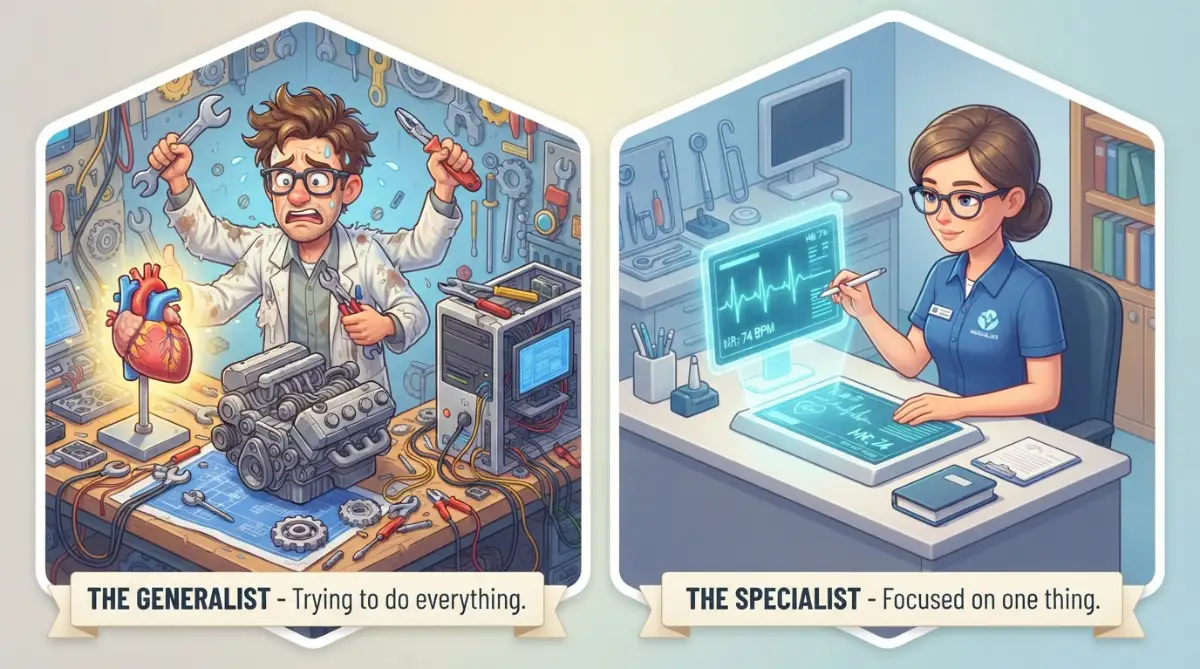
The exact same psychology applies to freelance writing. When you focus on a specific industry, you instantly become an authority figure. You can charge higher rates because you truly understand the deeply technical language of that specific market.
Before you pick your niche, look at this quick breakdown of what actually makes money right now versus what's just a waste of your time:
Here is a quick look at why focusing down is so profitable:
Stop telling the world that you can write about anything. Pick one or two industries that you genuinely enjoy reading about. Build your entire portfolio around those specific topics, and watch how quickly clients start trusting you.
Sending Generic Pitches That Annoy Business Owners
Let us talk about the single biggest reason your email inbox is currently completely empty. You are probably sending the exact same copy-pasted proposal to every single client. Business owners can smell a generic, automated pitch from a mile away.
When a client posts a job, they usually receive dozens, if not hundreds, of applications. If your message starts with "Dear Sir/Madam, I am a hard-working writer," they will delete it instantly. They do not care about your hard work; they care about how you can solve their specific problem.
Your proposal needs to prove that you actually read their job description. If you do not mention their specific company name or project details, you have already lost the job.
Want to learn exactly how to format a winning pitch? Watch this incredible breakdown before you send your next email!
The Anatomy of a Terrible Proposal
A bad pitch talks entirely about the writer and ignores the client completely. It usually contains long, boring paragraphs about where you went to school or what degrees you hold. Newsflash: nobody cares about your college degree if you cannot write a simple, engaging blog post.
Instead of writing a wall of text, keep your pitch short and punchy. Ask them a smart question about their business goals. This shows that you are thinking like a partner, not just a desperate employee looking for quick cash.
I used to make the same mistakes. Now, I follow a simple 3-step rule before I hit 'Send' on any pitch. If my email doesn't have these, I don't send it:
- The "Why You" Line: I mention a specific article they published last week.
- The Gap: I point out a topic their competitors covered that they missed.
- The Proof: I link one (only one!) piece of work that looks exactly like what they need.
My entire career changed when I stopped talking about myself in my pitches. I started my emails by pointing out a tiny flaw in their current blog and offering a quick solution.
I used to spend three hours sending fifty generic emails a day, getting zero replies. The moment I switched to sending just five highly personalized emails, I landed my first high-paying client within a week.
The Race to the Bottom: Destroying Your Own Value
There is a terrifying myth in the online money-making world that beginners must work for free. You might believe that charging extremely low rates is the only way to get your foot in the door. This mindset will trap you in a never-ending cycle of poverty and severe burnout.
When you charge two dollars for an article, you attract the absolute worst type of clients. These buyers will demand endless revisions, treat you terribly, and refuse to pay you on time. They do not respect your skills because your price tag tells them that your skills have no value.
Why Cheap Clients Are the Most Demanding
It is a strange psychological fact that clients who pay the least always expect the most. If you ask for standard professional rates, you suddenly start working with respectful business owners. High-paying clients understand that good content takes time, and they treat you like a respected consultant.
I know it feels scary to ask for more money when you have zero reviews on your profile. But underpricing yourself actually makes good clients suspicious of your abilities. If a normal article costs fifty dollars and you offer to do it for five, they will assume your work is garbage.
You do not need to charge thousands of dollars on day one, but you must set a minimum standard. Figure out how long it takes you to research, write, and edit a piece of content. Make sure your hourly rate actually covers your basic living expenses and allows you to breathe.
Relying Completely on Freelance Marketplaces
Many beginners make the massive error of depending solely on platforms with heavy competition. They set up a single profile and simply wait for magic to happen. When you rely completely on these crowded websites, you hand over all control of your business to an algorithm.
These platforms are heavily saturated with people willing to work for pennies. You are constantly competing against thousands of other writers for the exact same low-paying job. Worse, these websites take a massive cut of your hard-earned money as service fees.
Taking Control of Your Own Lead Generation
You must learn how to find clients outside of these heavily crowded platforms. Start using social media platforms effectively to showcase your writing skills to the world. A well-written post about your industry can attract business owners who never even use freelance marketplaces.
Create a simple, clean portfolio website that you completely own and control. You do not need to be a technical genius to set up a basic one-page site today. Having your own digital home makes you look incredibly professional compared to someone who only uses third-party apps.
Start building genuine relationships with editors and content managers on professional networking sites. Leave thoughtful comments on their posts instead of directly begging them for a job. When you focus on building real human connections, the writing contracts will naturally follow.

The Myth of Perfect Grammar Over Great Ideas
Another heavy burden beginners carry is the absolute obsession with having flawless grammar. They spend hours obsessing over a single comma, terrified that one typo will ruin their career. While good grammar is obviously important, it is not the main reason clients hire you.
Clients hire you because they need clear, engaging ideas that connect with their readers. An article with perfect grammar but boring ideas will never perform well on search engines. A piece with amazing, helpful ideas but one minor typo will still make the client happy.
Do not let the fear of imperfect English stop you from hitting the publish button. Use simple grammar checking tools to catch basic errors, and focus your energy on the actual message. Your ability to explain complex topics simply is your most valuable asset.
If you can master the art of holding a reader's attention, you will never struggle for work. We will continue exploring how to master your daily writing habits to ensure consistent income. Keep reading as we break down the exact steps to build a bulletproof portfolio from absolutely nothing.
Building a Profitable and Long-Term Writing Income Stream
Landing your first few clients is an amazing feeling, but keeping those clients is where the real money is made. Most beginners are constantly stuck on the hamster wheel of finding new jobs every single week. This constant hustle is exhausting and makes your income incredibly unpredictable.
If you want to build a truly peaceful business, you have to shift your focus from finding new clients to retaining the ones you already have. The secret to a high-paying writing career is having three or four steady clients who send you work every single month. This completely removes the stress of wondering how you will pay your internet bill next week.
To achieve this level of stability, you must transform yourself from a simple order-taker into a trusted business advisor. When a client asks for a blog post, they do not just want words on a page. They want those words to bring them more traffic, more leads, or more sales.
Over-Delivering Without Over-Working
Many writers think that over-delivering means writing an extra thousand words for free. This is a massive mistake that will only lead to severe burnout. Over-delivering actually means making your client's life significantly easier.
When you submit an article, do not just send a boring text document. Include a few suggested social media captions that they can use to promote the post on Facebook or Twitter. Format the article properly with clean headings, short paragraphs, and bold text so it is completely ready to publish.
You can also suggest how modern SaaS tools automate mundane tasks to help them upload your content faster. By saving your client fifteen minutes of formatting work, you instantly become their favorite writer. They will gladly pay you higher rates simply because you do not cause them extra headaches.
The Art of the Natural Upsell
Once you have submitted a great piece of work, never end the conversation with a simple thank you. Always pitch your next idea while the client is currently happy with your work. This is the easiest way to secure your next paycheck without sending out cold emails.
For example, if you just wrote an article about personal finance, look at their website and find a missing topic. Send them a quick message saying you noticed they do not have a guide on saving money for college. Offer to write that exact piece for them by next Tuesday.
Because they already trust you, they will almost always say yes to a good idea. This simple habit of pitching the next idea can double your monthly income immediately. It shows genuine initiative, which is incredibly rare in the freelance world.
Mastering Your Daily Research Habits
The highest-paid writers are not necessarily the ones with the best vocabulary. They are usually the ones who understand their specific topic better than anyone else. To charge premium rates, you must spend significant time educating yourself on your chosen industry.
Instead of staring at a blank screen, spend your mornings reading industry newsletters and analyzing market trends. You can even explore prompt engineering for beginners to help you brainstorm unique angles for your articles. When you understand the deep pain points of an industry, your writing becomes infinitely more valuable.
Business owners read a lot, and they can easily tell if a writer truly understands their market. According to detailed research on client retention and communication, businesses strictly prefer working with freelancers who speak their exact industry language. Make it a daily habit to consume content created by the top experts in your niche.

The Hidden Traps That Destroy a Writer's Mental Health
Building a writing business from scratch is deeply emotional work. You are putting your personal thoughts and skills on display for the world to judge. If you are not careful, the daily pressures of freelancing can completely ruin your mental peace.
I have watched incredibly talented writers quit the industry entirely just because they fell into a few psychological traps. They let minor setbacks destroy their confidence and drain their creative energy. Let us talk about these silent business killers so you can actively protect yourself.
Falling Victim to Endless Scope Creep
Scope creep happens when a client slowly asks for more and more free work outside of your original agreement. It usually starts with a harmless request to change a few sentences. Then, they ask you to add a completely new section, find five images, and interview an expert.
Before you know it, you are doing double the work for the exact same amount of money. Many beginners agree to these extra demands because they are terrified of getting a bad review. This is a very dangerous habit that destroys your hourly earning rate.
You must learn how to say no professionally and confidently. When a client asks for extra work, simply reply that you would love to help, and then state your price for the addition. Setting clear boundaries early on actually makes clients respect you much more.
Ignoring the Power of Clear Contracts
Working without a clear agreement is like driving a car blindfolded on a busy highway. It might feel fast and easy at first, but a crash is entirely inevitable. Many new writers simply agree to terms in a chat message and start working immediately.
When a disagreement happens about payment terms or revision limits, you have zero professional protection. The client might refuse to pay, claiming you did not meet their hidden expectations. You are left feeling angry, cheated, and completely helpless.
Always have a simple, written document that outlines the word count, the exact deadline, and the number of included revisions. It does not need to be written in complicated legal terms. A clear email summarizing the project details is often enough to save you from future disasters.
The Paralysis of Imposter Syndrome
Almost every creative professional battles the loud, annoying voice of imposter syndrome at some point. You sit down to write, and your brain suddenly tells you that you are a total fraud. You worry that the client will finally realize you have no idea what you are doing.
This fear can make you procrastinate for hours, missing deadlines and ruining your reputation. You might over-edit your work dozens of times, completely stripping away your natural writing voice. Studies on how the impostor phenomenon affects professionals show that this anxiety actively prevents talented people from charging what they are worth.
The truth is, even the most successful writers feel self-doubt when starting a new project. The difference is that professionals acknowledge the fear and start typing anyway. Your first draft does not have to be perfect; it just has to exist so you can edit it later.
Taking Editorial Feedback Personally
Getting your writing returned with a screen full of red edits can feel like a direct punch to the stomach. Beginners often read client feedback as a personal insult to their intelligence. They get defensive, argue with the editor, and ruin the professional relationship completely.
You must separate your personal self-worth from the words you type on a screen. When a client asks for changes, they are not saying you are a terrible human being. They are simply trying to make the content fit their specific audience better.
Every single piece of feedback is a massive opportunity to learn what the client truly wants. If you want to improve, you must practice maintaining an active voice in business writing and accept edits with extreme grace. Thank the client for their detailed notes, make the changes quickly, and move forward.
Mismanaging Your Business Finances
When the first few payments finally hit your bank account, the excitement is completely overwhelming. Many beginners instantly spend that money on new gadgets or expensive coffee without thinking about taxes. Freelance income is rarely consistent in the beginning, and poor planning will leave you completely broke.
You are no longer an employee; you are a business owner responsible for your own financial safety net. You must understand calculating self-employment taxes and baseline expenses to avoid a massive panic at the end of the year. Always save a percentage of every single payment you receive.
It is also incredibly smart to start understanding how AI content workflows function to speed up your research time and increase your hourly profit. By managing your time and your money strictly, you protect yourself from the natural ups and downs of freelancing.
Your Action Plan to Book Your Next High-Paying Client
We have covered a massive amount of ground today, and your head might be spinning with information. Please do not try to fix every single mistake in your business before tomorrow morning. True success in freelance writing comes from making small, consistent improvements over a long period of time.
Start by simply auditing your current online presence and your pitch templates. Remove the generic phrases, highlight your specific niche knowledge, and start treating your service like a premium product. Remember that every successful writer you admire started with zero clients and a blank screen, just like you.
Do not let rejection emails convince you that you lack talent or potential. Every single "no" you receive is just moving you one step closer to the client who truly values your voice. Keep refining your skills, keep hitting send on those proposals, and guard your mental energy fiercely.
I know exactly how terrifying it feels to stare at an empty inbox, wondering if this dream will ever actually work out for you. My entire life changed the moment I stopped acting like a desperate beginner and started treating myself like a valuable expert. Keep pushing forward with confidence, because you absolutely have the skills to build a wildly profitable writing business starting today.
Questions New Writers Quietly Ask Themselves
Do I need a professional website to start getting writing clients?
You do not strictly need a complex website on day one, but having a digital portfolio is highly recommended. A simple, free portfolio page using Google Docs or a basic site builder makes you look significantly more trustworthy. It gives potential clients a single place to view your best work without distractions.
How many articles should I have in my writing portfolio?
Three to five extremely high-quality articles are much better than twenty mediocre pieces. Clients rarely have the time to read more than a few paragraphs of your work anyway. Make sure those few samples perfectly match the specific industry you want to write for.
What should I do if a client completely stops replying to my emails?
Do not panic or send them angry messages demanding a response. Send one polite follow-up email after three days, and a final check-in after a full week. If they still ignore you, stay totally professional and move your energy toward finding better, more communicative clients.
Is it too late to become a freelance writer with so much competition?
It is absolutely never too late, because the internet requires thousands of new pieces of content every single minute. While there are many beginners willing to work for pennies, there is a massive shortage of reliable, professional writers. If you can meet deadlines, write clearly, and communicate well, you will always have work.
Disclaimer: The information provided in this article is for educational and informational purposes only and does not constitute financial, legal, or business advice. Freelance income varies greatly depending on individual effort, market conditions, and personal skills. Always conduct your own research and consult with a certified professional before making significant changes to your business or tax structures. We are not responsible for any financial losses or business decisions made based on this content.